Learning and Teaching News







 St Martin de Porres Catholic Primary School
Biological Science News from Grade 3/4
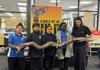
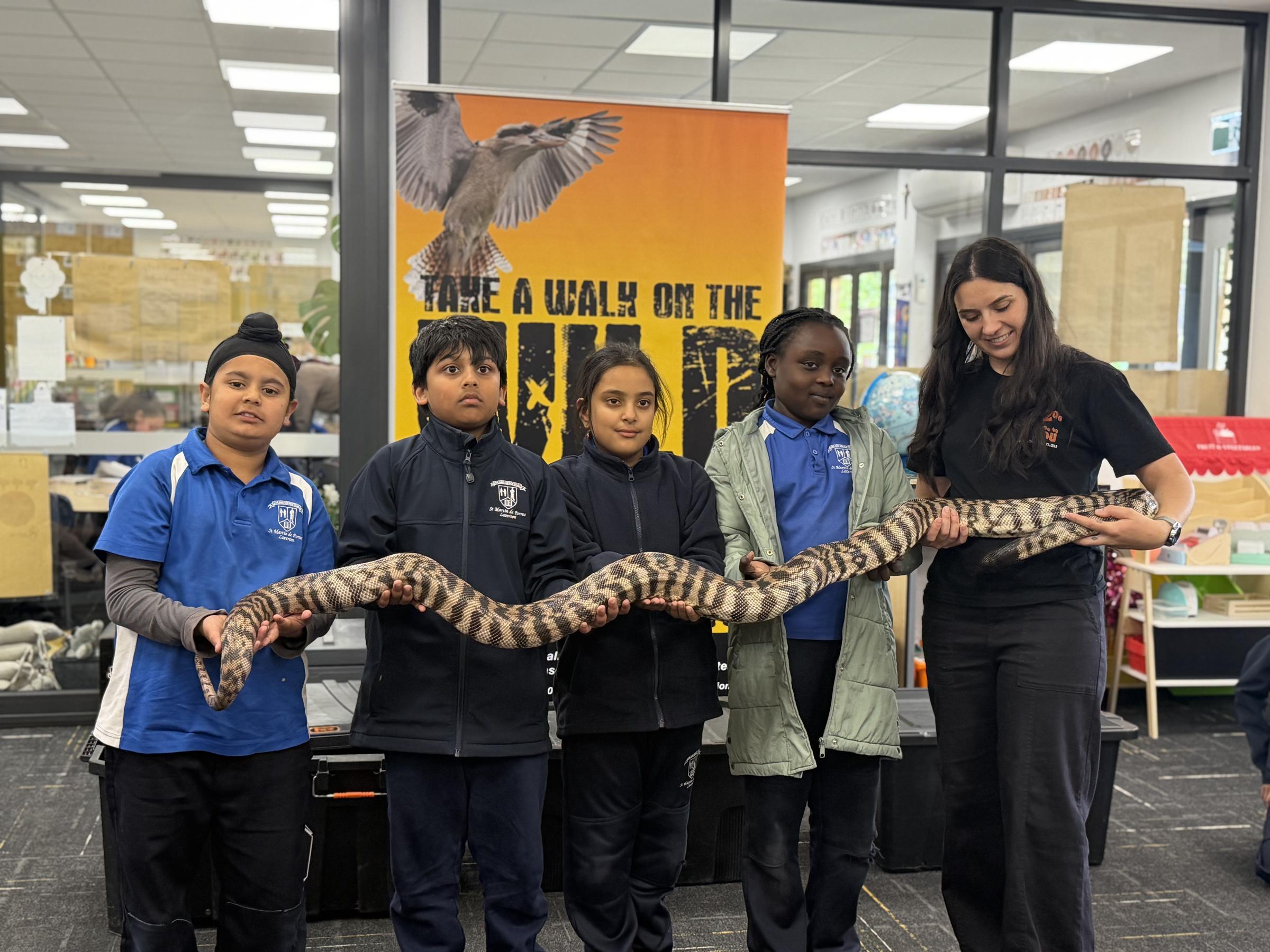
On Wednesday this week, our Grade 3/4 students participated in an engaging “Wild Action” incursion that supported their learning in the Biological Sciences strand of the Curriculum.
The students all experienced a hands-on encounter with a variety of native Australian animals, students had the opportunity to observe, touch and learn about reptiles, mammals and amphibians. The session deepened students' understanding of the characteristics of living things, animal classification, habitats & ecosystems, adaptations that help animals survive and the importance of conservation and protecting wildlife. It was wonderful to see the classroom learning brought to real life, allowing students to make meaningful connections between their science lessons and real-world examples.
We hope the students are inspired to keep staying curious about the living world around them and continue to learn and respect the natural environment in which they live.
Some of our students were keen to share their experiences with you and have written a little reflection of their session. We hope you enjoy reading them!
Animal Incursion… By Megha 3/4K
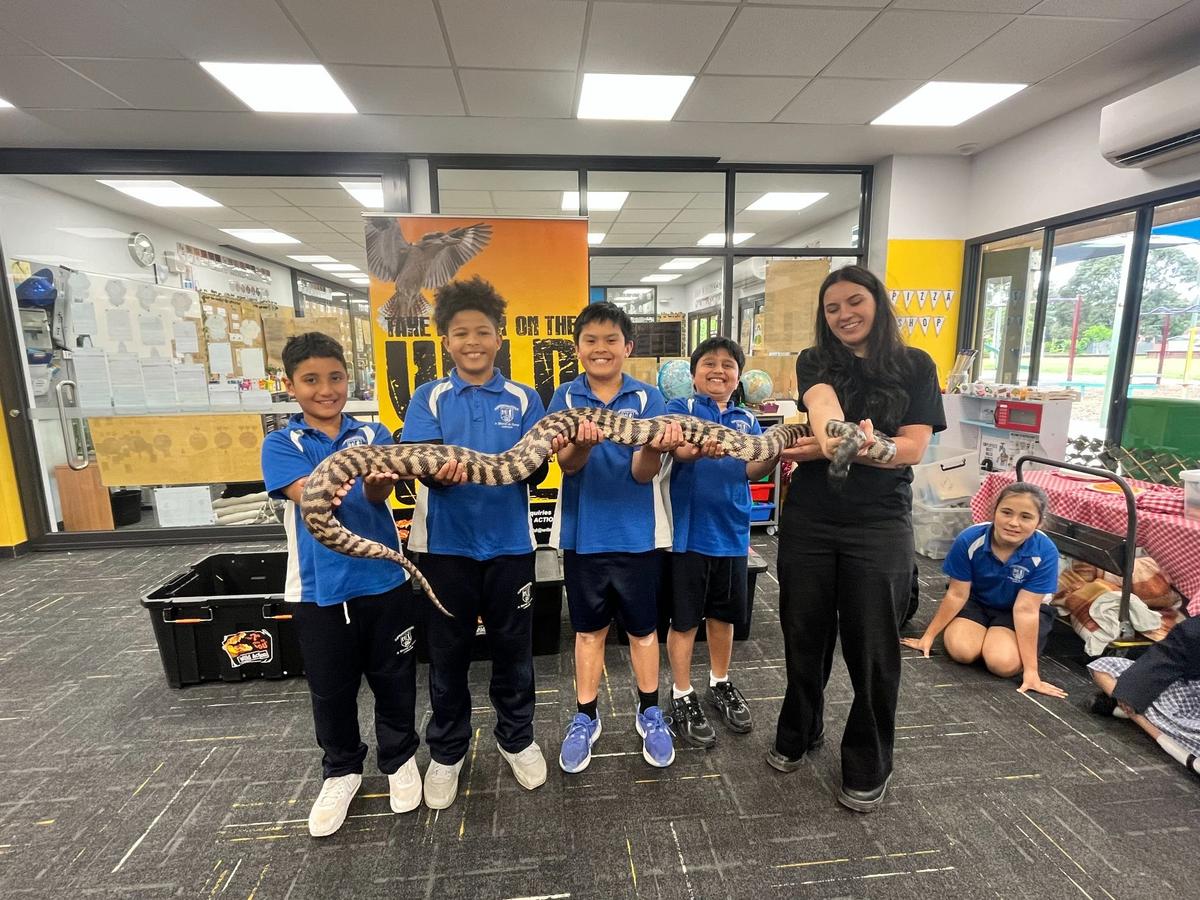
On 28/10/26, the whole 3/4 cohort had a very special animal incursion hosted by “Wild Action”. We had a person from the zoo come over to SMDP and teach us about lots of cool animals like the freshwater crocodile, the black-headed python, the dragon lizard, the echidna and many more!
The experience was very fun, everyone got a chance to hold at least one animal. We learnt a lot of new facts too, like that freshwater crocodiles have a third eyelid that helps them see and helps keep debris out of their eyes underwater. We also learnt that pythons can actually eat other poisonous snakes! After that we had a chat about how we could protect an animal and its habitat, and suddenly it was time to wrap up! The time went so fast. All in all we had a very fun incursion!
Reflection from Eva 3/4LM
On Wednesday we had a ranger come from Wild Action to show us some animals.
Some of the animals were reptiles, meaning that they are cold blooded. The ones that are cold blooded (reptiles) were, the blackheaded python, a snake that wasn't poisonous, they lived underground and had a black head. They also loved body heat so when the ranger took him out he coiled around her body cherishing the heat.
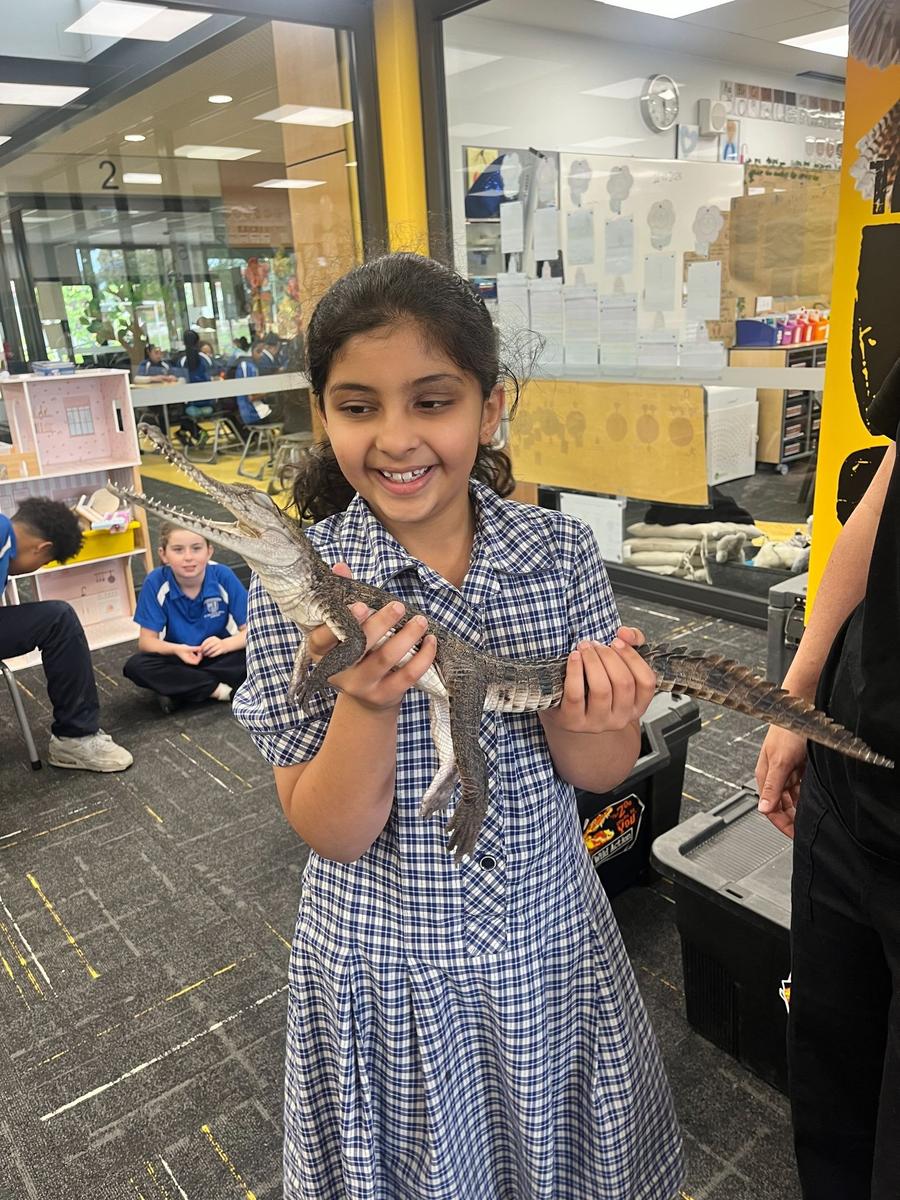
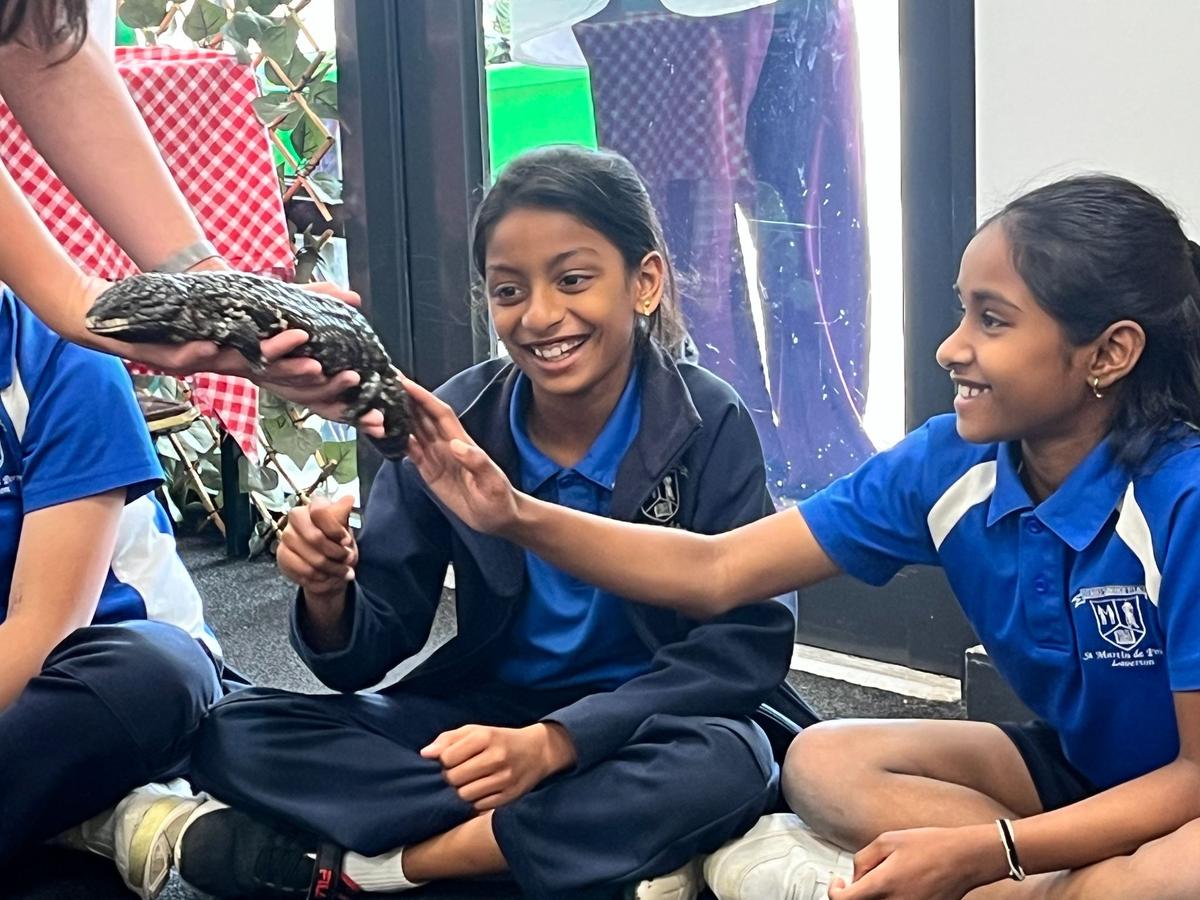
Another reptile was a shinglebacked lizard called Stumpy. His tail looked like his head! This was his way of confusing his predators like birds of prey that his head was his tail so they would grab the wrong side. Then there was an Australian water dragon. His spikes were weirdly soft for protection. The last reptile was a freshwater crocodile, (a baby because it would have been too big and would have bit someone) that always had its mouth open and had these special eyelids that they close underwater so they can see.
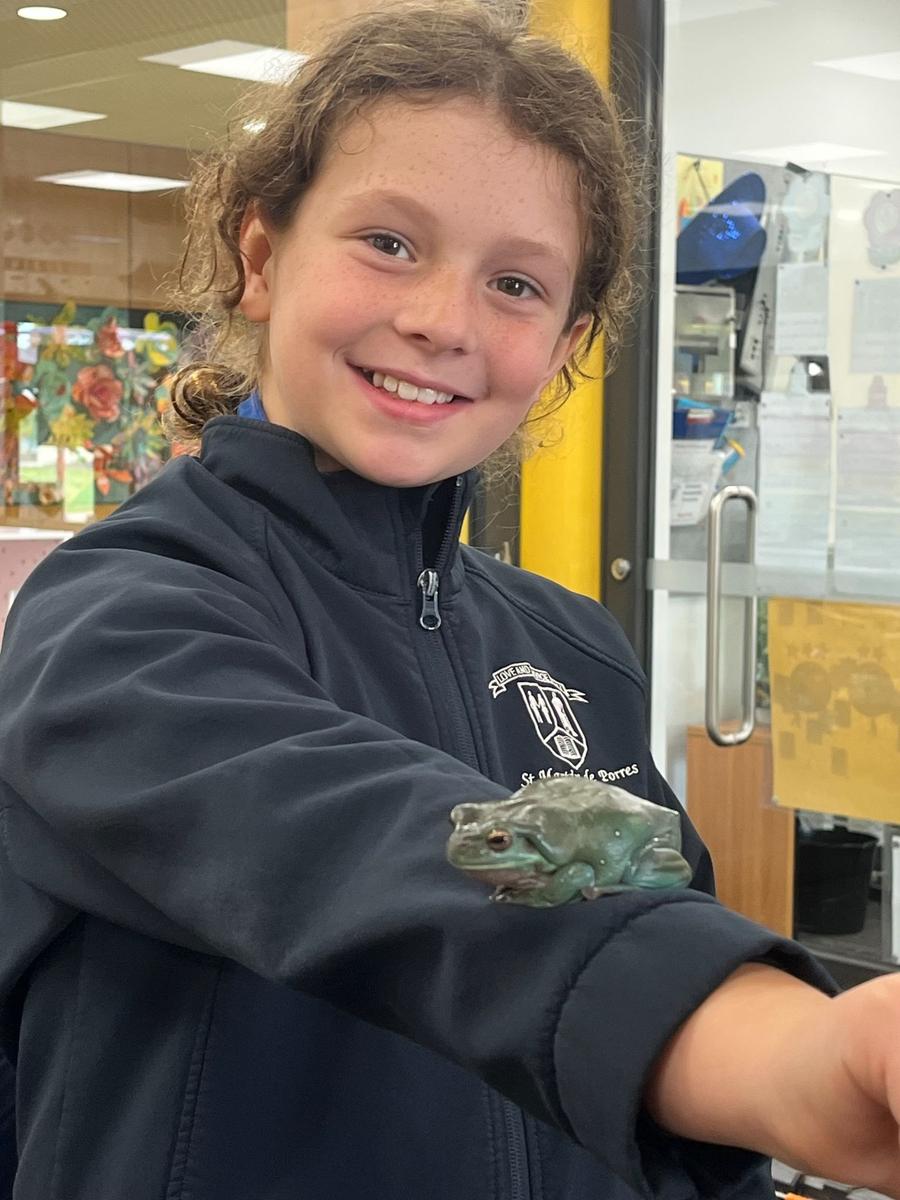
There was also an amphibian which was a green tree frog. They have sticky toe pads that help them climb on trees, they are also really agile enabling them to fall from quite a height and survive. An example of this is when they jumped from the ranger's hand for about a meter drop.
There also were some mammals like an echidna called Elton who loved to dig and was always making scratching noises inside his crate until he came out. His favourite food was ants, he would dig underground to find them and then gobble them up. Elton kept blowing snot bubbles from his nose, which is a good sign meaning that his nose is wet, indicating that he is healthy.
Some other mammals that are also marsupials like a pigmy possum a tiny marsupial that are pollinators which are an animal that carry the pollen from plants which helps plants make their fruits. Pigmy possums heart rate is 260bpm which is a lot for such a tiny creature. When you hold them it feels like they are vibrating because of their very fast heart rate. The other marsupial/mammal is a brush-tailed bettong. They are one of the only ground dwelling animals with a prehensile tail. They are critically endangered.
There were also 2 animals that weren't in those two categories which were the green tree frog and the tawny frogmouth. The Green tree frogs have sticky toe pads that help them climb on trees, they are also really agile enabling them to fall from quite a height and survive. An example of this is when they jumped from the ranger's hand for about a meter drop.
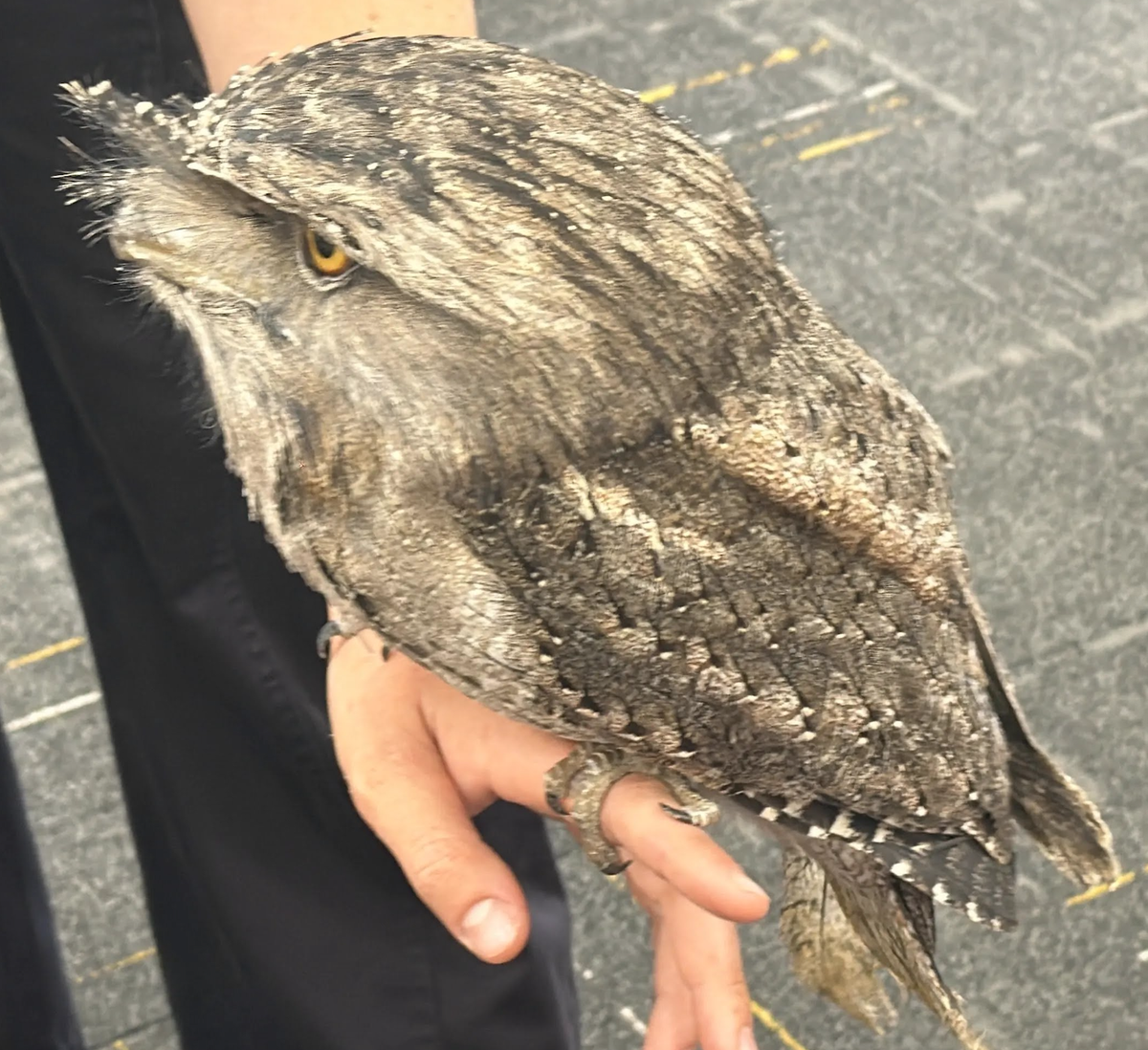
And the Tawny Frogmouth is nocturnal and can be found in most areas across Australia. They camouflage in with the trees looking like a dead tree branch! They have a wide flat beak unlike other owls.

Kathy Blythe
Learning and Teaching Leader
Sustainable News