Curriculum
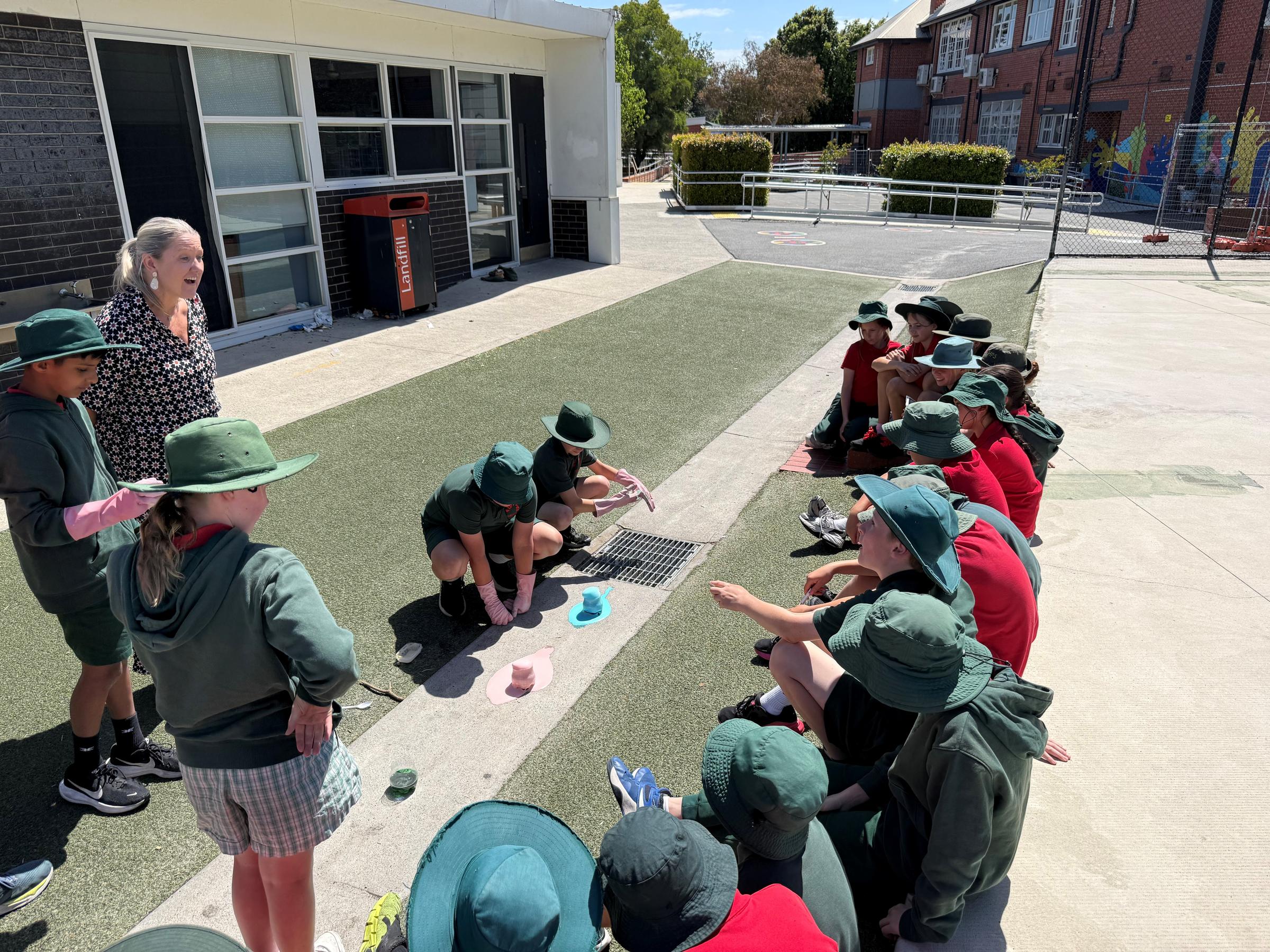
Cameron Azer | Assistant Principal Image: Grade 5 Science Experiment









 Hampton Primary School
Curriculum
Cameron Azer | Assistant Principal Image: Grade 5 Science Experiment
At times students can become overwhelmed when learning something new, whether it be solving a multi-step probmelm, writing a persuasive piece or learning a new sport skill. There are always times when the amount of information can simply feel like too much. Educational research helps explain why this happens through the concept known as Cognitive Load.
Cognitive load refers to the amount of information our brain can process at one time. When we are learning something new, we rely on our working memory, which has a limited capacity. If too much information is presented at once, learning can become difficult and students may feel confused, frustrated, or disengaged.
What does this look like in the classroom?
Teachers carefully sequence learning by breaking complex knowledge and skills into smaller, manageable steps. Rather than expecting students to learn everything at once, we provide explicit explanations, model new learning, and gradually increase the level of challenge as students build confidence and understanding.
For example:
These approaches reduce unnecessary cognitive load and allow students to focus on the most important aspects of the learning.
Why practice matters?
When students first learn a new skill, it requires considerable mental effort. Through practice, that skill becomes more automatic. This frees up working memory and enables students to tackle increasingly complex tasks.
Think about learning to ride a bicycle. At first, every movement requires conscious attention. With practice, balancing, steering and pedalling become automatic. The same principle applies to reading, writing and mathematics. This is one reason why students revisit important knowledge and skills throughout their learning. Repeated practice helps strengthen understanding and build long-term retention.
Learning something new is not always easy, and a level of challenge is both expected and important. However, when learning experiences are carefully designed and appropriately supported, students can experience success while continuing to grow. We are committed to using evidence-informed teaching practices that help every student develop the knowledge, skills and confidence needed to thrive. By carefully structuring learning and providing the right level of challenge and support, we aim to create classrooms where all students can achieve success.