
Mental Health & Wellbeing Students/Parents/Carers Support
Articles, Videos & Resources

Mental Health & Wellbeing Students/Parents/Carers Support
Articles, Videos & Resources

Mental Health and Wellbeing Update
Nikki Olsen | Mental Health and Wellbeing Leader | Ripponlea Primary School
This week’s focus: Sleep – supporting children’s learning and wellbeing
Getting enough sleep is essential for children’s physical health, emotional wellbeing, behaviour and learning. Sleep helps children concentrate, remember new information, regulate their emotions and manage the everyday demands of school.
Recently, I conducted a wellbeing survey across Years 1–6 at Ripponlea Primary School to better understand students’ experiences of school, friendships, learning confidence and wellbeing. One standout finding was the number of students reporting tiredness, late bedtimes or difficulties getting a good night’s sleep.
45.6% of students gave a less-favourable response to a question relating to sleep or tiredness.
What did our students tell us?
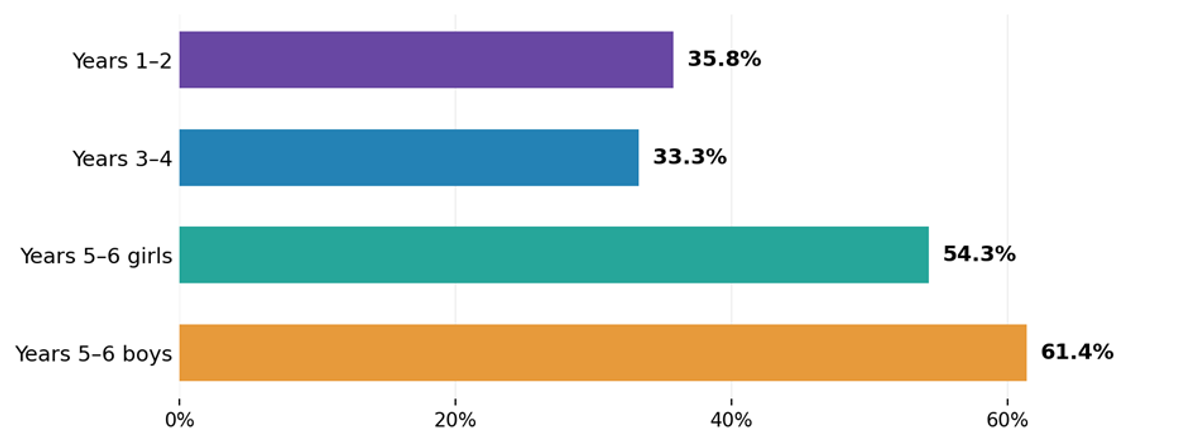
The graph shows the percentage giving a less-favourable response to a sleep- or tiredness-related question. Different groups answered different questions, so these figures are not directly comparable.
Years 1–2
Survey item: whether students consistently get a good night’s sleep before school. 35.8% reported that they do not consistently get a good night’s sleep.
Years 3–4
Survey item: going to bed late and feeling tired at school. 33.3% reported this concern. Among Year 4 students, 29.2% reported often or always staying up too late using screens.
Years 5–6 girls
Survey item: tiredness as something making school difficult. 54.3% identified tiredness or insufficient sleep as a concern. Additionally, 20.0% reported staying up later than planned because of iPad use.
Years 5–6 boys
Survey item: things that make looking forward to school difficult. 61.4% identified feeling tired.
Why is sleep so important?
Sleep is not simply a time when the body rests. During sleep, the brain processes information, consolidates memories and supports physical and emotional development. Adequate sleep is associated with better functioning in several important areas:
Learning and memory: Sleep helps children retain and organise new information and skills learned during the day.
Attention and concentration: Well-rested children are better able to focus, listen, follow instructions and complete classroom tasks.
Emotional regulation: Insufficient sleep can make frustration, disappointment and strong feelings harder to manage.
Mental health: Poor sleep is associated with anxiety, low mood and emotional difficulties. Worry and poor sleep can also reinforce one another.
Behaviour and friendships: Tiredness can affect impulse control, patience, conflict resolution and positive peer interactions.
Physical health: Sleep supports growth, immune function, energy and general health.
The American Academy of Sleep Medicine’s consensus statement links regularly obtaining sufficient sleep with improved attention, behaviour, learning, memory, emotional regulation and quality of life. These are associations and do not mean sleep is the only influence on learning or wellbeing.
How much sleep does your child need?
Australian guidelines recommend 9–11 hours of sleep per night for children aged 5–13 years. The guideline for children aged 3–5 years is 10–13 hours over 24 hours, so some five-year-olds may need more. The examples below assume a 7:00 am wake-up time and show when a child should be asleep, not simply in bed.
| Age | Recommended sleep | Example time to be asleep |
| 5–6 years | 9–11 hours; some five-year-olds may need 10–13 hours | 7:00–8:00 pm (11–12 hours) |
| 7–8 years | 9–11 hours | 8:00–9:00 pm (10–11 hours) |
| 9–10 years | 9–11 hours | 8:00–9:00 pm (10–11 hours) |
| 11–12 years | 9–11 hours | 8:00–9:00 pm (10–11 hours) |
These are examples aiming towards the middle or upper part of the recommended range; individual needs vary. If your child needs to be asleep by 9:00 pm, begin winding down about 30–60 minutes beforehand, or earlier if they need more time to settle.
How can parents help children develop healthy sleep habits?
1. Establish a predictable bedtime routine
Consistent routines help children anticipate sleep and give their bodies and minds time to slow down. Younger children may need more adult support, while older children can gradually take responsibility.
| Time | Example routine for an 8:00 pm sleep time |
| 7:00 pm | Screens off; devices charging outside the bedroom |
| 7:10 pm | Bath or shower, pyjamas and brushing teeth |
| 7:30 pm | Quiet reading, drawing or another relaxing activity |
| 7:45 pm | Cuddle, brief conversation, calming breathing |
| 8:00 pm | Lights out and ready for sleep |
2. Reduce screens before bedtime
Screens can interfere with sleep because bright light may delay melatonin release; stimulating games, videos and conversations can keep children alert; and “just one more” video or game can push bedtime later. Notifications and devices in bedrooms can also interrupt sleep.
Practical strategies:
Research generally finds an association between bedtime screen use and poorer sleep outcomes, although the strength of the relationship varies between studies and circumstances.
3. Help children settle emotionally
Bedtime is sometimes when worries about friendships, school or tomorrow become more noticeable. Rather than having a long problem-solving discussion after lights out, set aside a short time earlier in the evening to listen and help your child feel heard.
4. Support healthy habits during the day
Regular movement, outdoor play and morning daylight help support healthy sleep–wake rhythms. Keep wake-up times reasonably consistent, including weekends. Avoid caffeine-containing drinks and highly stimulating activities close to bedtime.
When might additional support help?
Occasional difficulties settling are common. Consider speaking with your GP if your child regularly takes a long time to fall asleep, wakes frequently, experiences significant bedtime anxiety, snores loudly, has breathing difficulties during sleep or remains very tired during the day despite having enough opportunity to sleep. Persistent difficulties may require assessment for sleep, emotional or other health concerns.
Useful evidence-based resources for families
A final message for families
Developing healthy sleep habits takes time, particularly when children are adjusting to new routines or busy schedules. Small, consistent changes can make a meaningful difference to their energy, emotional wellbeing and readiness to learn. Our survey highlights how important sleep and tiredness are for many students across the school.
If you have concerns about your child’s wellbeing, please feel free to reach out. Working together between home and school helps children feel settled, connected and ready to learn.
Nikki Olsen
Mental Health and Wellbeing Leader
Ripponlea Primary School