
Pastoral Wellbeing

Attendance at St. Kilian’s
🏆 Class Attendance Champions!
Every day counts, and over the past two weeks our classes have continued working towards our goal of 95% attendance or better!
A huge congratulations to our top three classes for attendance:
🥇 34B – 96.1% ⭐ 🥈 5JW – 96.0% ⭐ 🥉 2EM – 94.8%
A special congratulations to 34B and 5JW, who have both climbed into our top three this fortnight and achieved our 95% attendance goal! 2EM also made a great jump from 93.3% last fortnight to 94.8%, putting them very close to our target.
Our goal is to keep working towards 95% attendance or better — because being at school means more opportunities to learn, grow, connect and have fun with our friends.
There’s plenty of movement on our leaderboard — which class will take out the top spot next fortnight? 👀🏆
Class | Average attendance | Students at 100% |
0HE | 94.3% | 18 |
1GF | 94.0% | 10 |
1PW | 91.1% | 10 |
2EM | 94.8% | 16 |
34A | 89.4% | 15 |
34B | 96.1% ⭐ | 14 |
34C | 94.0% | 14 |
5JW | 96.0% ⭐ | 14 |
5LT | 92.3% | 12 |
6RM | 82.1% | 5 |
6SH | 93.3% | 9 |
The class figures are calculated from the individual attendance percentages in the report.
🌟 100% Attendance – We Beat Our Record!
WOW! Last fortnight we celebrated 123 students achieving 100% attendance and challenged ourselves to beat it.
Challenge accepted — this fortnight, 136 students achieved 100% attendance! 🎉👏
That's 13 more students who were here every day, ready to learn, connect with their friends and make the most of every opportunity at school.
We know that every day at school matters, and it is fantastic to see more than half of our students achieving 100% attendance across the fortnight.
A huge congratulations to all 136 of our attendance superstars! ⭐
We beat 123… can we beat 136 next fortnight? 💪
How Families Can Support Great Attendance
There are many simple ways families can help children attend school regularly and get the most out of every learning opportunity:
- Aim for every day. Unless your child is unwell, every school day provides valuable learning and social opportunities.
- Book appointments outside school hours wherever possible. If this isn't possible, consider returning your child to school before or after the appointment rather than keeping them home for the entire day.
- Plan family holidays during school holiday periods. Extended absences during term time can have a significant impact on learning and classroom routines.
- Establish consistent routines by ensuring children have a regular bedtime, morning routine and arrive at school on time each day.
- Talk positively about school and encourage your child to attend even on days when they may be feeling a little reluctant.
Keeping Us Informed
If your child is going to be absent, arrive late or leave early, please let us know as soon as possible.
Where possible, we ask families to:
- Notify your child's classroom teacher in advance of planned absences such as medical appointments, specialist visits, family events or holidays.
- Record the absence through PAM (or follow the school's usual absence notification process).
- Provide supporting information where appropriate so we can best support your child's learning and wellbeing.
Early communication helps us plan for your child's learning, ensure accurate attendance records and, most importantly, know that every child is safe and accounted for.
Thank you for partnering with us to make attendance a shared priority. Together, we can ensure every child has the best opportunity to learn, grow and flourish.
Seeking Assistance?
If your family is finding it difficult to get to school regularly, please know that we are here to help. You’re encouraged to speak with your child’s classroom teacher or reach out to our Wellbeing Team – Mrs. Antonowicz, Mrs. Maher, Mr. Teggelove or Mr. Podosky – for support.
We can assist in a variety of ways, including:
- Creating a positive morning routine to reduce stress before school
- Helping your child feel safe and connected at school
- Offering support for separation anxiety or school-based worries
- Adjusting your child’s transition into the classroom
- Working with families to make a plan that suits your situation
Please don’t hesitate to reach out – we’re here to work with you and your child every step of the way.
If you know that your child won’t be attending school, please contact the office and let them know that your child will be away!
A New Front Entrance for St Kilian’s!
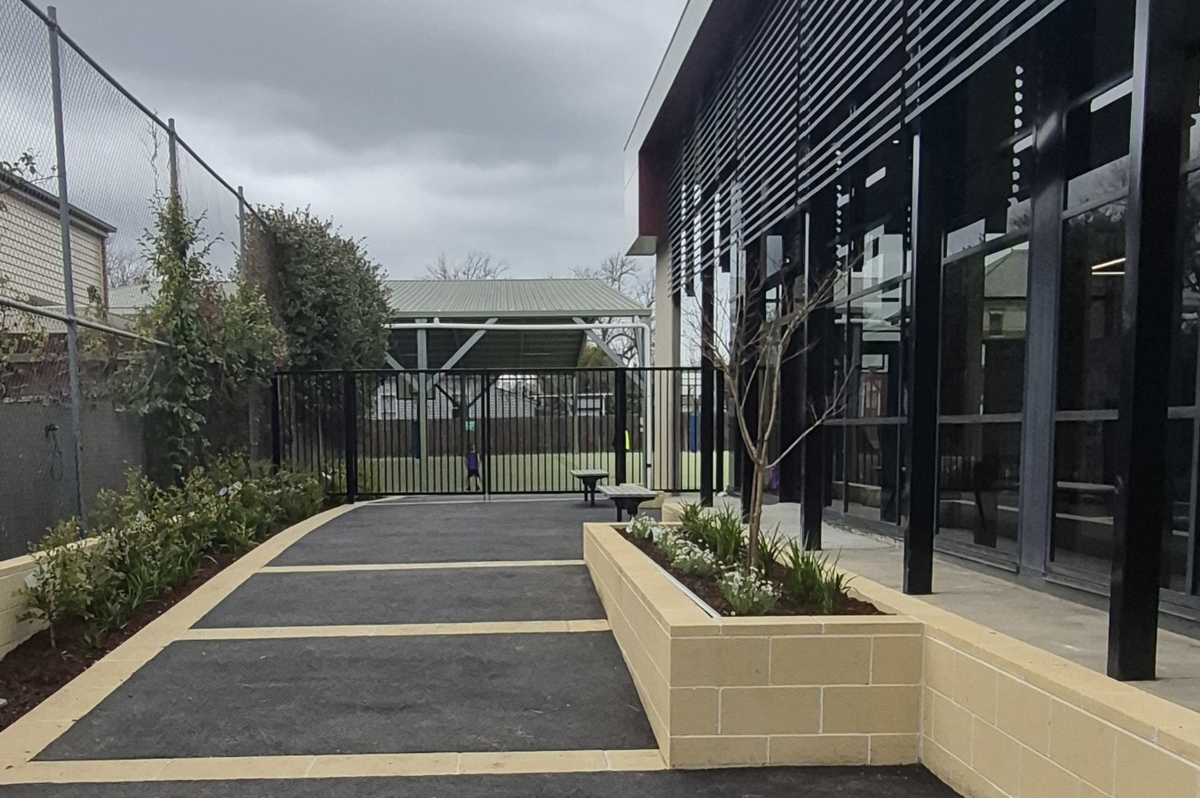
We are very excited to finally be opening and using our new front entrance on Havelock Street! After watching this part of our school take shape over recent months, it is wonderful to see our new entrance come to life and provide a welcoming new entry point for our students, families and visitors.
With the new entrance comes a few changes to our morning and afternoon routines. Teachers will be explicitly teaching these routines with students to help everyone become familiar with the changes.
From now on:
- Havelock Street: Students arriving or leaving via Havelock Street will use our new front entrance.
- Morning arrival: School supervision begins at 8:30am. Students arriving before a staff member is on duty will wait with their bag at the edge of the basketball court.
- Havelock Street pick-up: Students will wait in the designated area against the grey wall until they can see that their family has arrived.
- McCrae Street pick-up: Students leaving via McCrae Street will wait inside the school grounds in the asphalt area near the Hall gate until their family arrives.
- Road safety: Students needing to cross Havelock Street are expected to use the pedestrian crossing rather than crossing between parked cars.
We have also developed a social story with photos of the new entrance and waiting areas to help students understand and practise these new routines. Families can find the social story on the St Kilian’s Facebook page, ask their child’s teacher for a copy, or access it using the link below.
View the Arriving to and Leaving School Social Story
We’re incredibly excited to have this part of our redevelopment complete and can’t wait to welcome our students and families through our new front entrance!
Our Classroom Routines – Supporting Calm, Ready Learners
To help create calm, focused and respectful learning spaces, all classes use three shared classroom routines. These routines support students to transition smoothly, know what is expected of them, and feel confident and safe at school.
Ready in 5

What this routine teaches: Ready in 5 helps students learn self-regulation, organisation and focus. It supports children to pause, prepare and be ready to learn together.
How the routine works: When “Ready in 5” is called, students have a short countdown to:
- Sit or stand calmly
- Face the teacher
- Have hands still and voices off
- Be ready to listen and learn
How families can help at home:
- Practise short countdowns for transitions (e.g. “Ready in 5 for dinner” or “Ready in 5 to leave the house”)
- Encourage children to stop, look and listen when given a cue
- Praise effort rather than speed: “You got yourself ready so calmly”
Classroom Entry
What this routine teaches: This routine helps students develop respect for learning spaces, independence and calm transitions.
How the routine works: Students line up outside the classroom and enter calmly when invited, moving to their seat or learning space quietly and ready to begin.
How families can help at home:
- Encourage calm transitions between activities
- Talk about the importance of entering spaces respectfully (e.g. libraries, shops, places of worship)
- Reinforce the idea that how we enter a space sets the tone for what comes next
Classroom Exit
What this routine teaches: Classroom exit supports safety, responsibility and respect for others.
How the routine works: Students pack up, stand behind their chair or line up, and wait to be dismissed calmly by the teacher before leaving the room.
How families can help at home:
- Practise waiting calmly before leaving the house or moving to the next activity
- Encourage children to finish one task before starting another
- Model calm exits when leaving places together
These shared routines help create consistent expectations across the school and give students clear, predictable structures that support learning and wellbeing. Thank you for reinforcing these routines at home — your support makes a big difference.