At JSA, our 3 values of Respect, Empathy and Inclusion are key to addressing the importance of all us modelling respectful relationships across the school. Unfortunately, this is not easily acheived and does not always occur in our schools.
In the 2025 ATOSS Student Survey data,
- 16% (55,156) of students in government schools said that hey had experienced racism in that term
- 20% (69,158) of studens experienced racism in the last year
Therefore, all Victorian government schools share the responsibility to lead and implement the Preventing and Addressing Racism in Schools Policy. This policy outlines 3 key actions:
Simply, racism is not tolerated in any government school.
A copy of the Preventing and Addressing Racism in Schools Policy is saved to our school Website.
What is racism?
There are different forms of racism that can take place. They include:
- interpersonal racism – racism between individuals (students, staff, families, carers and members of the school community). This can occur in person or online
- systemic racism – structures, systems, policies, processes and practices that are inherently biased
- unconscious bias – a common type of racism where learned assumptions, beliefs or attitudes about people or groups of people are held without awareness
- racial or religious vilification– a behaviour that incites hatred, serious contempt, revulsion or severe ridicule for a person or group of people, because of their race or religion
- racist bullying– repeated, deliberate and ongoing behaviour that belittles, mocks, intimidates, vilifies or shames someone because of their physical appearance, ethnic background, religious or cultural practices, and/or the way they talk or dress
- cultural tokenism – occurs when aspects of cultures are acknowledged superficially or because we have to. Even when well-intentioned, cultural tokenism oversimplifies cultural differences and at its worst can exacerbate existing stereotypes and prejudices about certain cultural groups
- colourism – the dislike, unfair treatment or assumptions made about a person or group of people because of the tone of their skin. Colourism can include prejudice against people with darker or lighter skin tones. For example, this is particularly important for First Nations students who may be told they are not Aboriginal because they have fair skin.
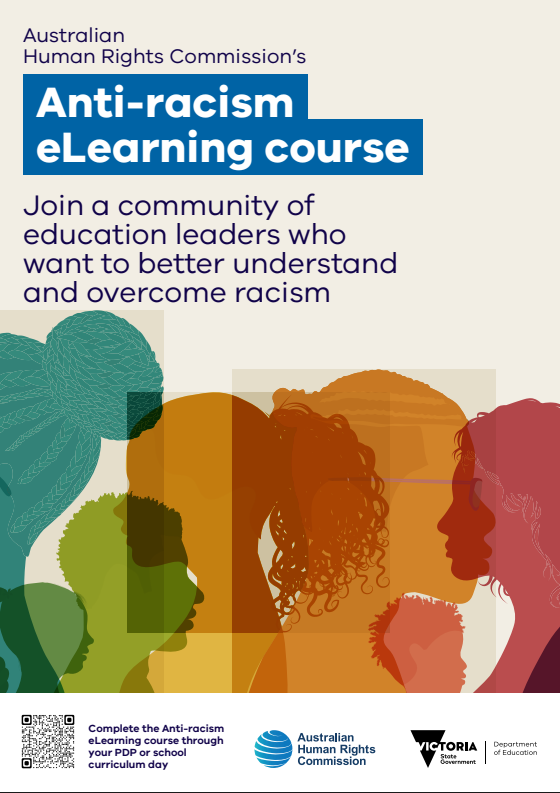
To further our understnading of racism, the department recommends an Anti-racism eLearning course, Australian Human Rights Commission – the course increases participants’ understanding of race in the Australian context and teaches skills to address and respond to racism. Please refer to the poster details below.
In our next issue, we will provide further information around how we can 'build capability' to prevent, respond to and report situations involving racism at school here.