
Curriculum
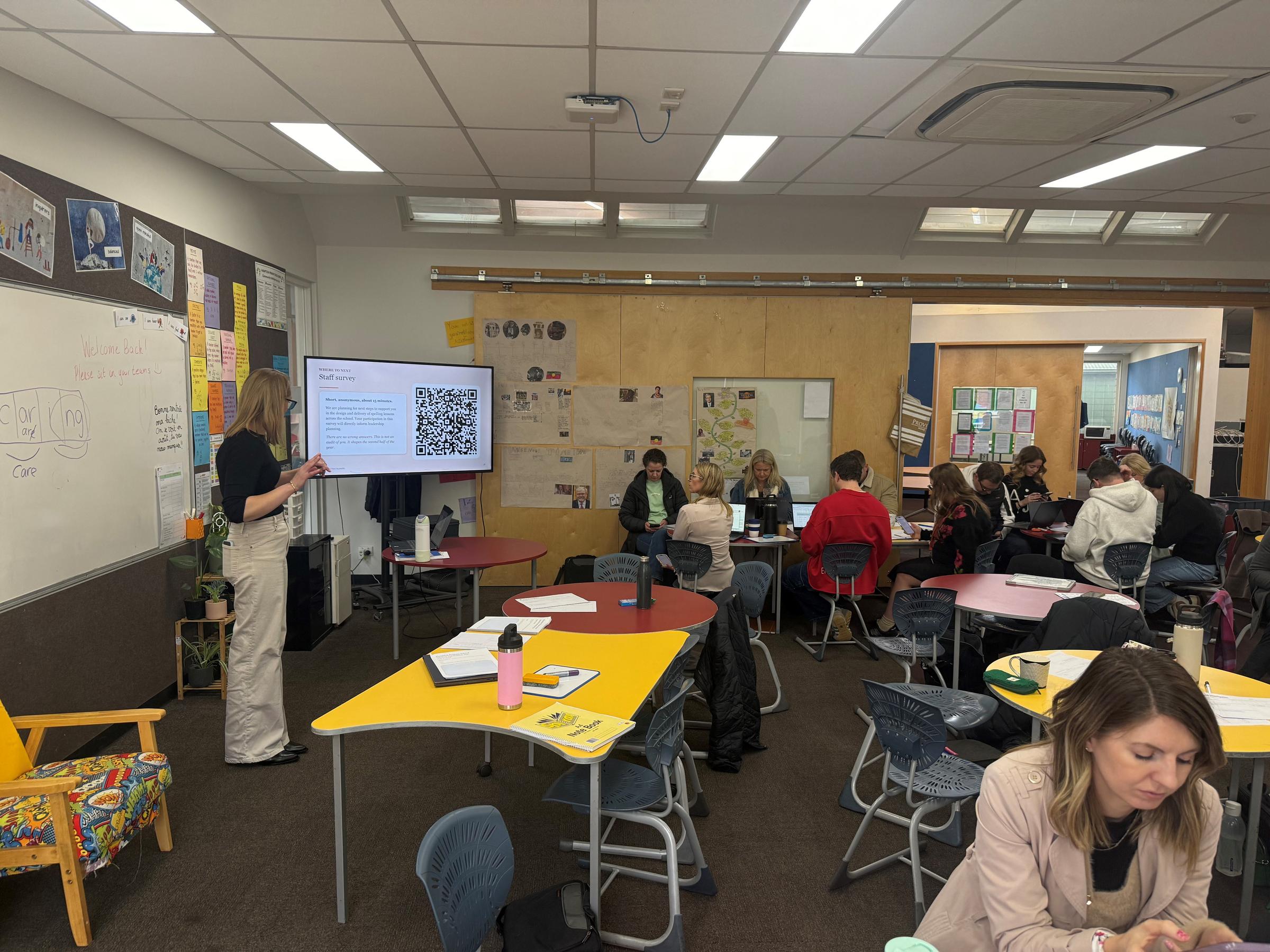
Cameron Azer | Assistant Principal Image: Literacy Curriculum Day
Curriculum
Cameron Azer | Assistant Principal Image: Literacy Curriculum Day
Our recent curriculum day brought staff together for a deep exploration of literacy, building a shared understanding of how students become successful readers, writers and spellers. The staff engaged with educational consultant - Jo Griffin from the Knowledge Nest. Jo has worked for over 20 years in the education system as a school leader in Tasmanian Education system, La Trobe Univeristy and OCHRE. She is known for her evidence informed, human-centred approach to instructional improvement, supporting schools and systems to navigate the significant shifts currently shaping education.
Staff initially investigated how background knowledge and vocabulary are essential drivers of reading comprehension, drawing on research around schema, long-term memory, the Simple View of Reading and Scarborough's Reading Rope. Through reflection activities, discussion and collaborative learning, staff considered what knowledge is most valuable for our learners and why building broad background knowledge and academic vocabulary matters more than ever in today's society.
Staff then shifted focus to orthographic mapping, which is the process which words become permanently stored in long-term memory and can be recognised and spelled automatically. We examined how phonology, morphology, vocabulary and background knowledge work together to create these lasting word representations. Using examples and practical activities, participants explored how successful decoding, understanding word meanings and recognising meaningful word parts help students map words for everyday use.
A strong emphasis throughout the day was on translating research into classroom practice. Staff experienced a range of explicit and responsive teaching routines, including partner discussions, mini whiteboards, checks for understanding and active participation strategies. These approaches modelled how engagement and effective instruction can work together to maximise learning. The day highlighted the importance of a coherent, structured approach to literacy instruction, grounded in evidence and connected to authentic classroom contexts. By strengthening our collective understanding of knowledge building, orthographic mapping and explicit word study, we continue to refine our practice and improve outcomes for all learners.