Inquiry Cycle 3
Big Idea 1: We Can Travel by Water
By Foundies
Inquiry Cycle 3
Big Idea 1: We Can Travel by Water
By Foundies
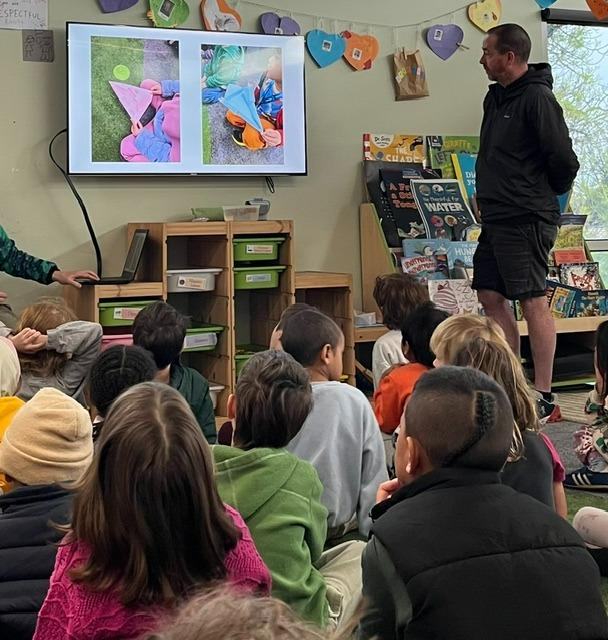
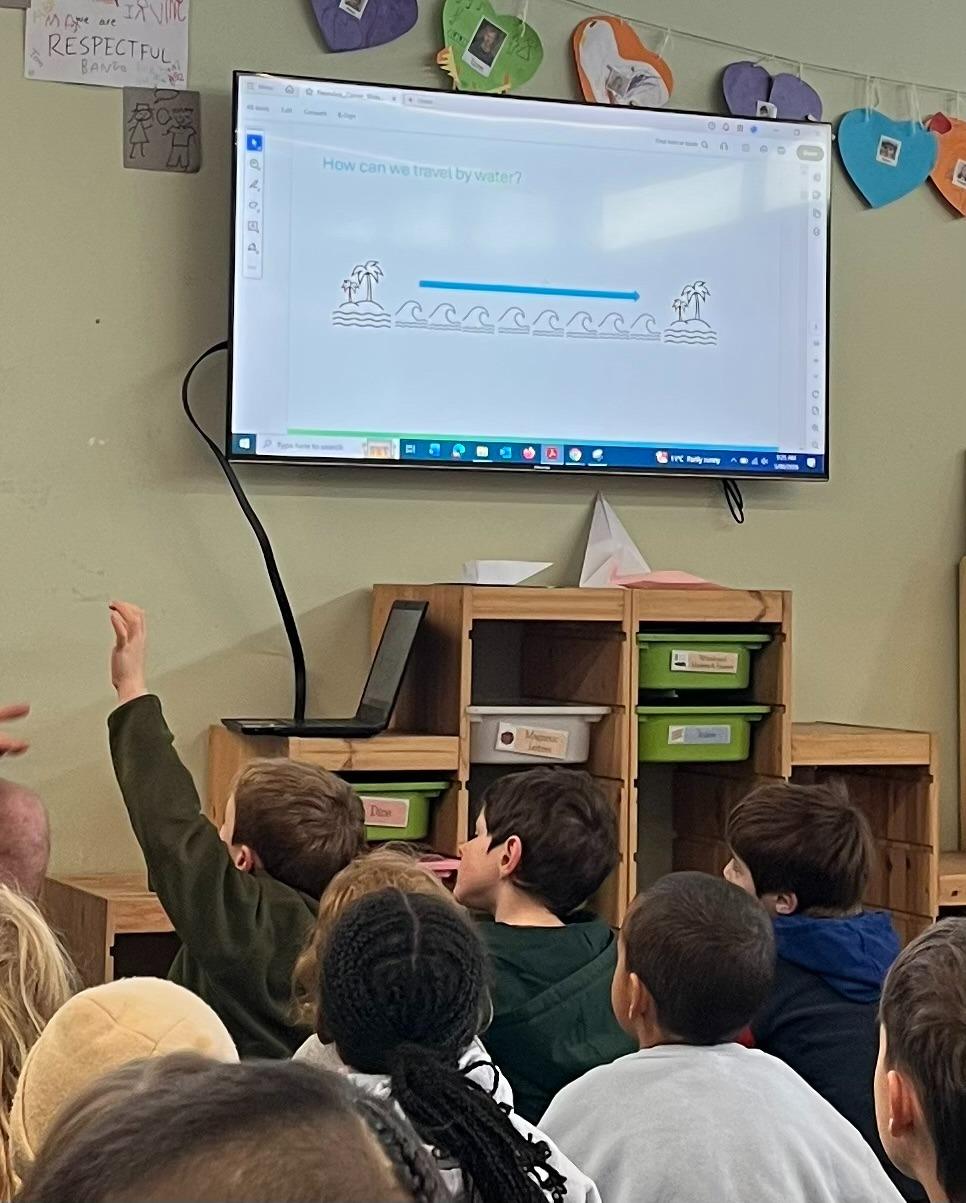
Foundie students enjoyed a fantastic presentation about watercraft, buoyancy, and Torres Strait Islander canoe culture.
We explored different types of watercraft, including rafts, row boats, dinghies and canoes.
We discussed why people travel on water, including visiting family and friends, trading food and tools, attending ceremonies and travelling between islands.
We learned about buoyancy and investigated why some objects float while others sink. Students explored how the shape of an object, the materials used and the air inside it can help it float.
Water travel is important for island communities because it allows people to:
Trade and swap food, tools and materials
Visit family and friends
Attend ceremonies and special events
Travel between islands
Maintain connections between communities
Raft – simple to build, slow, but useful for carrying lots of things.
Row boat – uses paddles.
Gondola-style boat – uses a pole to push the boat along.
Dinghy – used in the Torres Strait Islands; lightweight, strong and can have an outboard motor.
Canoe – traditionally made from a large tree and designed for travelling between islands.
The key science idea is buoyancy.
Something can float because:
It is less dense than the water.
Air trapped inside can help it float.
The shape of an object affects how much water it displaces.
The cork experiment was a great example: adding corks helped the container stay afloat.
Traditional canoes require enormous effort and teamwork:
A large tree was cut down.
Around 40–60 people could help drag the tree to the river.
Stone tools such as a stone adze were used to carve out the inside.
Because the Torres Strait Islands don't have the same tall trees needed for these canoes, some large canoes were obtained from Papua New Guinea.
Plants could be used to make rope.
Coconuts and bamboo could be used to carry water.
Important features include:
Bow – the front of the canoe.
Stern – the back.
Outrigger – provides stability and helps prevent the canoe from tipping.
Sails – help the canoe travel with the wind.
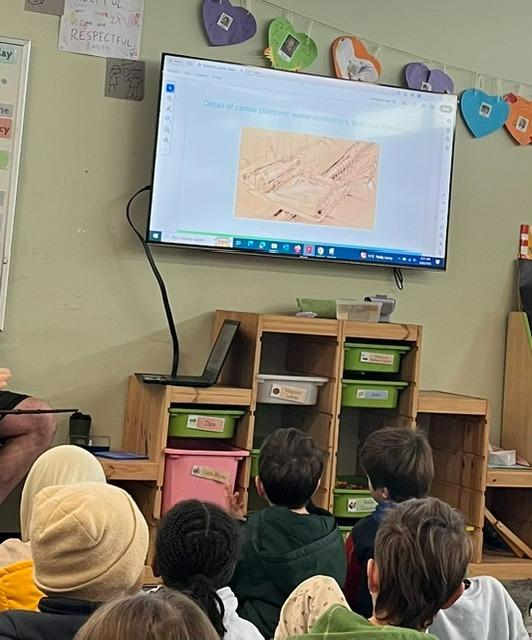
Platform – provides space for people, food and equipment.
Scoop/shell – used to remove water if it gets inside.
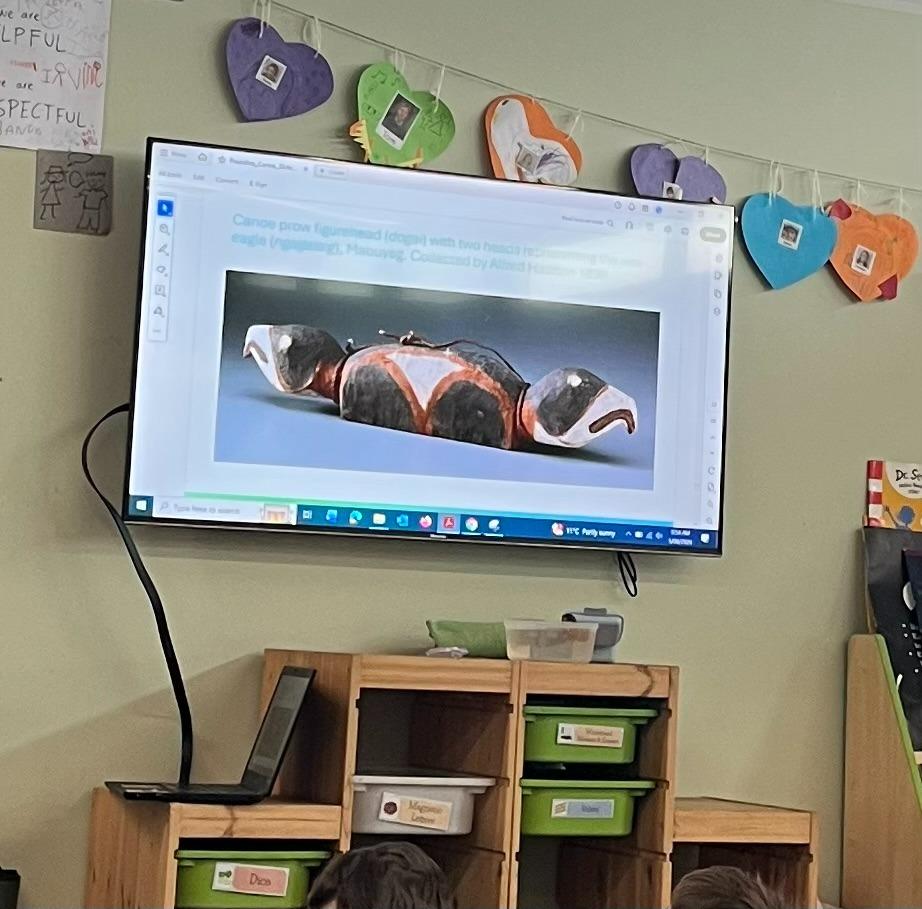
Decorations and carvings – some canoes have special carvings, including sea-eagle designs or shapes resembling heads.
Flags – can be used to communicate between canoes.
Torres Strait Islander peoples developed sophisticated ways of navigating the sea. Stars could be used as a map, helping people understand where they were and where they needed to travel.
The TSI flag also connects strongly to the sea:
Blue – water
Green – vegetation
Black – people
White – sand/islands and navigation symbolism
Travelling by water also meant understanding the environment, including dangers such as sharks and crocodiles. Canoes needed to be stable, strong and suitable for carrying people and important supplies.
After the presentation we began our great design challenge:
Students are investigating: What makes a good watercraft?