Wellbeing Update
2026 Wellbeing priority
A current priority at SKiPPS is to embed a consistent, whole-school approach to wellbeing, inclusion and engagement. This involves building a collective understanding of evidence-based practice in wellbeing, grounded in trauma-informed practice and Behaviour Science.
Two key initiatives as part of our school focus are Mental Health in Primary School (MHiPS) and School-wide Positive Behaviour Support (SWPBS).
Mental Health in Primary Schools (MHiPS)
This week, staff explored how depression and anxiety can present in primary school students. Our role as educators can be invaluable in identifying early signs to ensure appropriate supports can be put in place.
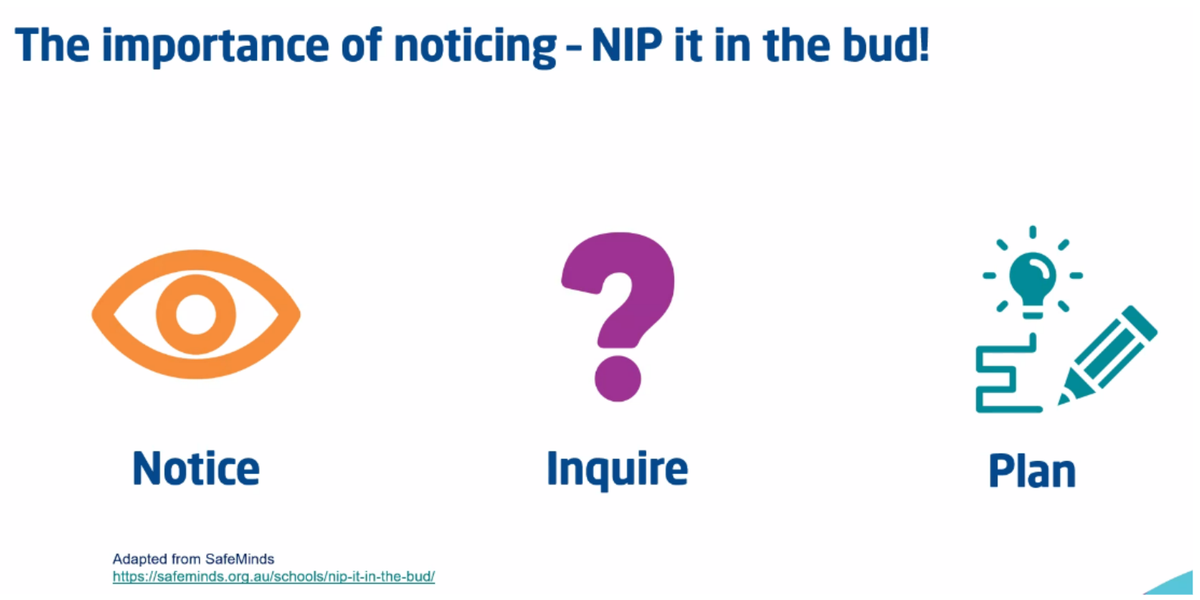
The Royal Children's Hospital conducted a survey in 2023 involving 2,113 parents and 1,525 children aged 8-13 years to assess the current state of children's mental health in Australia. Some key findings included that, among Australian children aged 8 to 13 years:
- 1 in 6 (16%) have symptoms of anxiety
- 1 in 4 (23%) have symptoms of depression
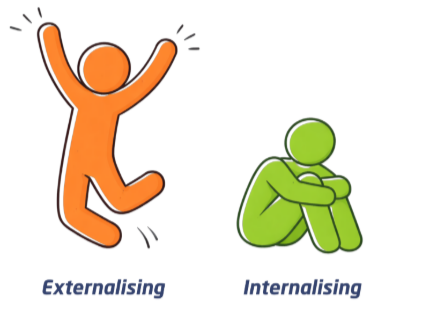
Importantly, some students respond by internalising, while others externalise:
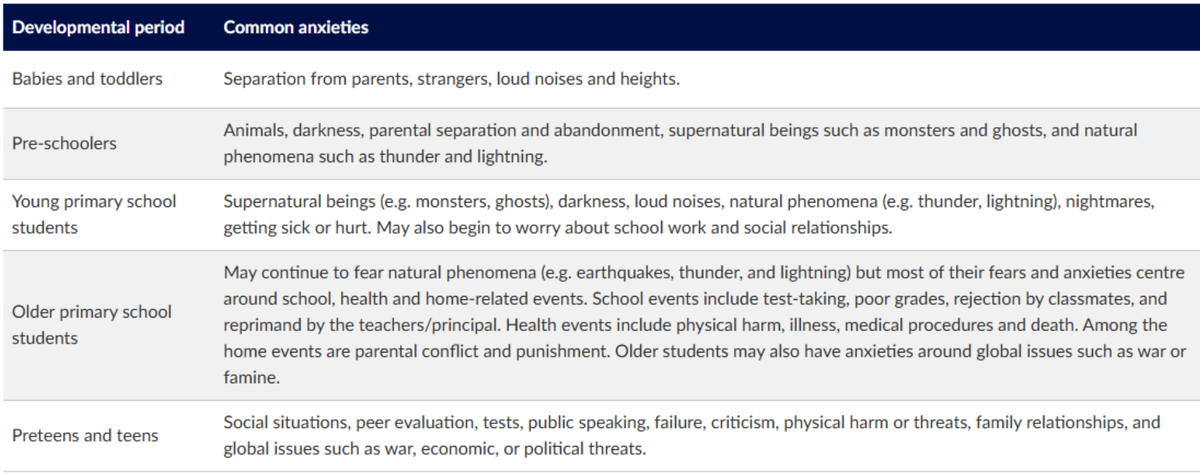
It’s important to first understand age-appropriate fear, worries and anxieties at different developmental periods:
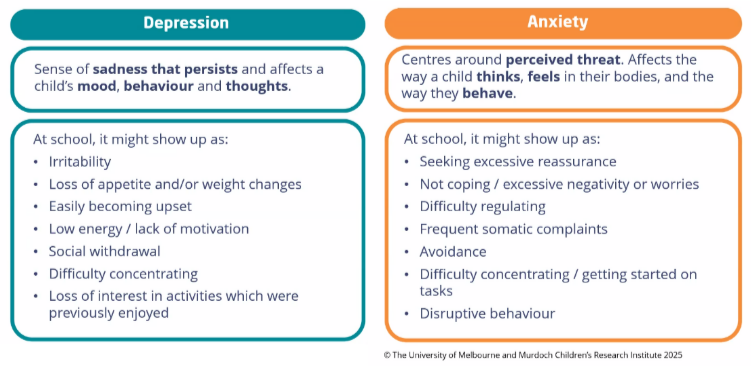
However, if mood or symptoms become persistent over time and across settings, or they start to impair daily functioning, adults can activate appropriate care pathways. Symptoms to monitor include:
More information about MHiPS can be found here: https://www.vic.gov.au/mental-health-primary-schools.
School-wide Positive Behaviour Support (SWPBS)
We’re now well and truly into the process of becoming a SWPBS school! On the first day of Term 3, staff completed a day of professional learning with Anthony King, our SWPBS coach from the Student Wellbeing and Engagement Division at the Department of Education.
SWPBS is a Tier 1 initiative, meaning it provides the universal foundation for proactive, primary prevention strategies for all students, staff, and settings across the school. As with academic learning, learning about expected behaviours requires a multi-tiered approach to ensure every child receives the adjustments they need to grow and meet behavioural expectations.
SWPBS is built around 7 essential features, all necessary to teach expected behaviours and improve student outcomes:
- Common philosophy and purpose - common language, vision and experience
- Leadership - leadership and school-wide support
- Clarifying expected behaviour - clearly defined set of expected behaviours
- Teaching expected behaviour - procedures for teaching and practising expected behaviour
- Acknowledging expected behaviour - continuum of procedures for acknowledging expected behaviours
- Discouraging inappropriate behaviour - continuum of procedures for responding to behaviour errors
- Ongoing monitoring - procedures for record keeping, decision-making and ongoing monitoring (data)
As a staff, we’ve engaged in a significant amount of learning around best practice, in order to define the SKiPPS core beliefs about behaviour. These core beliefs will guide how we teach, acknowledge and respond to the behaviours of our students:
SKiPPS Core Beliefs
At St Kilda Park Primary School, we believe that every student can learn, succeed and thrive when they experience strong relationships, clear expectations and adults who work together with consistency, care and purpose.
Everything we do to support student behaviour is guided by six shared beliefs about children, learning and the role of adults.
1. Relationships come first. Positive relationships are the foundation of learning, wellbeing and behaviour. We cultivate trust, mutual respect and unconditional positive regard in every interaction so that every student feels known, valued and connected.
2. Behaviour is a form of communication. We believe behaviour has a purpose, so we respond to behaviour errors with curiosity. We seek to understand the student’s needs, skills or circumstances so we can provide the right support.
3. Behaviour is learned, and therefore behaviour can be taught. Positive behaviour develops through explicit teaching, modelling, practice, feedback and encouragement. We believe every student can learn and strengthen the skills needed to feel connected and successful at school.
4. Consistency creates safety and success. When expectations are clear, predictable and consistently applied, students can thrive. We work together to create calm, structured learning environments with shared routines and high expectations.
5. Positive behaviour is everyone's responsibility. Every member of our school community plays a role in supporting student success, so we work collaboratively with students, colleagues, families and external professionals and agencies. We use a consistent and multi-tiered approach to ensure every student receives the support they need to learn, belong and thrive.
6. Adults lead by example. Students learn as much from what we do as from what we say. We model our school values of Pride, Kindness, Creativity and Perseverance through our words, actions and relationships, demonstrating emotional regulation, respect and a commitment to continuous growth. |
More information about SWPBS can be found here:
https://www.vic.gov.au/school-wide-positive-behaviour-support
You can also read previous wellbeing updates in these newsletters:
Newsletter #10 - https://newsletters.naavi.com/i/MnLwR2N
Newsletter #12 - https://newsletters.naavi.com/i/JeEbXvJ
Newsletter #16 - https://newsletters.naavi.com/i/NVv6bKN
Louisa Di Pietro
Learning Specialist - Mental Health and Wellbeing