
What's Happening in the Junior School
Prep
What’s Happening in Prep in August
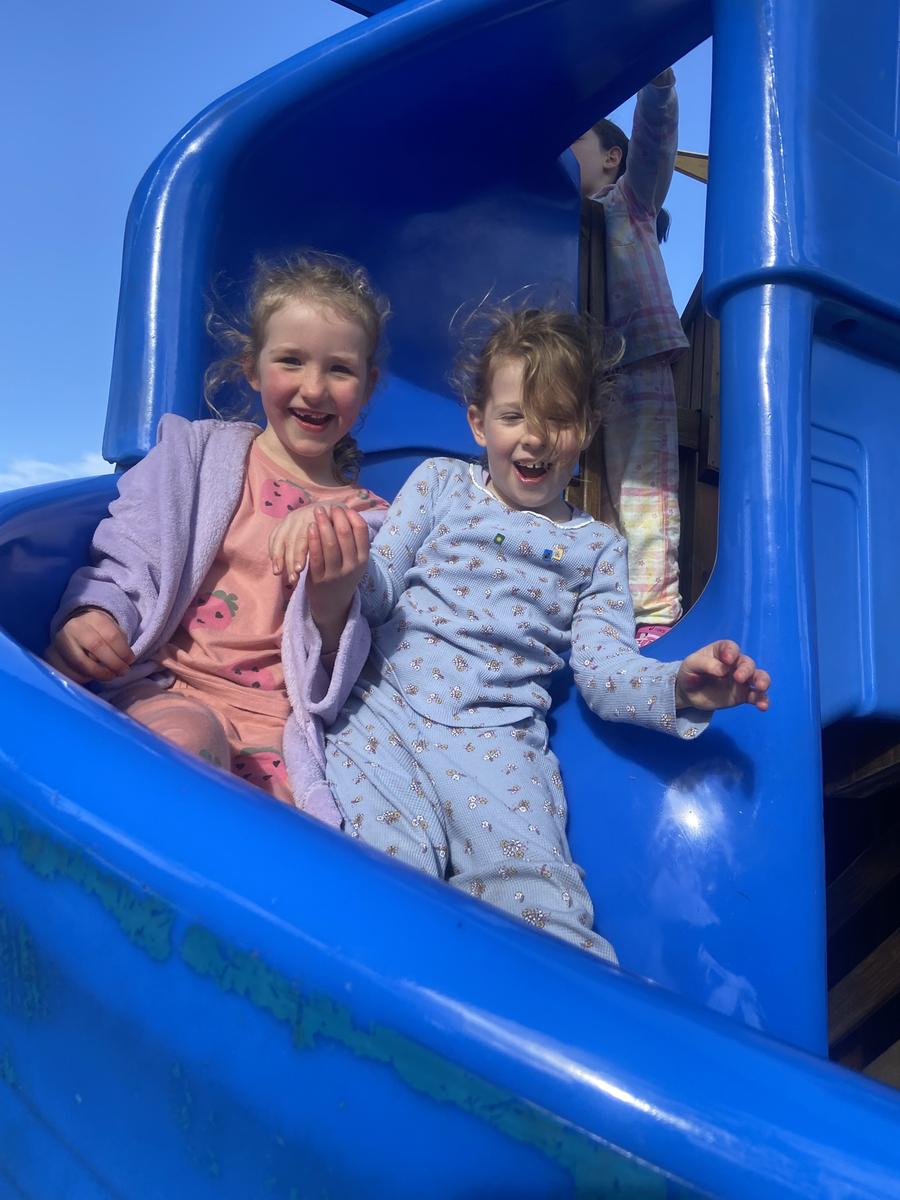
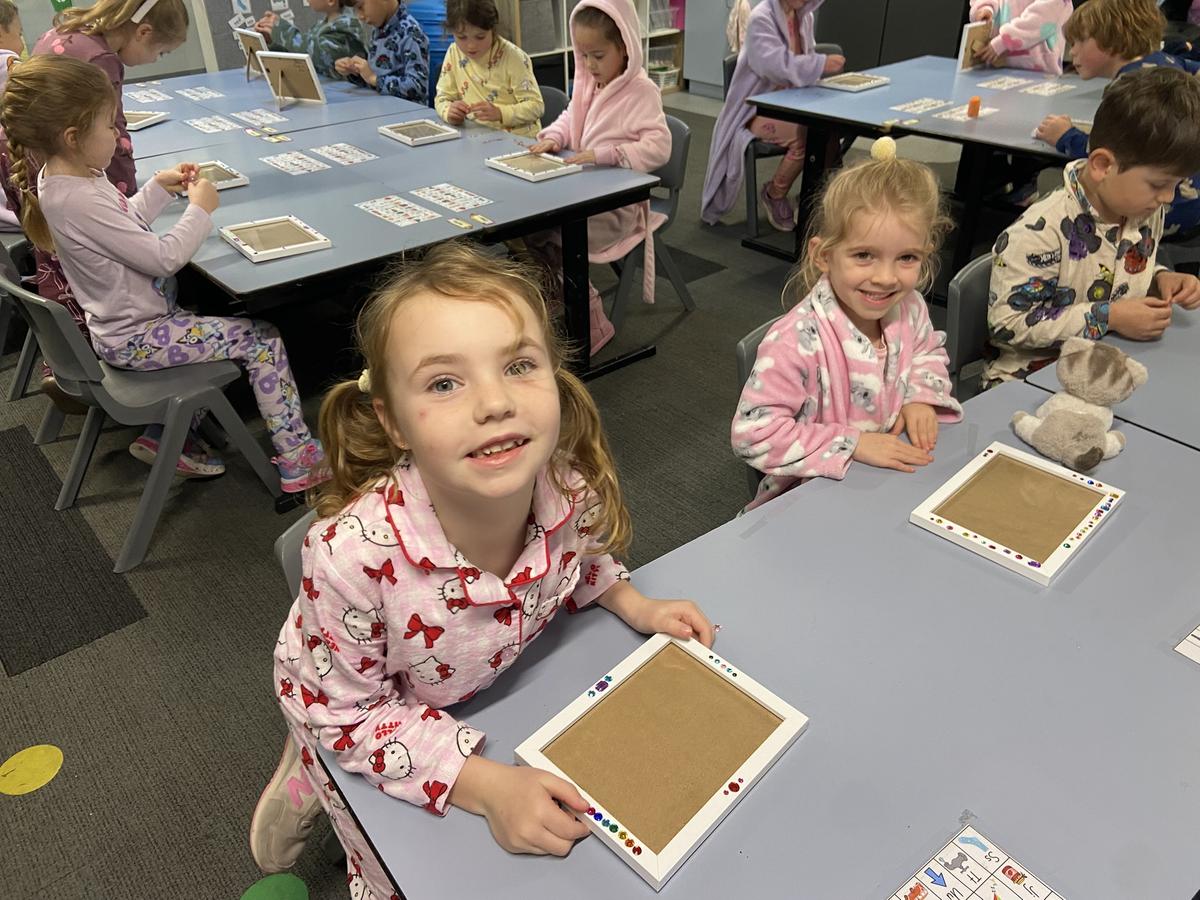
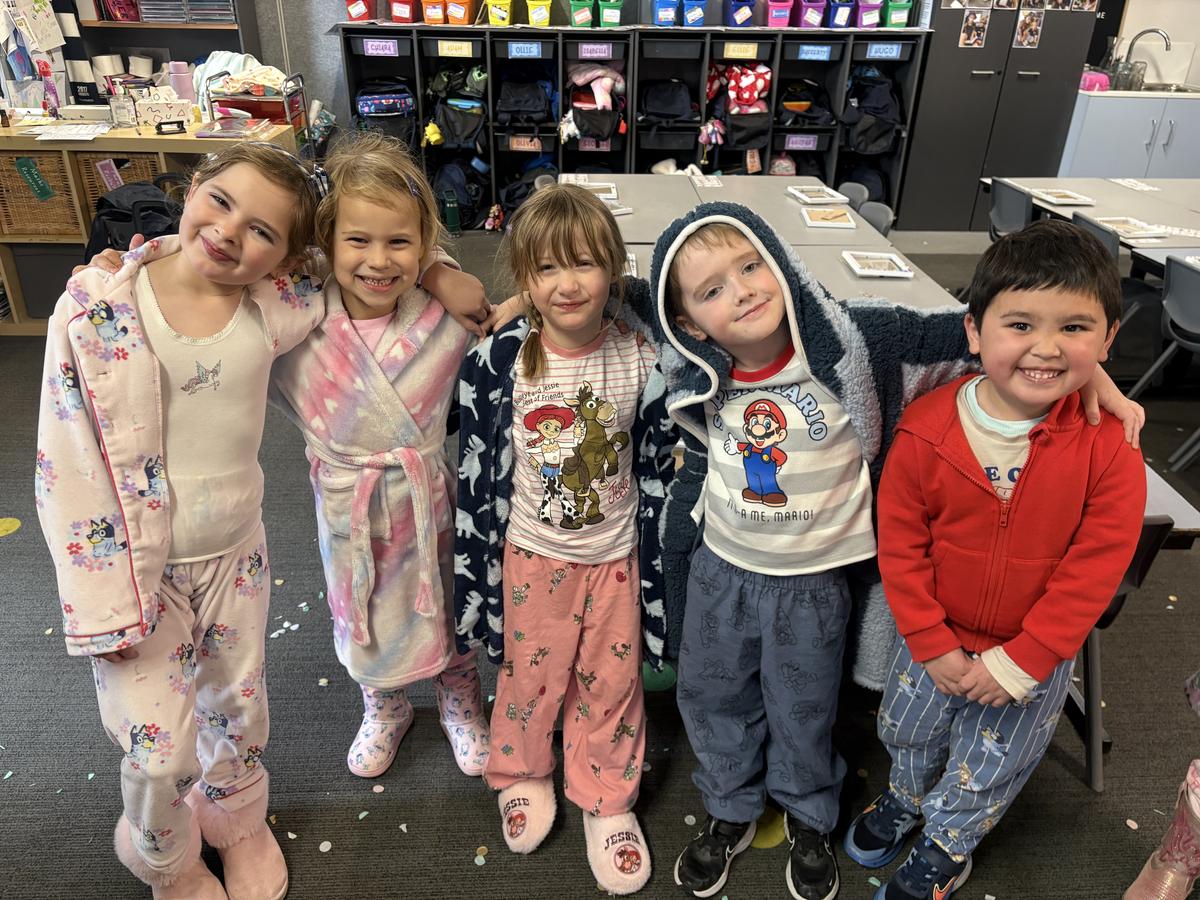
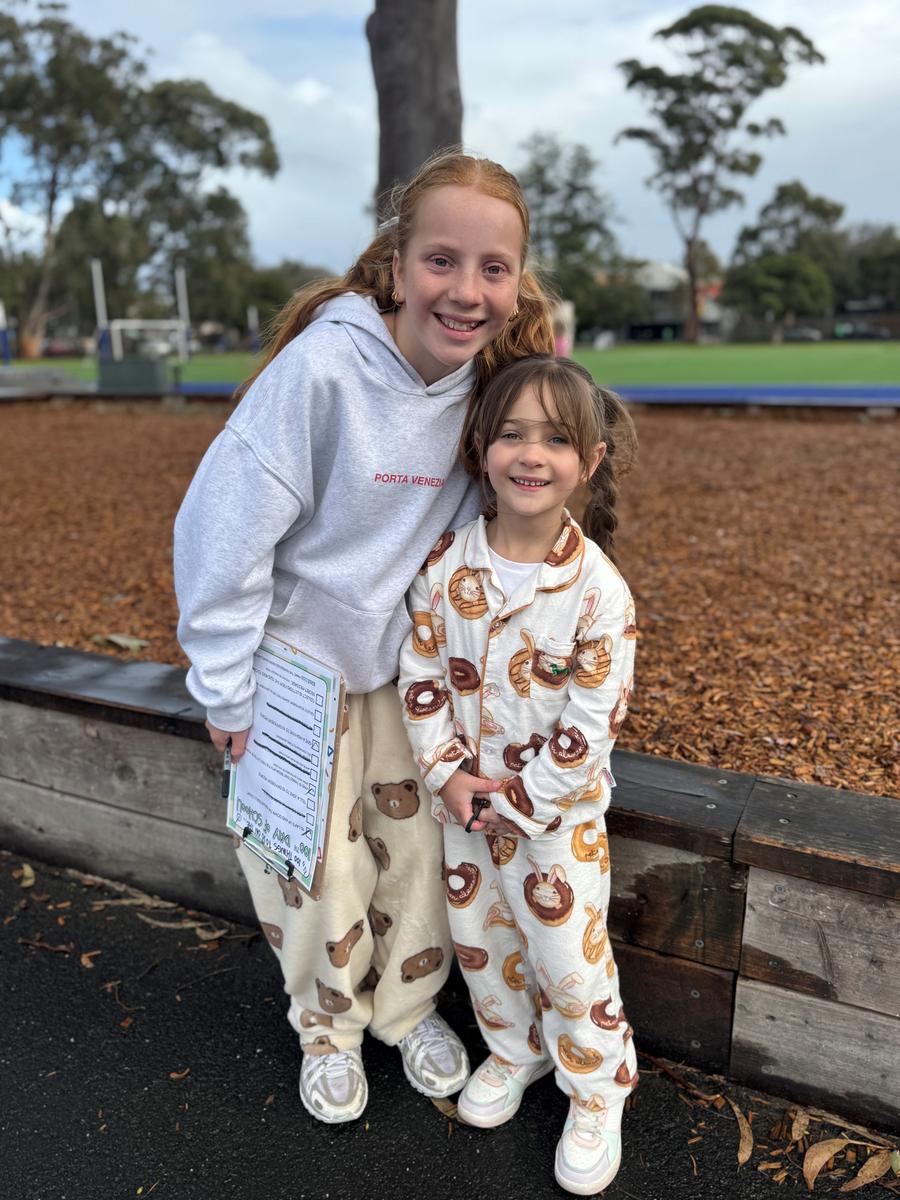
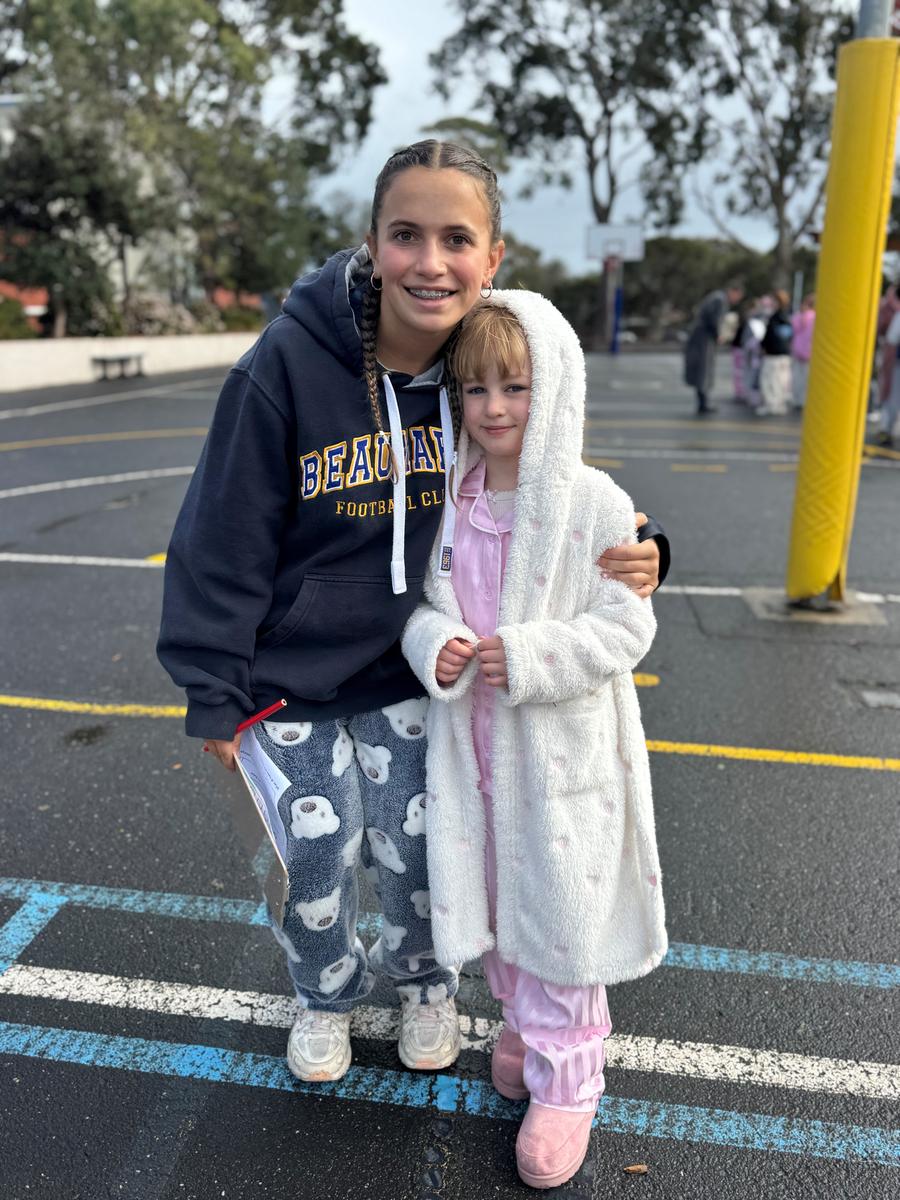
What a fantastic day we had celebrating the Prep’s 100th day at school! To celebrate this milestone we decorated photo frames, completed a ‘100 things’ scavenger hunt with our buddies, ate pizza for lunch and made a medal to mark the achievement. The teachers could not be prouder of all the Preps. We can’t wait for the next 100 days!
This term, we have also begun learning about animals and how they thrive and survive in their environments. We can't wait for our excursion to Moonlit Sanctuary next week, where we will discover even more about the amazing animals that live there!
Wellbeing
- NAIDOC week
- Persistence and Growth Mindset
Zones of regulation
Literacy
- Practising CVC, CCVC, CVCC words
- Identifying the diagraph /ph/ phone
- Identifying the diagraph /wh/ wheel
- Identifying the diagraph /ng/ sing
- Identifying the diagraph /nk/ sink, sank, sunk
- Reviewing diagraphs – ck, sh, th and ch
- Identifying superhero e. a_e (safe), i_e (pine),
- Using dotted thirds to form letters correctly
- Identifying the difference between fiction and non-fiction
Writing a sentence to inform
Maths
- Identifying the attributes of length
- Directly comparing the length of two objects
- Directly comparing the height of two objects
- Ordering objects based on direct comparison
- Identifying the attributes of mass
- Direct comparison of mass using hefting
- Direct comparison of mass using balance scales
- Predicting and checking mass
- Identifying the attribute of capacity
- Directly comparing capacity
- Comparing capacity by pouring the same amount
- Predicting and checking capacity
Knowledge Unit
Focus: Science
Big question: How do living things grow and change?
- What is a living thing?
- What do living things need to survive?
- What are some features of animals and plants?
Specialist
Please find below a timetable of when your child/rens class will attend specialist.
PC | PH | PR | PZ | |
| Performing Arts | Wednesday | Monday | Monday | Tuesday |
| Art | Monday | Tuesday | Tuesday | Monday |
| P.E | Monday | Tuesday | Tuesday | Monday |
| Japanese | Tuesday | Monday | Monday | Tuesday |
Homework
Each week, your child/ren will bring home a blue reading pouch (satchel). Inside, you will find;
- Three decodable readers
- One picture storybook labelled Classroom Library.
- A green “Decoding Detective/ Word Wizard” workbook
Sound pack cards.
These resources are designed to support your child’s reading practice at home. Please keep all reading materials stored in the reading pouch. Reading pouches should be returned to school each Friday so students can swap their books for the following week, and additional learning materials can be added.
Please note that at this early stage of the year, students are not expected to independently decode every word in their reading texts. At this point, they may focus on identifying individual sounds and recognising the “heart words” that have been explicitly taught in class (you can find these words within the Word Wizard section of the green workbook) Thank you for supporting your child’s reading journey at home!
Reminders
- Thursday 13th August - Moonlit Sanctuary Excursion
- Monday 17th August – Friday 21st August – Book Fair
- Monday 24th August – Book Week Performance
- Friday 28th August – Book Week Dress Up Day
Year 1
What’s Happening in Year 1 in August
Wellbeing
Welcome back to Term 3! We are looking forward to a great term of learning in Wellbeing. In the month of August, students will continue to explore different types of self-regulating tools – sensory supports, tools for calming and thinking tools. Students will identify that tools will be individualized and different strategies will work for different situations and feelings. Over the term, students will practice using the tools when they are in a regulated state so they become routine and automatic when they need to use them in a dysregulated state.
Literacy
The Year 1 students will be working through the UFLI structured, synthetic phonics program. During this time, they will focus on developing their phonics knowledge, decoding skills, and confidence as early readers. Last month, the focus was on two syllable words with open and closed syllable patterns and the spelling graphemes – tch and dge which are used to spell the /ch/ and /j/ sound after a short vowel sound. In the month of August, students will be learning about long vowel words that end in 2 consonants such as ld, nd, lt and st; Mr Y the Cheeky Guy which steals the sounds of I and e at the end of a word and words ending in consonant le. They will begin applying these skills to their reading and writing. We will continue with our fluency reading, focusing on reading with accuracy, reading rates, and using expression when reading. Students continue working on practising our short letters in handwriting, focusing on correctly forming the letters u and v in both uppercase and lowercase.
Language and Literature
Our second mentor text for Term 3 will be Jetty Jumping by Andrea Rowe. Students will use the text to:
- Identify and sequence key events in the narrative
- Develop their understanding of how connectives can be used to organise ideas clearly in writing and use the time connectives first, suddenly, after that, and luckily, in their own work
- Identify and explore how to write compound sentences by using the conjunction ‘and’
- Explore both the literal and inferred meanings within the story
- Develop an understanding of how the illustrations contribute to the overall meaning of the text
Explore the text-to-self connections, with a focus on facing fears and being brave
Our grammar focus will be expanding simple sentences with adjectives. E.g. I went down a slippery slide. I climbed a tall, green tree.
Maths
In Mathematics this month, students have continued to deepen their understanding of the concepts of sharing and grouping. They have been using a variety of concrete materials to represent their thinking and broaden their understanding of this concept; counters, unifix blocks etc. Students have been learning how to share collections equally, recognise the number of groups, and describe what makes a group equal. They have also been learning how to use an array to organise equal groups within a collection. An array is a way of arranging objects in equal rows and columns. It makes collections easier to count. The students have used this knowledge to solve and answer every day mathematical problems.
Knowledge Unit
As part of our science unit students will be investigating what happens to materials when they are heated and cooled. They will observe how frozen objects change over time. Students will then be exploring the three states of matter (solids, liquids and gases) through hands on activities. We will be conducting two experiments; making jelly and balloon blow up!
Specialist Timetables
1BM:
- Tuesday: Performing Arts and Japanese
- Wednesday: PE and Art
1C:
- Tuesday: Performing Arts and Japanese
- Wednesday: PE and Art
1M:
- Monday: Performing Arts
- Tuesday: PE and Art
- Wednesday: Japanese
1MC:
- Monday: Performing Arts
- Tuesday: PE and Art
Wednesday: Japanese
Reminders:
Fruit Snack
Every morning at 9.55am students will have a fruit snack. You child must have their fruit/veggie snack in a separate smaller container to their lunch.
Take Home Reading
Please make sure you child brings their reading pouch with their three readers on Thursdays. Students should be reading every night for 15-20 minutes. It is important for students to read their take home readers multiple times to build fluency. Students will also take home a book from the classroom library. This will be a rich literature text and can be read by you to your child.
Science materials
For an upcoming science experiment this term we are looking for donations of any empty small plastic soft drink or water bottles (under 600 mL). Please ensure they are clean and dry with labels removed. If you have any bottles at home, please send them into school.

Year 2
What’s Happening in Year 2 in August
The Year 2’s have loved learning about multiplication and division in our Maths learning this fortnight. We have been creating arrays to help us solve different problems. They are so clever we have even started solving some worded problems! We have also enjoyed learning about the different features of plants and planting our very own bean seeds. Over the next few weeks we are going to observe the changes we notice as our plant baby grows!
Over the next month, the Year 2 students will be learning to:
Wellbeing
- Identify safe and positive ways to manage anger
- Recognise problems and practice respectful solutions
- Work through challenges using safe and thoughtful choices
Collaborate with others using respectful communication and sharing decision-making
Phonics
- Review previously taught graphemes
- Read and write words with prefix: dis-
- Writing and reading words with the doubling rule when adding: - ed, -ing, -er, -est
- Spelling rule: y to –ies
Spelling rule: drop the e
Literacy
- Answer comprehension questions about our Mentor Texts ‘Walking in Gagudju Country’ and ‘The Gentle Genius of Trees’.
- Building new vocabulary from our mentor texts.
- Writing sentences with interesting verbs.
- Writing sentences with fronted adverbial phrases
- Using commas in a list
- Identifying the structure of an informative writing piece.
Writing a topic sentence, supporting details and a conclusion for our own informative writing piece.
Maths
- Solving problems using sharing
- Solving division problems using equal grouping and partitioning
- Naming, identifying and describing two-dimensional shapes
- Identifying parallel lines
- Identifying and sorting regular and irregular polygons
- Creating, manipulating and rotating two-dimensional shapes and exploring patterns
- Naming, identifying, describing and sorting three-dimensional shapes
- Problems solving with two-dimensional and three-dimensional objects
Knowledge Unit
This term, the Year 2 students are studying Biological Science. We are exploring the Big Question:
What do plants need to grow and thrive?
This month we will be:
- Identifying the stages of a lifecycle of plants.
- Observing our own plant grow.
- Identifying how seeds move to new places.
The adaptations of plants
Homework
Your child will continue to swap their take-home books each Thursday. They will bring home three decodable texts. We strongly encourage students to reread these texts multiple times across the week as this is an important way novice readers develop automaticity and reading fluency.
Students will also continue to bring home a classroom library textthat can be shared together.
Reminders:
- Year 2 Mad About Science ‘Plant Power’ Incursion: Thursday 20th of August