Learning & Teaching
Reading in Years 3 and 4 – Building Confident Readers
Reading is an important part of learning in Years 3 and 4. As students become more independent readers, the focus moves beyond simply reading the words on the page. Students are developing the skills needed to understand, interpret and discuss what they read.
In line with the Victorian Curriculum 2.0, our Year 3 and 4 students are developing their ability to:
- read a range of fiction and non-fiction texts with increasing fluency and accuracy
- use phonics and word knowledge to decode increasingly complex and unfamiliar words
- recognise the purpose and structure of different types of texts
- identify key ideas and important information
- locate and explain literal information that is directly stated in a text
- make inferences by combining clues from the text with their own knowledge
- make connections between ideas presented in different parts of a text
- develop their understanding of new and increasingly sophisticated vocabulary
- explain how words, images and language features contribute to meaning
- discuss characters, settings, events and information
- express and support their opinions and responses to texts.
Year 3 Reading Focus
By the end of Year 3, students are expected to read increasingly complex texts containing varied sentence structures, punctuation and vocabulary. Students work towards confidently identifying both literal and implied meaning, connecting ideas from different parts of a text and using appropriate strategies to monitor their understanding while reading.
Year 4 Reading Focus
During Year 4, students build on these skills by exploring a wider range of texts and considering how text structure, vocabulary, images and language choices influence the reader. Students develop greater confidence in explaining both literal and implied meanings, connecting ideas across texts, and responding to others' viewpoints.
How Families Can Help at Home
Regular reading at home continues to make an important contribution to reading development. Encourage your child to read for 15–20 minutes each day from a variety of texts, including novels, picture books, magazines, information books and appropriate online texts.
After reading, try asking questions such as:
“What was the main idea?”
“What happened and why?”
“How do you know the character was feeling that way?”
“What clues in the text helped you work that out?”
“What does this word mean in this sentence?”
“What do you think the author wants us to understand?”
“What might happen next? What evidence supports your prediction?”
The most valuable conversations about reading often begin with “How do you know?” Asking children to explain their thinking encourages them to return to the text, locate evidence and develop deeper comprehension.
By working together at school and at home, we can support our Year 3 and 4 students to become increasingly fluent, thoughtful and confident readers.
Mathletics
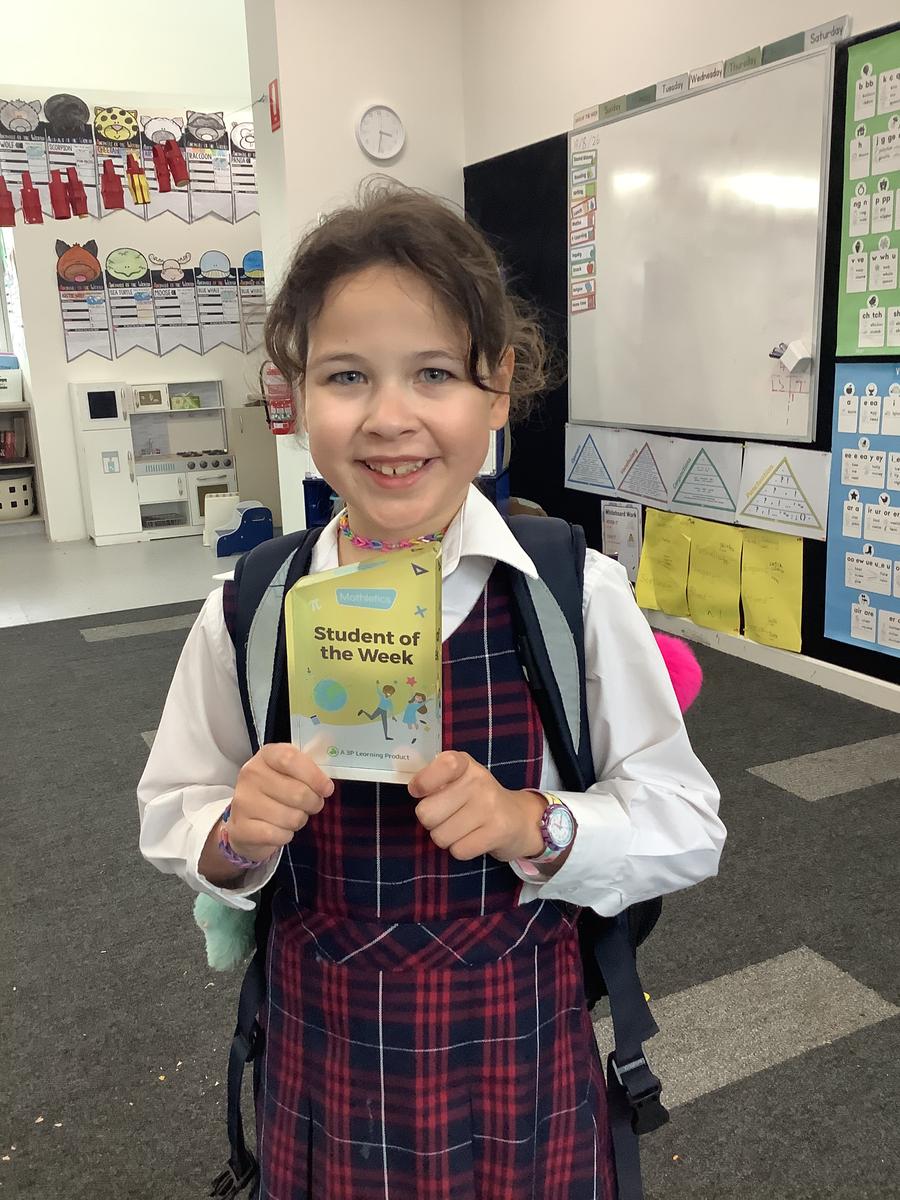
Congratulations to Federica Spina 3/4MS, who has received the Student of the Week award for Mathletics. Having four weeks of certificates to hand out at assembly, Fede achieved 5 certificates during this time, progressing through all the Gold ones! Well done, Fede, and keep up your great efforts!