
Student Wellbeing
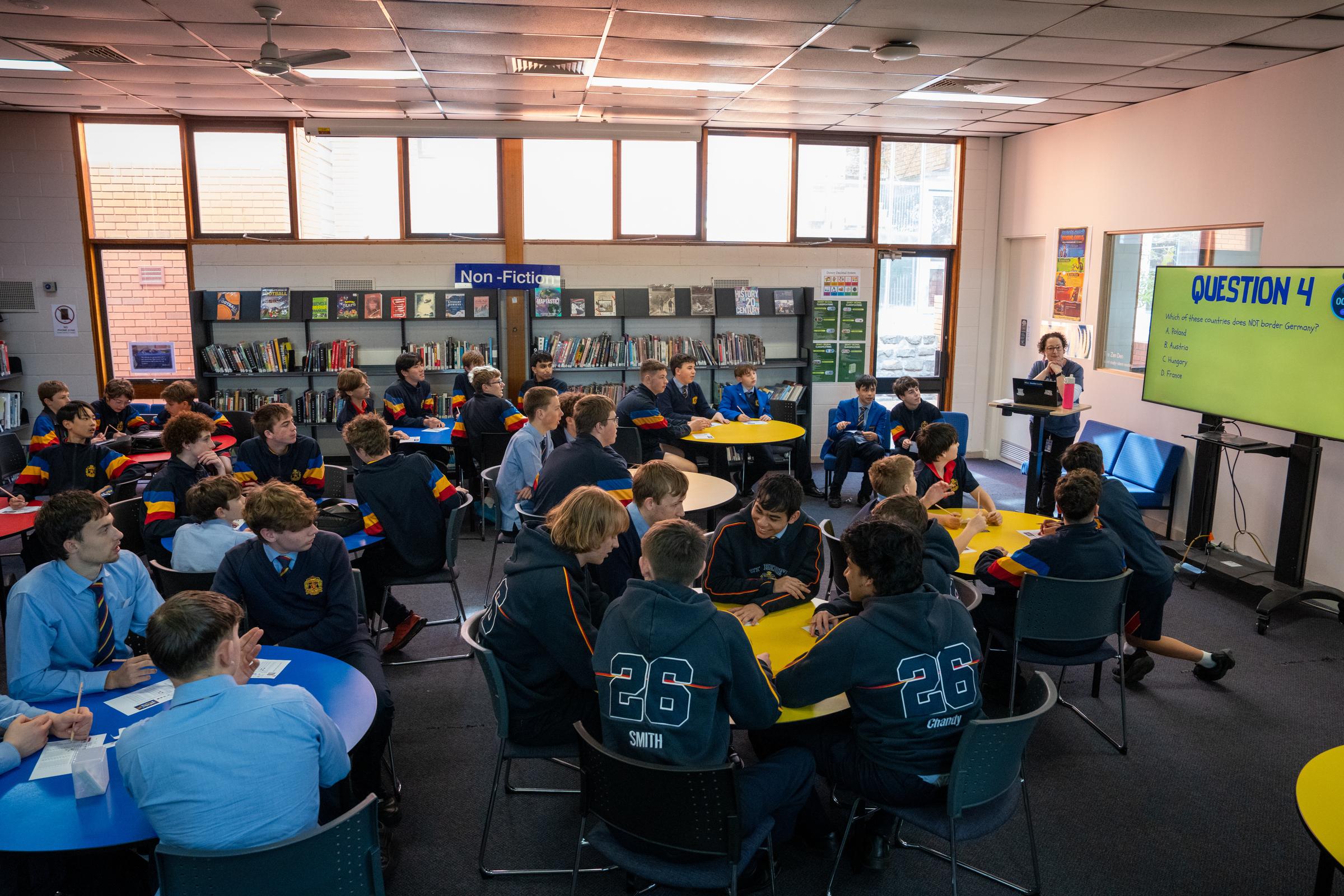
Friendship, Conflict and Bullying During Adolescence
Friendships are one of the most important (and sometimes challenging) parts of adolescence. During these years, friendship groups naturally change as young people develop new interests, identities and social connections. A student may move between groups, make new friends or grow apart from someone they were once very close to.
While these changes are a normal part of growing up, they can feel significant and sometimes overwhelming for young people.
Learning how to navigate friendships and relationships is an important part of wellbeing. Our approach at St Bede's College is grounded in our commitment to the care, safety and wellbeing of every student, and our Catholic values of dignity, compassion, justice and reconciliation.
Conflict or bullying?
It is important to understand that not every friendship difficulty is bullying. The College's Student Bullying Policy defines bullying as repeated, intentional and harmful behaviour directed towards another person or group, causing distress, fear or harm. This can be physical, verbal, social/relational or online (cyberbullying).
The policy also makes an important distinction: a single act of conflict or disagreement is not bullying, but it will still be addressed through the College's Behaviour and Wellbeing Framework.
Conflict is a normal part of relationships. Young people may disagree, misunderstand each other, feel excluded or say something they later regret. These experiences provide opportunities to develop important skills such as communication, empathy, problem-solving and reconciliation.
Bullying, however, involves a pattern of harmful behaviour and requires an adult response to ensure the student's safety and wellbeing.
Helping young people navigate conflict
When friendship difficulties arise, our first instinct as parents can be to step in and fix the problem. Sometimes our young people need us to do exactly that; at other times, they need us to help them develop the skills to manage the situation themselves.
Parents can encourage young people to:
- Communicate: Explain how they feel without attacking the other person.
- Listen: Try to understand another person's perspective.
- Take responsibility: Acknowledge when they have contributed to a problem.
- Set boundaries: Clearly communicate what behaviour is not okay.
- Problem-solve: Think about what could be done differently next time.
- Take space: Recognise that sometimes it is better to walk away and return to a conversation when everyone is calm.
These are examples of assertiveness, standing up for yourself while continuing to treat others with respect. For example:
- "I didn't like what happened. Please don't speak to me like that."
- "I felt left out when that happened."
- "I'm upset right now. I need some space and we can talk later."
What can parents do?
When your young person comes home upset about a friendship issue, try to listen before solving. You might ask:
- "What happened?"
- "How did that make you feel?"
- "What would you like to happen now?"
- "Do you think this is something you can work through with them?"
- "Would you like some help from an adult?"
Try to avoid immediately labelling another young person or encouraging retaliation. Instead, help your young person distinguish between what happened, how they feel about it and what they can do next.
It is also important to remind young people that friendship groups can change. Their sense of belonging does not need to depend on one particular friendship or group. Encouraging a range of friendships, activities, interests and connections can help build resilience.
When should parents contact the College?
If you are concerned that your young person is experiencing ongoing, harmful or repeated behaviour, feels unsafe, is becoming increasingly distressed or is struggling to manage a situation, please contact the College early.
The Student Bullying Policy encourages students and families to report concerns to a Teacher, Homeroom or Tutor Teacher, Year Level or House Coordinator, Deputy Principal (Students) or member of the College Leadership Team.
The College takes reports seriously and follows a structured, pastoral and restorative approach. This may include gathering information, speaking separately with students involved, providing wellbeing support, facilitating restorative processes where appropriate, applying consequences where necessary, and monitoring the situation over time.
The College's Wellbeing Team, including College Counsellors, Year Level and House Coordinators, are also available to support students and families.
Supporting our young people
We cannot prevent every friendship disagreement, disappointment or change that our young people will experience. What we can do is help them develop the skills to navigate these experiences with confidence and resilience.
We want our young people to understand that:
- Friendships can change;
- Conflict can sometimes be repaired;
- It is okay to set boundaries and step away from unhealthy relationships;
- Being assertive is not the same as being aggressive;
- Everyone deserves dignity and respect; and
- Asking for help is a strength, not a weakness.
We are committed to creating a community where every student feels safe, respected and valued as a child of God. By working together with families, our College can continue supporting our young people to develop healthy relationships and the confidence to navigate the challenges of adolescence.
Scott Cadby, PACFA Reg. Clinical (21605)
Psychotherapist
BA (Psych) MPsychotherapyCouns
College Counsellor and Wellbeing Coordinator
How Students Can Access College Counselling
College Counselling is tailored to each specific student and can be offered one-on-one or in a group context. Support can also last from a ‘one-off’ session to weekly/ongoing appointments.
Students can access counselling at their campus by choosing any of the options below:
- Self-refer to Scott Cadby, Wellbeing Coordinator at counselling@stbedes.catholic.edu.au
- Drop-in to our Wellbeing Office
- Request a referral from their Homeroom/Tutor Group teacher, Year Level/House Coordinator on their behalf
- Request a referral from their Parent/Carer on their behalf (either via counselling@stbedes.catholic.edu.au or 9582 5999)