Wellbeing

Breakfast Club: Every Monday, Tuesday & Friday from 8:25 am - 8:45 am
After-School Restraint Collapse
We often hear families share a similar experience: their child has had a successful day at school, followed expectations, worked hard in class, and received positive feedback from teachers, only to arrive home upset, emotional, argumentative, or completely exhausted. This common experience is known as After-School Restraint Collapse.
Throughout the school day, children are constantly using self-regulation skills. They are concentrating, following routines, managing friendships, coping with challenges, navigating noise and sensory input, and working hard to meet expectations. By the end of the day, many children have used a significant amount of their emotional and mental energy. When they arrive home, a place where they feel safe and secure, they may release the emotions and stress they have been holding in all day.
After-school restraint collapse can look different for every child. Some children may cry easily, become frustrated over small issues, argue with siblings, appear unusually clingy, withdraw to their room, or have emotional outbursts. While it is often discussed in relation to neurodivergent children, including those with ADHD or autism, it can occur in any child.
How Families Can Help
Research and child development experts suggest several practical strategies:
• Allow children some quiet time to decompress before asking lots of questions about their day.
• Offer a healthy snack and water soon after school, as hunger and dehydration can contribute to emotional dysregulation.
• Build opportunities for movement such as a walk, bike ride, backyard play, or time outdoors.
• Reduce unnecessary demands immediately after school where possible.
• Focus on connection and reassurance rather than problem-solving in the moment.
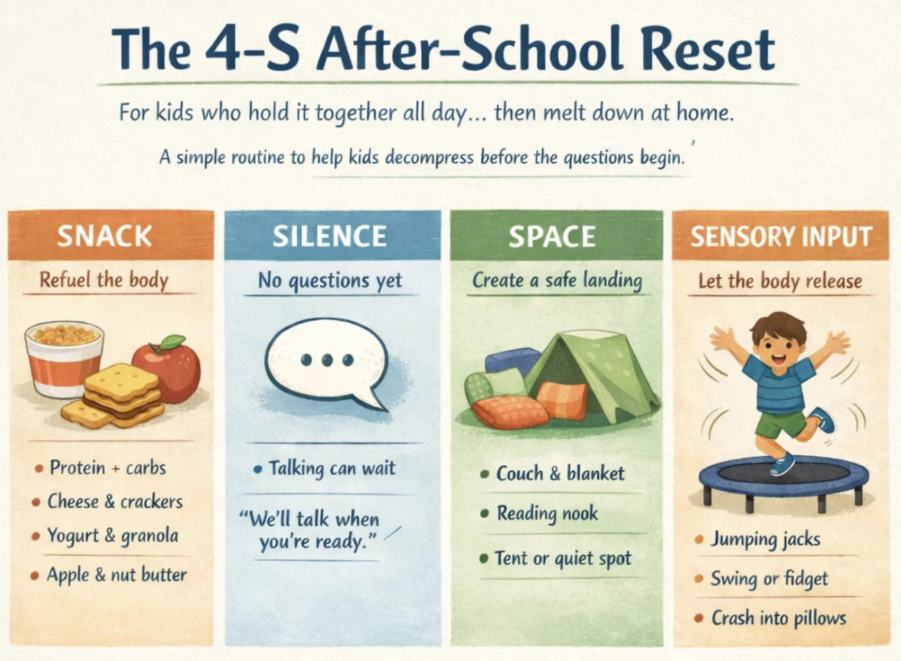
Young Sprouts Therapy
Young Sprouts Therapy
It can also be helpful to remember that these emotional responses are often a sign that children feel safe enough at home to express their feelings. While this can be challenging for families, it is usually not a reflection of poor behaviour or a difficult day at school. Instead, it may be a sign that your child needs time, support, and understanding as they transition from the demands of the school day to the comfort of home
If you have concerns about your child's emotional wellbeing or would like additional support, please reach out to your child's teacher or a member of our wellbeing team.
Wellbeing Team