Learning and Innovation


 St Patrick's College
Media and Information Literacy Week: The Library's Role in Building Critical Thinkers
This week, we celebrate Media and Information Literacy (MIL) Week, a worldwide initiative that highlights the skills young people need to navigate today's information-rich world. The 2026 theme, “We All Play a Part – Media and Information Literacy for the People," reminds us that helping students become informed, responsible and critical users of information is a shared responsibility across schools, families and communities.
Our students have access to more information than any generation before them, but access alone is not enough. The real challenge is knowing how to evaluate information, identify trustworthy sources and think critically about the content they consume every day.
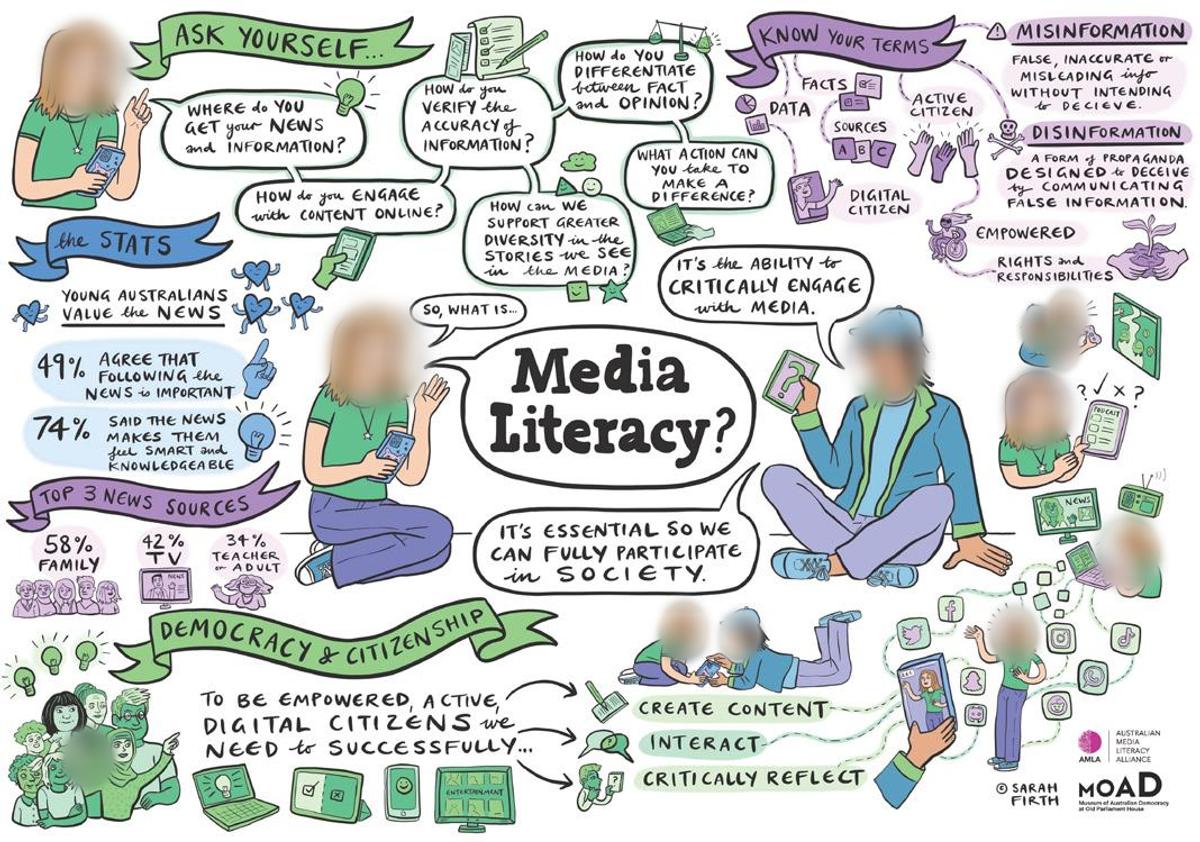
From news reports and social media feeds to podcasts, videos, influencers and AI-generated content, students are constantly exposed to messages competing for their attention. Media literacy is the ability to engage critically with these messages rather than simply accepting them at face value. It means asking questions such as:
Where did this information come from?
Is this fact or opinion?
How can I verify its accuracy?
Whose voices are represented and whose are missing?
Why was this content created?
These are the same questions students encounter in library research lessons and classroom inquiry activities. By developing habits of questioning and investigation, students become more confident and discerning consumers of information.
Media literacy is also closely connected to active citizenship. The Australian Media Literacy Alliance describes media-literate individuals as people who can create content, interact thoughtfully and critically reflect on the information they encounter. Rather than being passive recipients of information, students learn to participate responsibly in digital spaces and contribute positively to their communities.
The library plays a vital role in developing these capabilities. Through research instruction, information literacy lessons, curated collections and classroom partnerships, SPC Libraries support students to locate reliable sources, recognise misinformation and disinformation, understand bias, and use information ethically. These skills are essential not only for success at school but also for life beyond the classroom.
In an age of artificial intelligence, these skills have become even more important. Students must be able to distinguish between accurate and inaccurate information, evaluate evidence and make informed decisions about what they read, watch, share and create. UNESCO identifies media and information literacy as a key strategy for addressing misinformation and strengthening participation in society.
Media and Information Literacy Week provides an important opportunity to reflect on how we engage with information every day. At St Patrick’s College our goal is not simply to help students find information, but to empower them to question it, understand it and use it wisely. By teaching students to think critically, click wisely and engage responsibly, we are helping them become informed learners, confident digital citizens and active participants in an increasingly complex world.
References
Museum of Australian Democracy. (n.d.). Exploring media literacy: Learning activities and resources.
Jessica Lonard
Head of Library and Information Services
Photos are blurred by the publisher.
Unlock to view them.
Unlock to view them.