Whole School Activities
Lower Division English
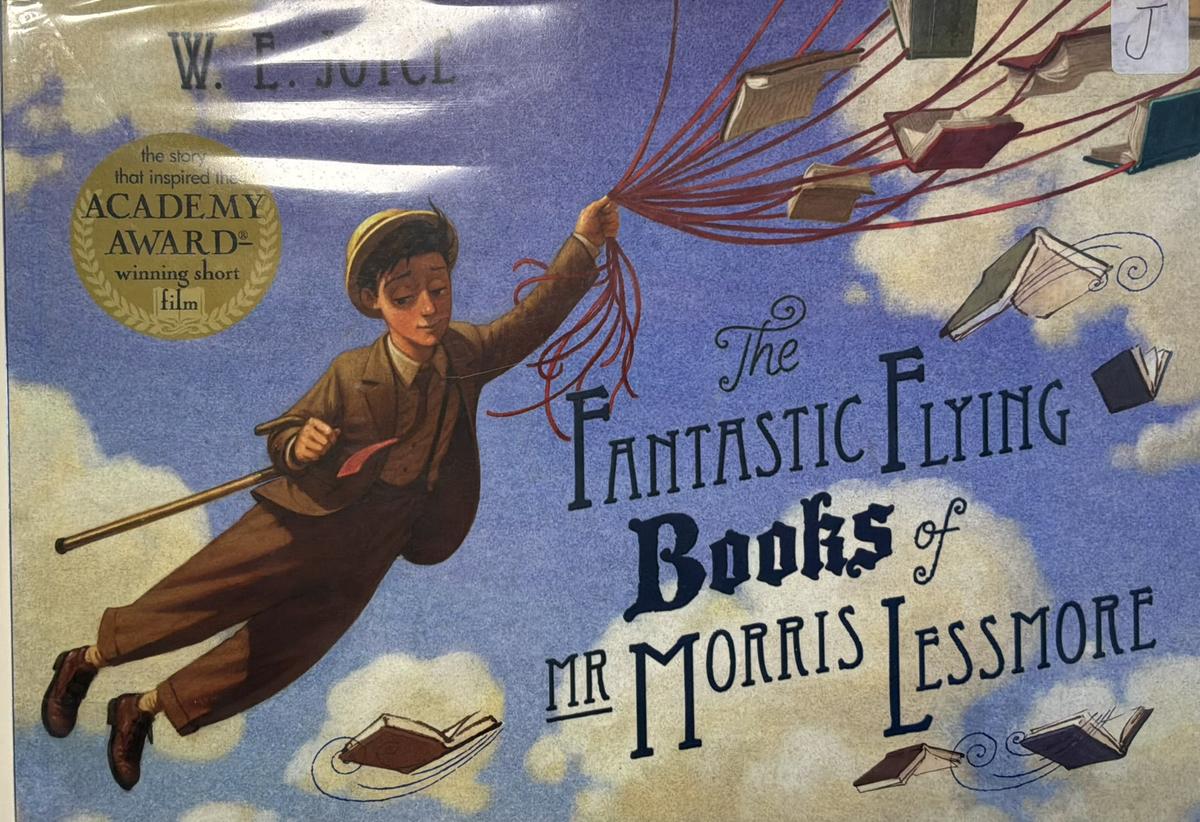
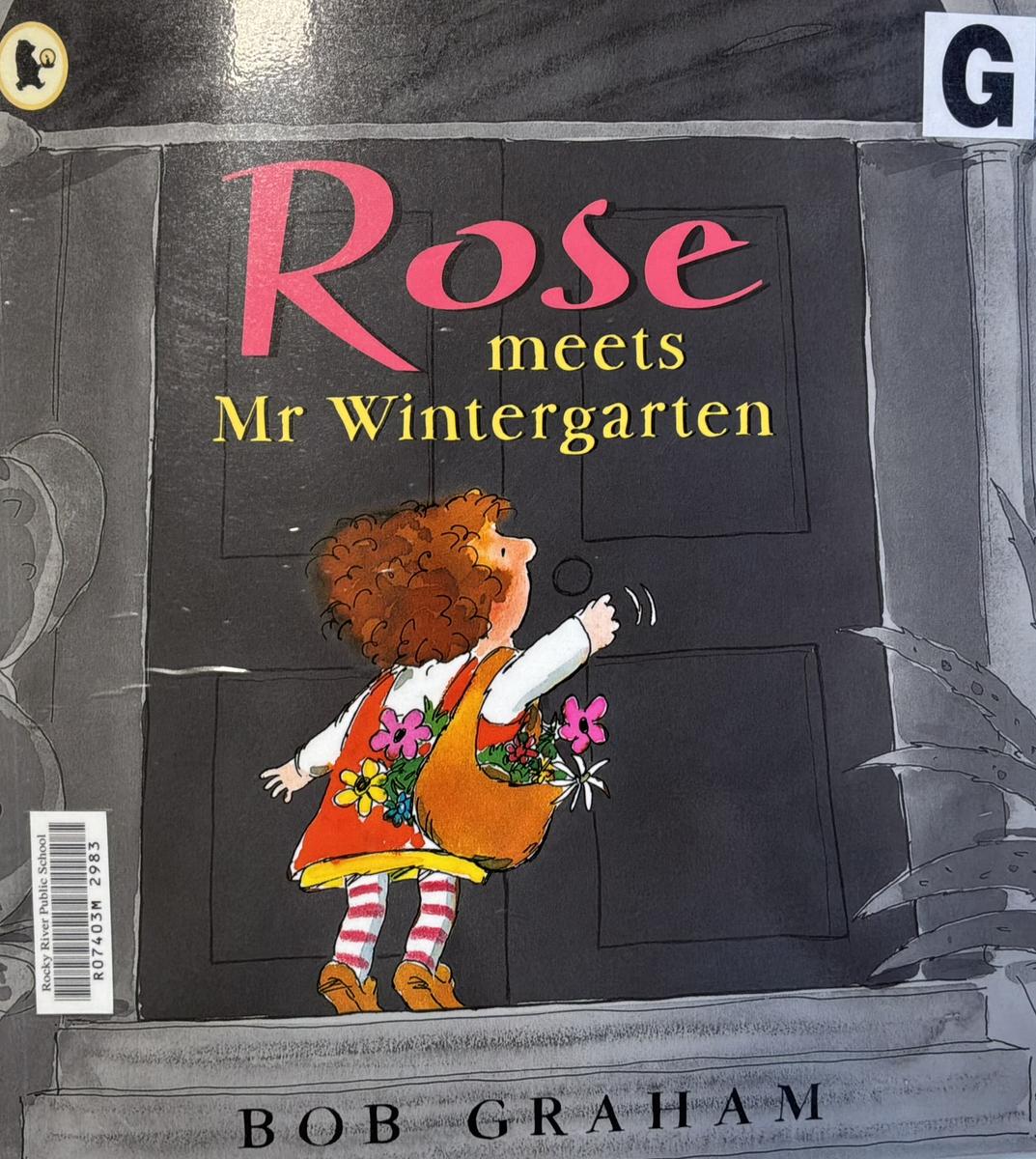
Lower Division students have been engaging with the concepts of character and representation by closely examining the texts Rose Meets Mr Wintergarten and The Fabulous Flying Books of Mr Morris Lessmore. Through these wonderful stories, students have explored how characters are portrayed and the different ways language can be used to describe them.
Our learning has focused on using compound and complex sentences as well as adjectives to bring our own characters to life. Students have also revisited important sentence construction rules to enhance their writing skills. This hands-on exploration has helped deepen their understanding of storytelling and language use in creative ways.
We are proud of their enthusiastic participation and look forward to seeing their imaginative characters develop even further!
Lower Division Mathematics
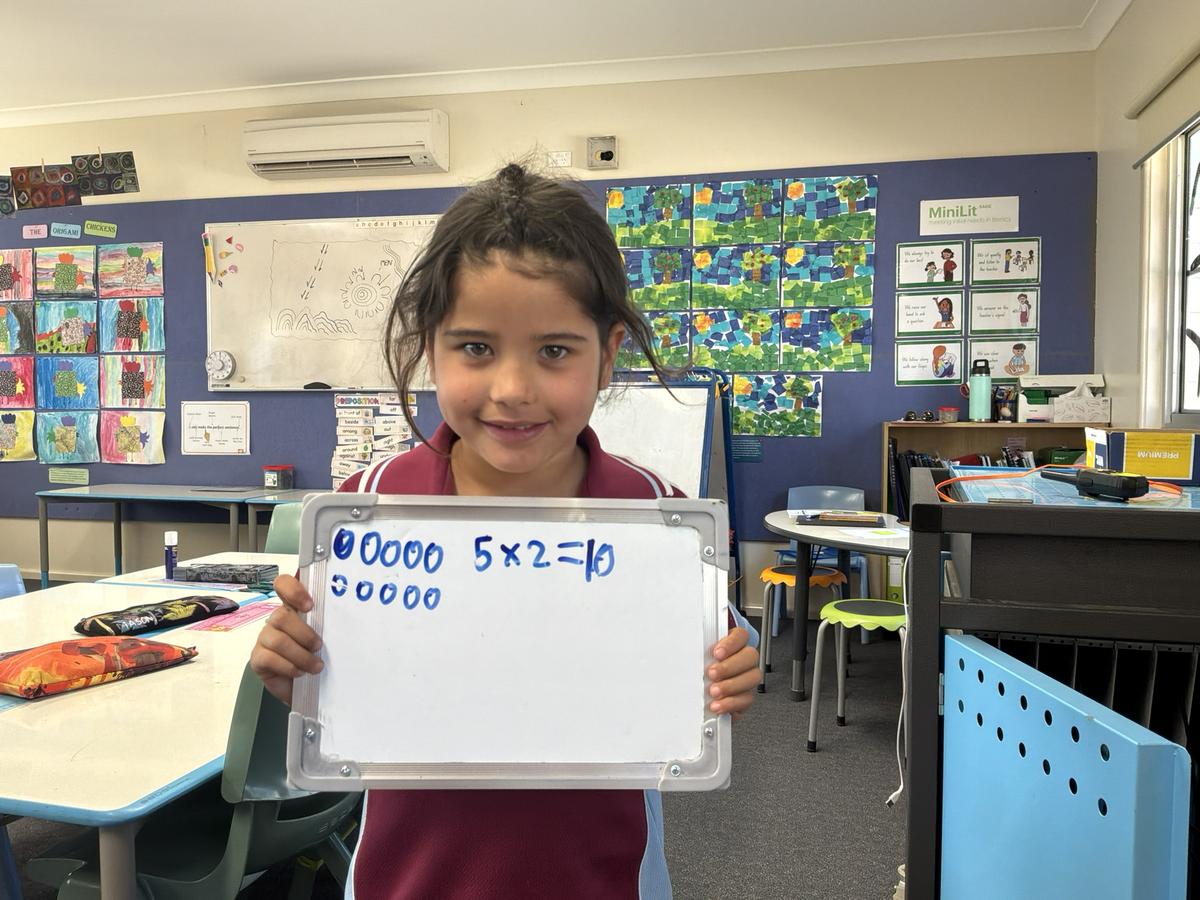
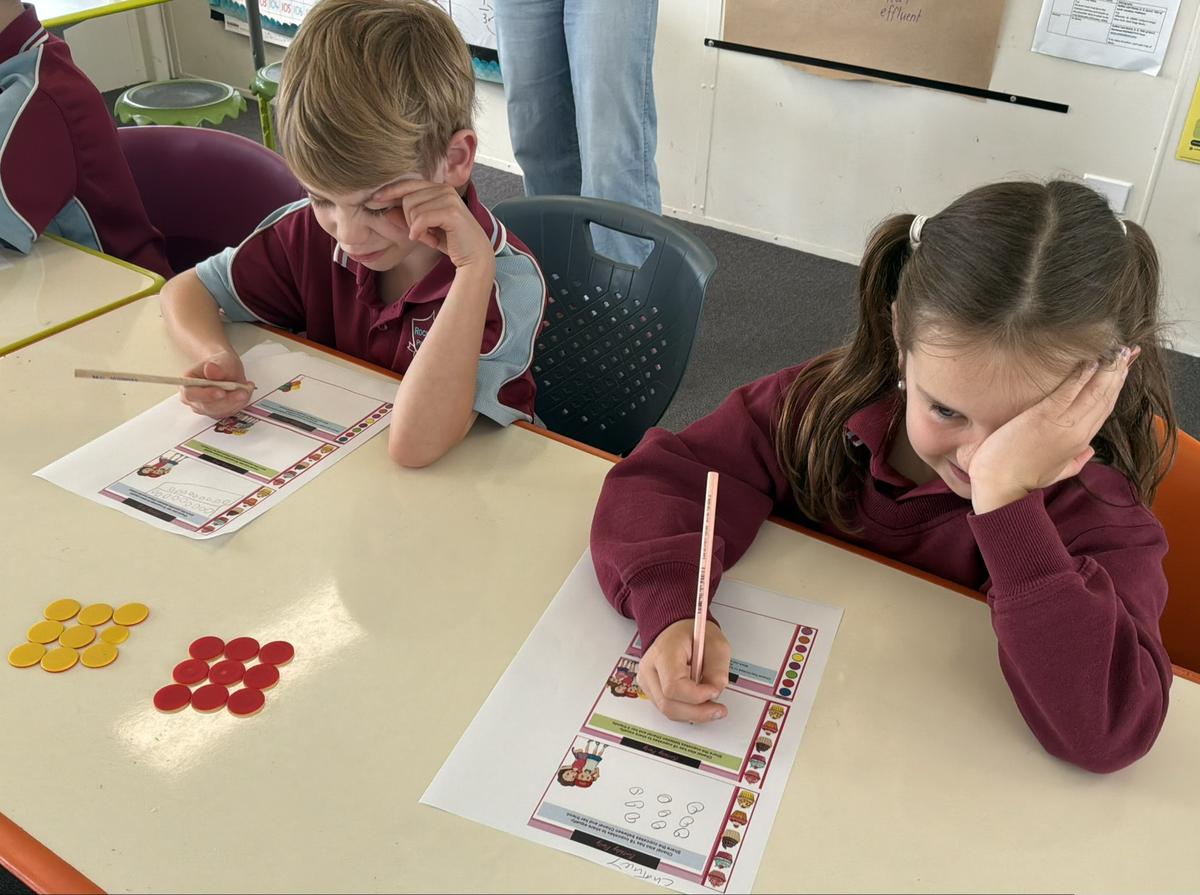
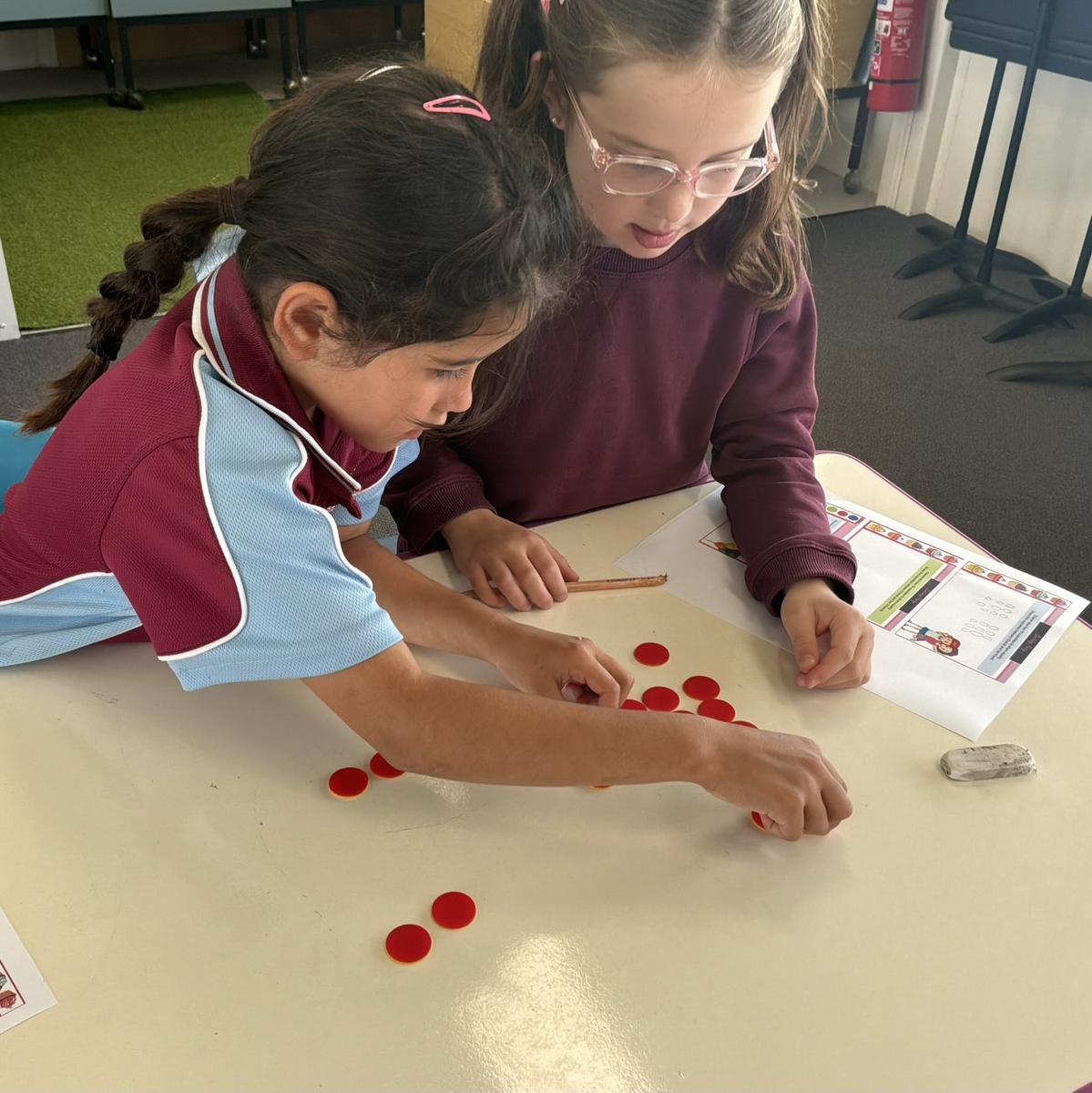
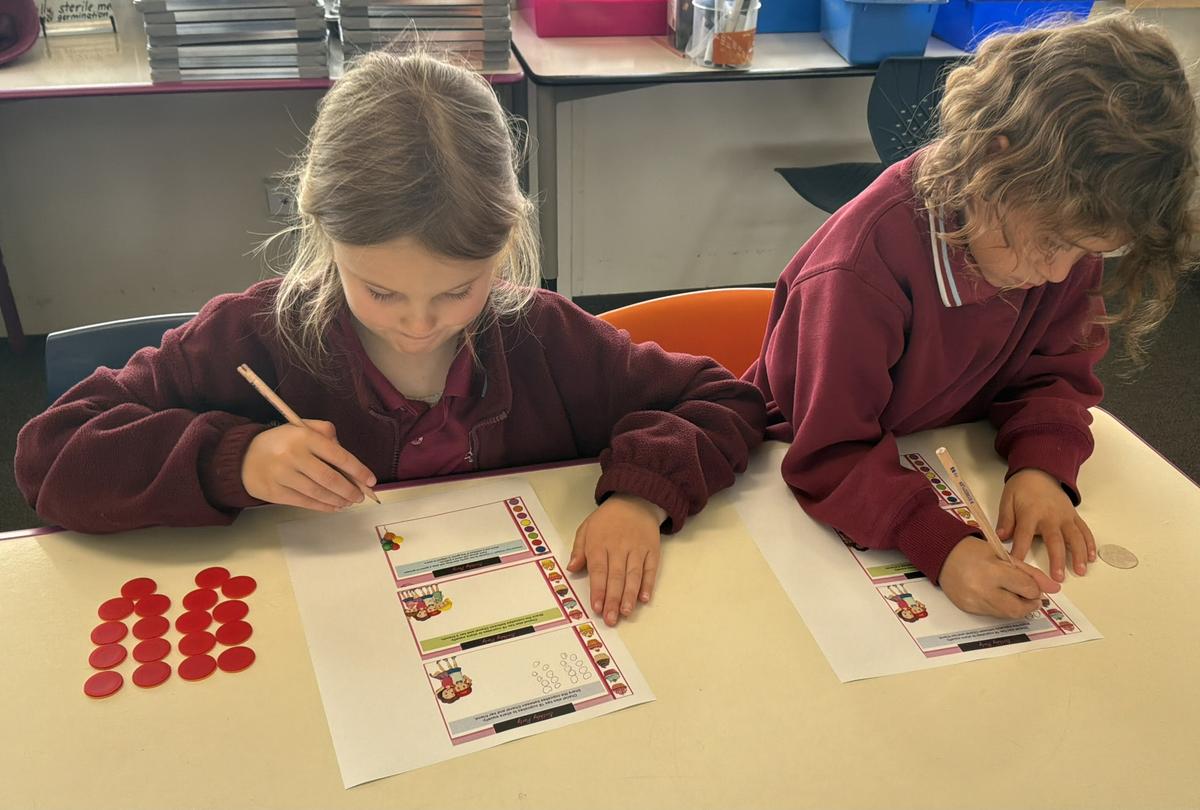
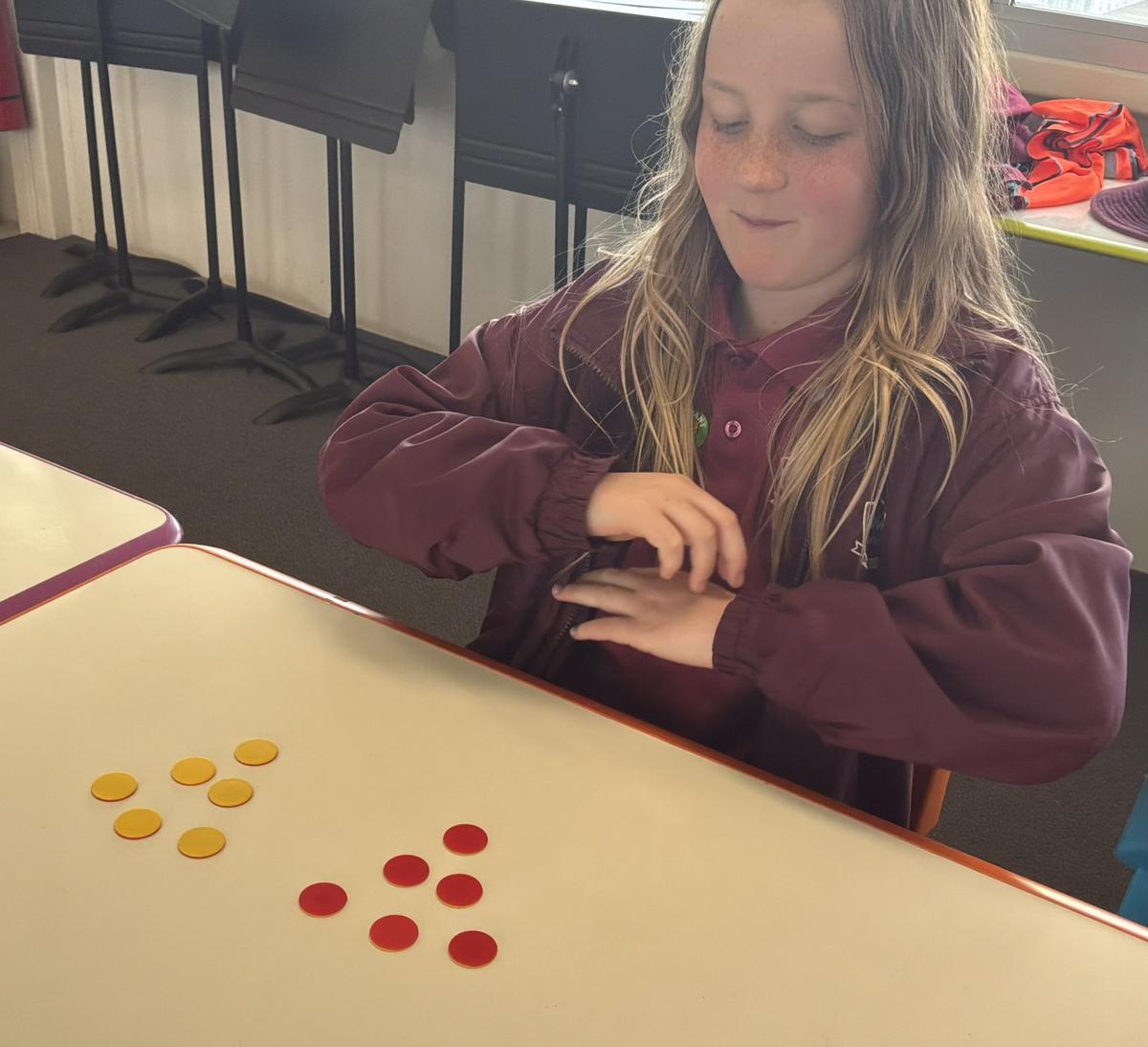
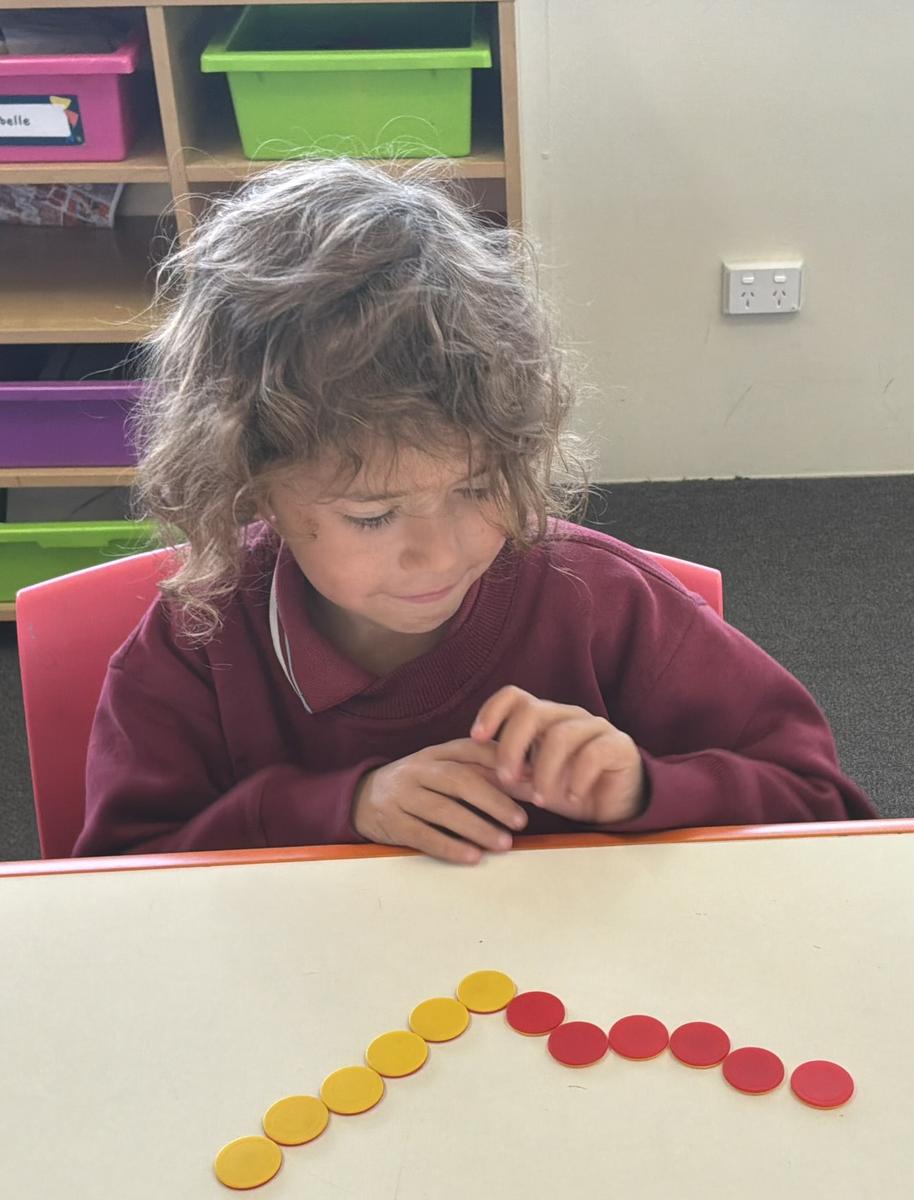
Our Lower Division students have been exploring arrays and discovering how they can be used to arrange collections in ways that make counting both easier and more efficient. To support our learning, we have used a variety of concrete materials to visualise and build arrays hands-on.
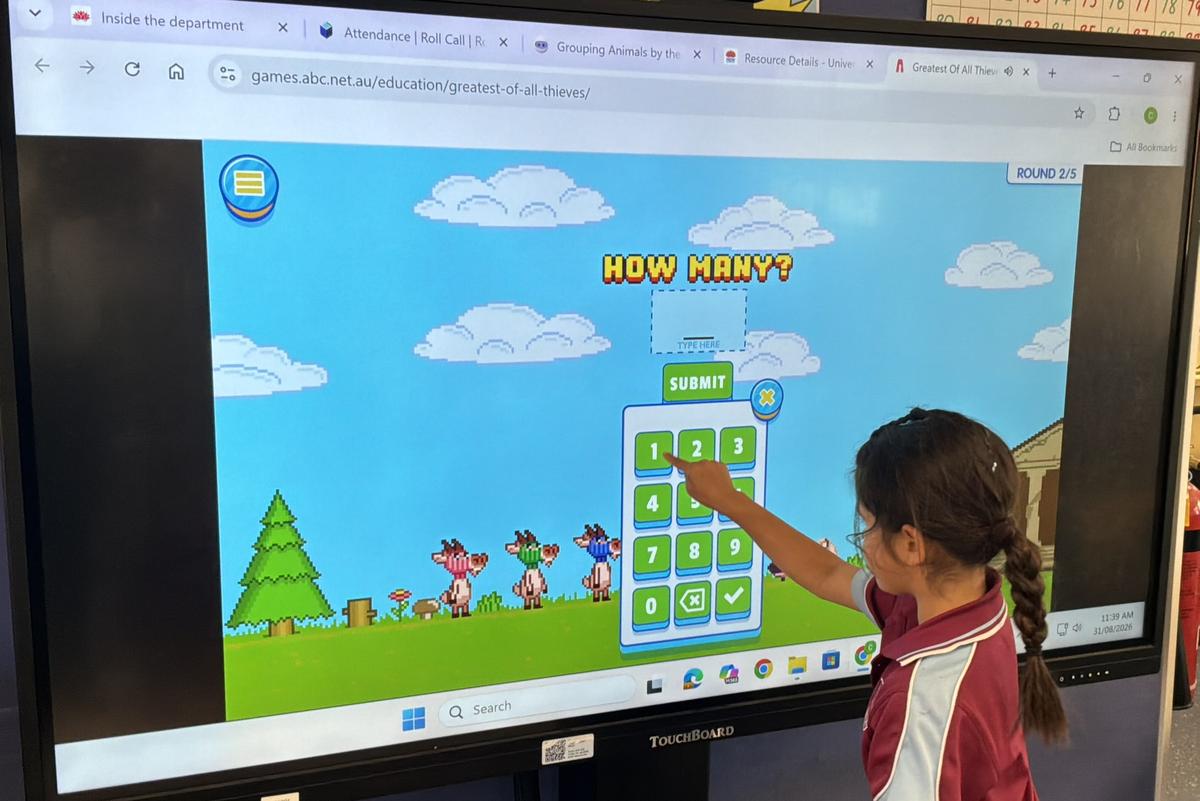
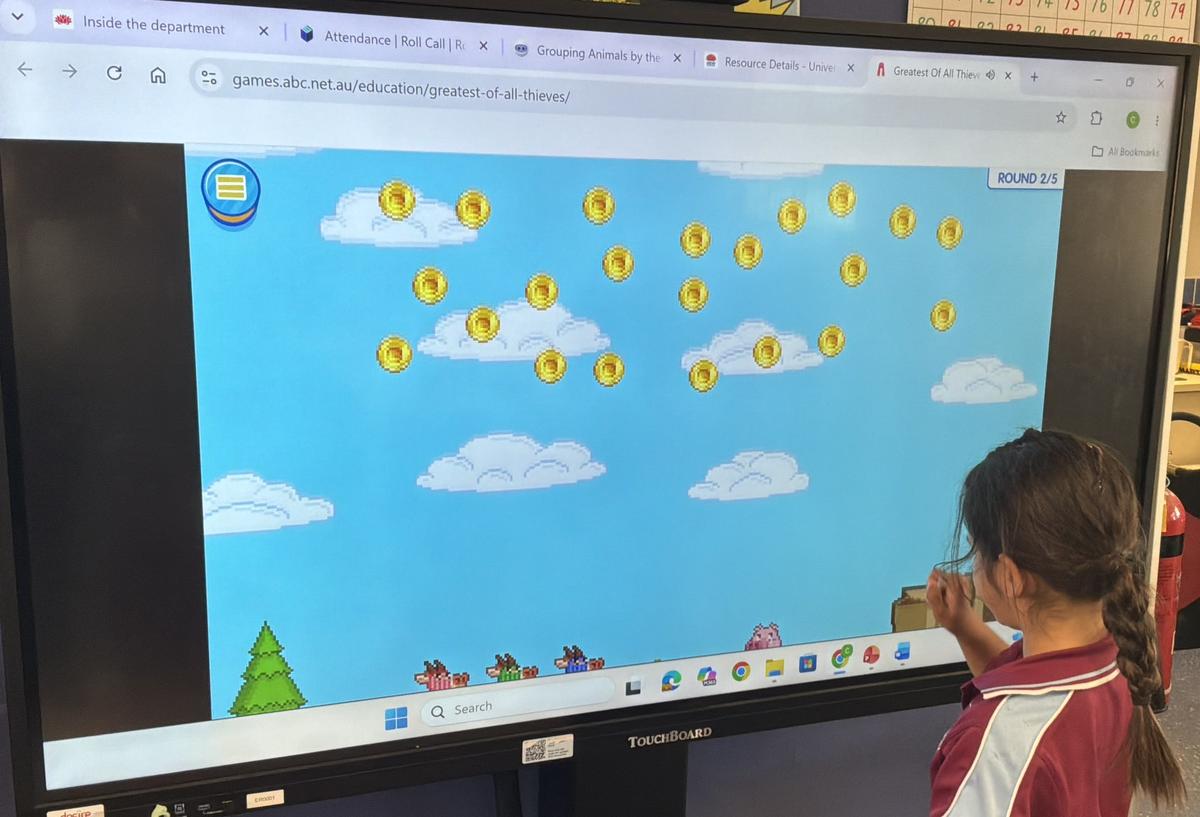
Additionally, students have enjoyed using interactive resources on our whiteboard, including the engaging subitising game, which you can explore here: https://games.abc.net.au/education/greatest-of-all-thieves/
These activities are helping our students develop strong number sense and confidence with counting strategies.
We look forward to continuing this exciting journey in mathematics!
Blockly Coding
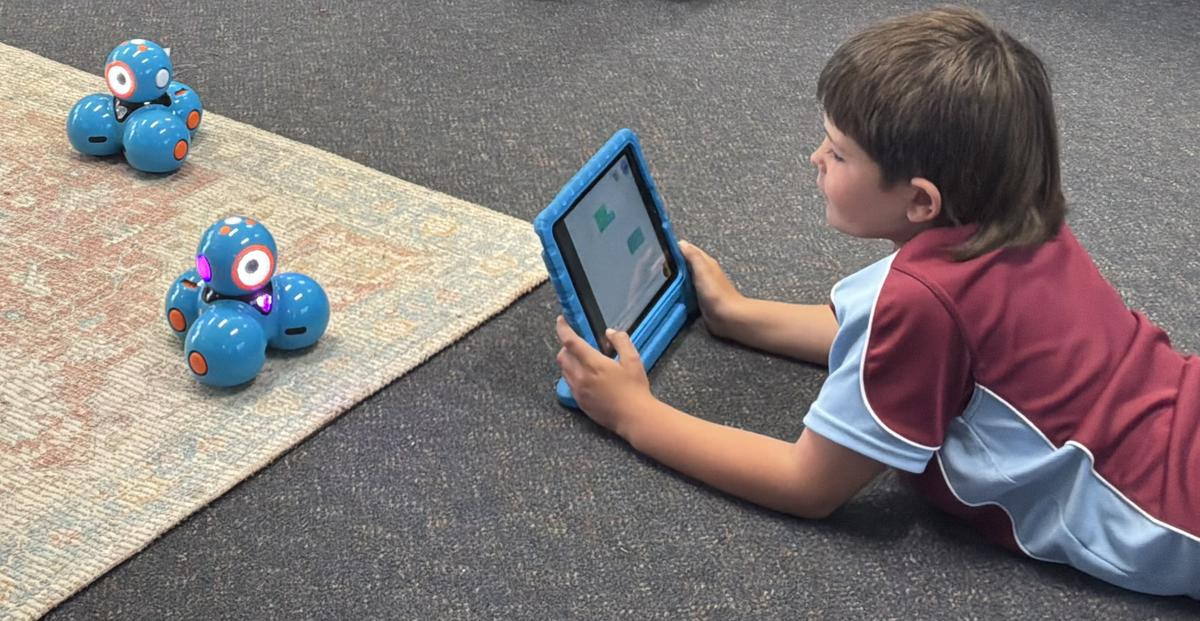
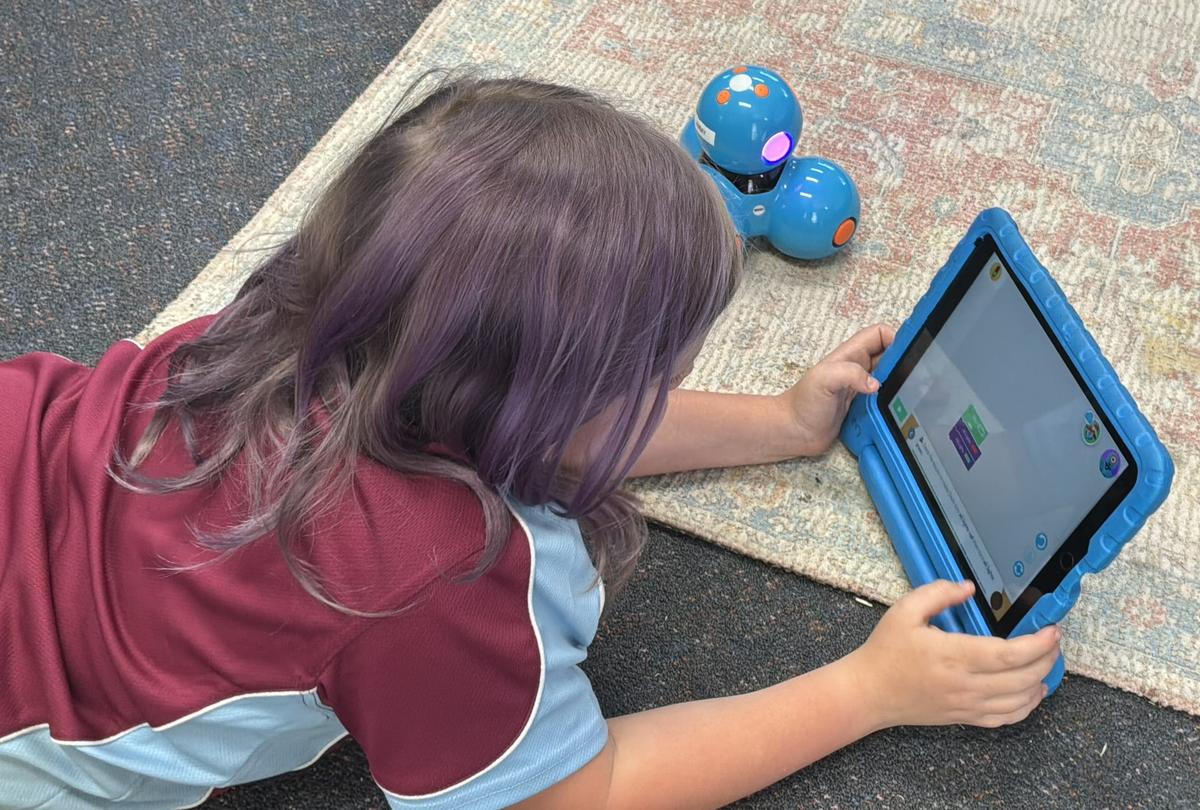
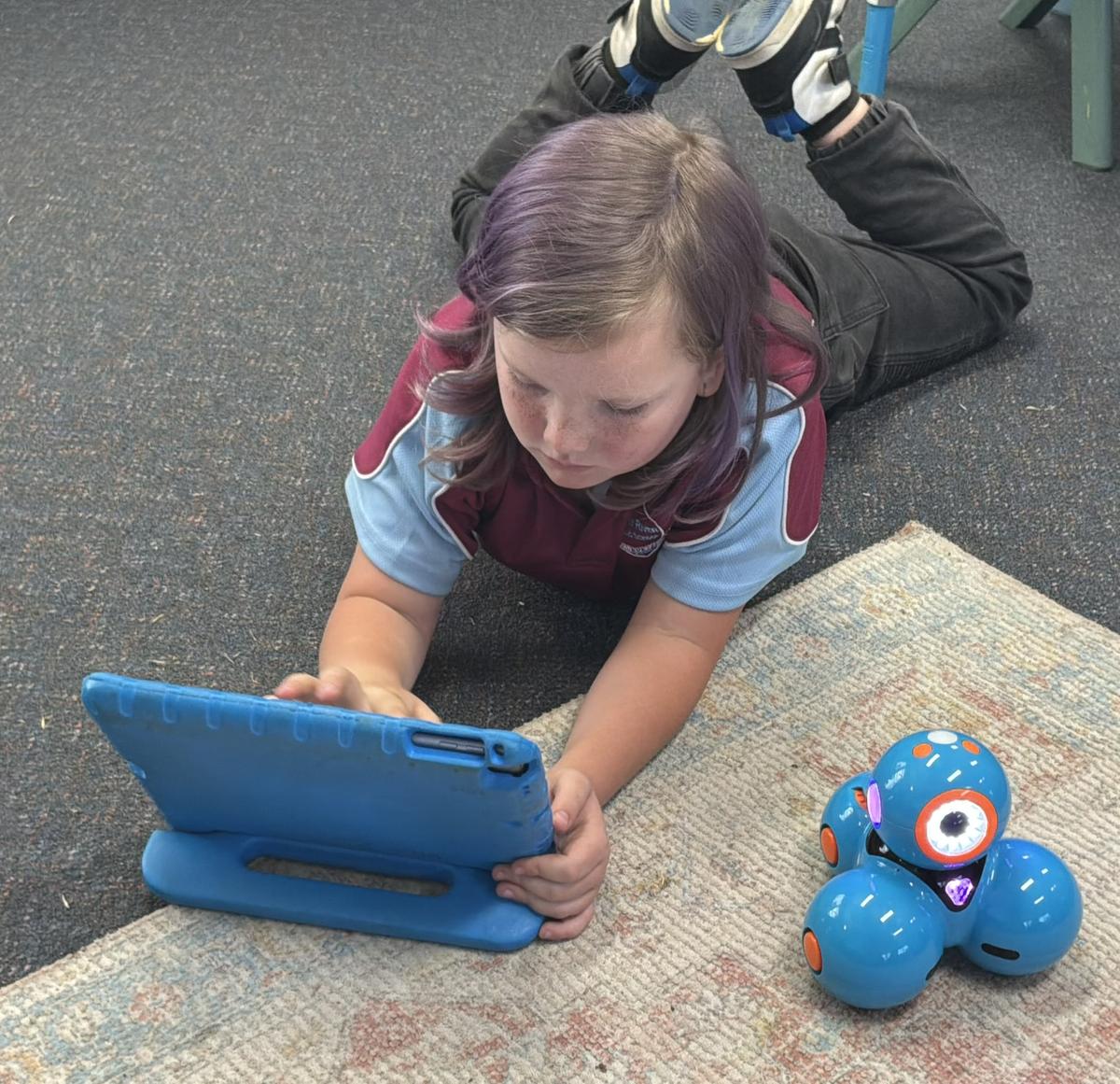
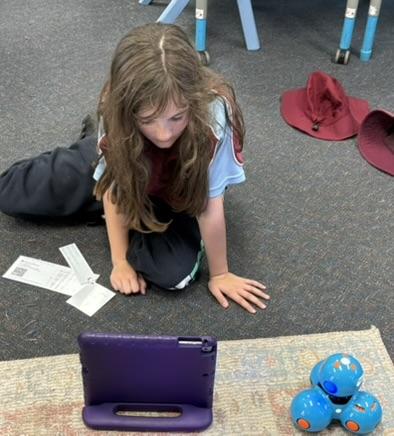
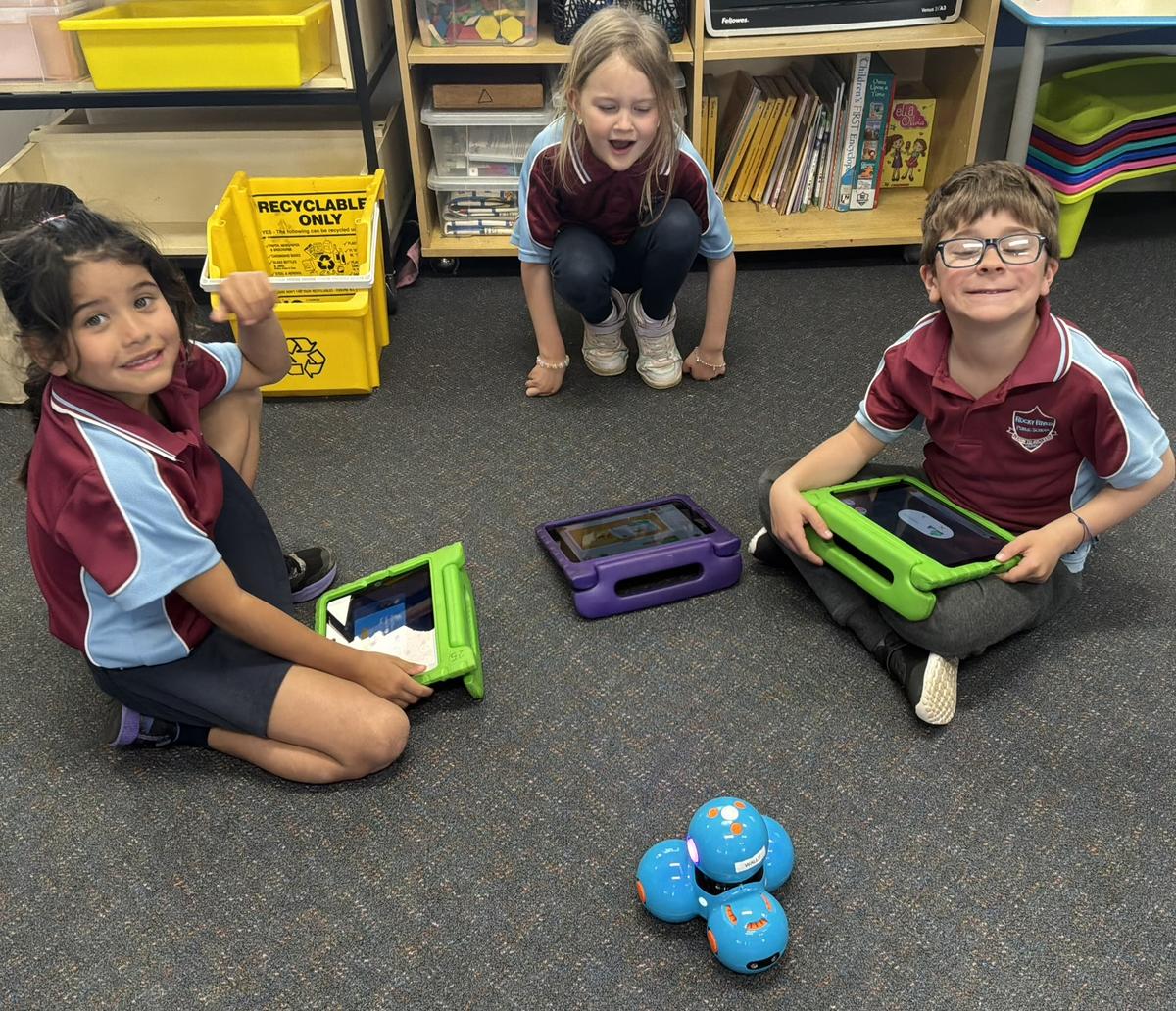
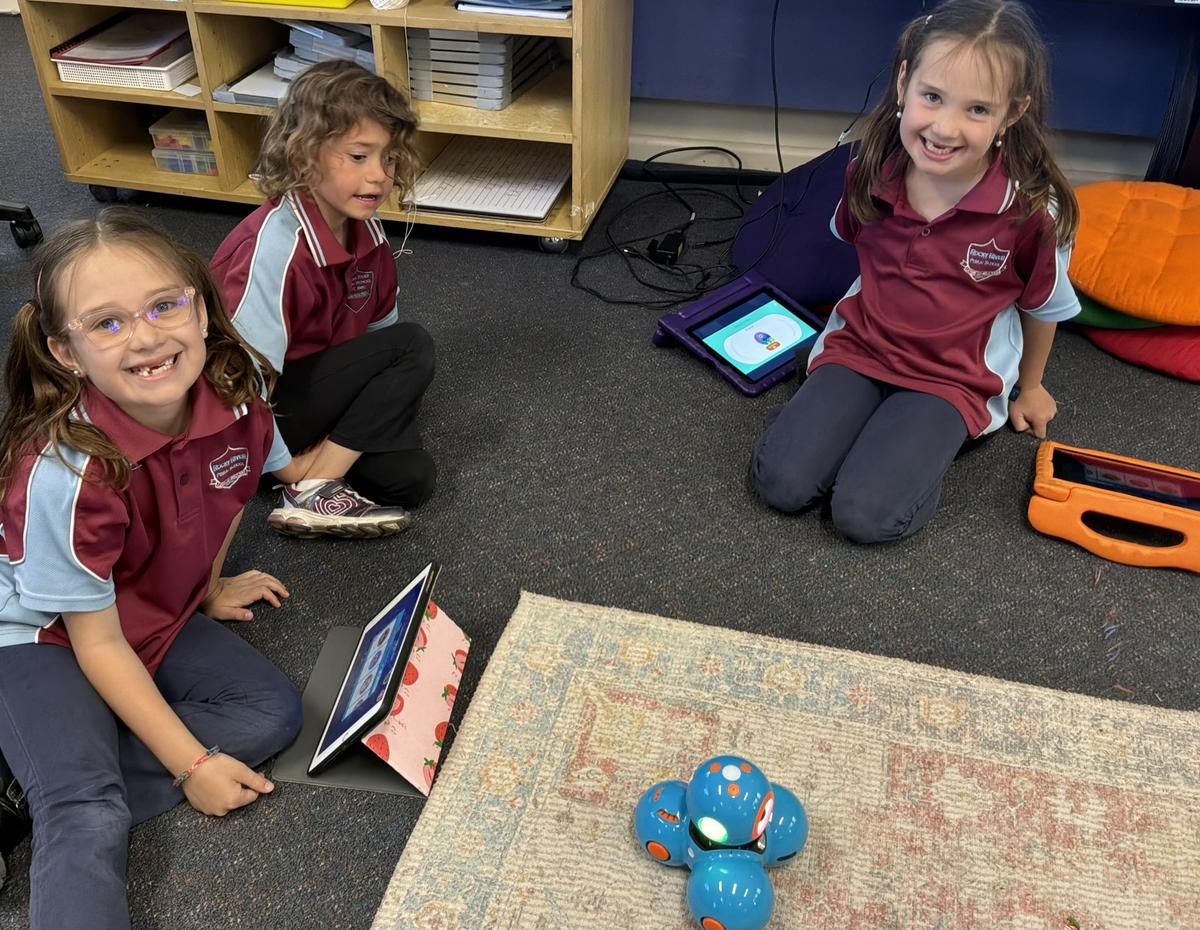
Both our Lower Division and some Upper Division students have been exploring block coding using the Blockly app alongside the Dash robots available at Rocky River. The simple yet engaging tasks set through the app have been greatly enjoyed by students, providing a fun and creative way to develop their problem-solving skills.
This hands-on experience is helping students build core coding skills that are valuable across many areas. We look forward to seeing students continue their exciting exploration of coding in the weeks ahead!
Stage 2 Mathematics | Capacity
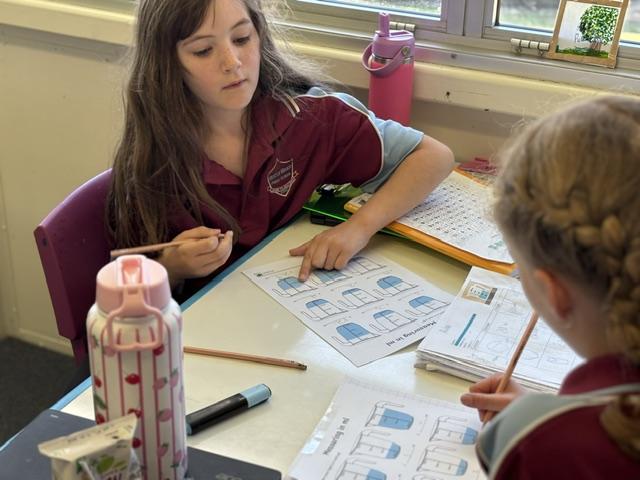
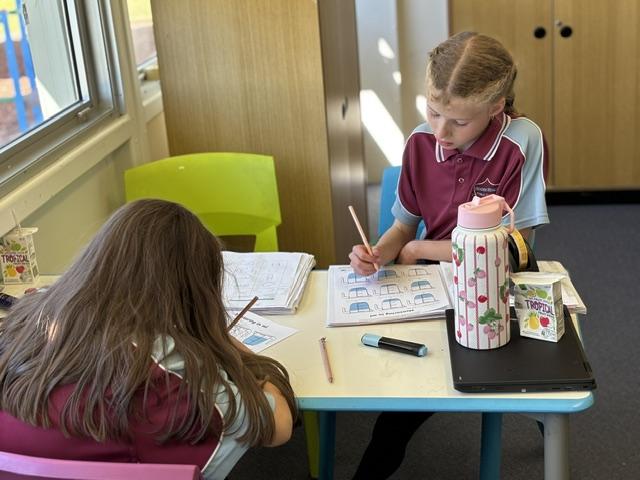
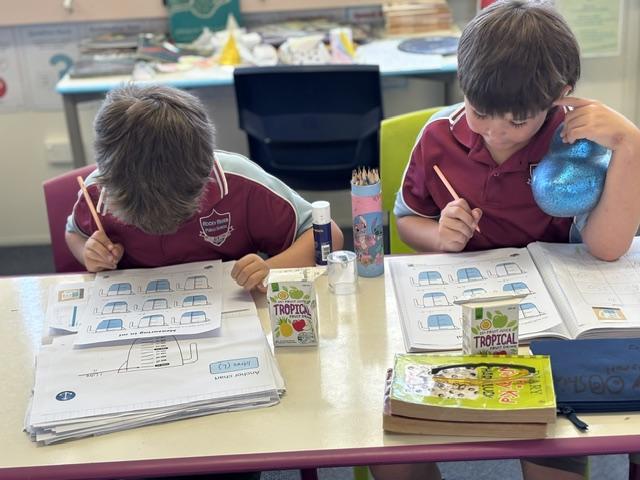
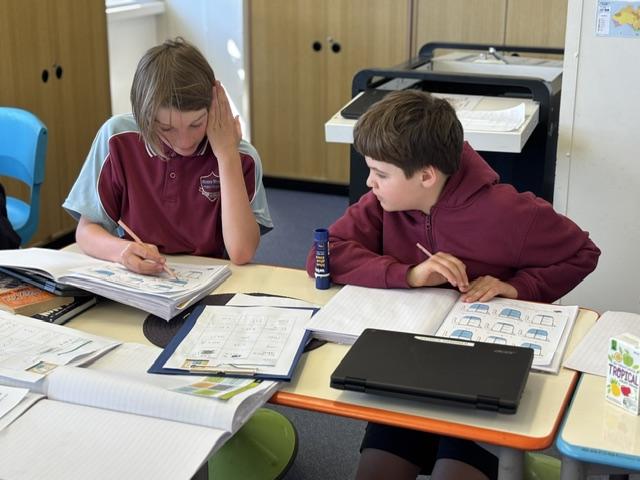
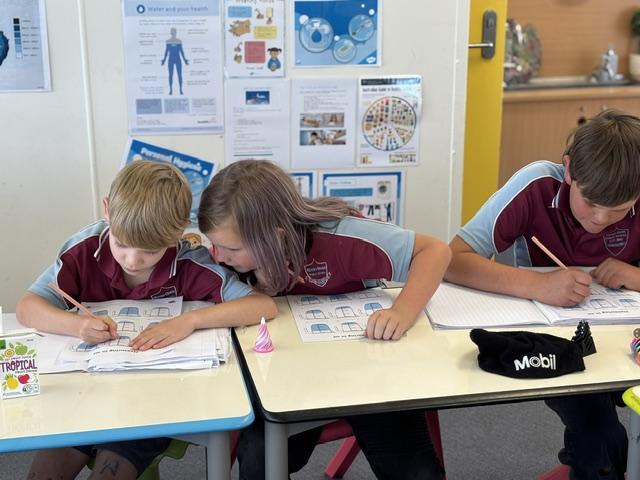
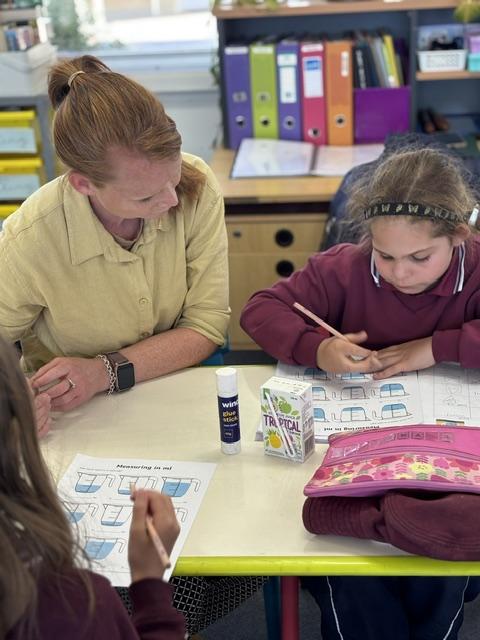
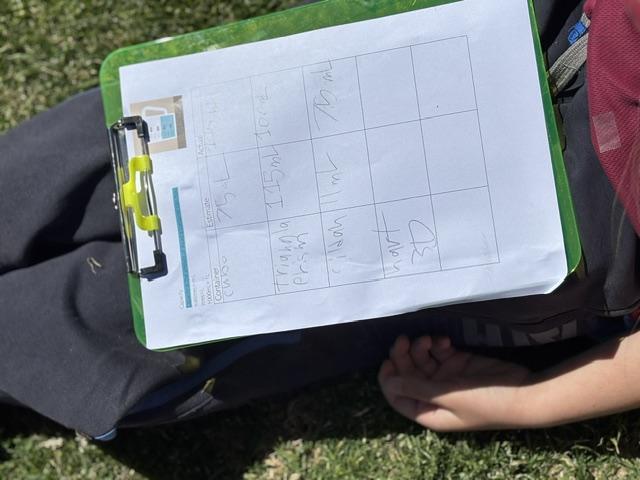
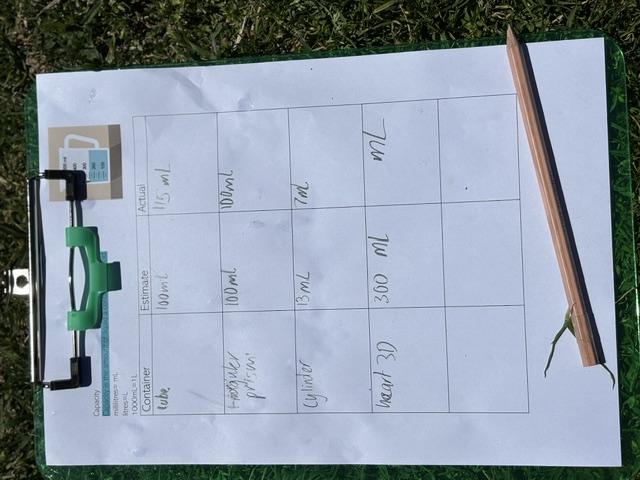
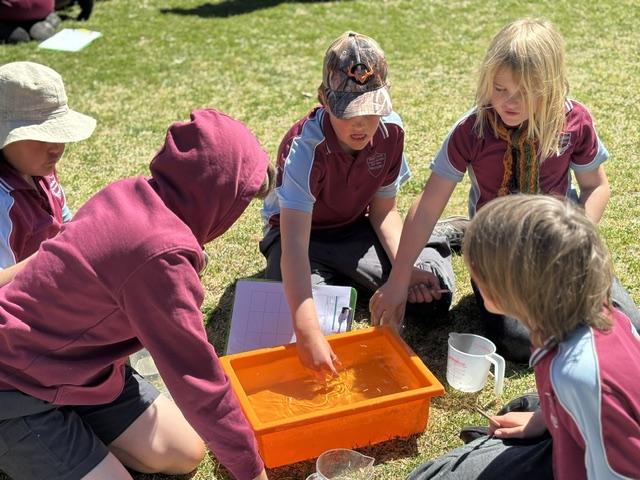
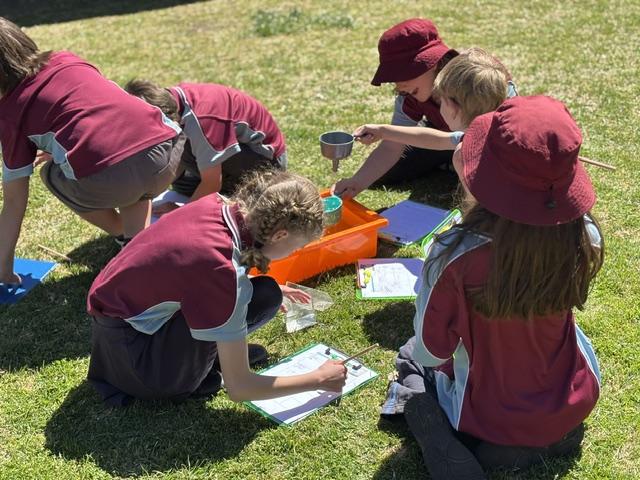
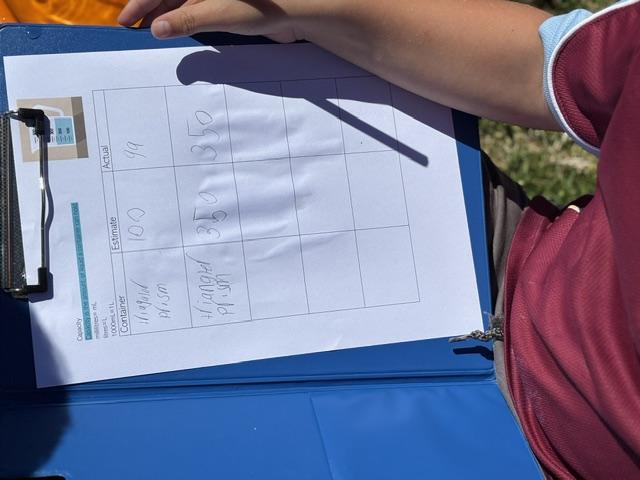
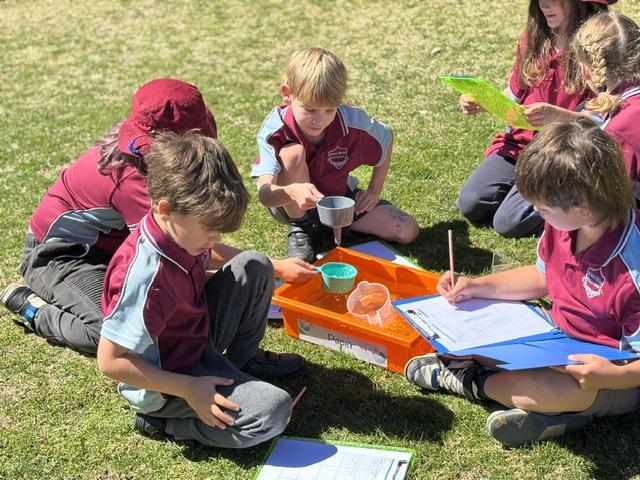
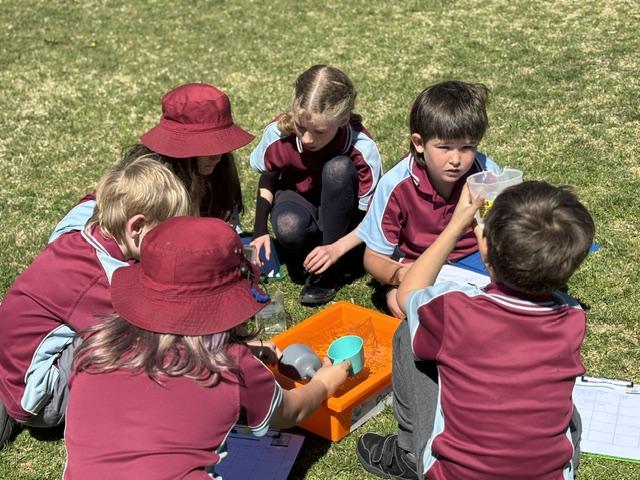
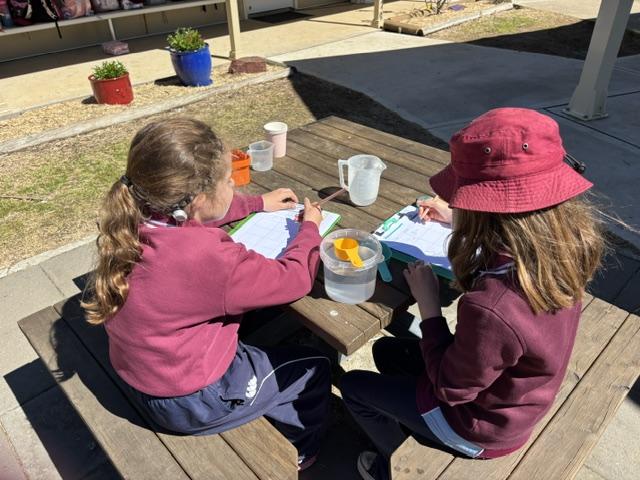
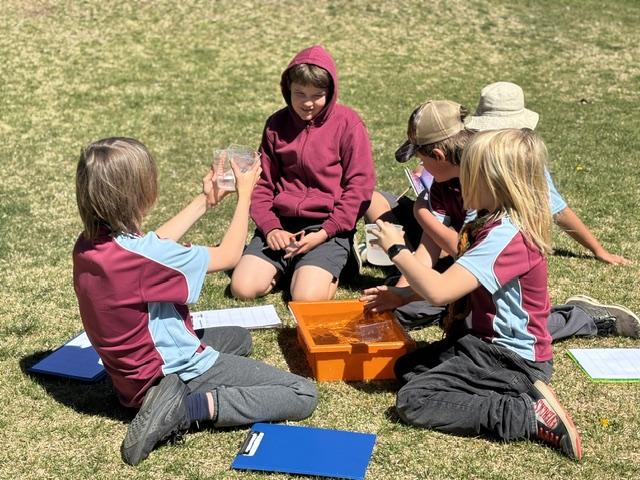
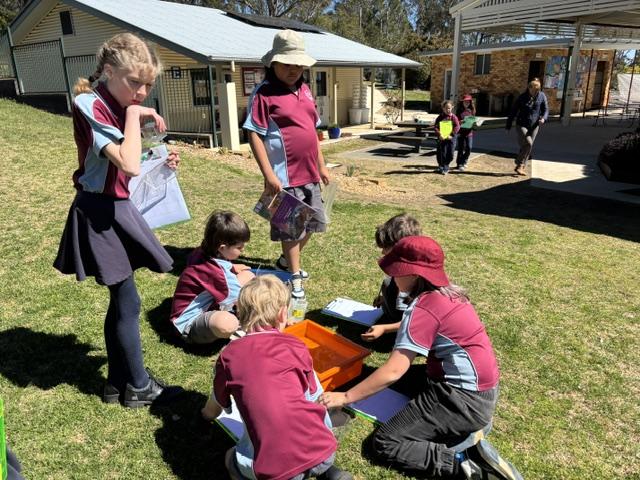
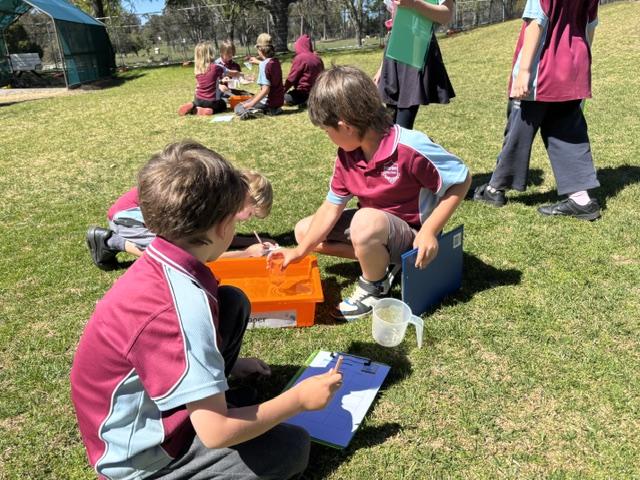
This week we have focused on the concept of capacity. Using a variety of containers from around the classroom, to estimate how much each could hold, sparking curiosity and discussion.
Students made their predictions, then put their estimates to the test using measuring jugs. By pouring water into each container and reading the measurements, they discovered the 'actual' capacity and compared it to their original guesses. This activity encouraged critical thinking as students observed differences between their estimations and the results.
Alongside measuring, there was a strong emphasis on understanding intervals and markings on measuring jugs. Students practised reading the scales, identifying half, quarter, and whole litres or millilitres, and interpreting increments accurately. This skill is essential not only in Mathematics but also in everyday life, helping students develop practical abilities in reading and understanding graduated scales.
The lesson was filled with lively teamwork, problem-solving, and plenty of wet fun! By linking estimation, measurement, and maths skills, students built a strong foundation for understanding capacity.
Stage 2 English | Favourite Book
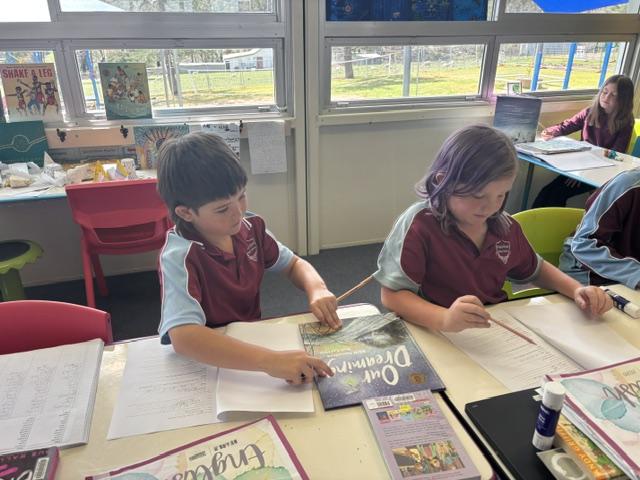
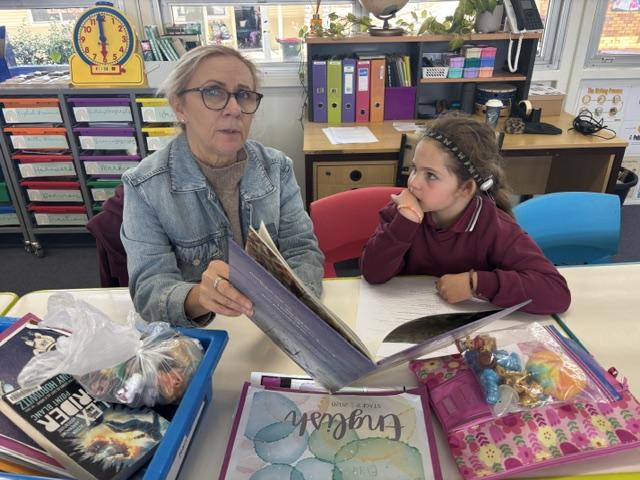
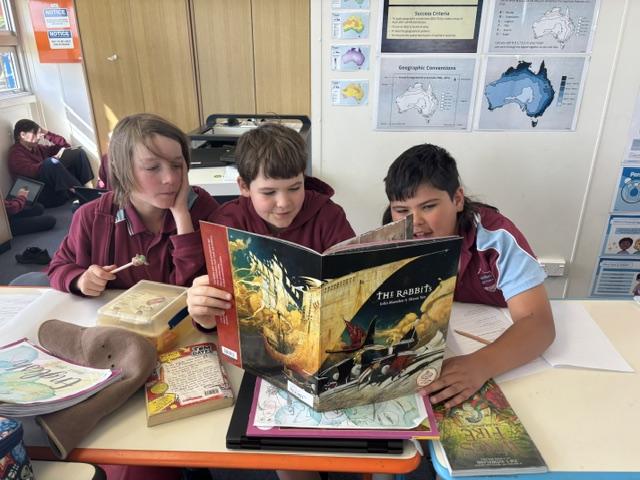
This week in English, students participated in a writing task centred around their favourite book. Each student selected one of three powerful texts to explore:
- Our Dreaming by Kirli Saunders
- The Rabbits by John Marsden
- Where the Wild Things Are by Maurice Sendak
Students were encouraged to reflect on what made their chosen book special, considering the characters, setting, and themes. They wrote about why the story resonated with them, what they learned, and how the book’s illustrations or language contributed to the overall experience.
Throughout this task, students practised structuring their writing, using descriptive language, and expressing personal opinions. It was wonderful to see students deeply engage with stories that offer unique perspectives—from the celebration of Indigenous culture in Our Dreaming, to the powerful message in The Rabbits, and the imaginative adventure of Where the Wild Things Are.
Students shared their writing with classmates, sparking thoughtful discussions about storytelling and the impact of literature. By connecting with these books, students not only improved their writing skills, but also broadened their understanding of different cultures, ideas, and artistic styles.
Anaiwan Language | Native Animals
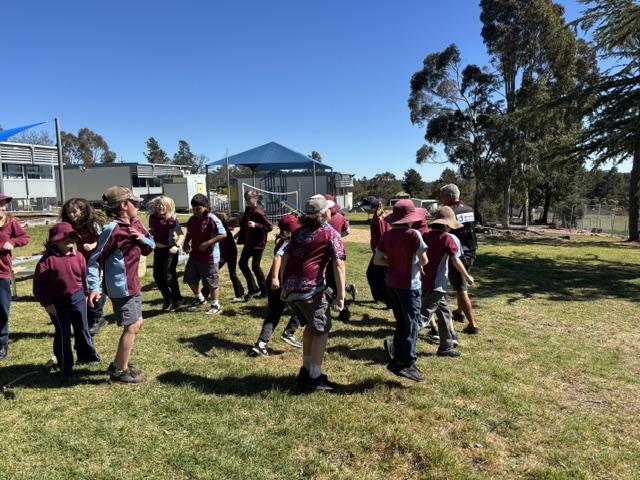
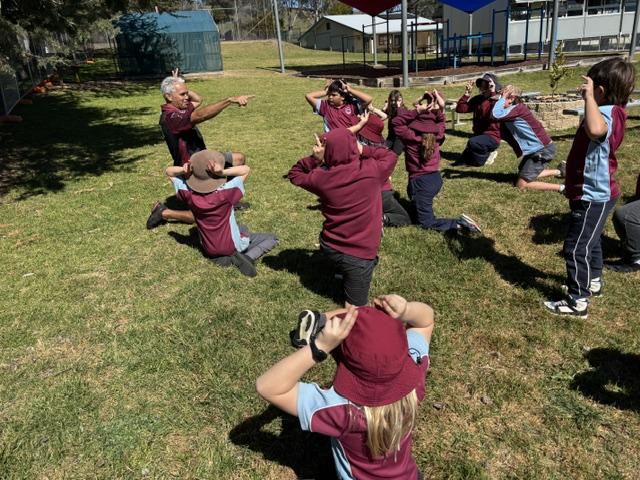
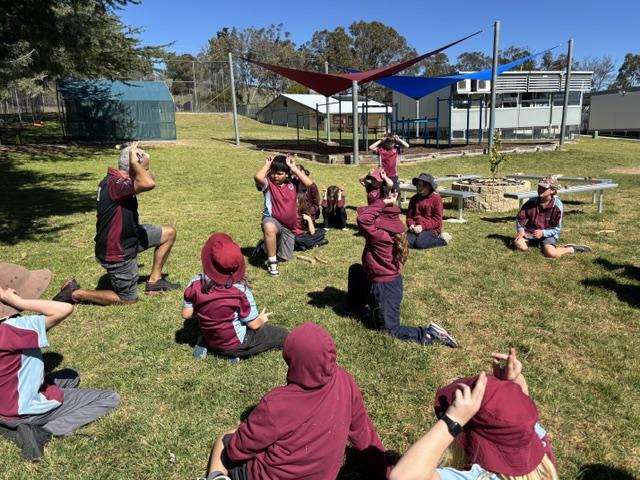
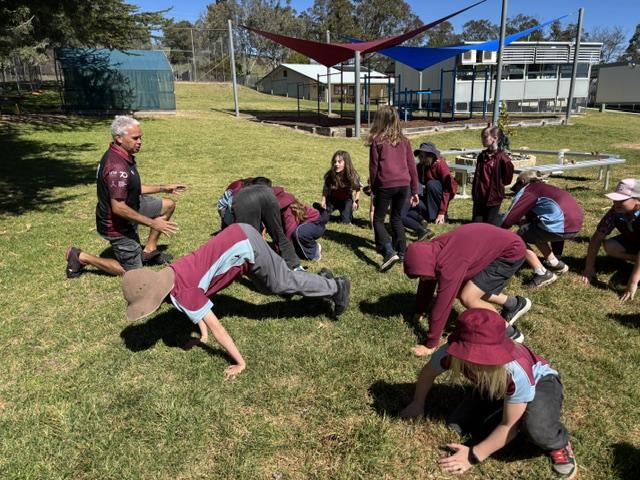
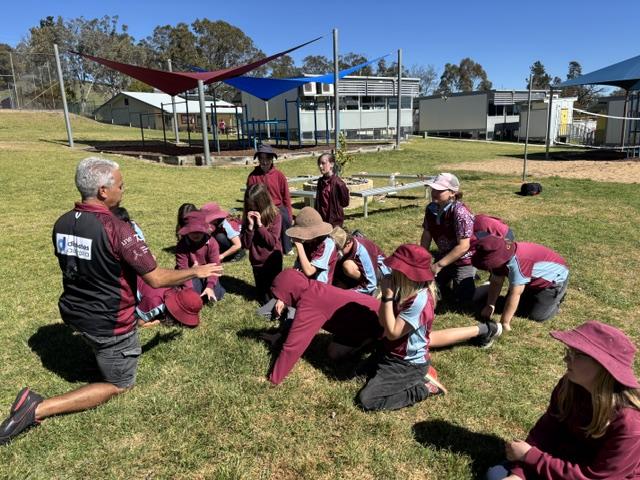
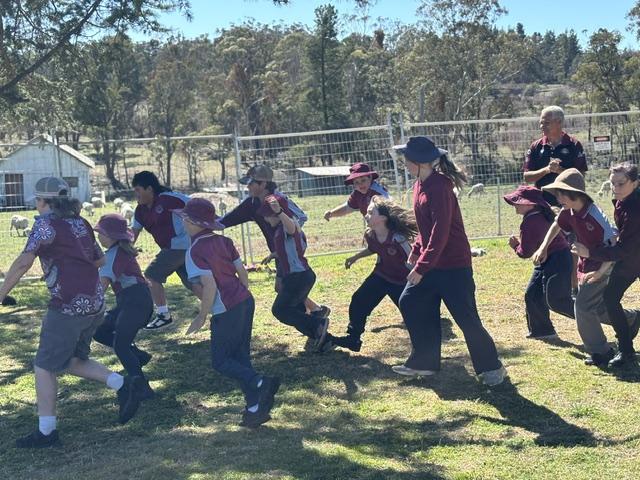
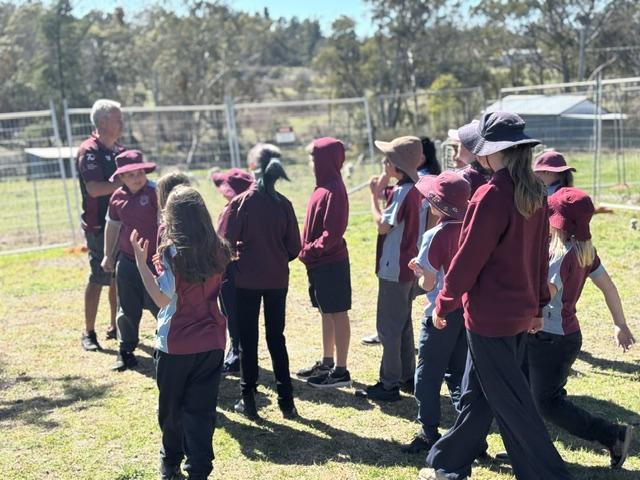
On Friday, the children enjoyed playing a lively game where they revisited the Anaiwan names for various native animals. As the animals’ names were called out in Anaiwan, students moved around the play space, running towards the designated animal. This dynamic activity encouraged physical movement, listening skills, and language learning all at once.
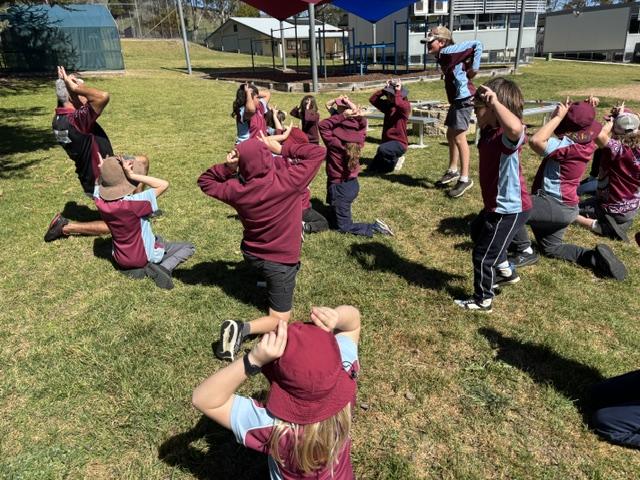
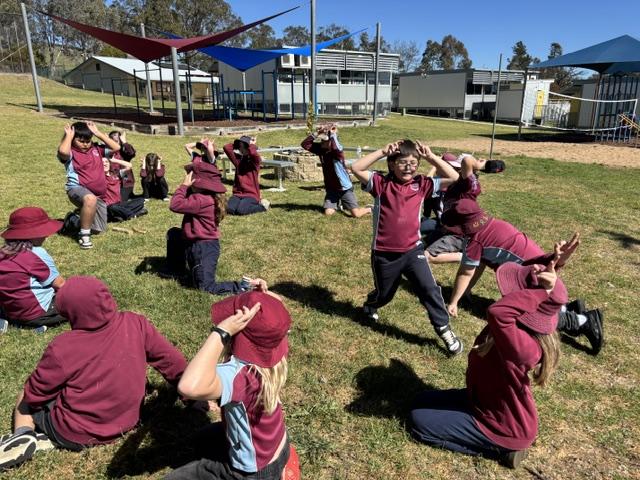
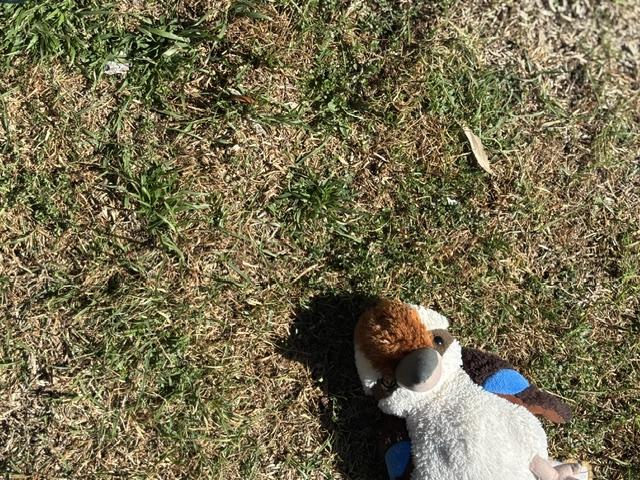
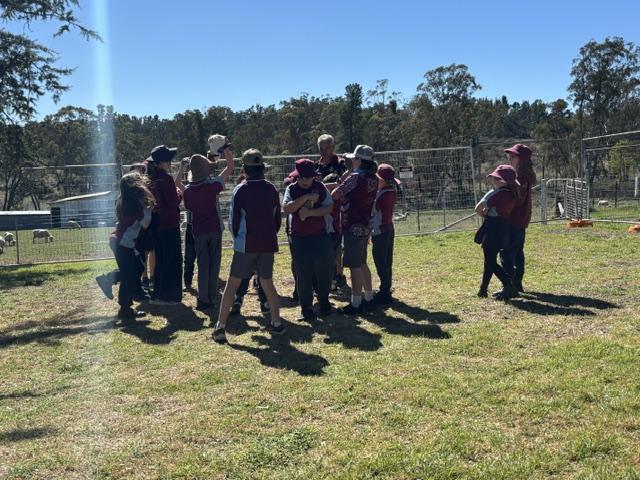
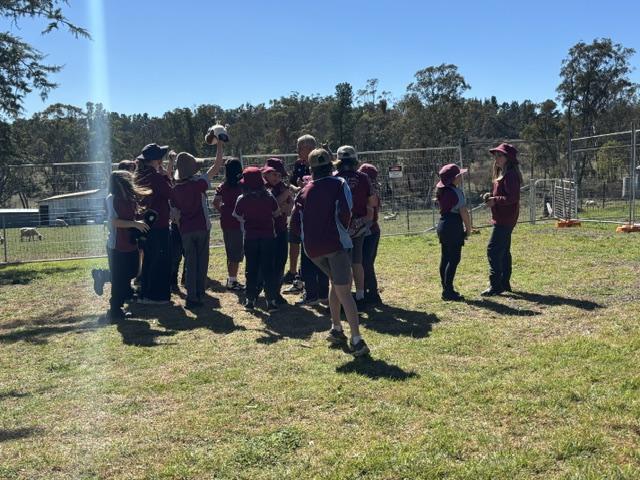
Following the game, Mima Dave guided the children to act out the natural behaviours of two iconic Australian animals—the kangaroo and the emu. The students enthusiastically imitated eating, scratching, and running, deepening their connection to the animals that hold special significance in Anaiwan culture.
This immersive experience was more than just language learning; it highlighted the cultural importance of these animals within Anaiwan stories and traditions. Engaging with the language and movements helped our students appreciate the deep relationships between the Anaiwan people, their land, and the wildlife. We thank Mima Dave for sharing this meaningful experience and look forward to many more opportunities to celebrate and learn from Indigenous languages and cultures as part of our school community.
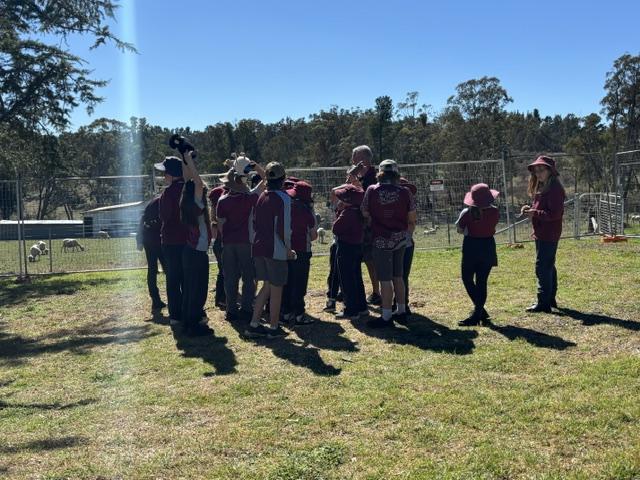
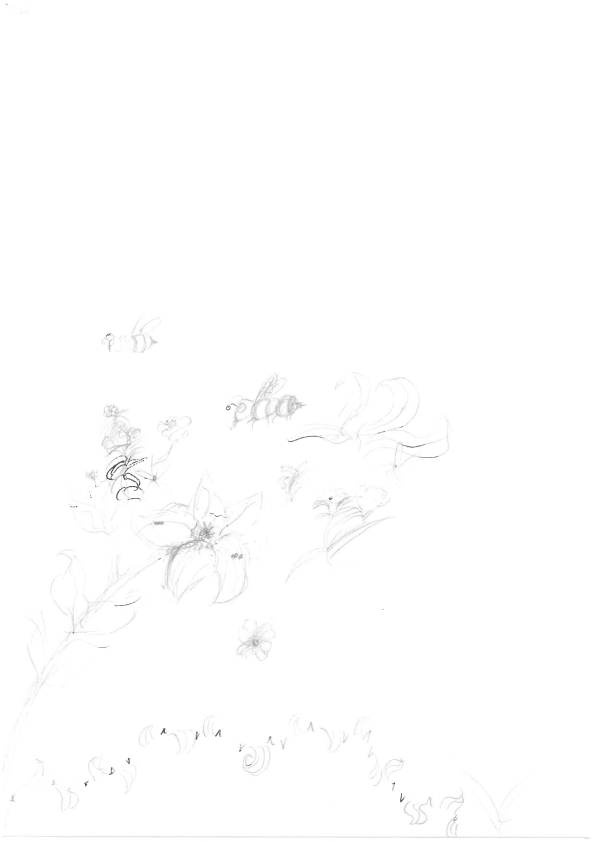
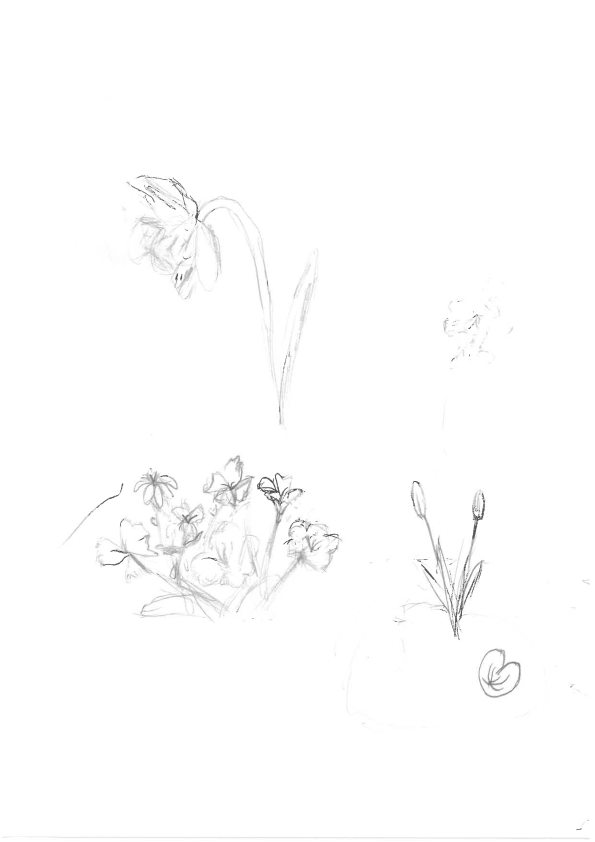
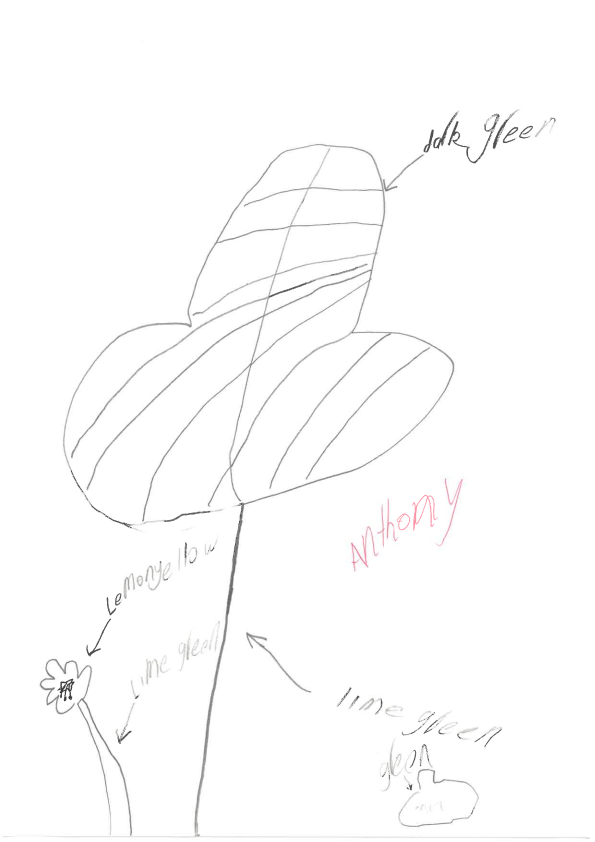
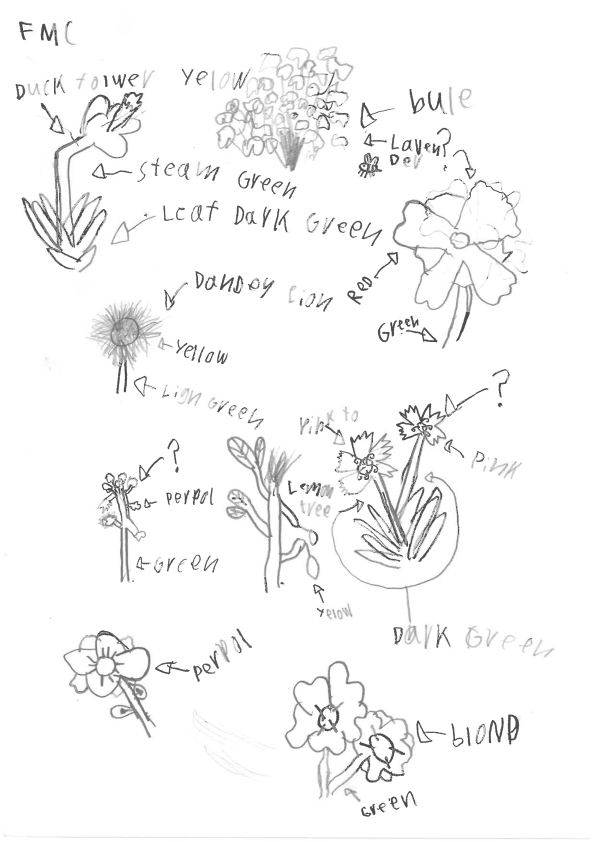
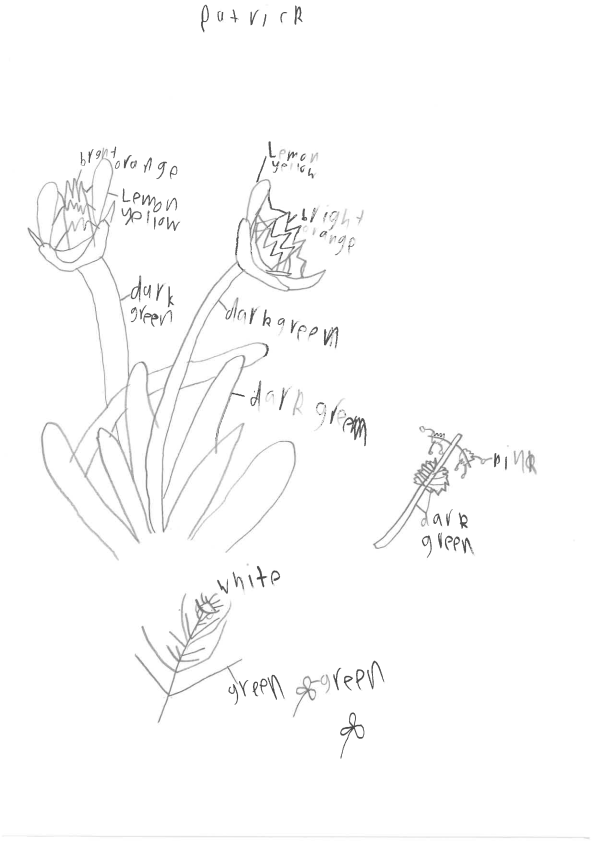
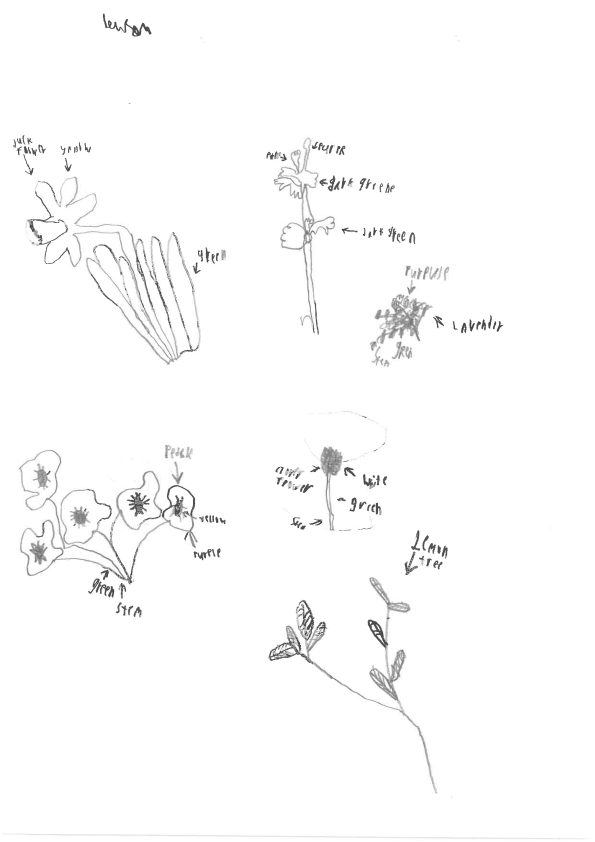
Visual Arts | Graphite Flowers
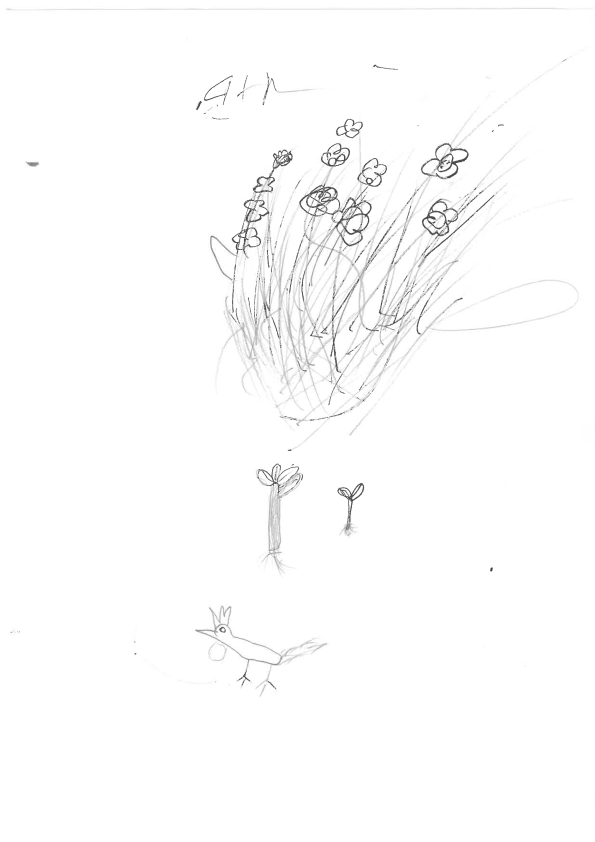
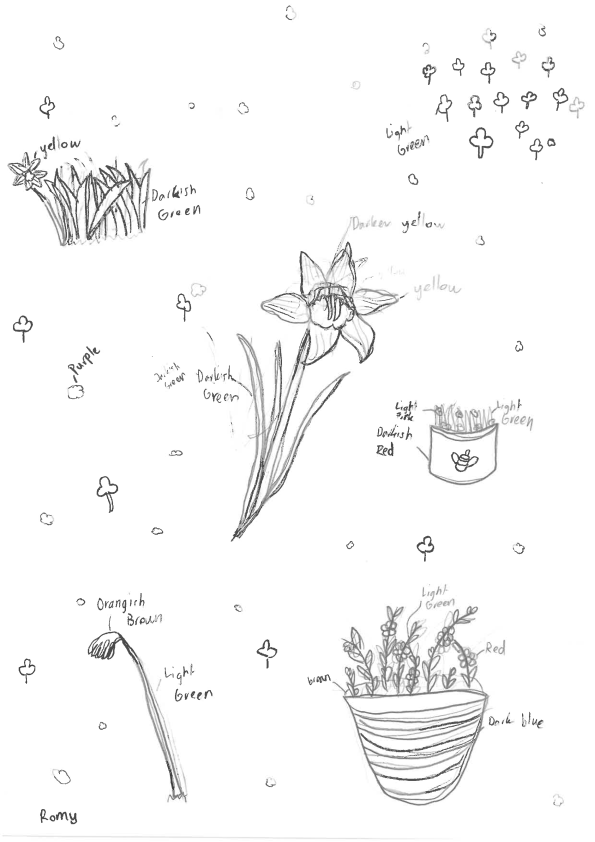
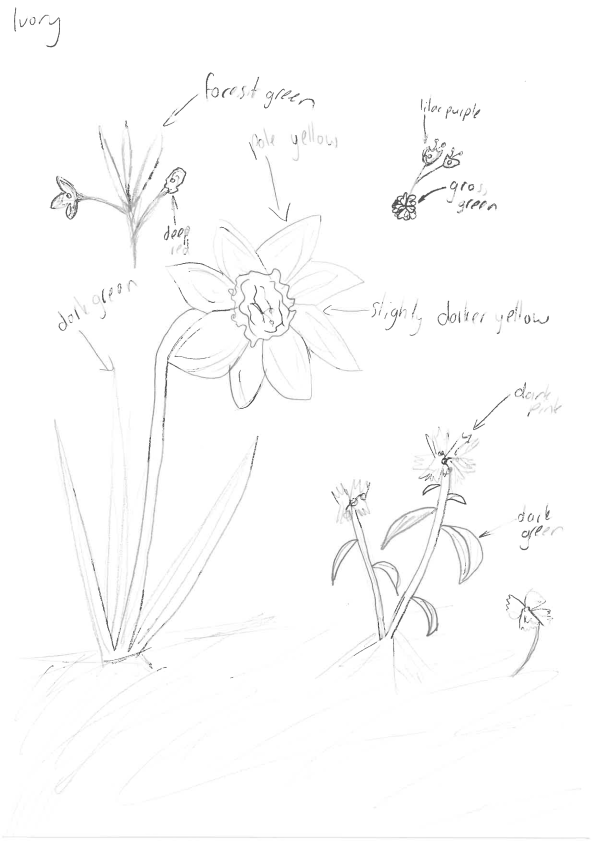
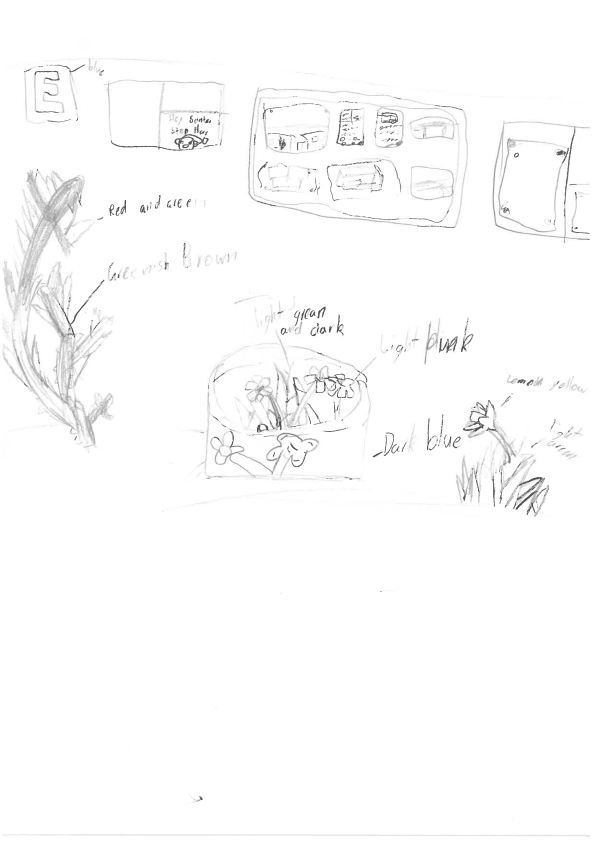
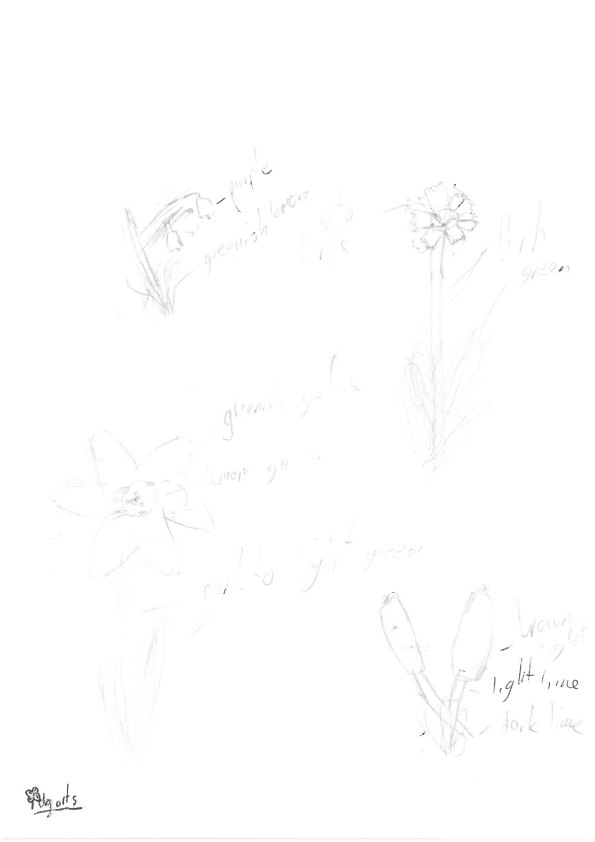
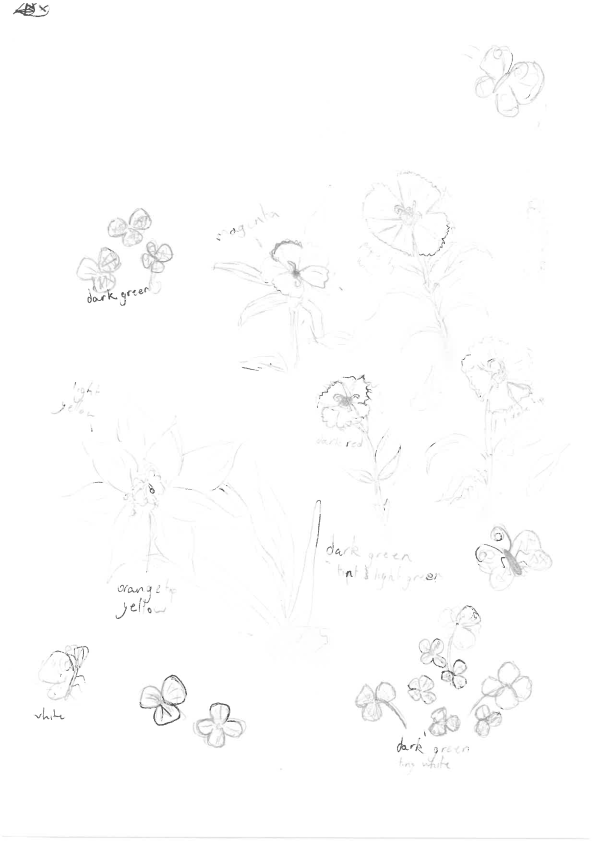
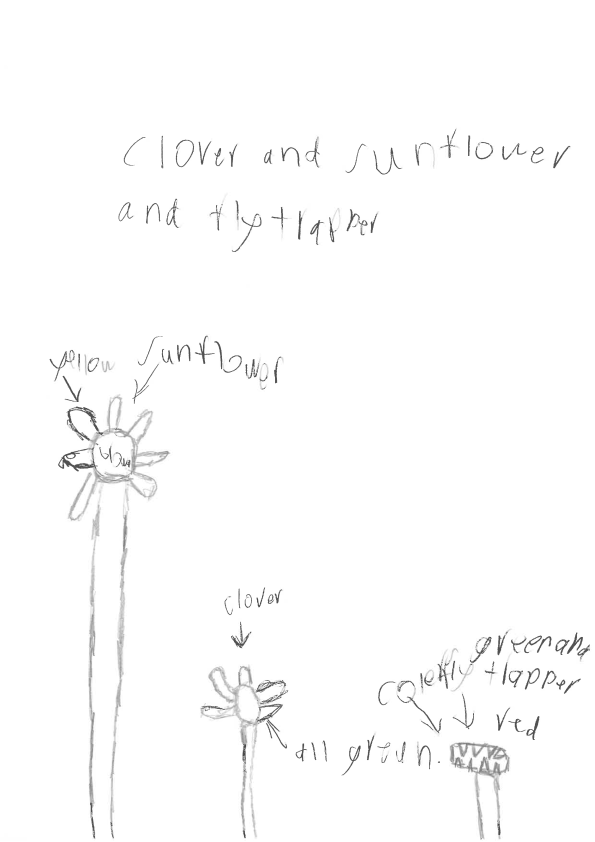
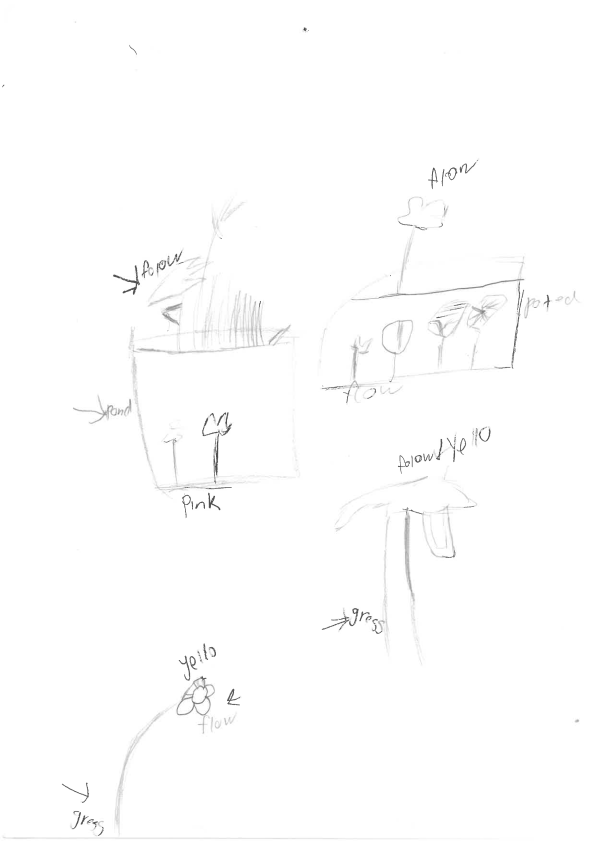
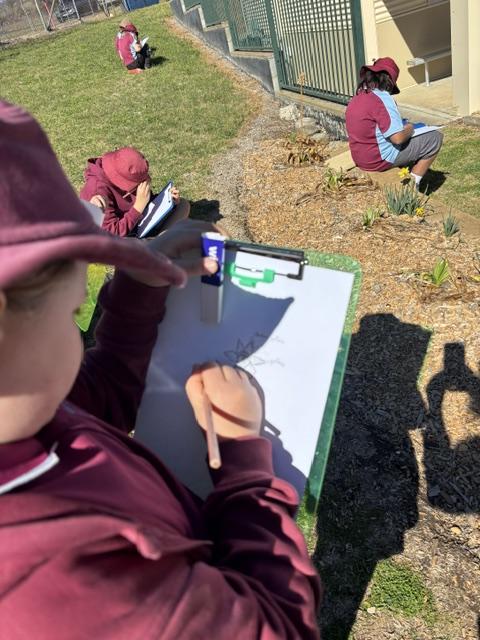
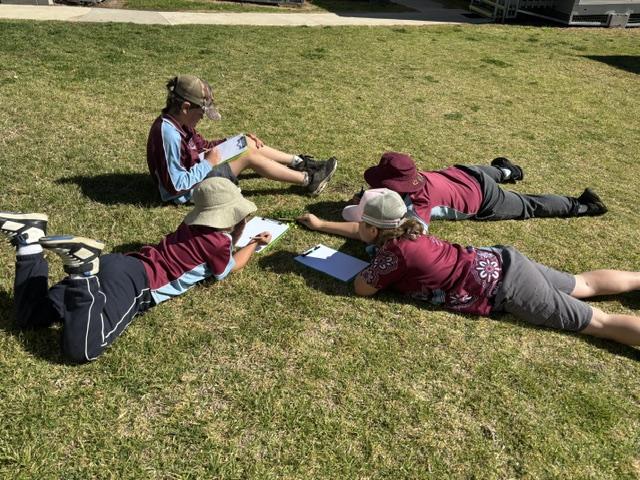
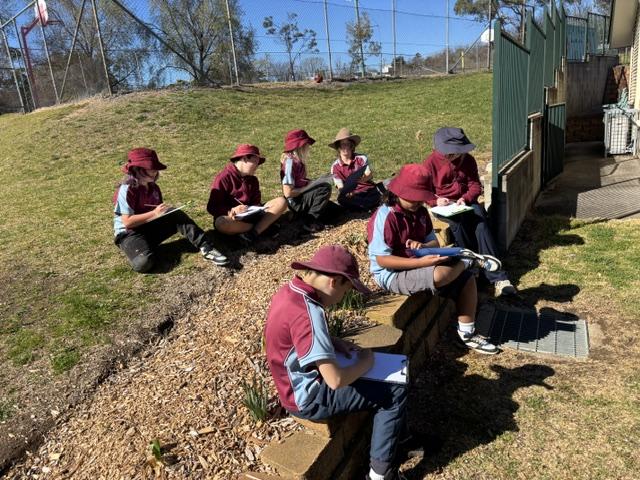
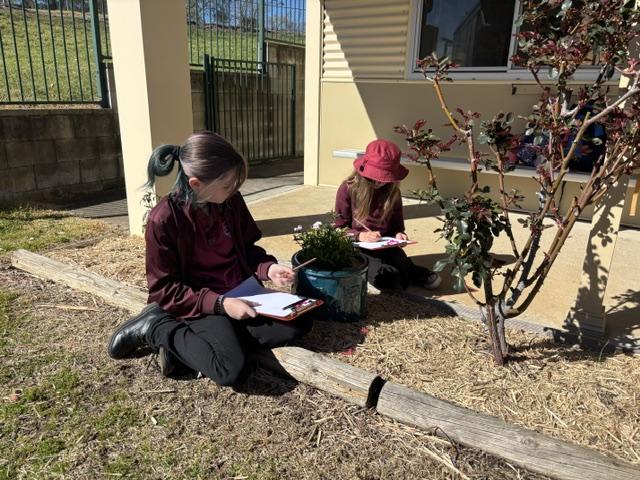
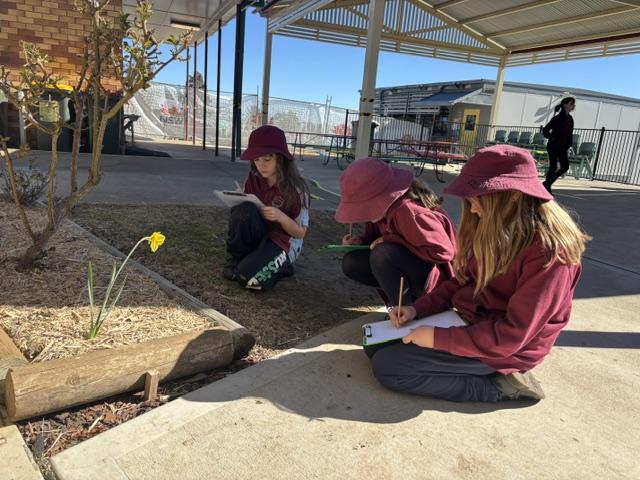
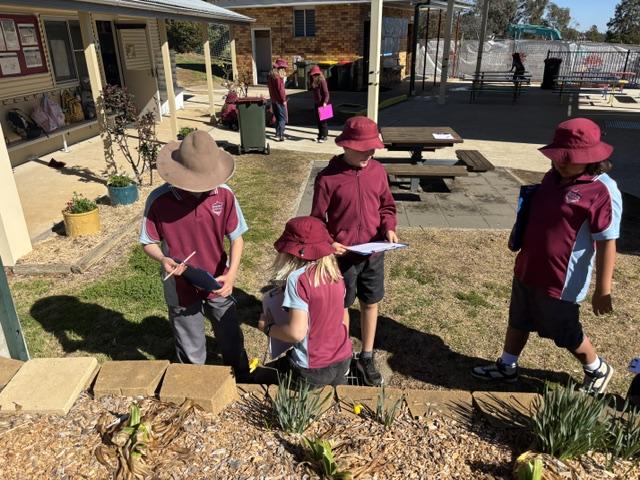
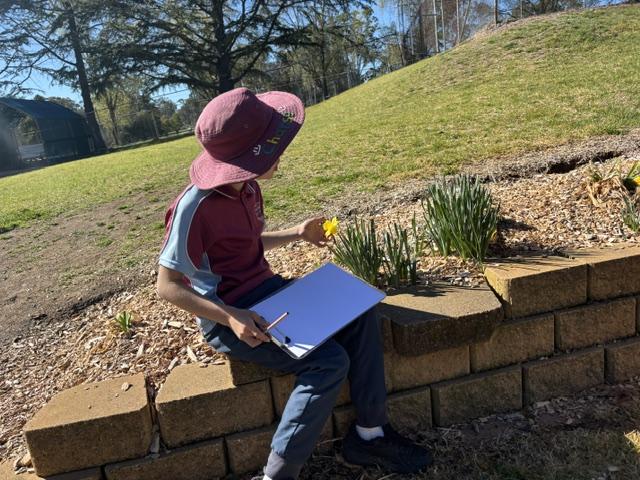
Students recently embraced the beauty of nature through an outdoor art activity focused on flowers. Taking their paper and pencils outside, the children explored the school grounds in search of vibrant flowers to observe and draw.
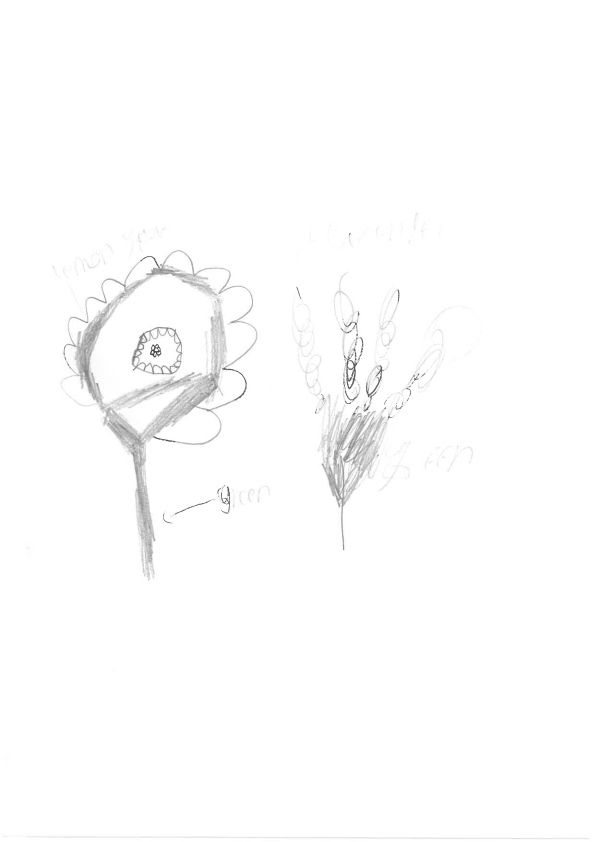
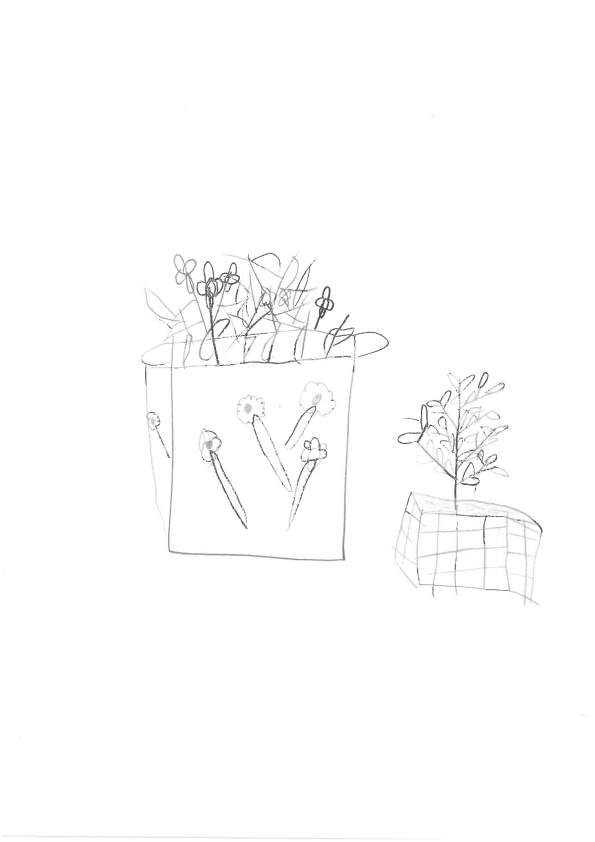
This hands-on experience allowed students to connect intimately with their natural surroundings, noticing the delicate shapes and structures of each flower up close. Once settled with their chosen blooms, the children created detailed graphite sketches, carefully capturing the intricate lines and contours of petals, stems, and leaves.
In addition to their drawings, students labelled colours that they observed, preparing to add watercolour paint to their artwork in the next phase. This helped to enhance their understanding of botanical details and colour application.
Throughout the activity, key elements of art were actively explored. Students practised line work to define shapes, used shading techniques to suggest depth and texture, and planned colour placement for their upcoming watercolour additions. This multifaceted approach enriched their skills in observation, drawing, and painting.
The outdoor setting offered a fresh and stimulating environment, encouraging mindfulness and a deeper appreciation for the natural world. We look forward to seeing the finished watercolour artworks that will bring these detailed sketches to life with vibrant colour.

Upper Division - STEM
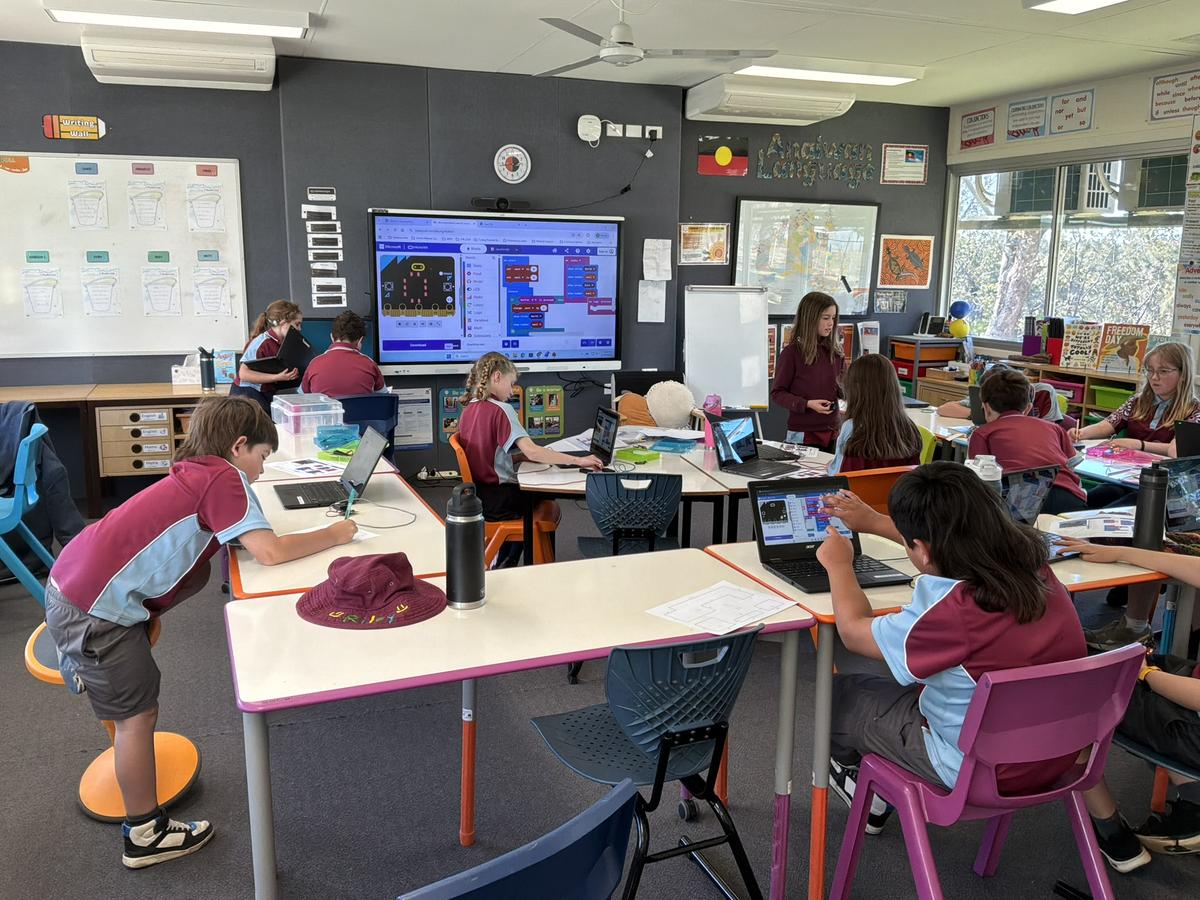
Over the past fortnight, the Upper Division class has engaged in enriching STEM sessions focused on coding and algebra concepts, aligned with the learning intention: "A student explains how digital systems represent data, connect together to form networks and transmit data".
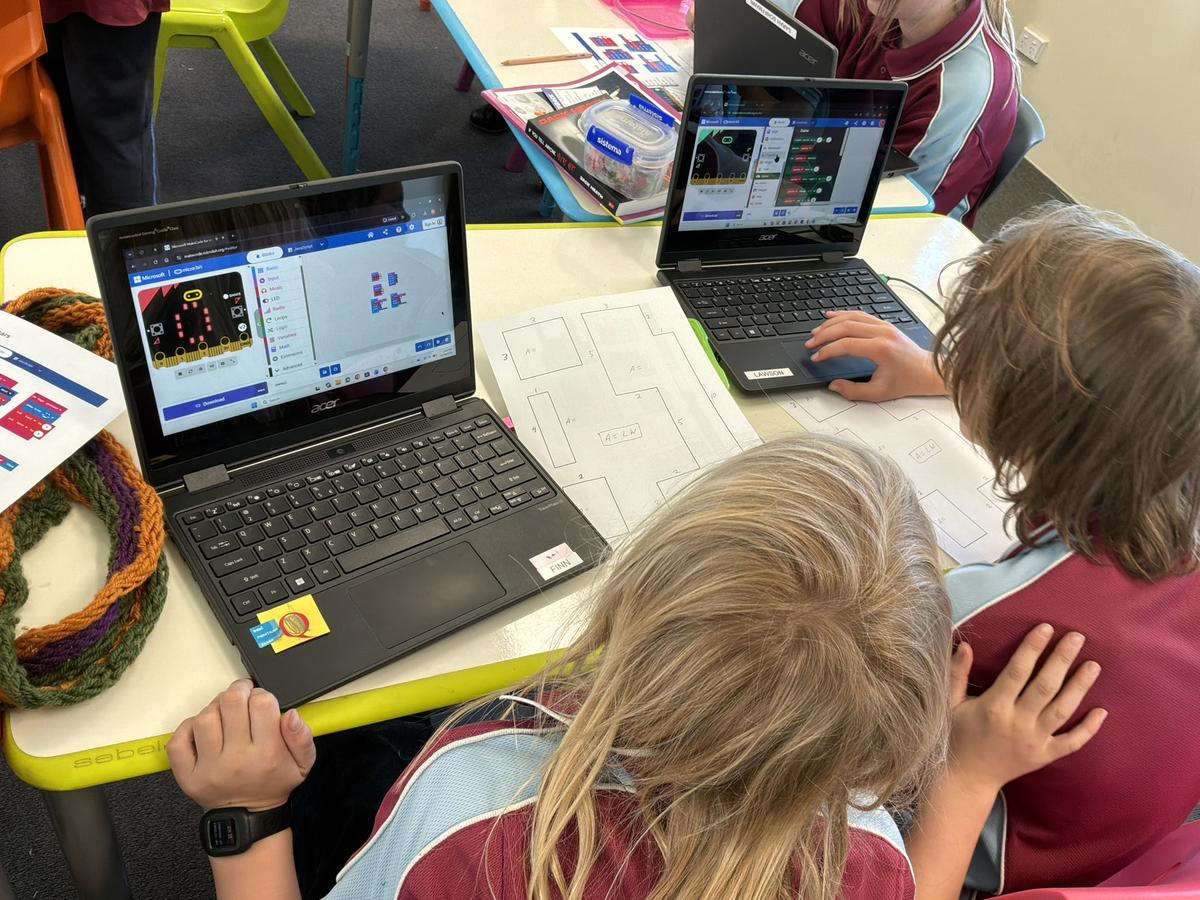
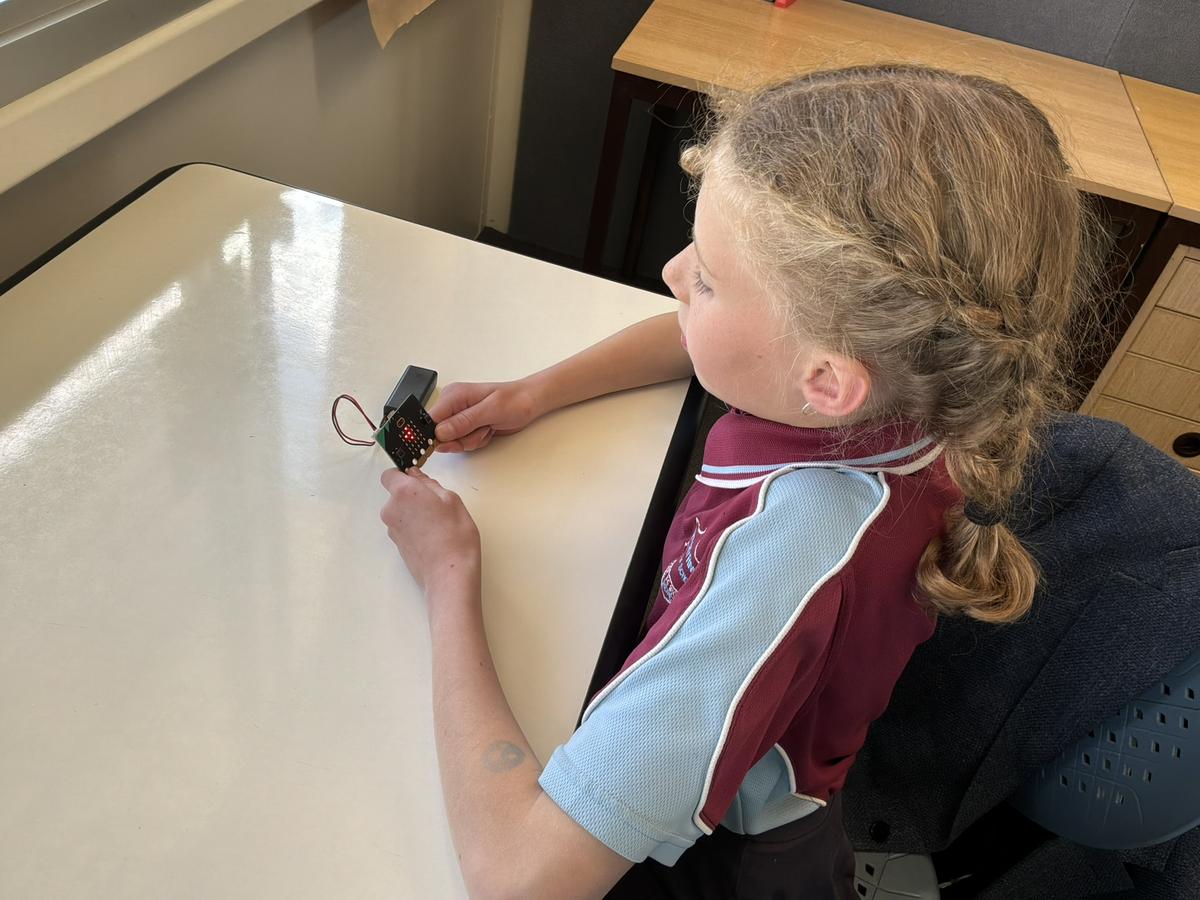
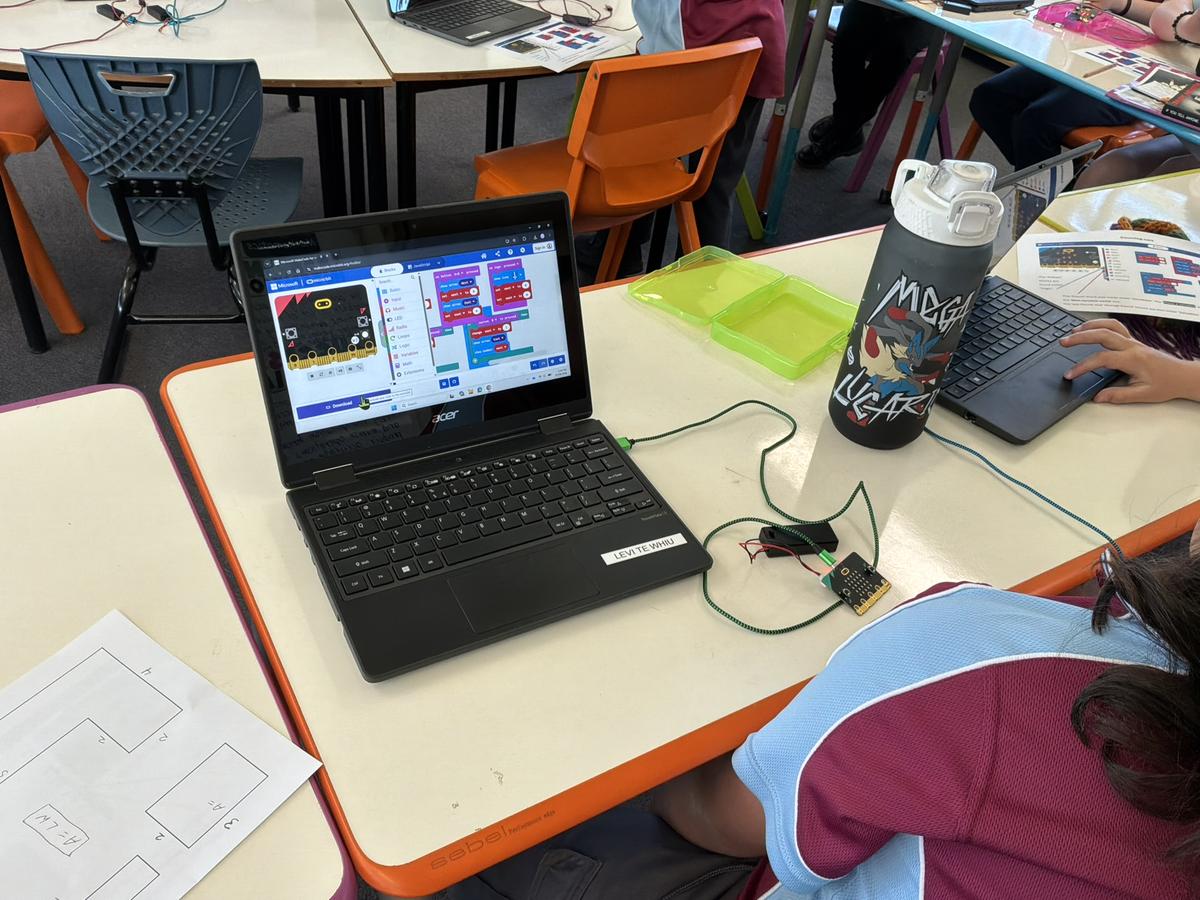
A highlight of our activities was extending the ‘Counting cars’ coding challenge from a SILO ‘Coding’ lesson. Students developed and refined code for two concurrent counters tracking highway traffic in the directions of ‘East’ and ‘West’. The enhanced program incorporated reset functionality and the ability to check both counters simultaneously without resetting either, strengthening students’ understanding of variables and concurrent processes in digital systems.
Our exploration of algebra continued alongside coding tasks, where we clarified the difference between variables and placeholders. Special attention was given to notation, such as the distinct font for the letter x to differentiate it from the multiplication sign, which is often omitted in algebraic expressions. This led to an introduction of algebraic formulas through practical examples like Distance (speed × time) and Area (length × width), grounding students’ comprehension of how formulas are structured and used.
These sessions combined hands-on coding with conceptual discussions, fostering students' capabilities in both computational thinking and mathematical reasoning as part of their STEM learning journey.
Stage 3 English - Novel Study
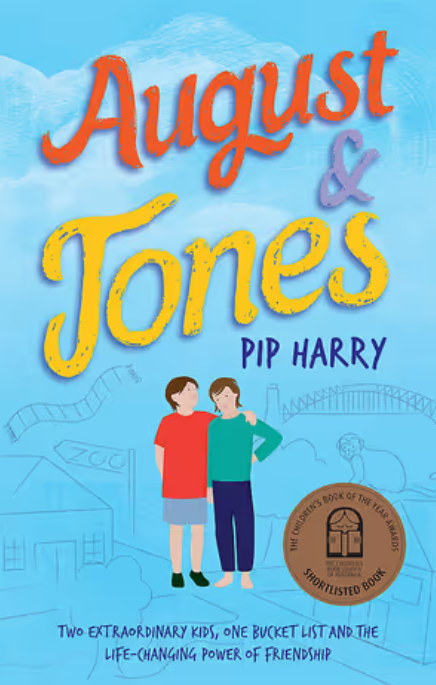
This week we finished reading our class novel, 'August & Jones' by Pip Harry. As a class, we enjoyed this fictional text and the clever perspectives which were presented by alternating chapters from the point of view of both protagonists, August and Jones. Stage 3 have unpacked the key textual concepts which align to this text, and how these concepts help us explore the book on a deeper level:
- Characterisation: The character traits and the development of individual personalities throughout the story, which we have analysed through a display of their dialogue, actions and feelings.
- Theme: The main message of the text which, as a class, we have identified as "the power of friendship".
- Perspective and Context: Gaining unique insight on the same set of events, told by different characters, within their individual circumstances and influences.
An interesting activity we completed recently was the compilation of a "bucket list". We discussed the meaning of this term and what type of items people would normally reserve for their bucket list. Students thought hard and considered what they would like to achieve one day in the (not so distant) future. We discussed the skills and motivation to achieve these items, noting that we are capable of reaching our most wildest dreams! Bungee jumping seemed like the most nerve-wracking option, with touching snow seeming to be the most achievable as ticked off in last year's local snow storm!
Students have started their final major writing piece of the term, beginning research on an extraordinary person who has achieved phenomenal things, whilst also with physical disability. This task is inspired by Jones, the protagonist in the text, who suffers through unimaginable challenges, but is able to overcome this adversity to achieve amazing things. Students will collate their research and understanding of Jones' character traits, to craft a letter to this inspirational person of choice. After discussing the qualities of resilience and bravery Jones displays in overcoming a fear of heights, we are excited to showcase some similar qualities at the Great Aussie Bush Camp next week, with some activities on offer for us to try, which were also mentioned in the book; including rock climbing!
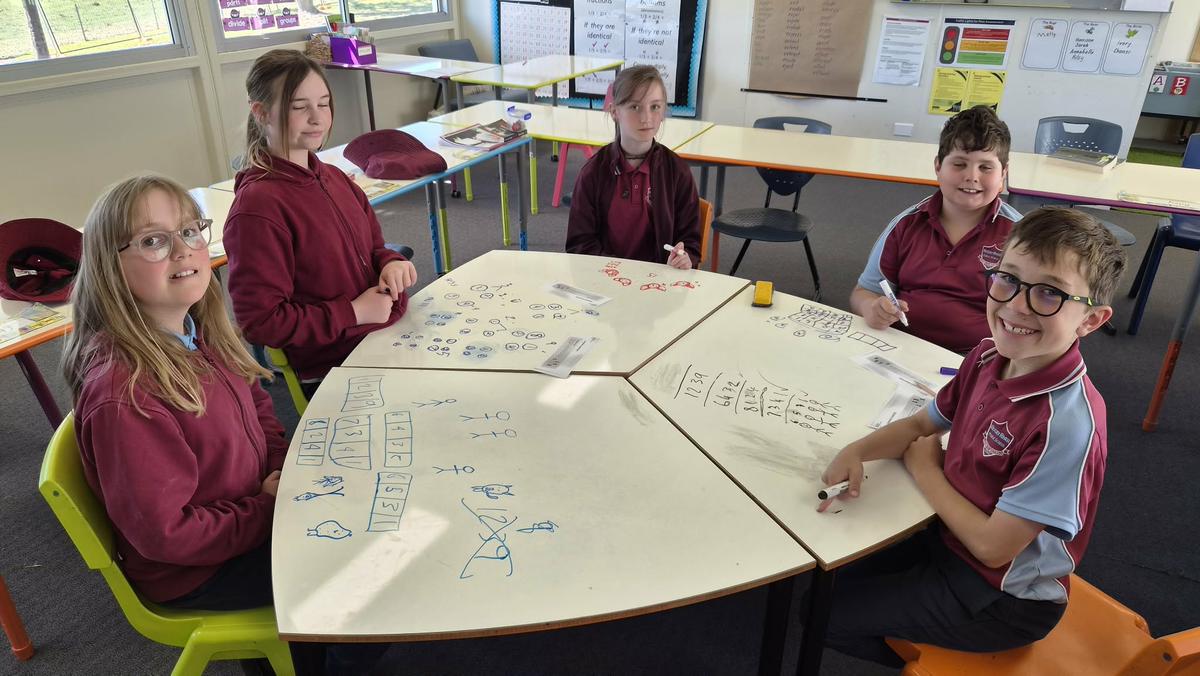
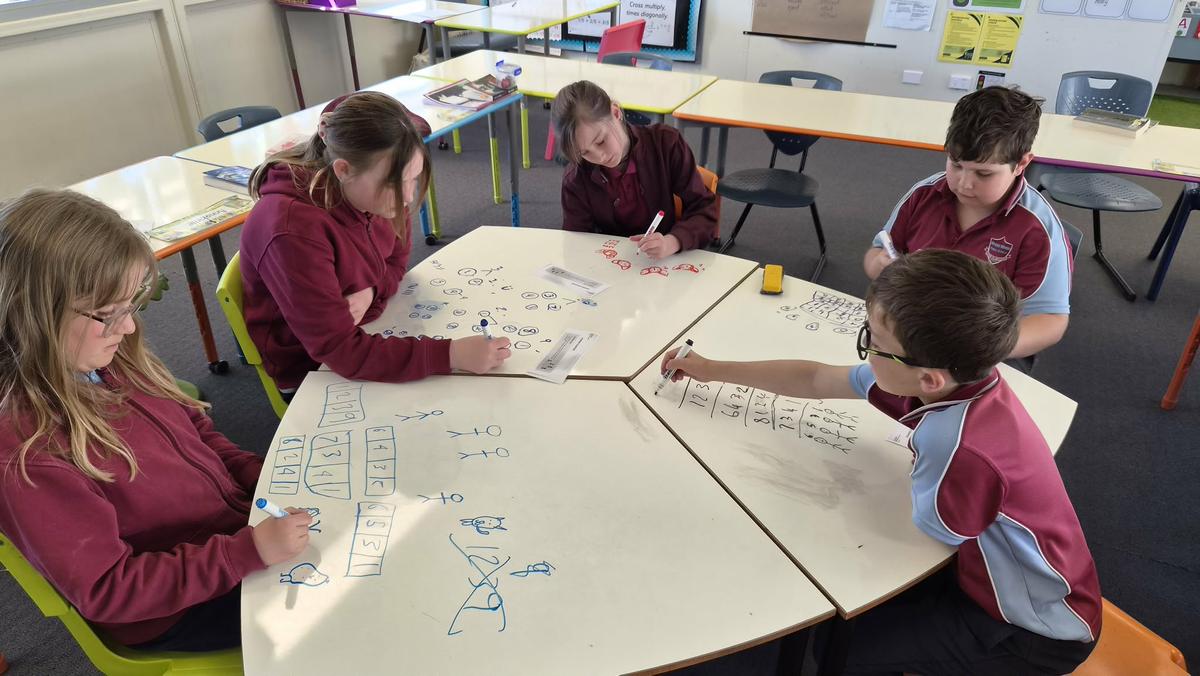
Stage 3 Mathematics - Tackling Challenging Tasks!
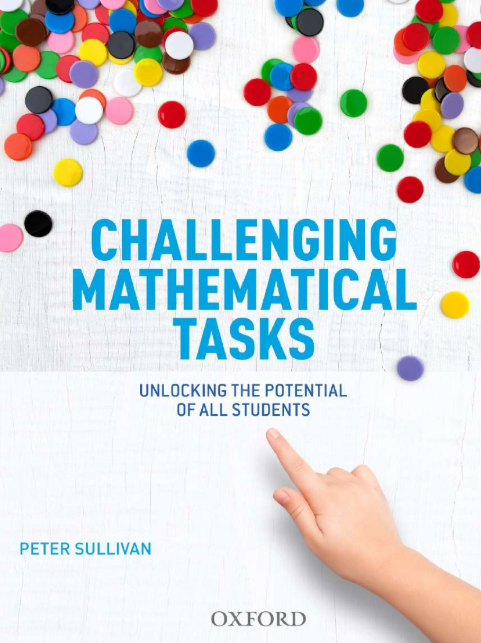
Stage 3 students have been kicking off our daily maths sessions with rich problem-solving activities from the book Challenging Mathematical Tasks. This resource is based on research by renowned educator Peter Sullivan, which highlights that students often thrive when faced with unfamiliar problems, enjoying the challenge and preferring to discover solutions independently rather than through direct instruction.
The tasks encourage deep thinking, decision-making, and risk-taking, supported by clear learning goals, key mathematical language, and thoughtful teaching strategies. Each activity is carefully designed to guide students through problem-solving processes while offering opportunities to extend their thinking. Through this approach, our Stage 3 learners are developing confidence, perseverance, and a stronger understanding of mathematical concepts in an engaging and meaningful way. It has been a real 'lightbulb moment' to recognise how creative maths can be, where problems can have multiple answers, and be interpreted in a number of ways - with the appropriate mathematical justification and reasoning.
Spare copies of these tasks are available for students to take home and challenge their family members, consolidating their own knowledge and stretching their thinking further, beyond the classroom.