Student News
Athletics Day
Although it was a chilly start to our Athletics Day in Bendigo, it wasn’t long before the day began to warm up and we enjoyed some fantastic conditions for competition. Congratulations to all of our students on the way they participated throughout the day. It was wonderful to see everyone giving their best, challenging themselves and putting all of their training into practice. There were some excellent individual performances, plenty of determination and great encouragement shown towards one another.
Our students should be very proud of their efforts and the way they represented St Mary’s. We will share the overall results and any new records with the school community in the coming week. More photos to come.
Adonis: For showing confidence in his reading and taking the time to go back and correct any errors.
Nakodah: For showing determination in her learning by working through challenging tasks independently to strengthen her understanding.
Chilli: For being willing to take on feedback and try new things.
Mason: For greeting each person with warmth and positivity. Your friendly smile and cheerful welcome help set everyone up for a happy day.
Braxton: For participating in all tasks with a smile and a positive attitude.
Foundation - Grade 2 History
How do you share your family's history?
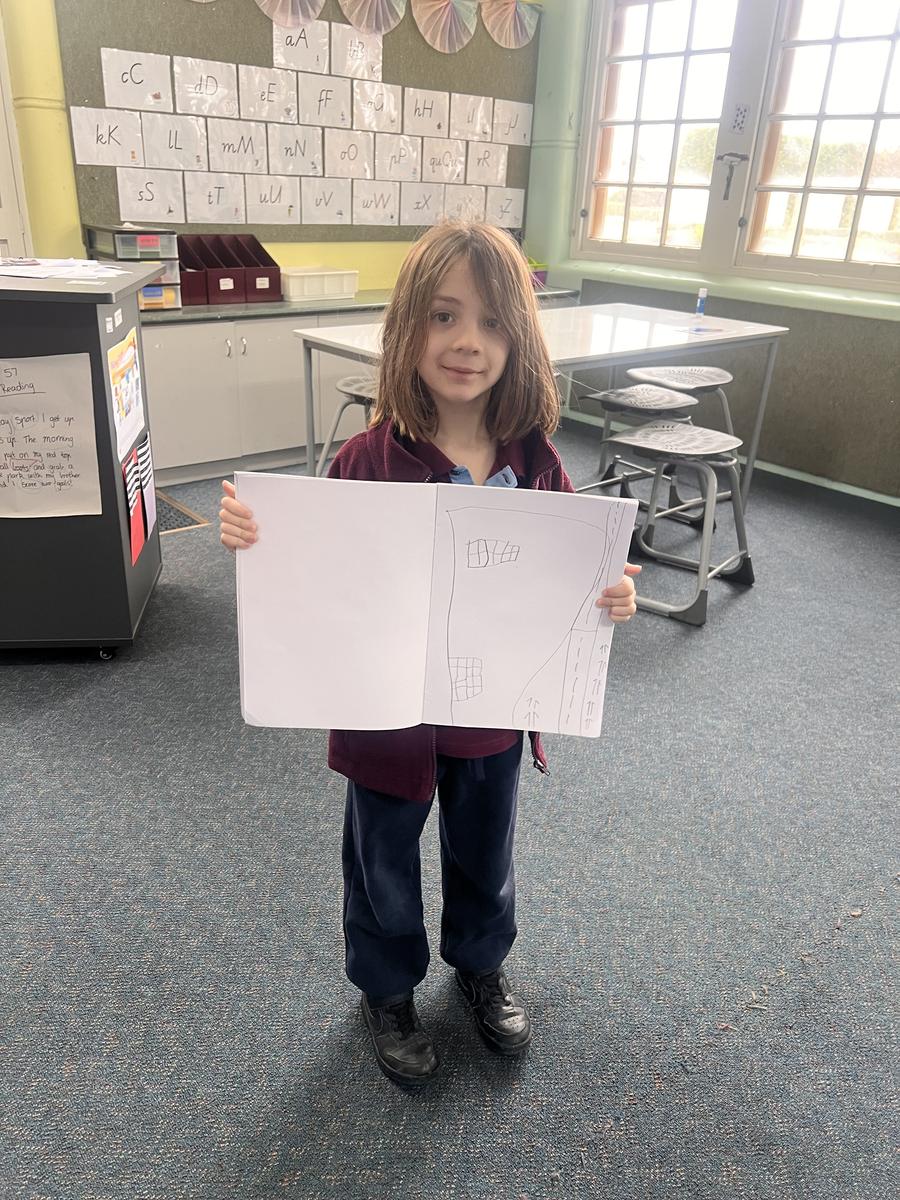
This term the juniors have been learning about all the different ways we can learn about the past including journal entries, letters, videos, newspaper articles, photos and storytelling just to name a few. This week students learnt about how our First Nations people share stories through pictures which include symbols. Students were able to use First Nations symbols and create their symbol to go along with their illustrations of their favourite place.
Adonis:
My favourite place is my house, I have used the kangaroo symbol because kangaroo's live next to my house.
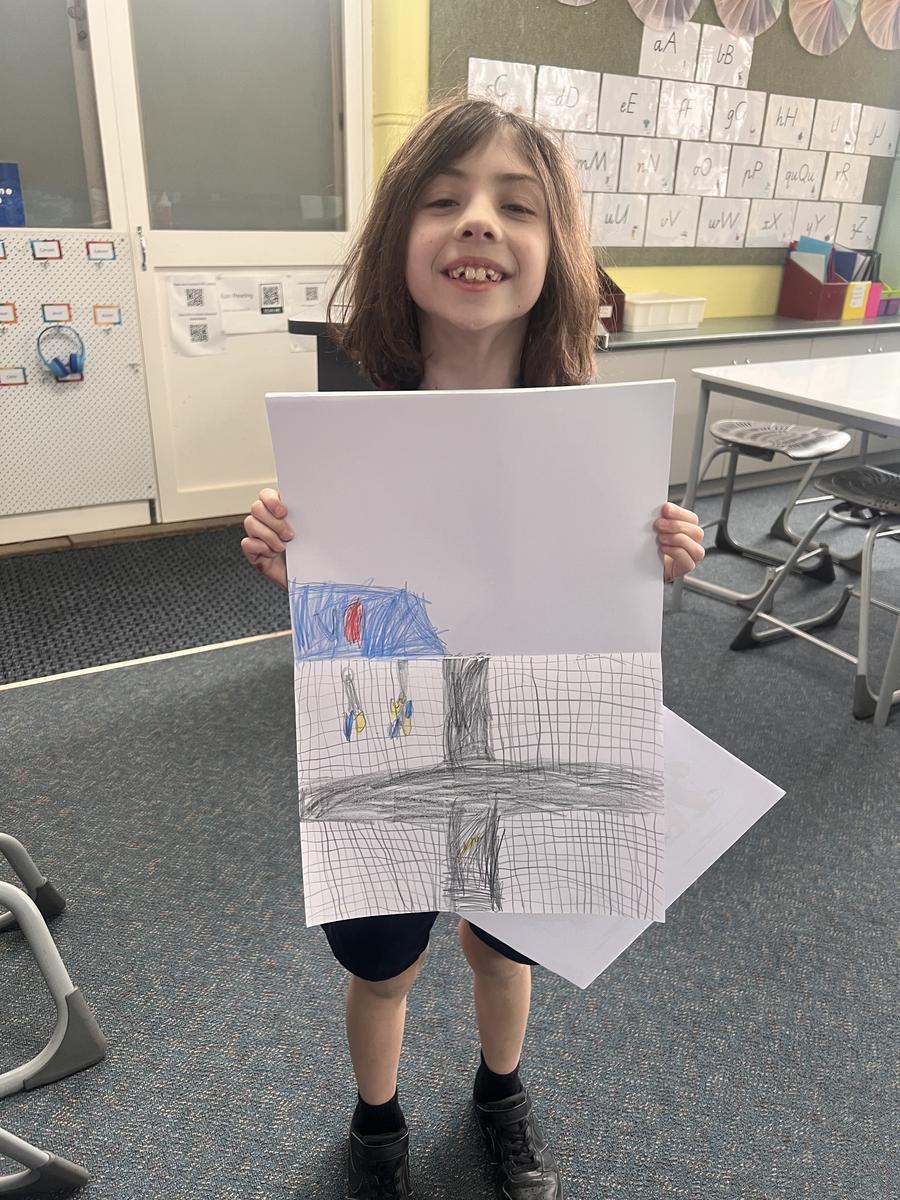
Achilles:
My favourite place is Jumpz, I have used the men and the women symbols. The men one was used to represent the Spiderman painting.
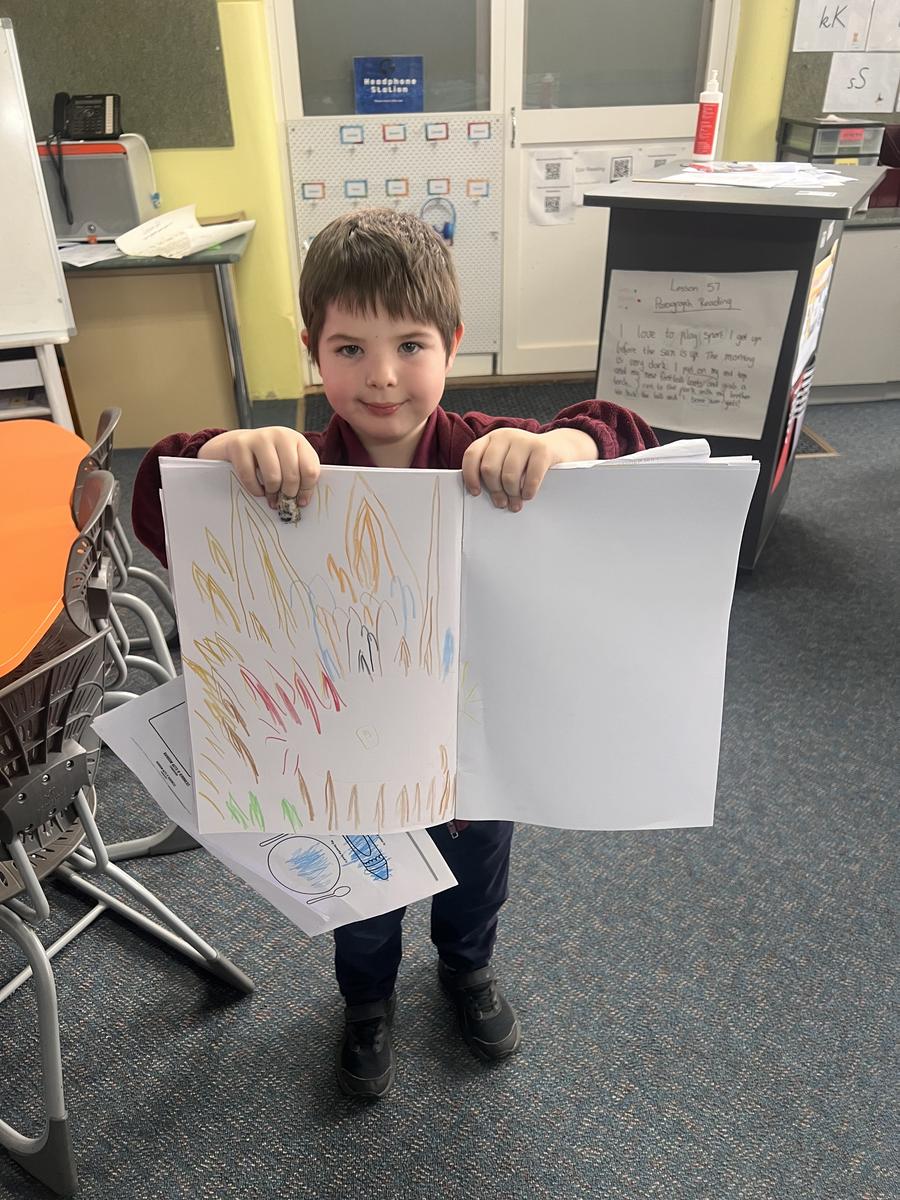
Mason:
My favourite place is the football oval, I have used the kangaroo symbols because they live there.
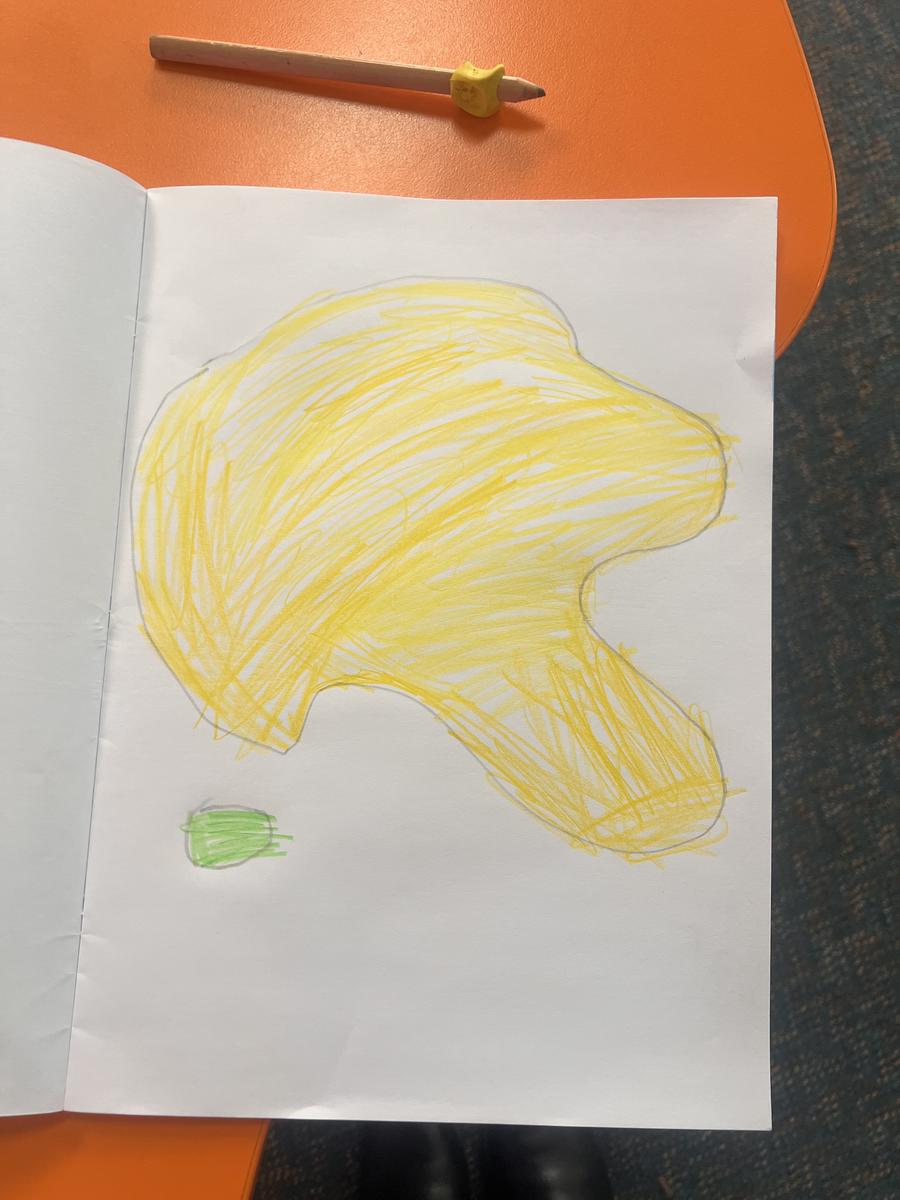
Dusty:
My favourite place is the pond.
Yr3-6 Literacy
This term in Literacy we have been researching and constructing information reports related to our focus text. Yr 5/6 have read the novel "Once" by Morris Gleitzman which is centred around Felix, a Jewish boy, during WWII in Poland. To build our understanding of the text we researched information about Poland as a country and its relationship with Australia. From this research we wrote our own Information Report about Poland. In Yr 3 we read the book "Iron Man" by Ted Hughes and discovered many interesting facts about iron and how Australia is one of the main producers of iron in the world! Read on to discover more of the intriguing iron facts we have learned!
Exploring Poland’s History
Poland, a country in the centre of Europe, has beautiful, fascinating landscapes, but sorrowful, tumultuous history. From the heart of Europe, Poland faced many hard challenges due to its neighbouring countries of Russia and Germany. While this report goes on, it will examine Poland’s landscapes, culture, and fascinating history.
Landscapes in Poland’s Geography
Poland, while it struggled in the past, found its way and survived to a beautiful landscape. In the southwest, a long, stretching river starts in the Czech Republic, forming part of the border with Germany, before going out to the Baltic Sea. In the southern third of Poland, it consists of hills and mountains including the Rysy mountain, at 8,199 metres high. While some of Poland is hills, mountains, and even forests, most of Poland is endless plains, giving little shelter in the winters. As Poland was shaped it gave many homes to many things.
Poland’s Cultural evolution
Poland’s diverse culture was home to many heritages such as Jewish, Roman catholic and that of neighbouring countries. In its wide population, Poland is home to approximately 3 million of those with Jewish heritage but was highly decreased in World War II. While a high population was Jewish, once the population decreased, it gave way to the rise of another culture known as roman catholic. As the culture’s diversity changed, their love of music stayed the same. While Poland changed from one culture to another, it stayed true to its beauty in its cultural diversity.
Australia’s Past and Present connections with Poland
As Poland struggled to remain in control of their country, one of their biggest allies was Australia. Through World War I and II, Poland and Australia both faced many challenges such as fierce battles and targeted attacks, but through it all, they have helped each other and survived together. Between 1839-1843, a Polish explorer by the name of Sir Paul Edmund Strzeleki was traveling through New South Wales Australia, when he came across a mountain bigger than all others in Australia and after researching, he decided to set out on a quest to climb it and once he did, name it after Poland’s leader. As Poland and Australia formed a more powerful bond, they came more dependent of each other’s resources such as ores like silver and platinum. While Poland helped Australia and Australia helped them, they both had many other countries on their sides.
Within this report, we discussed topics about the land, culture, wildlife, and Australia’s connection with and of Poland, past and present. Due to its location in eastern Europe, Poland has many unique specifications that not many places have. Their was no doubt that Australia will always maintain connection with Poland, for, through all the challenges they both faced, they always helped each other.
By Emmett Hodge
Iron
By Nakodah
Iron is a type of metal that we use in our everyday lives and help us make shelters for people. Iron is the second most common metal on Earth and it is made into many different shapes. The use of Iron is to make tools and weapons. This report will tell you the process Iron goes through when it was mined.
WHERE IS IRON MINED?
Iron is mostly mined in Western Australia. 90% of mining is done in the Pilbara region. They know if Iron is in the area if the soil is red. Iron also comes from meteorites that fall from the sky. All the Iron that is mined in Australia is shipped to different places in the world.
THE PROCESS OF MAKING IRON
Australia is one of the biggest producers of iron ore in the world. Smelting is the process that iron goes through. Iron is made with charcoal limestone and iron ore and smelted in a furnace at 1200c. Hot lumps from the furnace can be poured or pulled into shapes. Iron can be, hardened, softened, stamped pulled and rolled.
HOW IS IRON USED
Iron ore is mined and it is refined in an Iron works. Iron can be used for meany different things and in different products. Iron ore is turned into pure Iron in a process called smelting. Pure Iron can be mixed with carbon to make steel and the more carbon added to the harder the steel, lower amounts of carbon make steel less brittle. Steel is the most common use for Iron. Iron is found in, buildings, cars, tools, chains and nails.
This report teaches us where Iron is mined, the process it goes through and how it is used. Iron is a common metal that is cheap and it can be used to make steel. The uses of iron are outstanding, but did you know that we use iron in our everyday lives?