
Deputy Principal
Kristen Waldron

Deputy Principal
Kristen Waldron
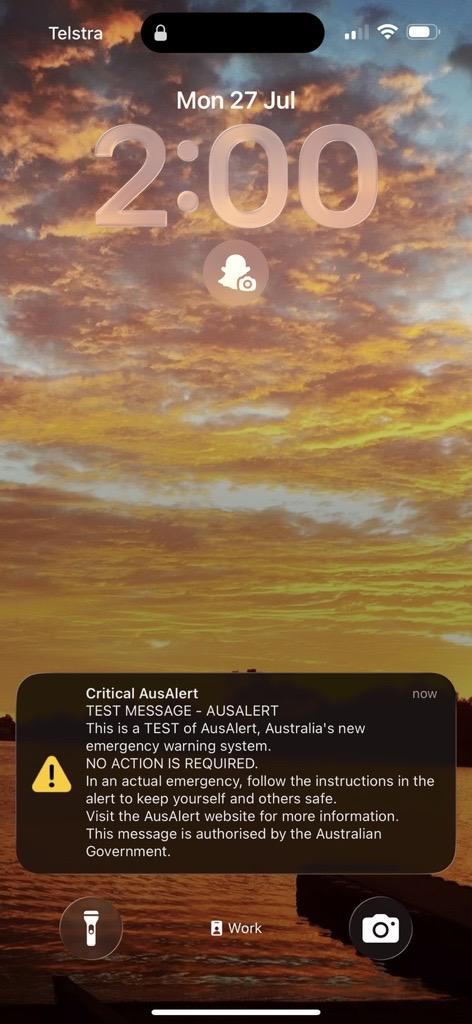
This week's National Emergency Alert test sent phones buzzing in pockets, lockers and bags across the school — and for many of our students, it was a useful, practical reminder of our mobile phone policy. We'd like to take this opportunity to reinforce that policy with our whole school community.
Why We Have This Policy
In an age of constant digital connectivity, it's important to strike a balance between the benefits of technology and the need for a focused, interactive learning environment. Phones and other devices, however useful, can easily become a source of distraction that pulls students away from their studies and from meaningful engagement with their peers.
Our aim is simple: to give students an environment where they can fully engage with their learning and enjoy real, face-to-face interactions with their classmates — free, at least for the school day, from the pressures of social media and the pull of constant notifications.
The Policy
Mobile phones and AirPods may not be used during school hours, 8:30am to 3:30pm, unless a teacher or staff member has given explicit permission.
Consequences for non-compliance:
First offense: The phone or AirPods will be confiscated for the remainder of the school day. Students can collect them from the front office at the end of the day.
Second offense: Parents or guardians will be asked to come to the school to collect their child's phone or AirPods in person.
We appreciate your support in reinforcing these expectations at home, and thank the students who follow the policy consistently.
We know that for some families, going phone-free during the school day isn't just an inconvenience — it can bring up real separation anxiety for kids (and parents!). This is a challenge schools around the world are grappling with, and Australia is no exception, as more schools move toward comprehensive bans on phone use during school hours.
The debate around these bans is a lively one, but the research base is growing. A widely cited 2016 study found that schools introducing mobile phone bans saw student test scores improve by roughly 6.4% of a standard deviation — an effect comparable to adding around five extra days to the school year, or an additional hour of learning each week. Notably, the biggest gains were seen among lower-achieving students. Similar patterns have emerged from research in Spain and Norway, lending further weight to these findings.
None of this means the transition is easy. It's worth having open, honest conversations at home about phone use and the effects of constant connectivity — including the very real pull of phone addiction. A few things that can help:
Talk about it openly. Acknowledge that missing their phone during the day is a genuine feeling, not just an inconvenience.
Stay in touch with the school. If your child is struggling with the adjustment, let us know — we're happy to work together on strategies that support them.
Build healthy habits at home. Phone-free times or spaces at home can help the school day feel less like a sudden shift and more like part of a broader, balanced routine.
The evidence is clear that reducing phone distractions during school hours supports better focus and stronger learning outcomes. With your continued partnership, we can help our students navigate this transition in a way that protects both their education and their wellbeing.
— Dr Michael Carr-Gregg