
CHILD SAFE STANDARDS AT ST AGNES'

Child Safe Standards at St Agnes'
At St Agnes’, the safety, wellbeing and dignity of every child are central to all that we do. We are committed to creating a school environment where every student feels safe, valued, respected and empowered. As part of this ongoing commitment, each month we are highlighting one of the Victorian Child Safe Standards with our community.
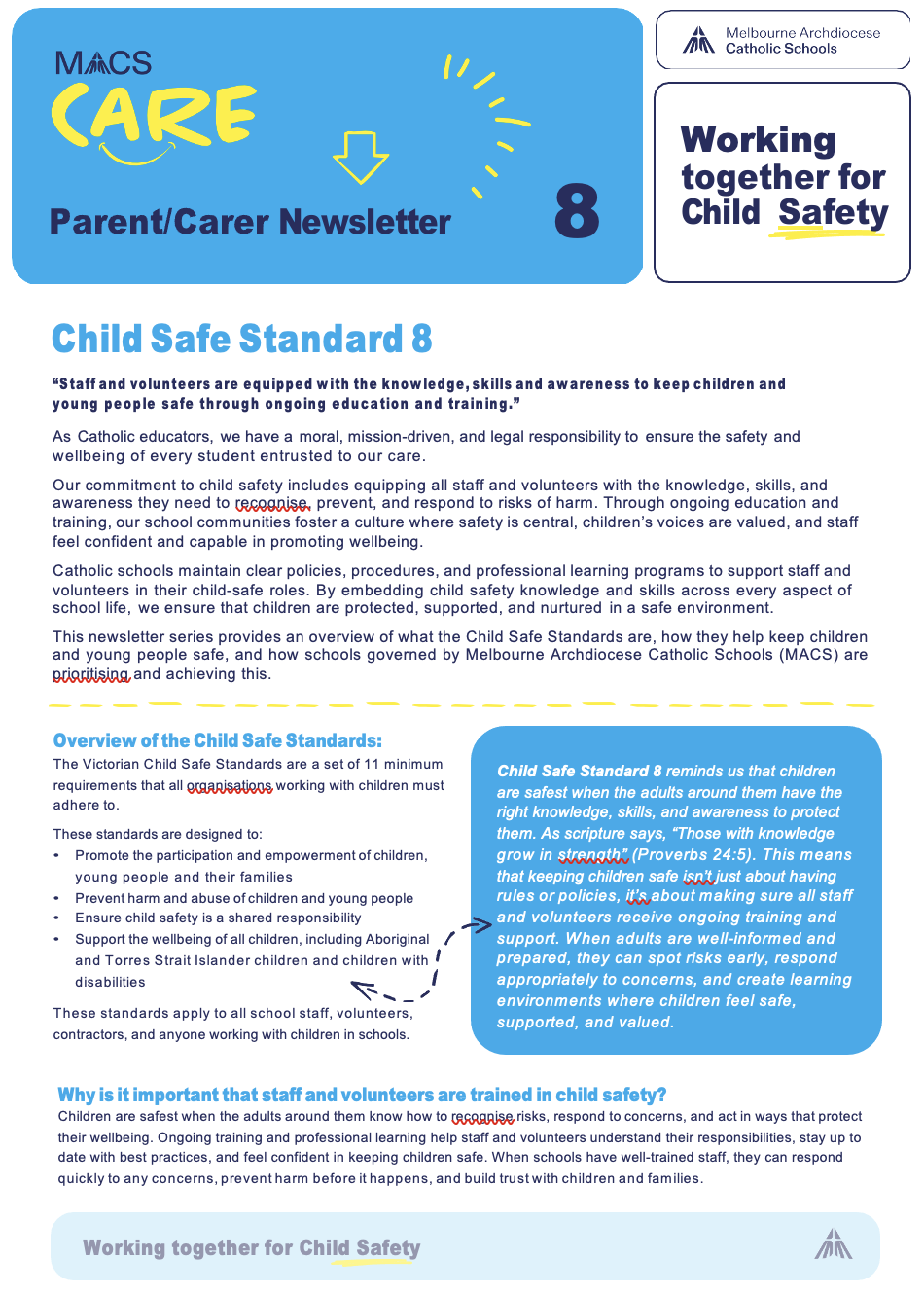
The Victorian Child Safe Standards are a set of eleven standards designed to help schools create and maintain child-safe environments through strong policies, practices and partnerships with families. They support schools in building cultures where children’s voices are heard, their wellbeing is prioritised, and safeguarding is embedded into everyday school life.
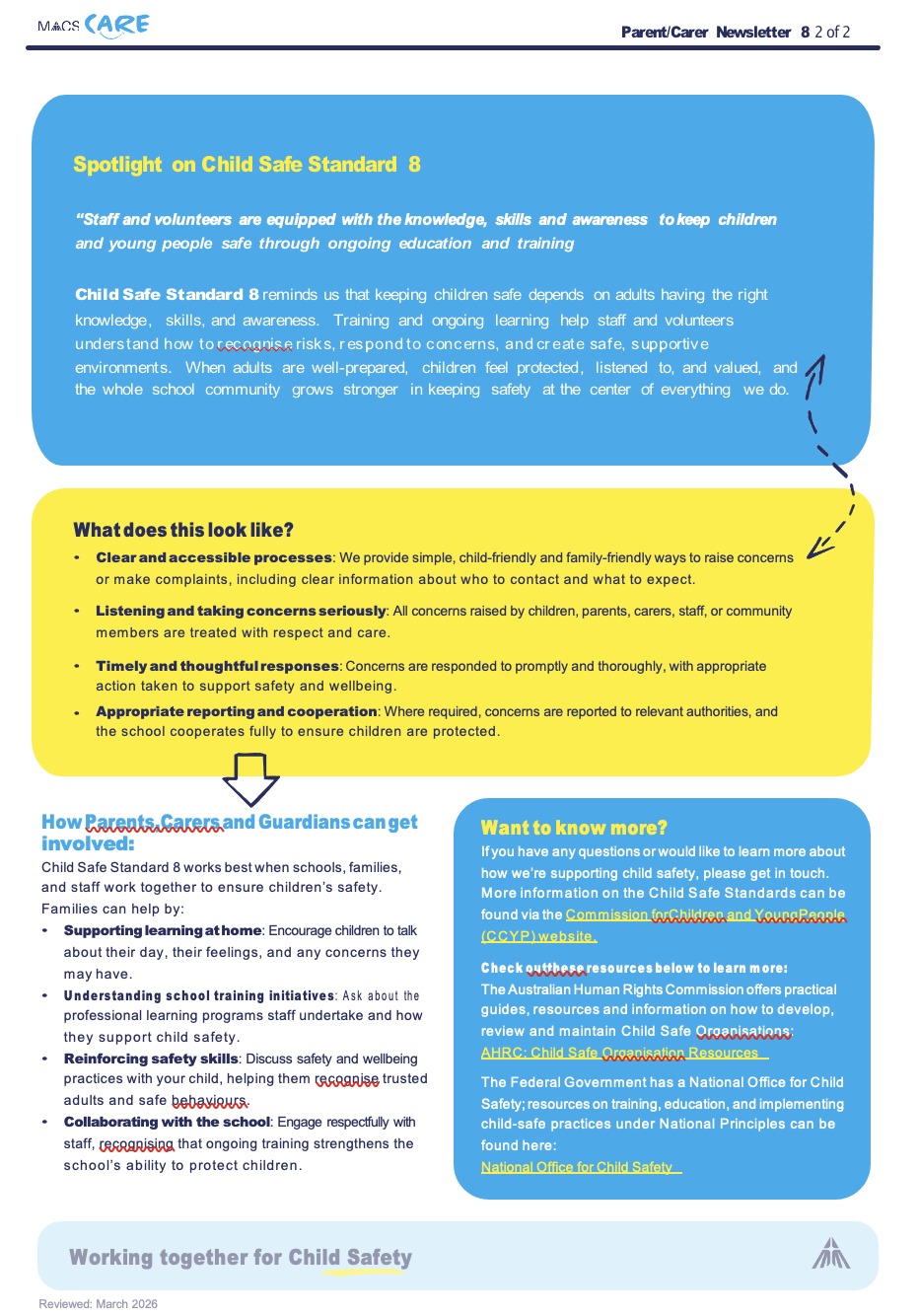
This week, we focus on Child Safe Standard Eight, which is about ensuring that staff and volunteers are equipped with the knowledge, skills and awareness they need to keep children and young people safe. Child safety is an ongoing responsibility, and it is important that the adults working with our students understand how to recognise potential risks, respond appropriately to concerns and contribute to a strong culture of child safety.
At St Agnes’, all staff undertake regular training and professional learning in child safety. This includes our responsibilities around mandatory reporting, identifying and responding to signs of abuse or harm, professional boundaries, the Child Safe Standards and our Child Safety Code of Conduct. Child safety is also regularly discussed at staff meetings and through school policies and procedures so that staff understand both their individual responsibilities and the processes to follow when a concern arises.
Importantly, this knowledge is reflected in our everyday practices. Staff understand the importance of appropriate supervision and visibility when working with students, maintaining professional boundaries, listening and responding when a child raises a concern, and reporting concerns to the appropriate people. Staff are also supported by our school leadership and wellbeing teams when responding to more complex situations, ensuring decisions are made with the safety, wellbeing and dignity of the child at the centre.
Our commitment also extends to the many parents and volunteers who generously support our school. Volunteers are provided with information about our child-safe expectations, including our Child Safety Code of Conduct, and are made aware of their responsibilities when working with students. Whether helping in a classroom, attending an excursion, supporting a sporting event or volunteering at a school activity, we want every adult working with our students to understand the important role they play in maintaining a child-safe environment.
Child safety is not something we address through a single policy or training session. It requires ongoing learning, awareness and shared responsibility. By continually building the knowledge and confidence of our staff and volunteers, we strengthen our ability to identify risks, respond appropriately and maintain an environment where every child at St Agnes’ feels safe, respected and protected.
What this looks like at St Agnes'
At St Agnes’, we believe that keeping children safe requires every adult working with our students to have the knowledge, skills and confidence to recognise concerns and respond appropriately. Child safety is not simply a set of policies or an annual compliance requirement; it is something that needs to be understood, discussed and reflected in our everyday practices across the school.
All staff at St Agnes’ undertake regular child safety training and professional learning. This includes training in Mandatory Reporting, the Child Safe Standards, identifying and responding to signs of abuse or harm, professional boundaries and our Child Safety Code of Conduct. At the beginning of each year, staff revisit these responsibilities and throughout the year child safety remains a regular part of staff meetings, professional conversations and school updates.
We also use practical examples and scenarios to ensure staff understand how our policies translate into everyday situations. For example, staff discuss what to do if a child makes a disclosure, if they notice an unexplained change in a student’s behaviour or wellbeing, or if they observe something that does not align with our Child Safety Code of Conduct. Staff understand who concerns need to be reported to within the school, when further action or documentation is required, and when external reporting obligations apply.
Our focus on child safety can also be seen in the everyday routines and expectations across St Agnes’. Staff consider visibility and appropriate supervision when working individually or in small groups with students, follow clear procedures for yard duty and student movement around the school, and carefully plan supervision and risk-management arrangements for excursions, camps, sporting events and other activities. Staff are also expected to maintain clear professional boundaries in their interactions and communication with students.
An important part of our professional learning is also understanding the different ways children may communicate that something is wrong. A child may not always directly tell an adult that they feel unsafe. Changes in behaviour, attendance, engagement, friendships or emotional regulation can all prompt staff to check in with a student and, where appropriate, seek further support from our Wellbeing and Learning Diversity team or school leadership. This helps ensure concerns are identified early rather than waiting for a child to explicitly ask for help.
New staff and regular CRTs are also supported to understand our expectations from the beginning of their time at St Agnes’. Our induction processes include information about child safety, mandatory reporting, supervision, professional conduct and the procedures to follow if they have a concern about a student. This ensures our expectations remain consistent regardless of which adults are working with our children.
Our commitment extends to the parents and volunteers who generously support our students. Volunteers are provided with information about our Child Safety Code of Conduct and expectations for working with children, including appropriate interactions, supervision and what to do if they see or hear something that concerns them.
Ultimately, Child Safe Standard Eight is about ensuring that the adults around our students are not only committed to keeping them safe, but are equipped to do so. Through ongoing training, regular discussion, clear procedures and consistent everyday practices, we continue to build the knowledge and confidence of our staff and volunteers so that the safety, wellbeing and dignity of every child remain at the centre of our work at St Agnes’.