
Student Engagement & Wellbeing News

Executive Functioning
Mornings with my own kids are getting a little easier as they get older, but for years, I found my mornings were like Groundhog Day. The kids got up. I gave reminders of their morning steps; get dressed, eat, pack your bag, teeth, shoes. We have a big rule in the mornings. We finish what we MUST do BEFORE we do the ‘non-essentials’. There was a time where we had daily chats about the essential tasks versus the non-essentials. You NEED shoes and a lunch box for the day. Roller skating is a non-essential task. We can do it only after the essentials are done. Still to this day, I have to give some reminders, or check that my little man actually put his undies on (oh my!). What is it with kids?! By the way, if your mornings sounded like mine, search for ‘checklist boards’. Amazon has them for less than $20 and they can be a life saver!

Executive Functioning involves a range of cognitive processes to support us in getting through our day-to-day lives. People can be skilled in some areas, and need support for others. And that’s okay.
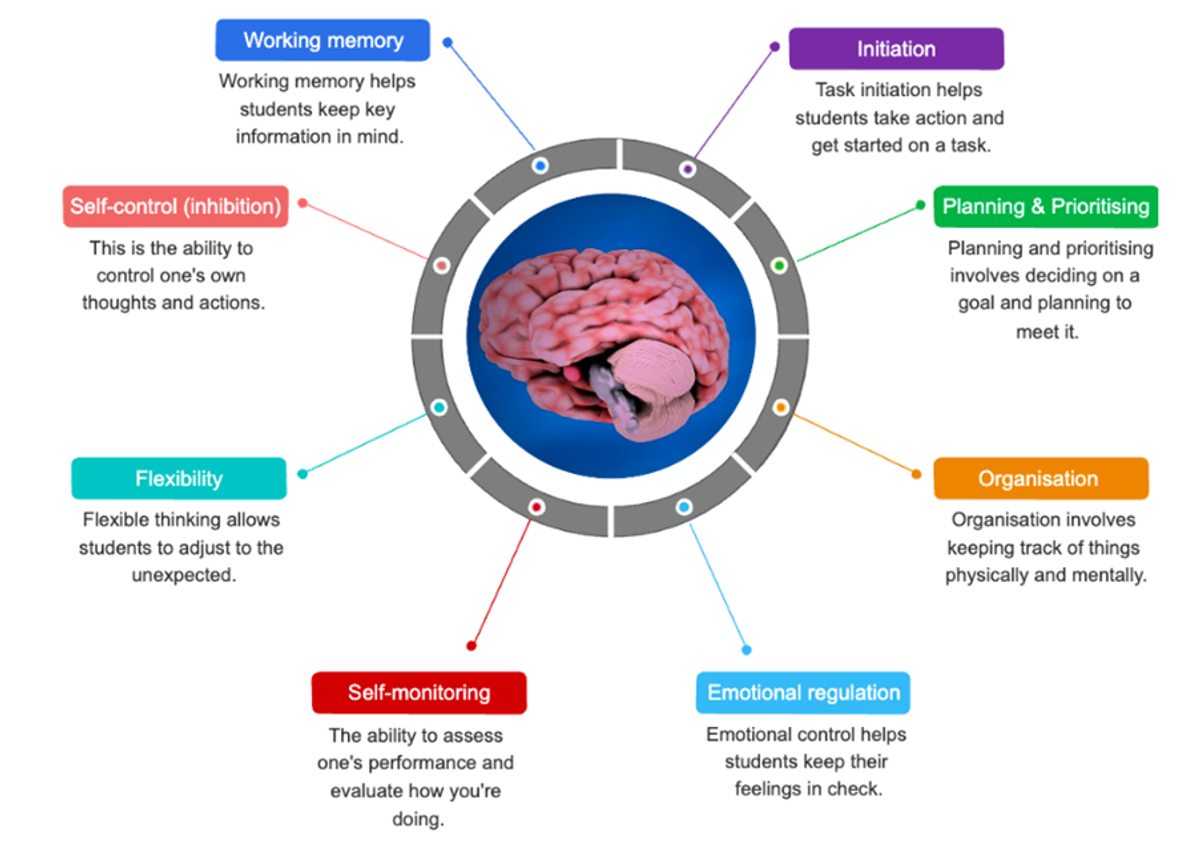
Why are executive functions important?
The skills involved in executive functioning allow us do the following:
- Initiate: Beginning a task or activity. Impact of difficulty: May have trouble getting started on homework or independent tasks.
- Inhibit: Not acting on an impulse or stopping one’s own inappropriate activity at the proper time. Impact of difficulty: May have trouble stopping negative behaviour or acts without thinking.
- Shift:The ability to move from one situation, activity, or aspect of a problem to another as the situation demands. Impact of difficulty: Can get stuck on a topic or tends to perseverate on ideas or actions.
- Plan: Anticipating future events, setting goals, and developing appropriate steps ahead of time to carry out an activity. Impact of difficulty: May start assignments at the last minute; does not think ahead about possible problems.
- Organise: Establishing or maintaining order in an activity or place; carrying out a task in a systematic manner. Impact of difficulty: Often has a scattered or disorganised approach to solving a problem; is easily overwhelmed by large tasks or assignments and unsure where to begin.
- Self-monitor: Checking on one’s own actions during, or shortly after finishing, a task or activity to ensure appropriate attainment of goal. Impact of difficulty: Unlikely to check work for mistakes; is unaware of own behaviour and its impact on others.
- Working memory: Holding information in the mind for the purpose of completing a specific and related task. Impact of difficulty: Trouble remembering things, even for a few minutes; when sent to get something, forgets what he or she is supposed to get.
- Emotional control: Modulating/controlling one’s own emotional response appropriate to the situation or stressor. Impact of difficulty: Is easily upset, explosive; small events trigger a big emotional response.
Over the next few editions, we will look into EF a little more.
Anna Gbikpi-Benissan
Assistant Principal