Careers Corner
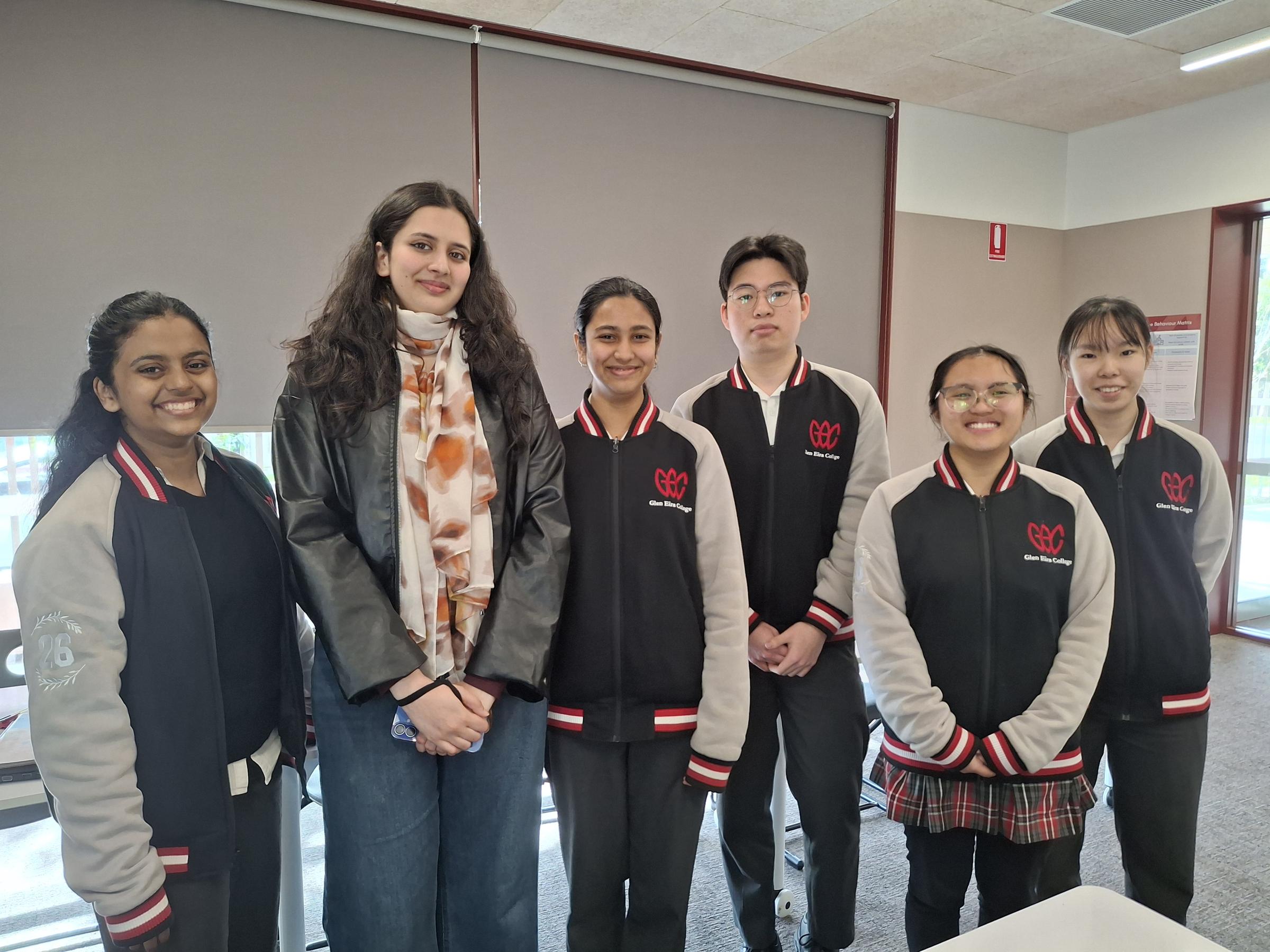
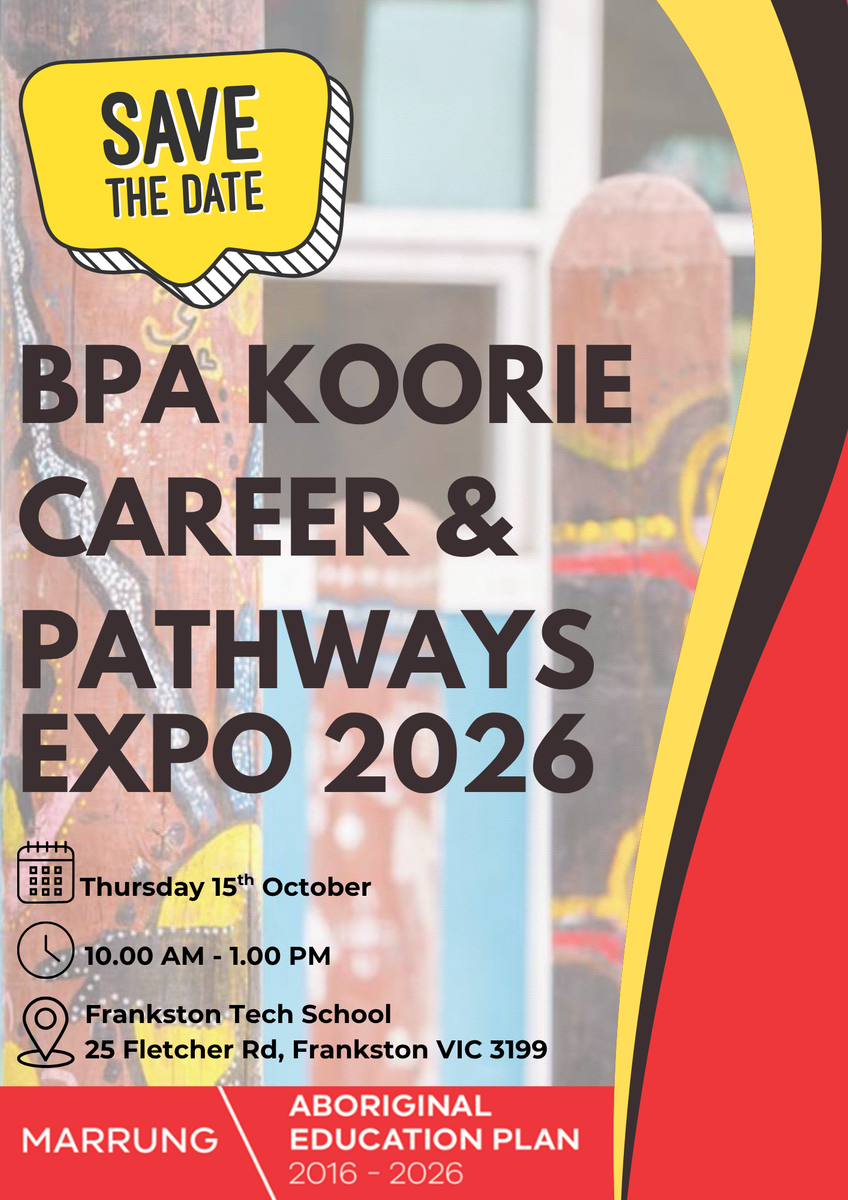
The Department of Education is hosting a Careers and Pathways Expo for Koorie students on Thursday, 18 October. First Nations students from Years 7-12 are invited to attend the event, where they will connect with culturally-safe education, training and employment opportunities and meet with Aboriginal and Torres Strait Islander role models, employers and industry representatives.
Please see the flyer above for details and email Ms. Karen Eap if you are interested in attending.
Vocational Education and Training (VET)
Vocational Education and Training (VET), provides specialised, industry-relevant skills and practical, hands-on training, leading to faster workforce entry, higher employability, and often lower tuition costs than traditional degrees.
It offers flexible career-focused pathways (including apprenticeships and traineeships), strong industry connections, and direct, practical preparation for skilled roles in fields like technology, healthcare, and trades.
Key Benefits of Vocational Education and Training
- Fast-Tracked Employment & Job Readiness: Programs are designed with employers, providing "work-ready" skills that make graduates highly employable immediately upon completion.
- Practical, Hands-On Learning: Unlike purely academic pathways, VET emphasizes practical skills and real-world experience, such as workshops and internships.
Cost-Effective & Shorter Duration:
Vocational training is generally more affordable than traditional university degrees and takes less time, allowing students to start earning a salary sooner.
- Increased Career Flexibility: It offers diverse, specialised training for specific industries (e.g., technicians, IT specialists, nursing assistants, graphic designers).
- Strong Industry Connections: Students often build professional networks through industry expert teachers, work placements, and apprenticeships, leading to better job opportunities.
- Improved Earning Potential: Many vocational careers are in high demand and offer competitive salaries due to specialised skill sets.
- Flexible Study Options: VET provides options for part-time, full-time, online, or evening classes, catering to school leavers, people changing careers, or those needing to upskill.
- Continuous Learning Pathways: It offers clear pathways for further study, allowing individuals to bridge into higher education later if they choose.
- Vocational education is increasingly recognised for strengthening the economy by closing skill gaps and providing practical, tangible career opportunities.
Pathway Advantages
Community Perception (Myth) - “VET is for students who aren’t academic.”
Reality (Evidence + Statistics)
VET supports learners of all abilities and leads to high skill careers. 16% of VET graduates continue into a higher-level VET qualification and 8% progress into higher education, demonstrating upward academic movement.
Community Perception (Myth) - “VET doesn’t lead to good jobs.”
Reality (Evidence + Statistics)
78% TAFE graduates and79% unit graduates secure work after training. 84% of VET graduates are employed after training. Demand is especially strong in health, community services, trades and technology.
Community Perception (Myth) - “VET graduates earn less.”
Reality (Evidence + Statistics)
Graduates with a TAFE Qualification (Cert IV and above) earn more on average then bachelor’s degree graduates). Median income for VET graduates increases by $11,800 in the year after completion. First Nations graduates gain $13,000 and women gain $11,400, showing strong economic uplift across cohorts.
Community Perception (Myth) - “TAFE qualifications aren’t valued by employers.”
Reality (Evidence + Statistics)
VET is highly employment-driven: 84% of graduates gain work and employer satisfaction in National Centre for Vocational Education Research (NCVER) surveys consistently remains high.
Community Perception (Myth) - “VET is only for trades.”
Reality (Evidence + Statistics)
VET spans health, community services, early childhood, IT, digital, business, engineering, and more — all priority industries in Victoria’s Skills Plan
Community Perception (Myth) - “VET closes off university options.”
Reality (Evidence + Statistics)
VET students can and do transition into Higher Education: Graduates move into university, and many receive credit for prior VET study.
Source: RMIT Statistics 2026.
Please do not hesitate to contact the Careers and Pathways Coordinator for assistance.
Chris Kotsonis
Careers and Pathways Coordinator