





REFORM

As we move through 2025, the Road Trauma Support Group NSW remains unwavering in its commitment to systemic reform — supporting victims, shifting public perceptions, and advocating for safer roads across the state.
We have marked some significant milestones in our advocacy journey. From legislative wins to new education initiatives and powerful partnerships, each step reflects our collective drive for a future where road trauma is not inevitable — but preventable.
Language shapes how society perceives road deaths. That’s why RTSG has been leading the charge to eliminate the word “accident” from road crime conversations — a term that undermines the responsibility and preventability behind most fatal crashes.
We are proud that, in March 2025, NSW Parliament passed a landmark Bill enabling police to take drug and alcohol samples after any crash causing grievous bodily harm, and formally replaced “accident” with “crash” in legislation. This is a major validation of what so many families have long fought for — recognising that reckless choices behind the wheel are not accidents, but acts with consequences.
RTSG founding member Duncan Wakes-Miller shares why this change matters — and why language is just the beginning of the reform still needed.
Read his powerful opinion piece here.
RTSG has also developed and released the Road Crash Reporting Guidelines (RCRG) — ten core principles for responsible, respectful, and accurate media coverage of road crashes. These guidelines promote factual, non-sensationalised reporting that honours victims and educates the public. We urge all stakeholders and media outlets to adopt them.
RTSG members Mick Duke and David Vidal recently shared their personal stories to highlight why accurate language matters. As they powerfully stated:
“Criminal road deaths aren’t random — they’re preventable. 58% of fatal crashes involve reckless driving, 52% speeding, and 37% drunk driving. Y et many still call them ‘accidents.’”
Their voices, alongside many others, are shifting public understanding and demanding accountability.
You can read the full article here to see how their stories are helping shift the narrative and drive real change.
Another significant step forward is the amendment of the Victims Rights and Support Act 2013, which now formally recognises victims of road crime. This reform ensures access to counselling and emotional support — beyond what insurers provide — and places families on equal footing with other victims of crime.
The case for this reform was made clear in our research with FiftyFive5 / Accenture Song, The Human Impact of Fatal Road Crimes in NSW, which found:
- 280,657 adults in NSW personally know someone killed due to criminal driving
- 59% of those affected experience severe psychological impacts like PTSD and depression
- Many receive little or no support from current systems
These reforms were driven by the lived experience and courage of RTSG families, and we thank everyone who contributed to this meaningful change.
Led by founding member Duncan Wakes-Miller, RTSG continues to advocate for the creation of a Road Crimes Act. Key proposed reforms include:
- A new offence of Vehicular Homicide
- Stricter penalties and rehabilitation programs for offenders
- A Dangerous Drivers Register for repeat offenders
- Greater weight placed on victim impact during sentencing
With more than one death and 28 serious injuries on NSW roads every day — and the cost of road trauma topping $9 billion annually — we believe these proposals must be debated in Parliament in 2025.
We are also proud to support the point-to-point speed camera trial, which targets high-risk regional areas. With road deaths rising more than 25% in 2024, this initiative uses proven technology to deter dangerous driving and protect communities.
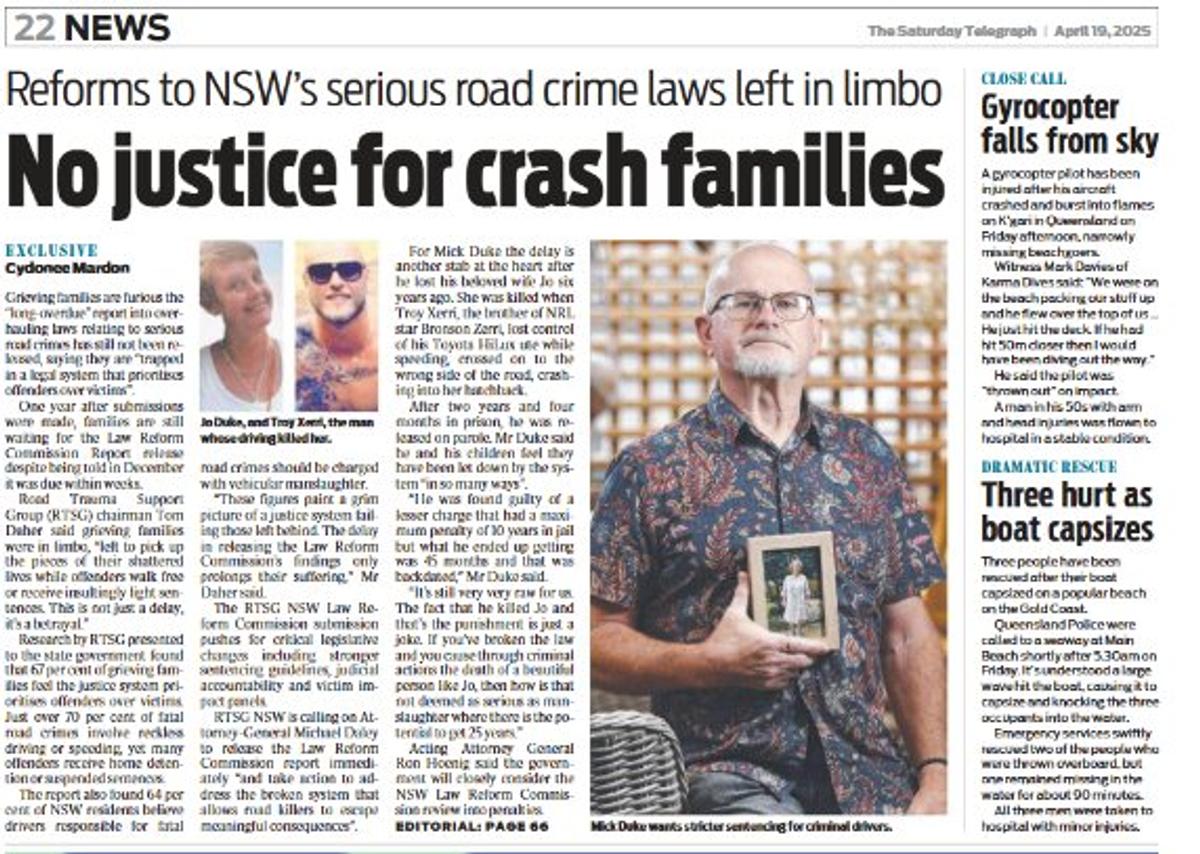
RTSG Interim Chairperson Tom Daher and member Mick Duke recently spoke with The Daily Telegraph and 2GB radio, urging the NSW Government to immediately release the long-overdue Law Reform Commission report into serious road crimes. As Tom stated, grieving families are being retraumatised by a system that protects offenders while delaying justice. The Commission’s recommendations could provide a crucial pathway to reform — but families are still waiting. RTSG NSW looks forward to reading the report and working constructively with the Government to implement meaningful changes that deliver justice, accountability, and prevention.
To all those who stand with us — politicians, partners, media allies, families, and supporters — thank you. Your commitment is helping to reshape a justice system that better supports victims and builds a culture of accountability on our roads.
Together, we will continue pushing for reforms that save lives, honour those we've lost, and support those left behind.