Mental Health and Wellbeing

Resilience, Rights and Respectful Relationships
Resilience, Rights and Respectful Relationships is a resource provided to all government schools to support education in the areas of social and emotional well being. There are 8 topics in this resource: Emotional literacy, personal and cultural strengths, positive coping, problem solving, stress management, help seeking, gender norms and stereotypes and positive gender relationships.
During Term 3, classroom teachers will be focussing on positive gender relationships. Each year level is provided with resources that are age appropriate. This topic explores the difference between fair and friendly play and play that is violent or too rough. This sets the scene for understanding that violence is never acceptable and is definitely not a mode of resolving a relationship problem. This topic also emphasises the importance of students gaining an understanding that other people do not have the right to hurt or touch their bodies inappropriately. The terms ‘okay’ and ‘not okay’ can be used to refer to rules, and are useful in teaching about the right to be safe. As the students gain a deeper understanding of rights, the terminology of consent will be introduced.
Effective respectful relationships programs use a combination of critical-thinking and collaborative learning activities. The collaborative learning tasks provide structured opportunities for students to mix across friendship and gender divides, and further develop their capacity to treat each other with respect.
Tracey Mclaren
Mental Health and Wellbeing Leader
Child Development with a wellbeing focus
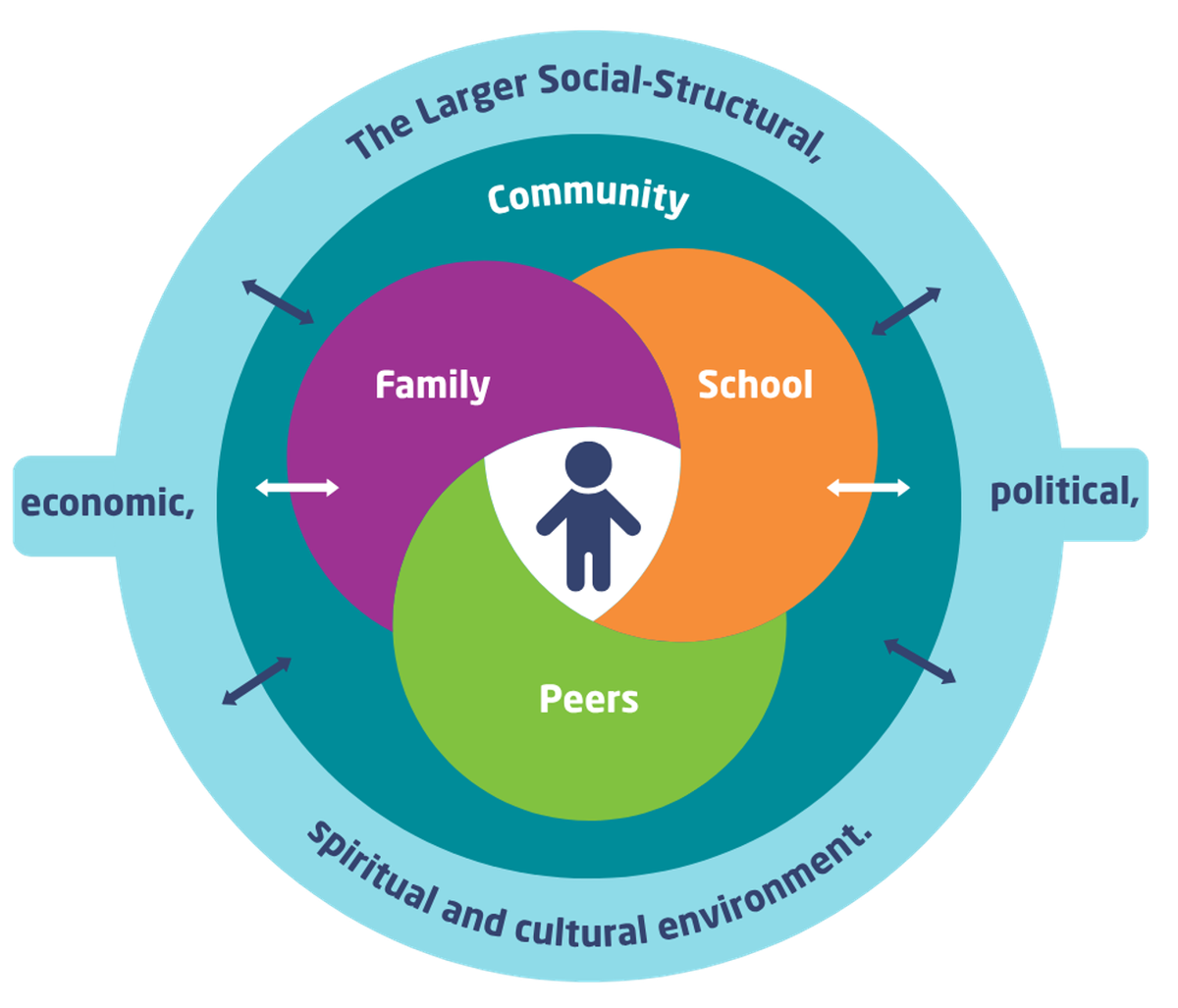
When considering the influences on students' development we can visualise the student at the centre, surrounded by the different systems that support them, as seen above. Through their close connections with students, their families and peers, schools play a central role in their students' development.
Social development includes learning about the norms of relationships and building the social skills they need for getting on with others and managing friendships. School is a critical context for children's social development. Through their relationships and connections with others, children build a sense of who they are and where they fit in the social world.
As Anna has mentioned in previous newsletters, it is important for students to have continuity in their learning. It is just as important to have continuity in their social development for their well being. Please reach out if your family needs support to achieve this.
Mental Health and Wellbeing 2026
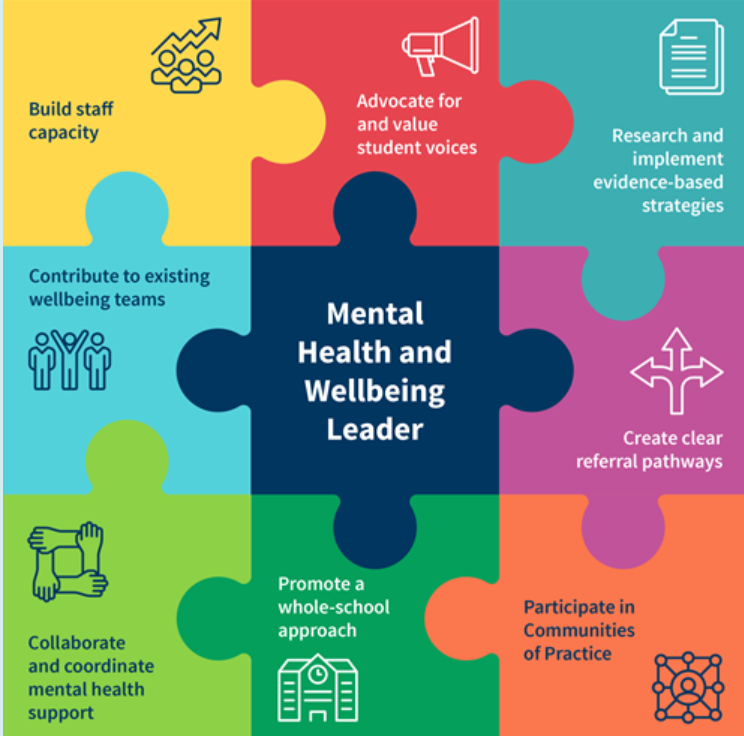
This year, for the first time, our school has appointed a Mental Health and Wellbeing Leader (MHWL).
My role as the MHWL is to build the capability of the whole school with regard to mental health and well being (identification, promotion and prevention), provide support to staff to better identify and support students with mental health needs, establish clear pathways for referral for students requiring assessment and intervention, and monitor and evaluate student progress. The role has been designed to support classroom teachers.
The role has also been designed to provide a proactive focus for the promotion and prevention of mental health and wellbeing based on a broad and extensive knowledge of the needs of the school.
Once my training begins, I will share the resources across the school to build the capability of staff to better identify and support students.
The role also includes implementing whole-school approaches to mental health and wellbeing.
I am looking forward to an exciting year in this developing role.
Tracey Mclaren