
The Learning Zone
"Learning is a treasure that will follow its owner everywhere." - Chinese Proverb
The Learning Zone
"Learning is a treasure that will follow its owner everywhere." - Chinese Proverb
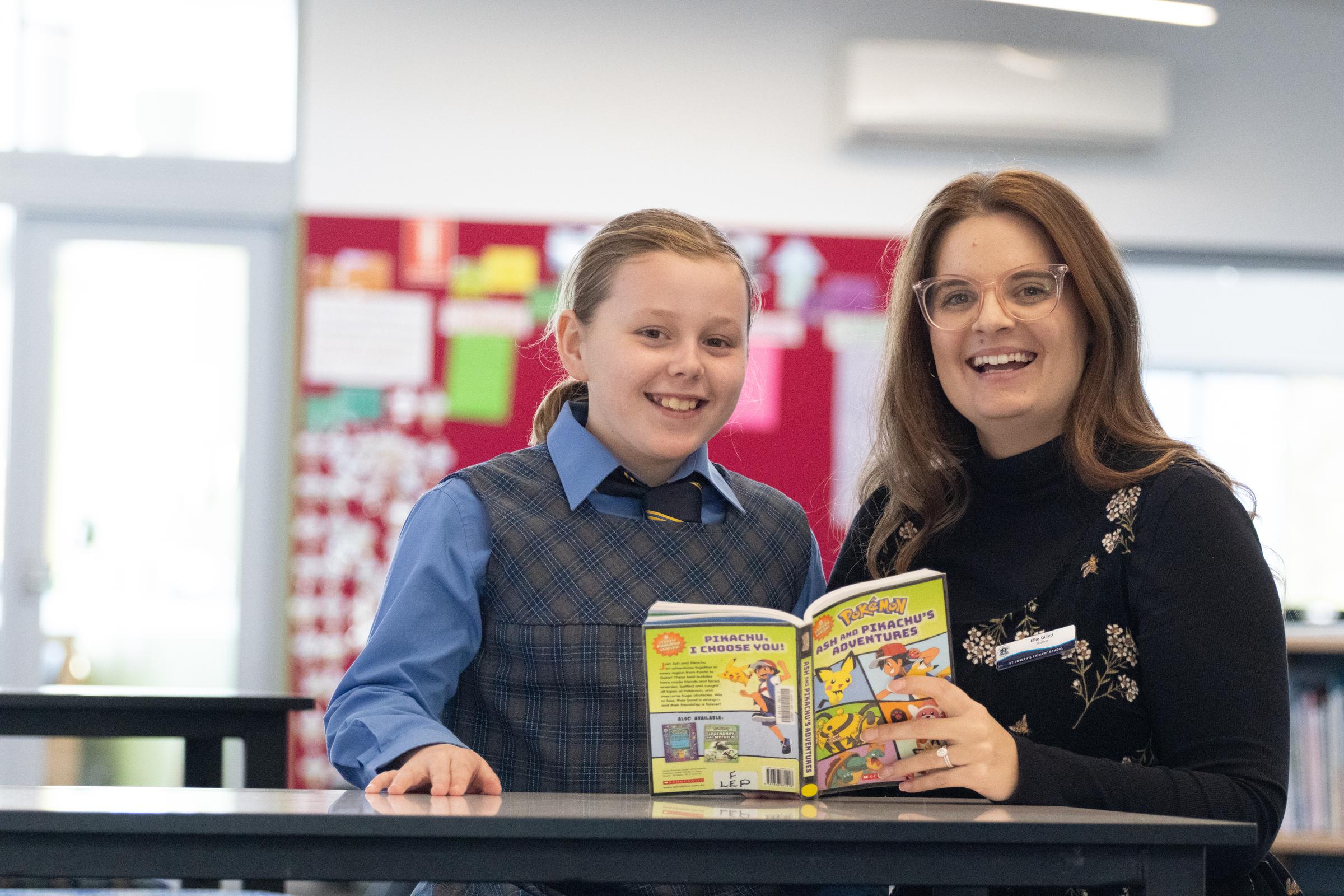
As we reach the middle of the school year, we would like to thank our families for the wonderful support you have shown with home reading. At St Joseph's, we value, support and encourage reading both at school and at home, and we appreciate the important role families play in helping children become confident, capable readers.
Reading is one of the most valuable skills a child can develop, and in today's world it is more important than ever. While children learn reading skills at school, they also learn by seeing family members use reading in everyday life. Sharing books, reading recipes, making shopping lists, writing birthday cards or reading signs together all demonstrate that reading and writing are meaningful, lifelong skills.
Our structured home reading program is designed to foster a love of reading while providing opportunities for children to practise the skills and strategies they are learning in the classroom. At the beginning of the year, each child received a home reader in a clear plastic wallet, along with an information sheet containing helpful tips and strategies to support reading at home (please let your class teachers know if your child requires a new home reading wallet). Students are encouraged to read every day and may change their reader as needed.
For younger readers, a helpful routine is to:
Read the book to your child first.
Read the book together, pointing to each word as you read.
Encourage your child to read independently as they become more familiar with sounds, sight words and reading strategies.
The amount of time children spend reading at home will vary, but the following daily guide is recommended:
Kindergarten – Year 2: 10–15 minutes
Years 3–4: 20 minutes
Years 5–6: 30 minutes or more
Most importantly, we want reading to be an enjoyable experience. Regular reading at home builds confidence, strengthens comprehension and vocabulary, and nurtures a lifelong love of books and learning.
Thank you for your continued partnership in supporting your child's reading journey. Your encouragement and involvement make a lasting difference.

At St Joseph’s, we proudly celebrate student success each week by presenting two class awards. The Learning Well Award honours a student who has shown pleasing effort, perseverance or achievement in a nominated area of the curriculum. The Living Well Award recognises a student who exemplifies our school values through respectful behaviour, positive attitudes and outstanding citizenship.
| Week 11- Term 2 | ||
| Class | Learning Well Award | Living Well Award |
| K | Elsa | Xygel |
| 1 | Jessica | Roman |
| 2 | Isabel | Eleanor |
| 3 | Archer | Isabella |
| 4 | Mabel | Bethany |
| 5 | Zavier | Mason |
| 6 | Valeria | Leo |

| Week 2 - Term 3 | ||
| Class | Learning Well Award | Living Well Award |
| K | Sophia | Fletcher |
| 1 | Theo | Ruby |
| 2 | Mason | Archie |
| 3 | Roman | Flynn |
| 4 | Sophia | Aldrix |
| 5 | John | Oscar |
| 6 | Logan | Violet |

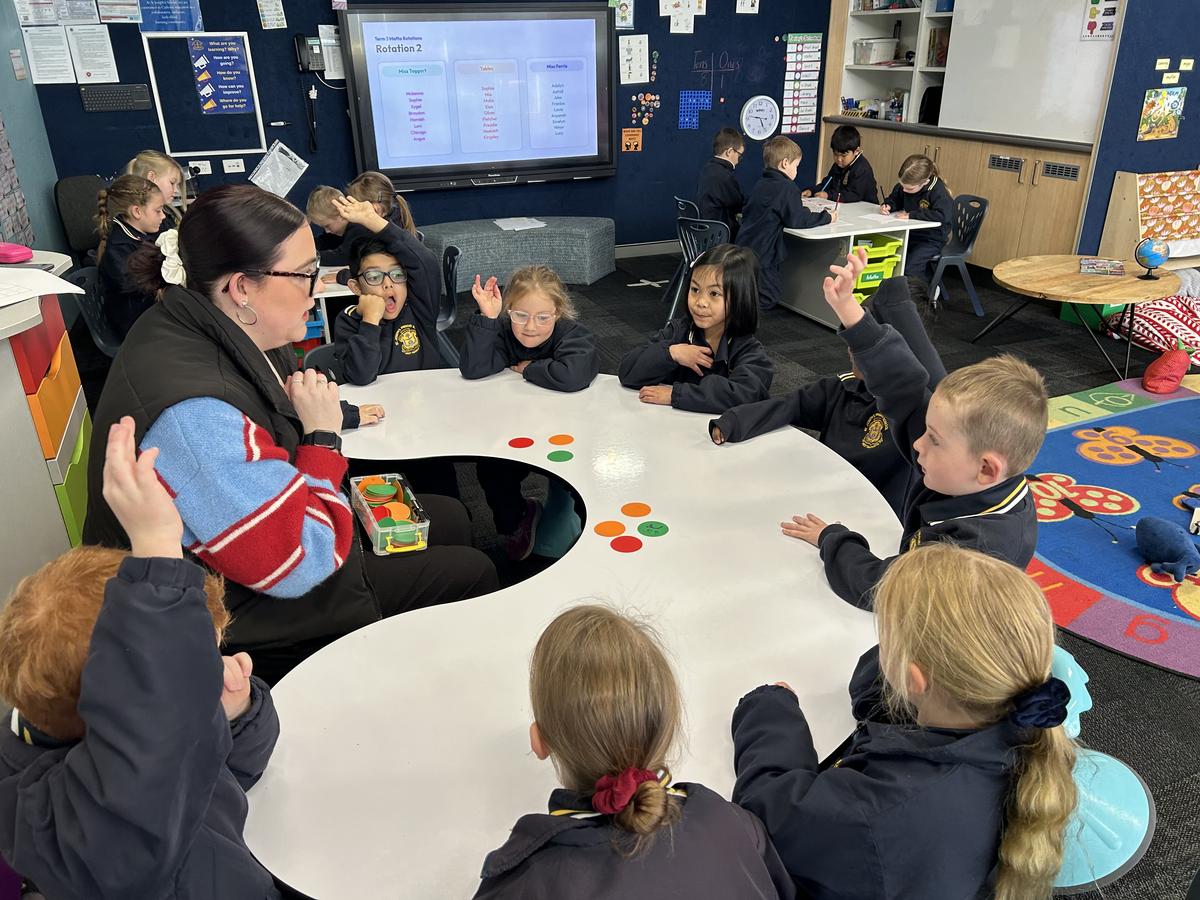
What is happening in the world of mathematics at St Joseph's? Let's take a look!
Please see the information below to assist your child at home.
Maths At Home:
Kindergarten - Representing Whole Number
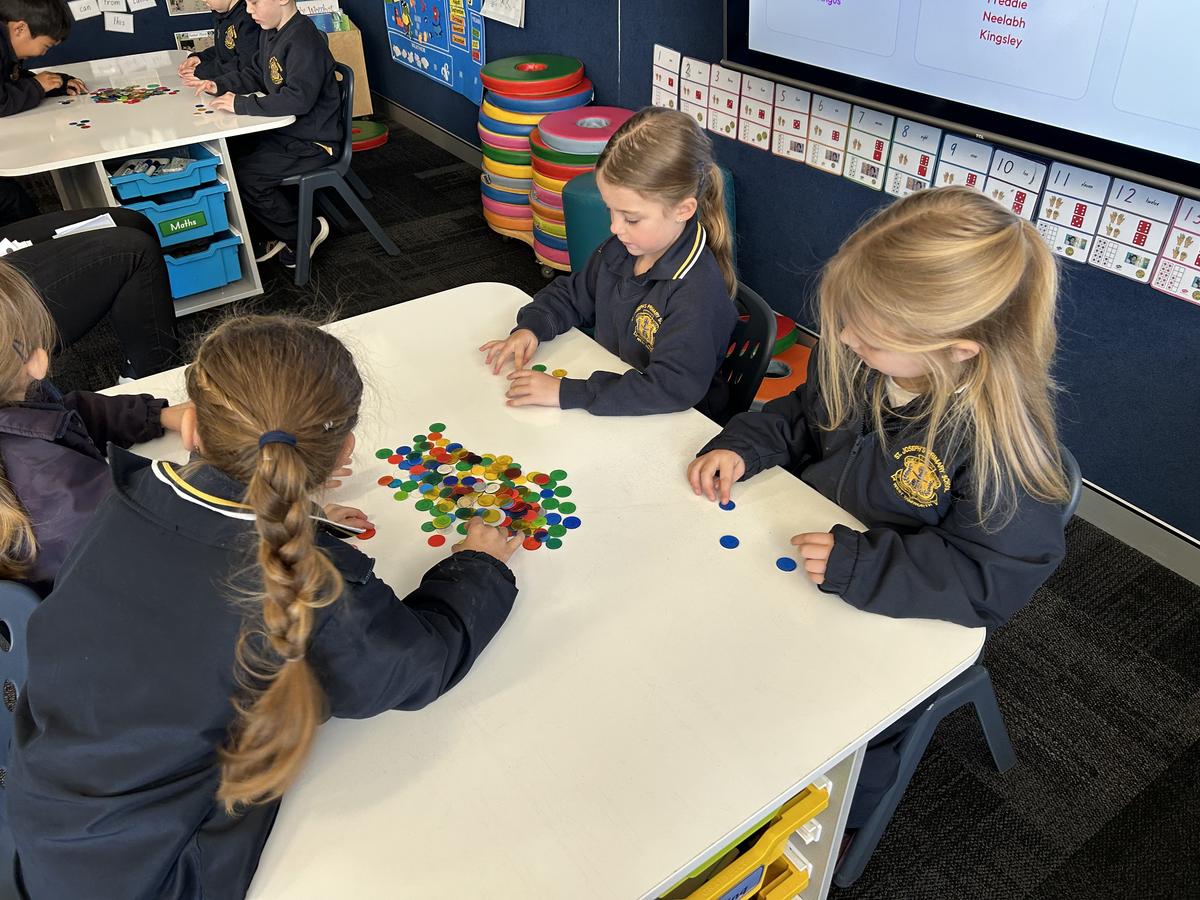
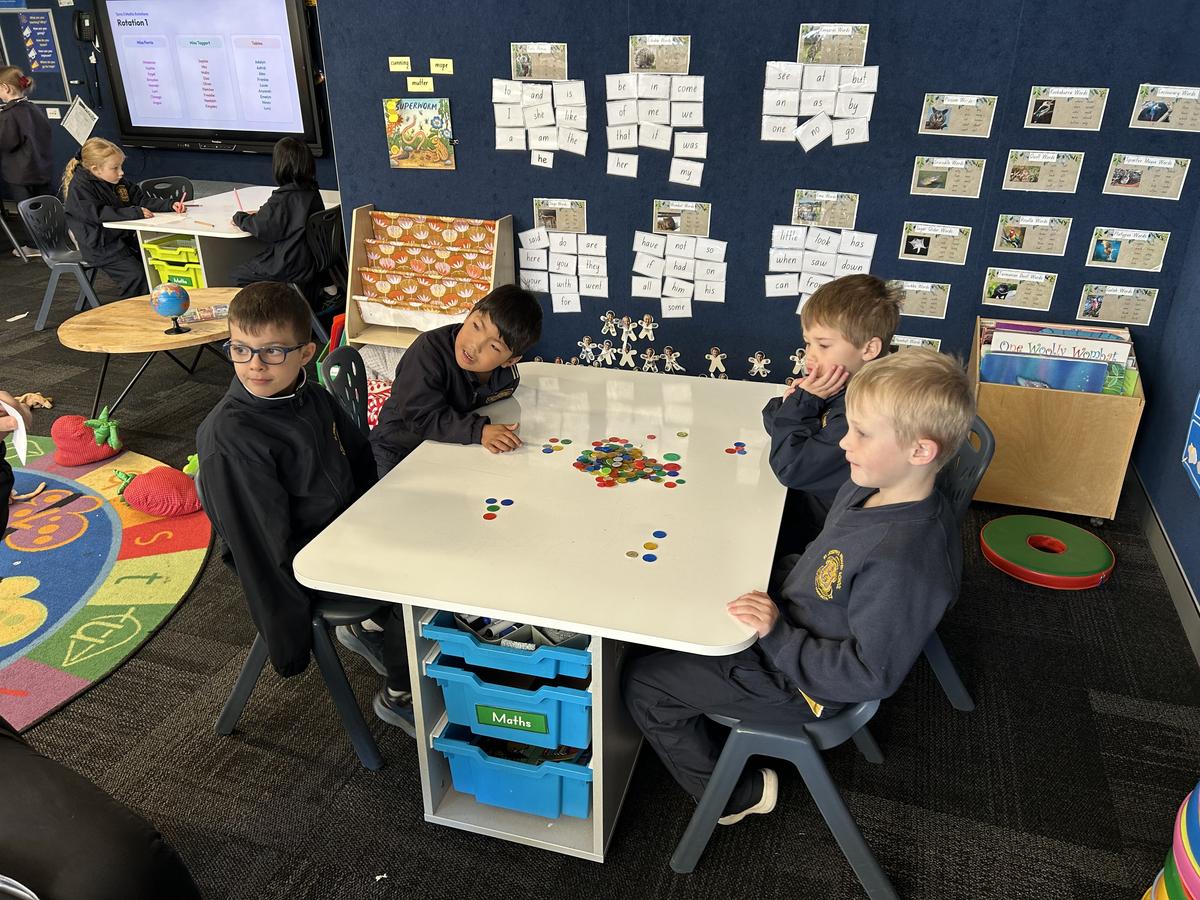
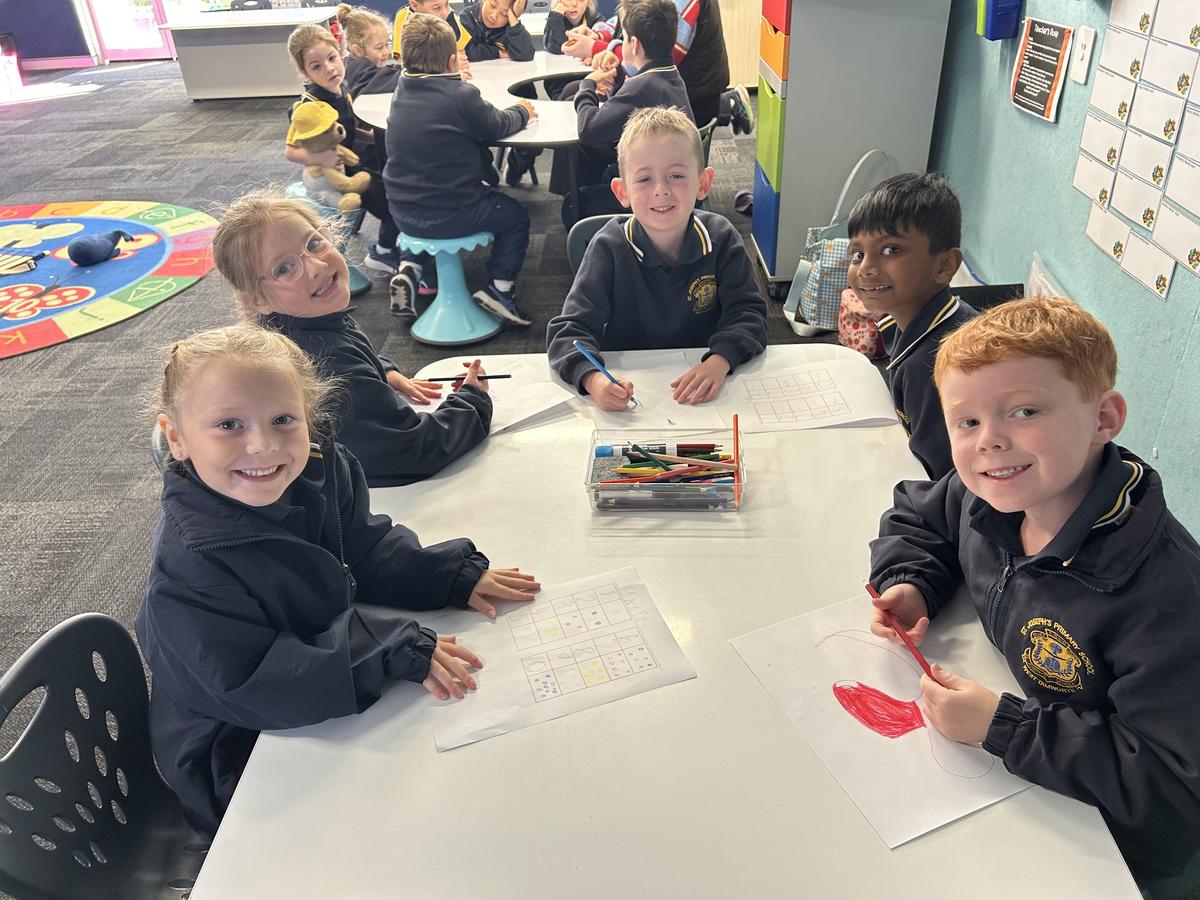
Kindergarten continue working on whole number to begin this term. Counting is an important foundation for future number work. Students can count a group of objects or their toys. They are also looking at subitising which is recognising the number of items/objects up to four in a small group without counting them.
Stage 1 - Multiplication
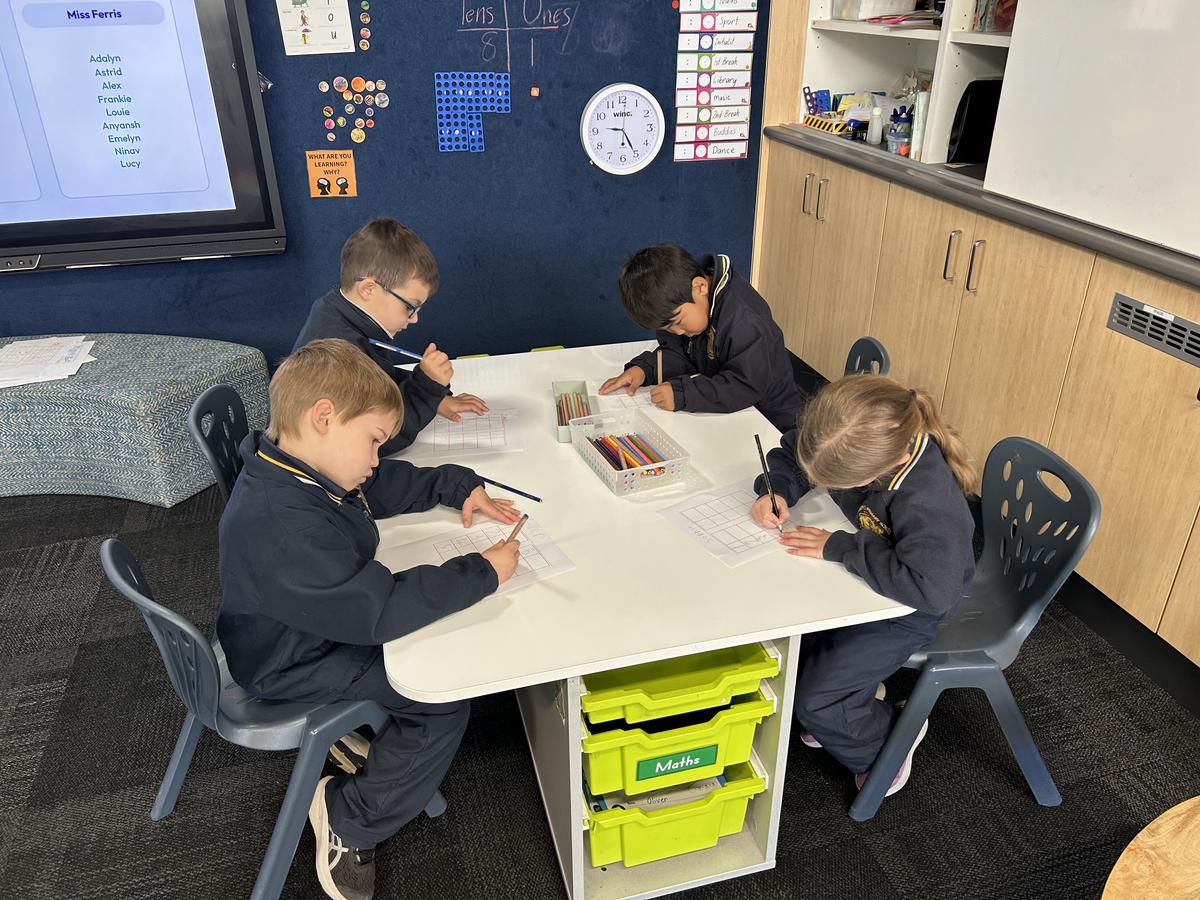
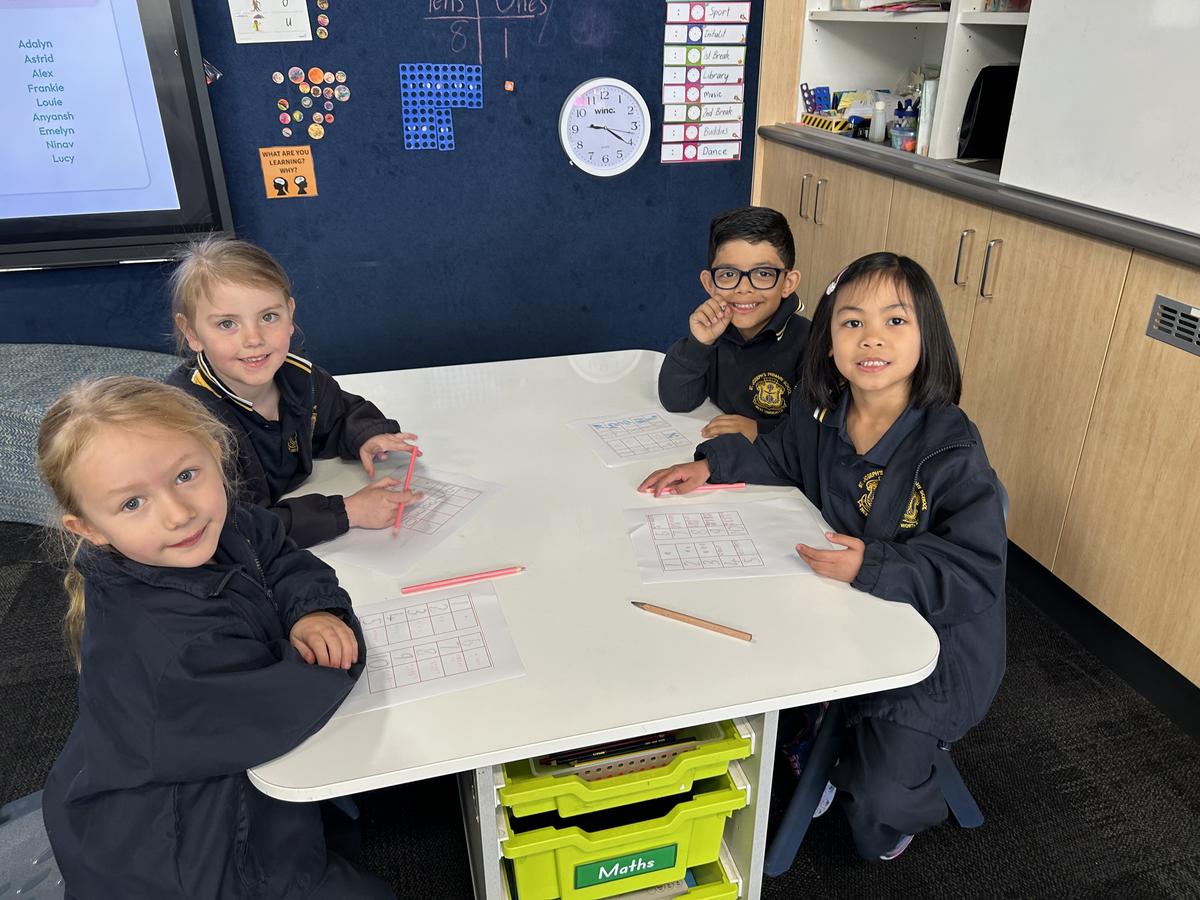
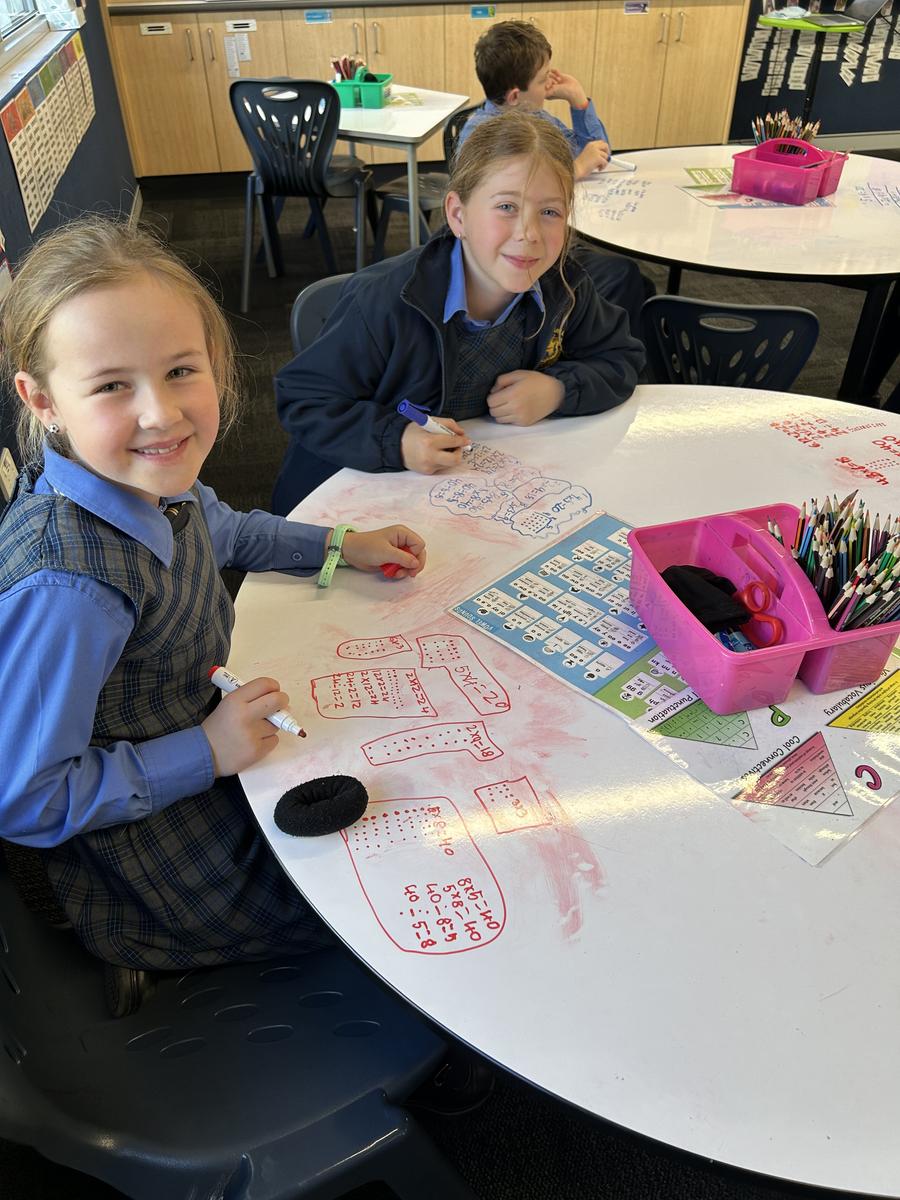
It is all about skip counting and making equal groups in Stage 1 for the next two weeks. Parents are encouraged to skip count by 2's, 3's, 5's and 10's and to make a variety of equal groups with their children.
The links below are skip counting songs:
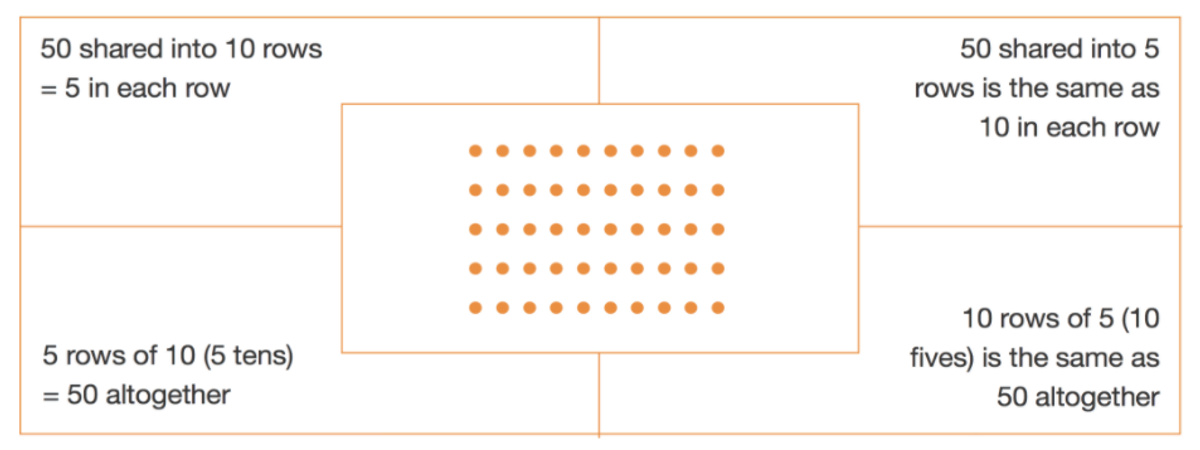
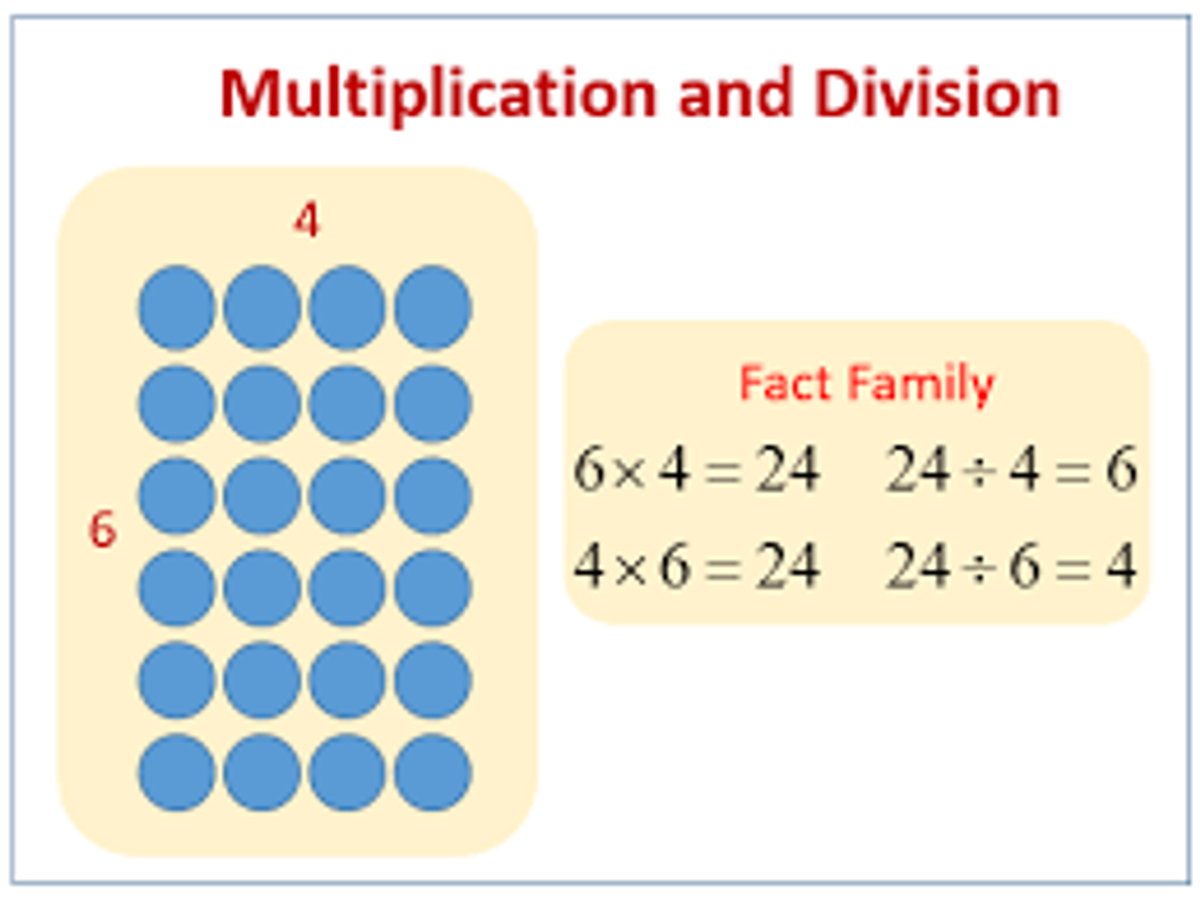
Arrays: Look at what we know about this array.
Stage 2 - Multiplicative Relations - Division
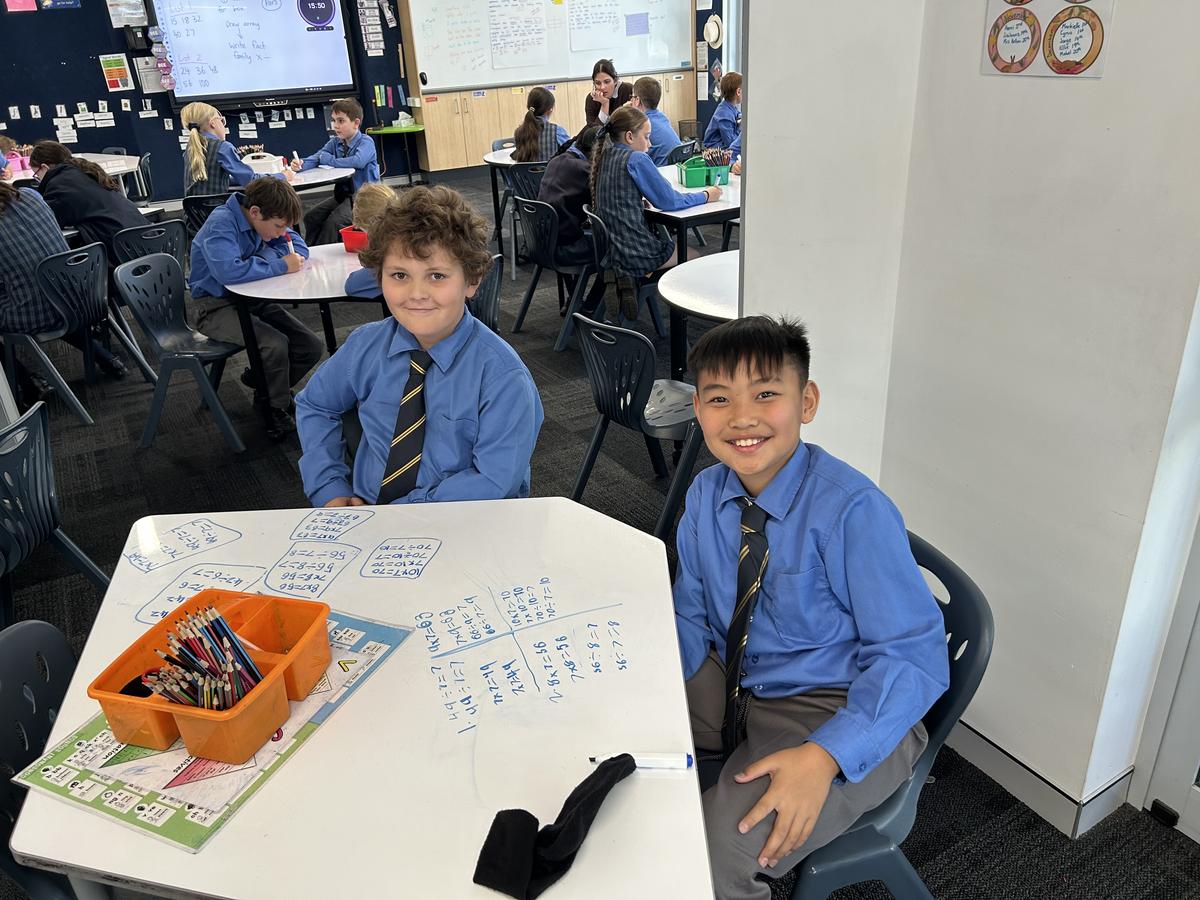
Stage 2 have commenced their next unit recalling their understanding of factors. Please use the link below to assist your child with division.
Four easy ways to practise division at home
Arrays are useful to link multiplication and division fact families.
For example:
4 rows of 2 is 8 4 x 2 = 8
2 columns of 4 is 8 2 x 4 = 8
8 shared into 4 rows is 2 8 divided by 4 = 2
8 shared into 2 columns is 4 8 divided by 2 = 4
Stage 3 - Multiplicative Relations
Grocery Shopping: Ask your child to calculate the total cost of multiple items or compare prices to determine better deals.
Use highlighters to mark important information. Word problems are overwhelming, but you can help your child break the problem down by only highlighting the parts of the problem that are important. Teach them to highlight important numbers and key phrases in math problems so they can focus on what matters.
Mr Lee bought 250 ducks for $60 each and 14 geese for $34 each. How much will Mr Lee have to pay?
A carton contains 228 oranges. If Jess ordered 21 boxes, how many oranges will she receive?