Science















Grade 1
Our unit in Earth Science this term is called Up, down and all around
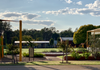
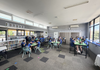
Look out your window and you will see a constantly changing world. The Sun rises and sets and the sky reflects many different hues over a day. The landscape, everything we know about the environment began by observing it. Environmental modelling, space exploration and city planning all rely on careful observations of the land and sky. We have begun the term by exploring what is in our school environment including man made and natural things. We have looked at our science room garden and predicted how it will change over the coming weeks.
Grade 2
This term Grade 2 students have begun a unit called Water Works. Water is essential to life. As humans, we not only drink water, we use it for cooking, hygiene, recreation and agriculture. Australia is a dry continent with an expanding population, and how we use water has become increasingly important. Water is a precious resource. We have begun the term by exploring where we use water in our school and homes, where the water comes into our school and where does it actually come from.
Grade 3
Our unit this term is about soils, rocks and minerals - rocks, minerals and soils are important Earth resources and have observable properties that enable them to be used in a variety of ways.
Unit objectives
●Differentiate between rocks and minerals and explain that rocks are made up of one or more minerals.
●Observe and classify different types of rocks based on their physical characteristics such as colour, texture, and grain size.
●Compare and group rocks according to their relative hardness using simple tests and observations.
●Identify and describe common uses of rocks in everyday life, including how they are used in local environments such as quarries.
●Identify and describe how minerals are used in everyday products and local industries.
●Explain the role of geologists and describe what they do to study rocks, minerals, and soils.
●Describe the composition of soil and explain that it is made up of different materials such as rock particles, organic matter, air, and water.
●Compare and differentiate between various soil types based on texture, colour, and water retention.
●Identify the features of healthy soil, including the presence of nutrients, organic matter, and a balanced structure.
●Explain the importance of healthy soil for human activities such as farming, gardening, and construction.
Grade 4
Our unit this term is about the water cycle. In our current lessons we are learning that water is a precious and essential resource that comes from many different sources, and about the connection First Nations Peoples have to water.
Unit objectives
- Recognise that water is an important Earth resource that originates from various sources.
- Describe how water cycles through the environment by moving through the sky, landscape and ocean, an
- Describe processes involved in the water cycle, including precipitation, evaporation, transpiration, condensation, melting, freezing, crystallisation, infiltration and run-off.
- Identifying everyday examples of precipitation (rain and snow), evaporation (drying of wet washing or paint) and condensation of water (water droplets forming on a cold water bottle).
- Relate the water cycle processes to changes in state.
- Compare the distribution of saltwater and freshwater on Earth.
- Recognise that the land, sea and water are central to Aboriginal and Torres Strait Islander Peoples’ culture and spirituality and that connection to water includes the responsibility to care for water on Country and Place.
- Identify sources of freshwater and local water sources and explore how they change over time.
Grade 5
Our unit this term is about Space travel. In our current lessons we are learning to describe the features of stars and galaxies and to describe the features of nebulae, black holes and exoplanets.
Unit objectives
- Recognise stars, galaxies, nebulae, exoplanets and black holes as astronomical features that exist beyond our solar system
- Research how living things can travel and survive in space
- Examine the development of our knowledge through discoveries and technologies, and how these benefit humankind
- Describe how First Nations Australians’ knowledges of the positions of the Sun, Moon and stars are used for navigation and wayfinding
Grade 6
Our unit this term is about the Earth, Sun and Moon. In our current lessons we are learning to describe that the Sun is the centre of our Solar System and that it provides us with energy and to describe how Earth and other planets orbit the sun.
Unit objectives
- The Sun is the centre of our solar system and provides our world with energy
- Describe the movement of Earth and other planets relative to the sun
- Demonstrate that gravity is a force of attraction between objects and Earth, and it is the force of gravity that keeps Earth, moons and planets in their positions in the solar system.
- Model Earth’s revolution around the Sun and recognise that a complete revolution takes 365.25 days, linking to the year
- Describe the movement of the moon, and how we are able to see the moon with reference to light reflection
- Model how Earth’s tilt, rotation on its axis and revolution around the sun relate to cyclic observable phenomena, including variable day and night length
- Research cultural references to the solar system including Aboriginal and/or Torres Strait Islander knowledges of the night sky and use of the sky for timekeeping purposes