
Thrive & Flourish

Wellbeing Newsletter:
Welcome to Week 9 of Term 3.
For those currently unwell, we hope for a speedy recovery for you.
For those who’ve welcomed a new addition to the family, we extend our warmest congratulations on this happy occasion.
For those families who’ve experienced a recent bereavement, please know you are in the prayers and thoughts of all in our community.
Attendance Matters:
At Sacred Heart, most students come to school regularly and as a result are learning new skills socially, academically and emotionally. This is an expectation and a right that we would like to see enacted for every student.

We know that coming to school on time every day is a necessary condition for learning to occur. Students who attend school every day benefit from all of the support and teacher assistance that is available, and are much more likely to go ahead in their learning.
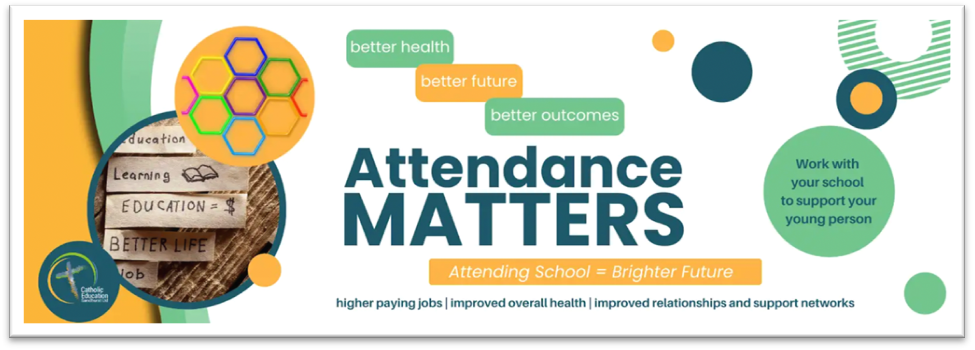
Being ready to begin the day's learning with the rest of the class is also very important and we ask for your support in ensuring that students are in their classes by the beginning of day bell. Being prepared for the day, and starting with peers, encourages a great day of learning and helps with organisational details of the day.
What can I do if my child says they don’t want to go to school?
• Let the child know that being at school is important to you.
• Let your child know that you value learning and education. Talk about how being late or regular absences from school can disrupt their learning and limit their choices in the future.
• Keep a regular morning routine. Set the alarm to allow time to get ready.
• Have school uniform, shoes, lunch, hat and everything needed ready the night before school.
• Consider not having the TV or computer games on before school.
• If children appear unhappy, listen to them and help them be honest and objective about what’s happening.
• Show your child you are interested in their school and their schoolwork. Ask them about what they are learning and what they do in class and in the playground.
• Praise effort and their achievements.
• Celebrate their success.
• Show and tell others about what your child does at school.
• Develop a positive relationship with parents and school staff.
• Remain calm! Be firm and quietly say that they are going to school and continue with your usual morning preparations.
• Speak to your child’s teacher, Assistant Principal, Principal or Student Wellbeing Coordinator. This discussion can be confidential (private) and can help the school to put in place strategies to help.

Activities to Help Your Child Develop a Positive Attitude
As a parent, it’s never easy to hear your child express negative thoughts or to see them wallow in feelings like self-doubt, sadness, or anger.

Unfortunately, science says it’s natural for people to dwell more on negative thoughts than on positive ones, and this can be even more true for children.
This negativity is usually driven by fear or doubt, which produce stress chemicals in the brain. Ultimately, a negative attitude can shape how a child sees themself and the world around them.
But as parents, there’s plenty we can do to help our children develop a more positive attitude about themselves and their world.
We can teach our children to accept negative emotions and process them in a healthy way. We can encourage positive thinking and positive affirmations.
According to positive psychology researcher Barbara Fredrickson, positive thinking is important because it broadens your sense of possibility and opens your mind, allowing you to build new skills. It also makes children (and adults) more resilient.
This can be accomplished by engaging in mental exercises that help “rewire” the brain. There are many but here are a few favourites.
1. Loving Kindness Meditation
Loving-kindness meditation involves thinking of loved ones and sending them positive thoughts. Later, your child can expand their positive thoughts to more neutral people in their life as well. This form of meditation is a way of “directing good-hearted wishes to others.”
The four traditional phrases are,

“May you feel safe. May you feel happy.
May you feel healthy. May you live with ease.”
By practising generating these feelings, the brain is conditioned to think more positively. It also shows your child how easy it is to engage in feelings of compassion and kindness, which can help them connect more easily with others and increase their overall well-being.
2. Helping Others
Helping others is obviously beneficial to other people, but it will also enhance your child’s own positive feelings and attitude.
People who volunteer have been found to have higher self-esteem and overall well-being than those who don’t.
People who engage in kind acts become happier over time. When your child helps others, they will feel good about themself as a person, which will ultimately help them feel more optimistic and positive in general.
"People who engage in kind acts become happier over time."
Helping others is also linked to fostering a sense of belonging, inner peace, and gratitude. Your child could help others by assisting an elderly neighbour with jobs around the yard, helping a friend at school, or participating in a clothing drive or event. You could also make volunteering a family affair and regularly help out with a charitable organisation.

A very young child can assist you around the house, help a younger sibling with picking up toys or getting dressed, or even accompany you (and be your “assistant”) when you help others.
The more your child helps others, the more positive they’ll become.
3. Sharing Positivity
One of the most powerful ways to teach your child to have a positive attitude is to MODEL this behaviour for them. When you accept and process your emotions in a healthy way, you teach your child to do the same.
You can also share positive experiences with your child. You can do this by simple activities such as watching a funny TV show or movie and laughing together, sharing a funny joke or good news.
Anything that sparks feelings of joy, contentment, and love contributes to positive thinking, especially when these emotions are shared.
“Shared positivity—having two people caught up in the same emotion—may have an even greater impact on health than something positive experienced by oneself.”
4. Practising Positive Affirmations
Positive affirmations are statements that children or adults can repeat to themselves in order to increase self-esteem, promote positive thinking, and change negative self-talk.
Affirmations are most effective if you let your child come up with their own. This is because the healing power of affirmation comes not from saying the positive words aloud, but from internalising them. Your child will also take ownership of the process and be more committed to their affirmations.
Guide your child to come up with affirmations that are short, positive, and present tense. Examples include:
● I am kind.
● I am enough.
● I am a good friend.
● I am unique.
● I am helpful.
As your child engages in these activities, they’ll train their brain to be more positive and respond to emotions in a healthier manner. It will boost confidence, resilience, and overall happiness, and help them gain a more positive outlook on the world.
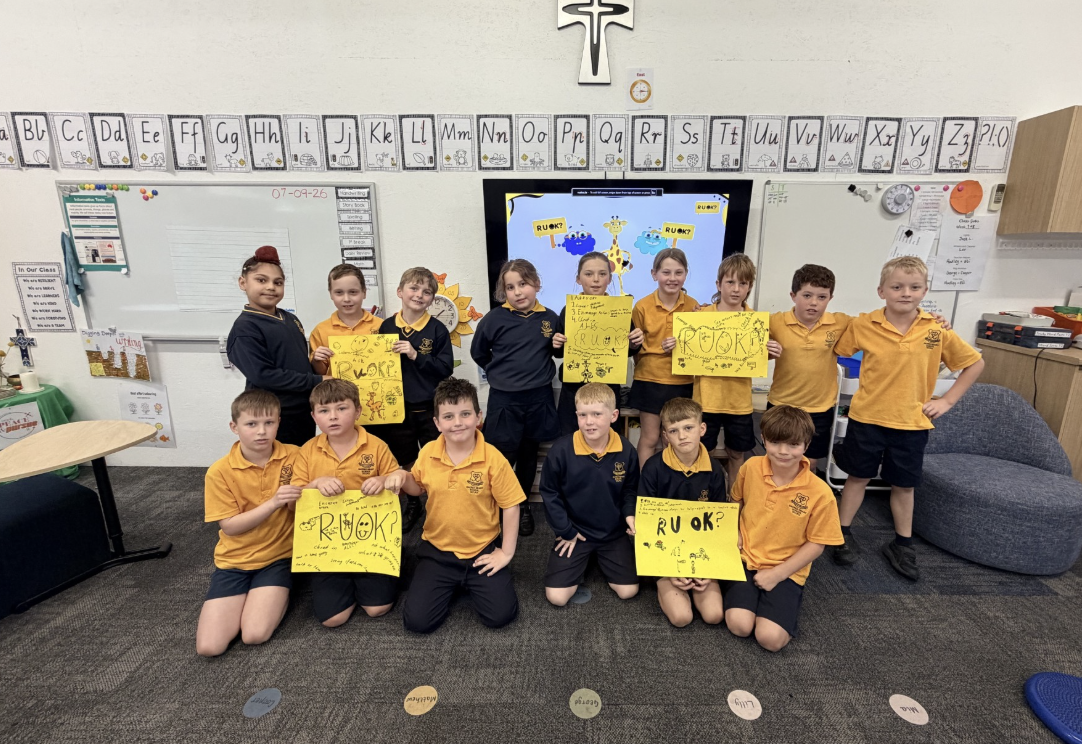
A Conversation Can Change a Life!

R U OK? - inspire and empower everyone to meaningfully connect with the people around them and start a conversation with those in their world who may be struggling.
You don't need to be an expert to reach out - just a good friend and a great listener.
Use these four steps and have a conversation that could change a life:
· Ask R U OK?
· Listen.
· Encourage Action
· Check-In.
Website for additional resources and supports; https://www.ruok.org.au/
We welcome any emails or calls if families wish to seek support and can be contacted via email at any time or a phone call to school.
Email:
Tony McDonald: tmcdonald@shtatura.catholic.edu.au
Jess Daniel: jdaniel@shtatura.catholic.edu.au
