Page 0 Banner Photo
Cover Page
Principal's News Banner Photo
Principal's News Celebrating 175 years as a Parish and School Community, PIC AGM Meeting, St John's Christmas Carols – Christmas Stall Information 2026, Trivia Night, 2026 Yearbook for Graduating Grade 6 Class Now on sale!, Congratulations Zoe, School Fees- 2027, School Structure for 2027, Prep enrolments for 2028, Important Dates – Start of the 2027 School Year
Education in Faith News  Banner Photo
Education in Faith News  Remembrance Day, Putting Faith into Action: Year 5 Students Support Local Community, Social Justice fundraiser., A Gift for Our Families: Free Access to Australian Catholics
Wellbeing News Banner Photo
Wellbeing News Day for Daniel - Friday 30 October, Australia’s largest child safety education and awareness day, Positive Behaviour for Learning (PBL)
Literacy News Banner Photo
Literacy News Reading for Meaning: How Fluency Drives Comprehension, How Fluency and Comprehension Develop Together, Why Re-Reading Deepens Comprehension, Five Ways to Support Comprehension Through Fluency at Home, Working together to support confident readers
Maths News Banner Photo
Maths News What’s happening in… Year 6! 
eLearning News Banner Photo
eLearning News Term 4 Digital Safety Incursions, Home STEM Project
Learning Diversity Banner Photo
Learning Diversity  Understanding Neurodiversity ,  How can we talk about neurodiversity/differences with children?,                      We can encourage children to:
School Advisory Council SAC Banner Photo
School Advisory Council SAC School Advisory Council Feedback Form 2026
PIC NEWS Banner Photo
PIC NEWS Second-hand Uniform Shop, Thank You for an Incredible Trivia Night 2026!, Relive the highlights!, Subway Day, Christmas Carols, PIC AGM Meeting, PIC Events Calendar
School Calendar Banner Photo
School Calendar
Snapshot Calendar Banner Photo
Snapshot Calendar DATES TO REMEMBER, 2026 TERM DATES
School Information Banner Photo
School Information General Office, Absences, Late arrival / early departure to school,  Uniform Supplier, Lunch Orders, Lost Property, School Fees 2026, ANNUAL FEES FOR 2026
Staff Contact Details Banner Photo
Staff Contact Details Class Teachers 2026, St John's Leadership Team
Assembly Dates Banner Photo
Assembly Dates Whole School Assemblies 
Happy Birthday Banner Photo
Happy Birthday
MACSEYE Banner Photo
MACSEYE MACSEYE – OSHC Provider at St John’s
St John's Parish Banner Photo
St John's Parish Parish Clergy, Parish Office, Mass Schedule, Other Services, Parish Prayer 
Community News Banner Photo
Community News
Banner Photo

Literacy News

Tracey James (P-2), Elizabeth Whiting (3-6) - Literacy Leaders 

Reading for Meaning: How Fluency Drives Comprehension

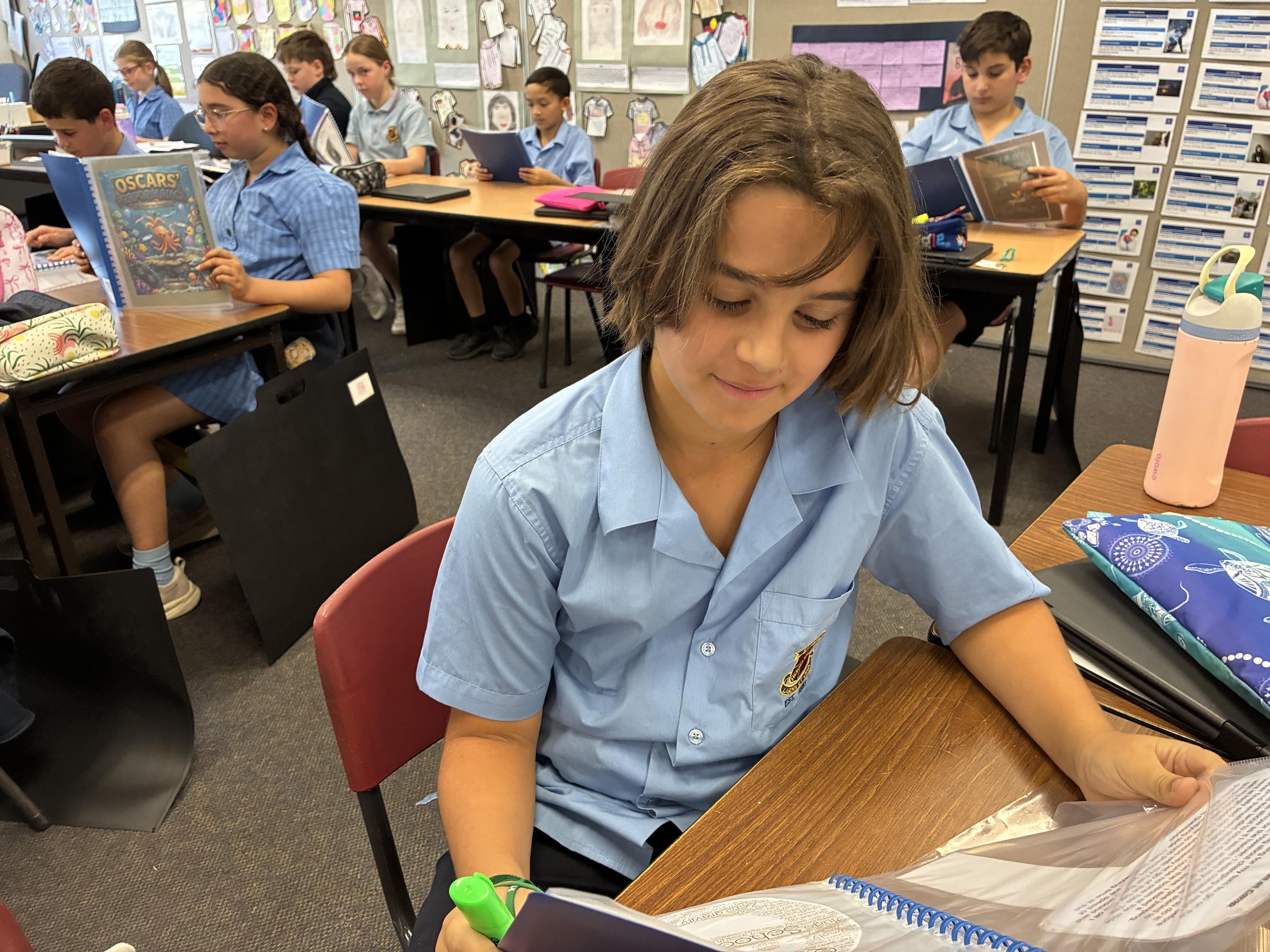
As children learn to read, their pace naturally quickens—but true reading success is never measured by speed alone. Reading fluency is the vital bridge between recognising printed letters and genuinely understanding a text. When a child reads accurately, at a natural rhythm, and with proper expression, they spend far less mental energy decoding individual words. This frees up their working memory to focus on what matters most: grasping ideas, making connections, and enjoying the story.

How Fluency and Comprehension Develop Together

Fluency and understanding grow side-by-side, shifting in emphasis as a child moves from early decoding to complex analysis.


Prep and Year 1: Building the Foundations of Meaning

At this stage, children spend significant cognitive energy linking letters to sounds and blending them together. Reading may be slow and deliberate, but every word recognised automatically frees up space in the child's mind to process the sentence's meaning.


How to support comprehension: Use decodable books that match their school lessons. Encourage sounding out rather than guessing so they grasp the precise meaning of the text. Re-reading familiar books helps words become recognisable on sight, allowing them to focus on the story's overall context.


Years 2 and 3: Connecting Words into Thoughtful Phrases

As children recognise words automatically, they transition from reading word-by-word to grouping words into meaningful phrases. Changing their tone for question marks, full stops, or character dialogue is direct proof that they understand the narrative's emotional tone and structure.


How to support comprehension: Have your child re-read passages to practice natural phrasing and expression. Take turns reading aloud and pause to discuss the plot, asking questions like: "Why do you think the character reacted that way?" or "What clues in the sentence tell us how they feel?"


Years 4 to 6: Strategic Reading and Deep Thinking

Experienced readers flexibly adjust their pace depending on the text and their purpose—slowing down to analyse a complex scientific explanation or pacing up through an exciting novel section. Fluency now directly supports critical thinking, inferencing, and evaluating different perspectives.


How to support comprehension: Expose your child to diverse reading materials, including news articles, non-fiction, and multi-layered novels. Discuss unfamiliar vocabulary in context, the author's underlying purpose, and complex themes. Reading aloud together occasionally remains a powerful way to unpack dense text.

Why Re-Reading Deepens Comprehension

Re-reading is one of the most effective tools for deepening text comprehension. On the first read, a child’s brain is heavily occupied with decoding the literal text—answering the question, "What does this say?"


When they re-read a familiar passage, decoding requires significantly less effort. This extra cognitive bandwidth allows them to process "What does this mean?" They notice overlooked details, make inferences, grasp subtle humor or logic, and retain information far more effectively.

Five Ways to Support Comprehension Through Fluency at Home

  1. Prioritise regular practice: Frequent reading builds automatic word recognition, leaving more mental space available for understanding complex content.
  2. Re-visit familiar texts: Encourage re-reading so your child can move beyond basic word recognition and focus on deeper narrative layers and themes.
  3. Model expression to illustrate meaning: Read aloud to your child, showing how tone, pitch, and pauses convey emotion, structure, and character intent.
  4. Keep comprehension at the center: Frequently talk about what is happening in the text. Encourage your child to summarise passages in their own words or predict what comes next.
  5. Focus on clarity over speed: Celebrate thoughtful self-correction and accurate reading over fast reading. If your child misreads a word, guide them to ask: "Does that word make sense in this sentence?"

Working together to support confident readers

At school, teachers explicitly build the tools children need to transform text on a page into active understanding. At home, families can strengthen these skills by keeping meaning, reflection, and discussion at the heart of daily reading time. Ultimately, the goal of fluency is not to produce fast readers, but to raise thoughtful, insightful, and confident comprehenders.