Senior School News

Unit of Inquiry Four- How the World Works
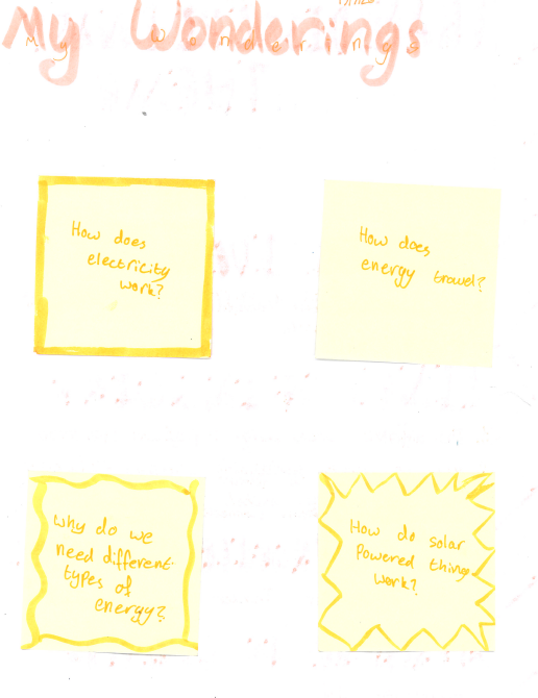
Our Senior School students have just completed a vibrant and hands‑on Unit of Inquiry exploring energy systems, sustainability and scientific problem‑solving. Over four weeks, learners investigated where our energy comes from, how different systems work, and why new innovations are essential for the future. They began by unpacking the central idea “Energy is produced in a variety of ways with new methods continually being developed to meet society’s needs”—and built curiosity through provocations, photo walks and student‑generated wondering questions.
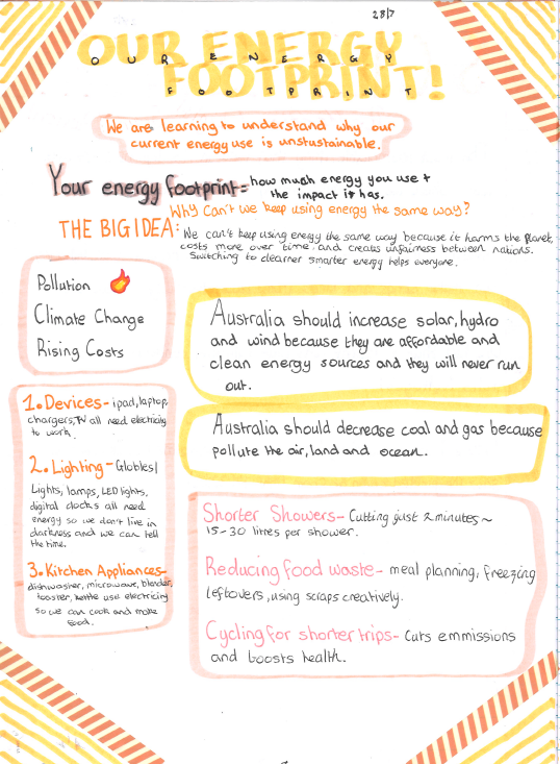
Students explored energy in action through practical demonstrations, matching activities and flowchart creation. They examined renewable and non‑renewable sources, compared how solar, wind and coal systems operate, and analysed the advantages and limitations of each. Using graphs and global data, they investigated Australia’s current energy mix and discussed why our present patterns of use are unsustainable. This led to thoughtful conversations about pollution, climate change, rising costs and fairness between countries.
A highlight of the unit was the exploration of future energy innovations, including fusion, hydrogen, tidal power, bioenergy and space‑based solar. Students compared benefits and challenges, ranked the technologies and justified which options Australia should invest in. They then applied their understanding to a design challenge, creating a sustainable energy grid for a fictional city called Energetica. Using climate, geography and budget constraints, students built digital models showing how their chosen energy mix would provide reliable, clean and affordable power.
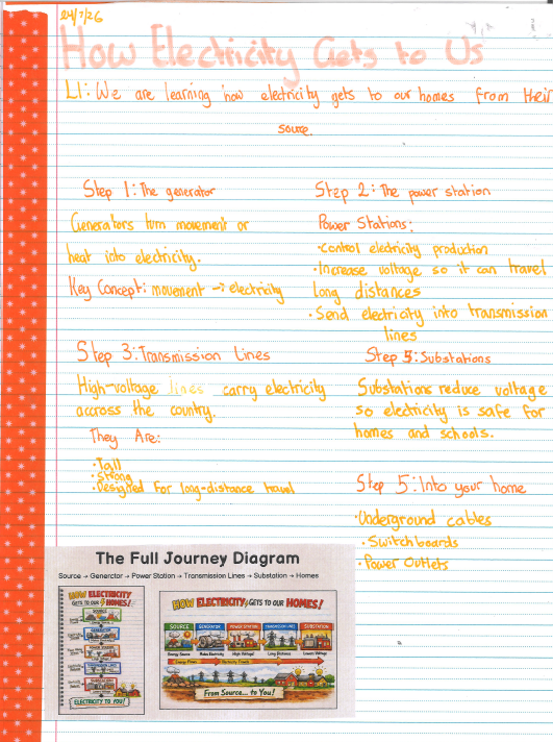
Throughout the unit, students demonstrated strong inquiry skills—asking deep questions, analysing data, designing solutions and applying the scientific method to real‑world problems. Their learning was further enriched through a film study of WALL‑E, where they identified energy systems, sustainability issues and examples of scientific problem‑solving within the story.
This unit empowered students to think critically about the world’s energy challenges and imagine innovative, responsible solutions for the future. Their curiosity, creativity and scientific thinking were evident across every lesson.
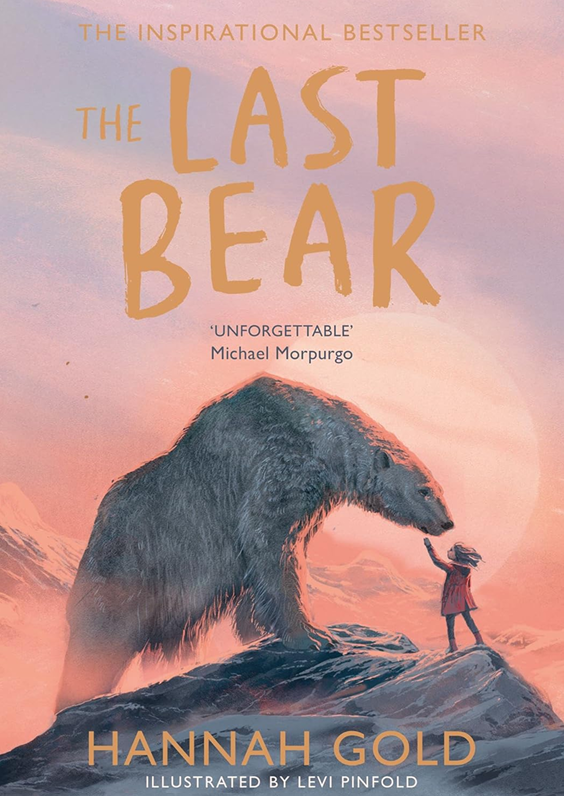
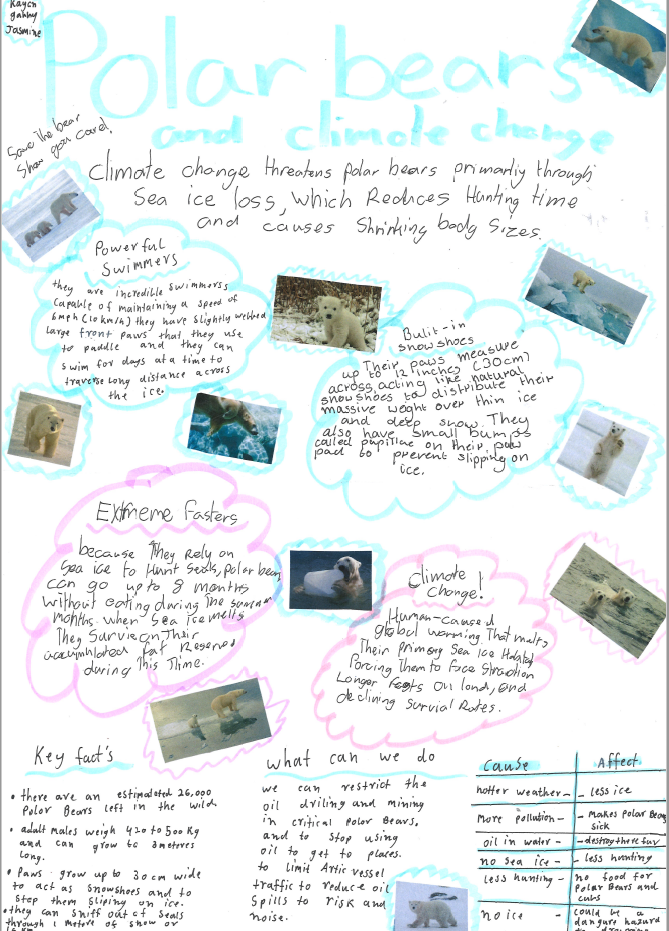
During this Unit of Inquiry, our Year 5/6 students have continued to be deeply engaged in a rich text study of The Last Bear by Hannah Gold. Across the unit, students have explored April’s extraordinary Arctic adventure and her powerful bond with Bear, while building strong comprehension, vocabulary and writing skills.
Through close reading, students have analysed plot tension, character development and the author’s use of imagery, simile, personification and repetition. They have practised summarising key ideas, responding to text‑dependent questions and discussing themes such as friendship, courage and environmental protection.
Students have also strengthened their sentence‑level writing, learning to expand sentences, use relative clauses and craft complex sentences with cause, contrast and conditional relationships. At the text level, they have researched real conservation issues affecting polar bears and planned a persuasive letter calling for action to protect Arctic wildlife. They have drafted introductions, structured body paragraphs using the PEPS (point, explanation, proof and summary) model and crafted conclusions that include subtle warnings and calls to action.
This unit has combined reading, writing and critical thinking in meaningful ways, helping students understand both the story and the real‑world environmental issues it reflects. It has been a joy watching them connect with the text, build confidence as readers and writers, and engage thoughtfully with the world beyond the page and with the energy choices that will shape its future.
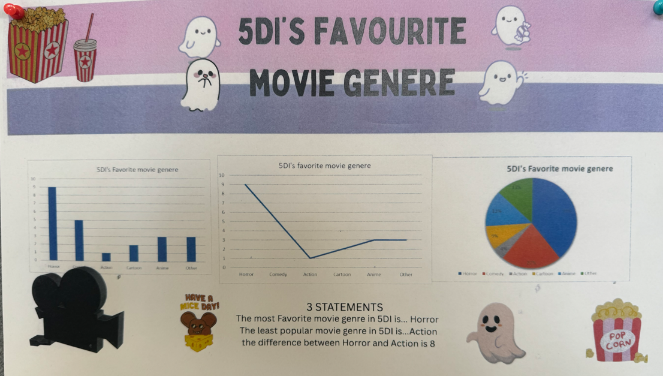
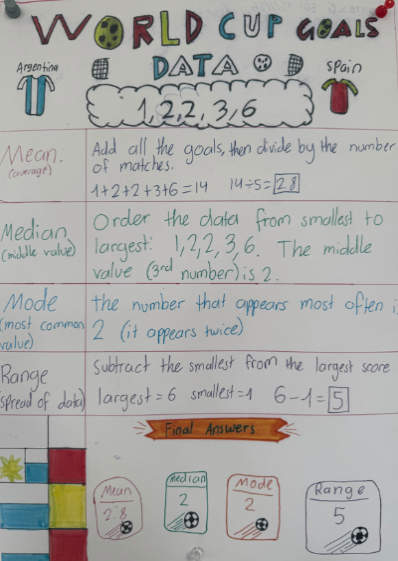
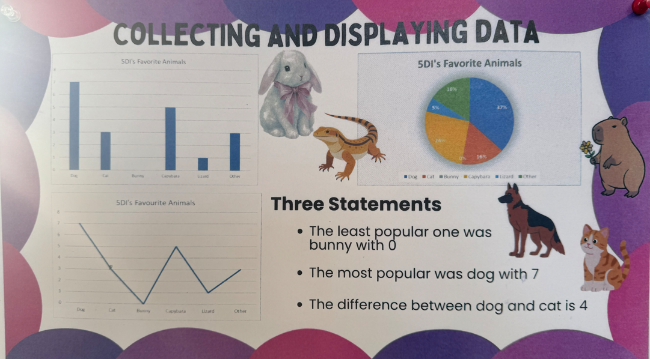
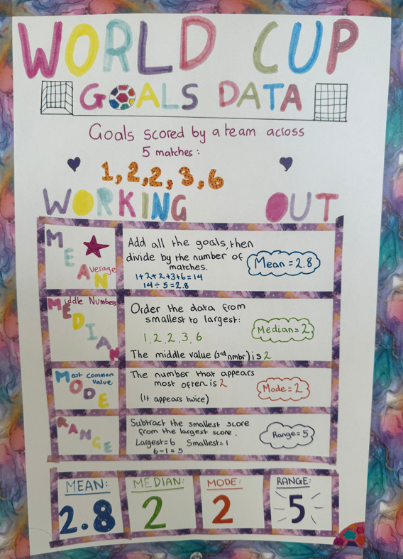
Students commenced their Investigating and Representing Data unit, developing their understanding of how data is collected, organised and displayed. Across Years 5 and 6, learners explored different types of data, including categorical and numerical data, and identified subtypes such as nominal, ordinal, discrete and continuous data. They also investigated the key statistical measures of mean, median, mode and range, applying these concepts to real-world data sets and interpreting what the results reveal about the data. Students represented data in a variety of ways by creating graphs by hand and using Excel to design column graphs, pie charts and line graphs, while focusing on presenting information clearly, accurately and visually.
In the coming weeks, the Year 5 and 6 cohort will begin their Angles unit, exploring how angles are identified, measured and used in everyday life. Students will learn to recognise and classify different angle types, including acute, right, obtuse, straight and reflex angles, while developing their skills in measuring and drawing angles using a protractor. The unit will also explore important angle relationships, such as complementary and supplementary angles, angles on a straight line, angles at a point and vertically opposite angles. These concepts will be applied to solve missing-angle problems and strengthen mathematical reasoning and problem-solving skills.