Specialist News
From our Engaging With Place, Italian, Sport & Music Educators

Specialist News
From our Engaging With Place, Italian, Sport & Music Educators
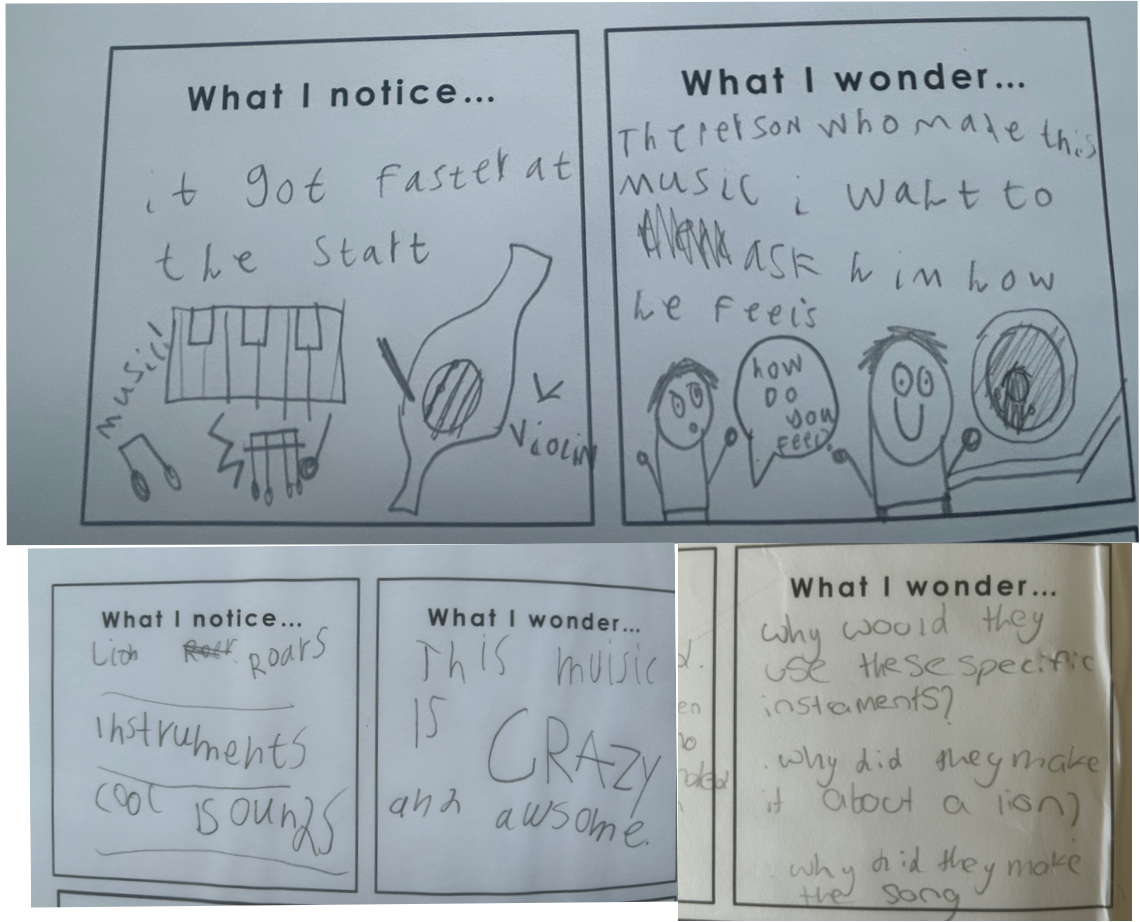
In Music, students enjoy listening lessons where they have the opportunity to listen carefully to a piece of music and write down what they notice, wonder about, and think about it.
Recently, children enjoyed listening to ‘Lions’, the first movement from Carnival of the Animals by Saint Saëns. It was a joy to see the their response and interaction with this piece of music as they heard how the lion was depicted in the music as ‘majestic’ and the dramatic sound of the lion’s roar represented in the piano part.
Dear families, as the music teacher I also want to share this wonderful reflection on the importance of music education for all. I hope you find the reflection (source unknown) as inspiring as I did!
Why We Teach Music
Music is scientific. It is precise, specific, and demands accurate acoustics. A conductor's score is a complex chart that indicates frequency, intensity, volume, melody, and harmony, all at once and with the most exact control of time.
Music is mathematical. It is rhythmically based on the subdivisions of time into fractions that must be calculated, interpreted, and applied instantaneously.
Music is foreign language. Most of the terms are in Italian, German, or French, and notation is a highly developed kind of shorthand based on symbols that represent ideas. The semantics of music is the most complete and universal language known.
Music is history. It reflects the environment and times of its creation, including the cultural and social values.
Music is physical education. It requires exceptional coordination of fingers, hands, arms, lips, cheeks, and facial muscles. It also takes extraordinary control of the diaphragm, which in turn uses the back, stomach and chest muscles.
Music is philosophy. It demands research and develops insight and perspective.
Music is art. It allows a human being to take dry, boring, and often difficult techniques and use them to create emotion.
We do not teach music because we expect you to major in music or become a professional musician. Nor do we teach music because we expect you to play or sing all your life (although you might).
We teach music so you will recognise beauty.
We teach you music so you have more compassion.
We teach you music so you can be fully human.
Source: Unknown