Learning & Teaching
Maths News…
Mathematics Learning Prep: Length, Mass and Capacity
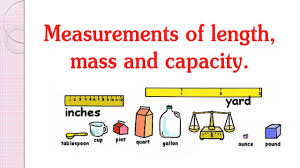
In Maths, the Prep children are learning about Measurement. They are exploring and comparing the attributes of objects, including length, mass and capacity. Through hands-on learning experiences, the children are developing their understanding of measurement by comparing, describing and measuring everyday objects. They are learning to identify which objects are longer or shorter, heavier or lighter, and which containers hold more or less.
Using a range of informal measurement tools and everyday materials, the children are gaining practical experience in measuring and comparing objects. They are exploring measurement through play, investigation and problem-solving activities, helping them make meaningful connections between mathematics and the world around them.
To support this learning at home, we encourage you to go on a "Measurement Hunt" with your child. Together, you might:
- Find the longest and shortest items in your home.
- Compare the heaviest and lightest fruit or vegetables in your kitchen.
- Investigate which cups or containers hold the most or least water.
- Use hands, blocks, string or other household items to measure different objects.
As your child explores measurement in everyday situations, encourage them to compare objects and explain their thinking. These conversations help strengthen their understanding and build confidence in using mathematical language.
Mathematics Learning 1-2: Multiplication and Division
In Maths, the children in Years 1–2 have been learning about sharing and grouping. Through hands-on activities and real-life problem-solving, they are developing their understanding of how collections can be shared equally and grouped in different ways.
The children are using concrete materials, drawings and counting strategies to model equal sharing and grouping situations. They are learning that equal groups have the same number in each group and are beginning to make connections between sharing, grouping and repeated addition.
How You Can Support Learning at Home
Here are some simple ways to reinforce this learning at home:
1. Share Everyday ObjectsUse items such as fruit, toys, blocks or snacks and ask your child to share them equally between family members.
For example:
- Can you share 12 grapes equally between 3 people?
- How many does each person get?
2. Make Equal GroupsAsk your child to organise objects into equal groups.
For example:
- Make groups of 2, 5 or 10 using counters, toys or coins.
- How many groups did you make?
3. Draw PicturesEncourage your child to draw pictures to represent sharing and grouping problems. This helps them visualise their thinking.
4. Count CollectionsPractise counting groups of objects and discuss how many are in each group and how many there are altogether.
5. Talk About Maths in Everyday LifeAsk questions such as:
- Can these be shared equally?
- How many groups can we make?
- How do you know the groups are equal?
These simple activities help children build confidence and develop a strong understanding of sharing and grouping, which provides an important foundation for future multiplication and division learning.
Mathematics Learning 3-4: Multiplication and Division
The children in Years 3–4 have been developing their understanding of multiplication and division by building strong number sense and recognising the relationship between these two connected operations. Throughout the unit, children have been learning to explain and justify their mathematical thinking, select efficient strategies to solve problems, and apply their understanding in a variety of contexts.
Throughout the unit, the children have been learning to:
- recognise multiplication as equal groups, repeated addition and arrays
- understand division as sharing equally and grouping
- identify the relationship between multiplication and division (fact families)
- use skip counting and known multiplication facts to solve problems
- develop fluency with multiplication and division facts
- apply strategies to solve one-step and multi-step word problems
- explain and justify their mathematical thinking using mathematical language.
How you can support your child at home
Families play an important role in developing children's confidence with mathematics. Here are some simple activities you can do together:
- Practise multiplication facts for 5–10 minutes several times a week using flashcards, games or songs.
- Look for arrays around your home or community, such as egg cartons, muffin trays, windows or paving bricks, and ask, "How many rows? How many columns? How many altogether?"
- Use real-life situations to practise sharing and grouping. For example:
- "We have 24 strawberries and 6 people. How many does each person receive?"
- "If there are 18 biscuits and each plate holds 3, how many plates do we need?"
- Skip count together while walking, driving or climbing stairs (e.g. by 2s, 3s, 4s, 5s and 10s).
- Talk about your thinking. Encourage your child to explain how they solved a problem rather than simply giving the answer.
- Play games that involve multiplication and division, such as card games, dice games or online maths games.
Mathematics Learning 5-6: Decimals
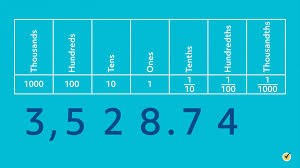
The children in Years 5-6 are developing their understanding of decimals and place value. They are learning to read, write, compare and order decimals, including numbers with more than two decimal places. The children are exploring how decimals are connected to fractions and are using place value knowledge to add, subtract, multiply and divide decimals. They are applying these skills to solve real-world problems and are learning to estimate and round decimal numbers to check whether their answers are reasonable.
How You Can Support Learning at Home
Families can support this learning by looking for decimals in everyday life. Encourage your child to read prices while shopping, compare distances, measure ingredients when cooking or discuss decimal numbers they see in sports statistics or weather reports.
Ask questions such as, "Which number is greater: 3.45 or 3.54?" or "How much change would we receive from $10.00?" You can also practise estimating totals when shopping and discussing how decimals are used in real-world situations. These conversations help children develop confidence and a deeper understanding of decimal numbers.
Literacy News
What is coming up in Literacy?
Next week (week 7) is a huge week for Literacy! We will be celebrating Book Week and the wonderful stories we get to experience when reading. This year, the theme is ‘Symphony of Stories’ . To celebrate Book Week, our children will be participating in Book
week activities throughout the week.

Our much anticipated Book Week Parade will happen on Thursday 27th at 9:15am. Please come along if you can!
Our Book Fair will also be arriving and open for sales on Wednesday 26th before and after school. Every dollar you spend goes towards getting resources for our school library.
Can you guess what our teachers will come for Book Week this year? Here is your clue:
