Parent Corner















 Boroondara Park Primary School

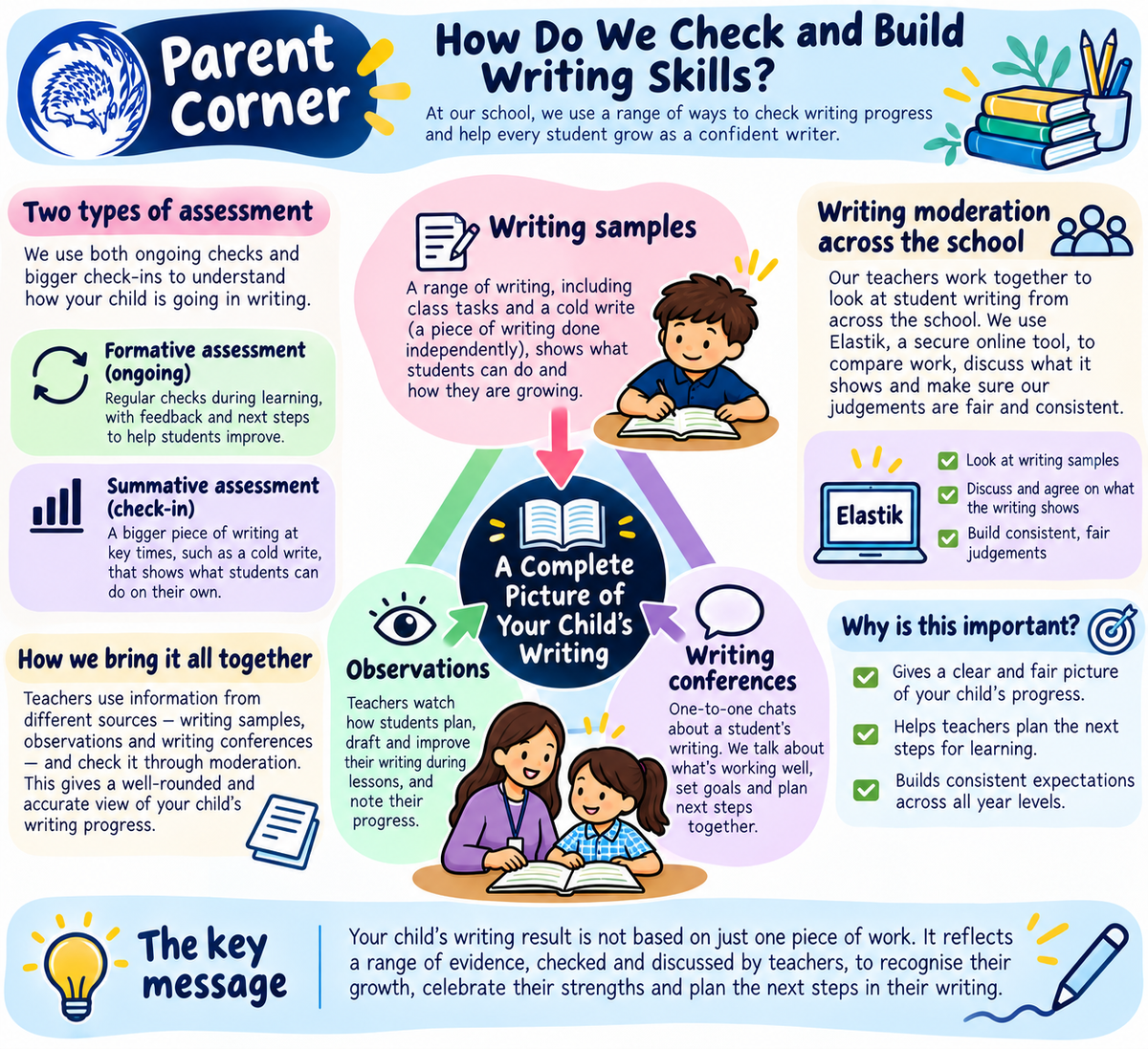
Parent Corner: How Do We Assess Writing?
Understanding how teachers track your child's writing progress
At Boroondara Park Primary School, we know that becoming a confident writer takes time, practice and feedback. Students learn to plan their ideas, write clear sentences, choose interesting words and organise their writing for different purposes.
But how do teachers know how well your child is going in writing?
Just like reading, we don't rely on one piece of writing or one test. Teachers collect information throughout the year to build a clear picture of each child's writing skills and progress.
Three Ways We Check Writing Progress
1. Writing tasks and cold writes
Students complete different writing tasks throughout the year. These include cold writes, where students write independently without help or a practice session for that particular task.
Cold writes help teachers see which writing skills students can use on their own and what they need to learn next.
2. Teacher observations and writing conferences
During writing lessons, teachers watch how students plan, write and improve their work.
Teachers also meet with students for short writing conferences. These are conversations about their writing, where students can share their ideas, celebrate what they have done well and receive feedback on what to work on next.
3. Student work samples
Teachers collect writing samples across the year. Looking at different pieces of writing helps them see how students are improving their spelling, punctuation, sentence structure, word choices and organisation of ideas.
How Do Teachers Make Fair Decisions?
At Boroondara Park Primary School, teachers take part in whole-school writing moderation.
This means teachers meet to look at student writing, discuss what students can do and agree on what writing looks like at different year levels.
We use a tool called Elastik to support this process. It helps teachers review writing samples and make consistent decisions about student achievement against the Victorian Curriculum.
This is important because it means students' writing is judged using the same expectations across the school, not just by one teacher.
Why Do We Assess Writing Throughout the Year?
Some assessments help teachers decide what to teach next. These are called formative assessments. They include classroom observations, writing conferences and regular writing tasks.
Other assessments help teachers make a judgement about what students have learnt at a particular point in time. These are called summative assessments. They may include independent writing tasks and a review of writing samples collected over time.
Both are important.Students need chances to practise, receive feedback, revisit skills and use their learning in different writing tasks. This also reflects the Victorian Teaching and Learning Model 2.0.
How Does This Help With School Reports?
When preparing reports, teachers bring together writing samples, classroom observations, writing conferences and assessment results.
They also use whole-school moderation to check that their decisions are fair and consistent.
The key message for families: Your child's writing result is not based on one piece of writing or one day. It reflects the skills they have shown across different tasks and over time.
By looking at the full picture, teachers can celebrate each child's growth and plan the next steps to help them become confident and capable writers.