Wellbeing

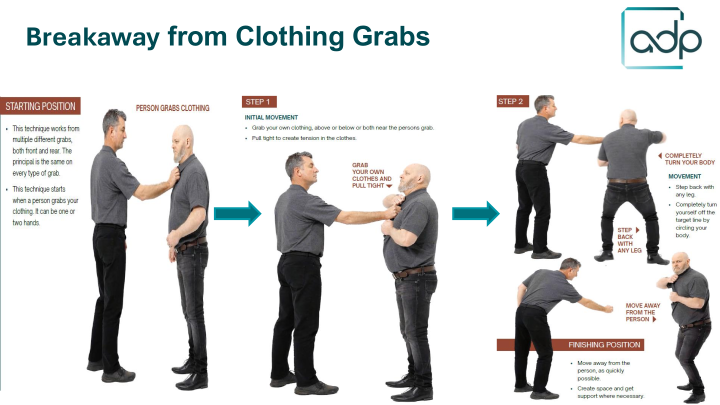
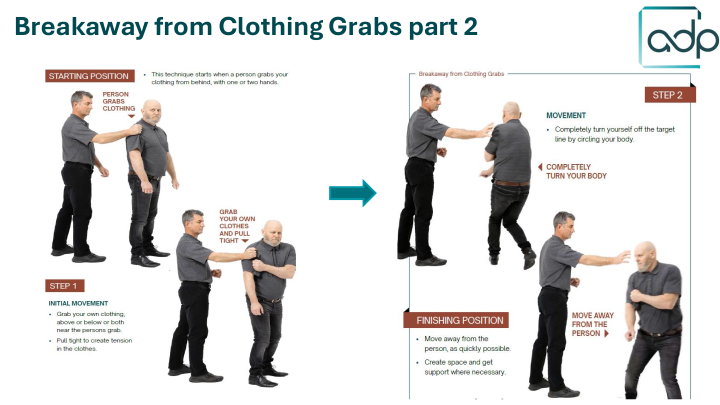
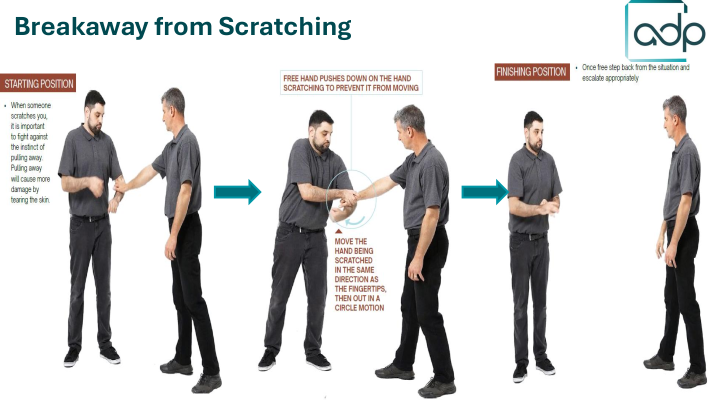
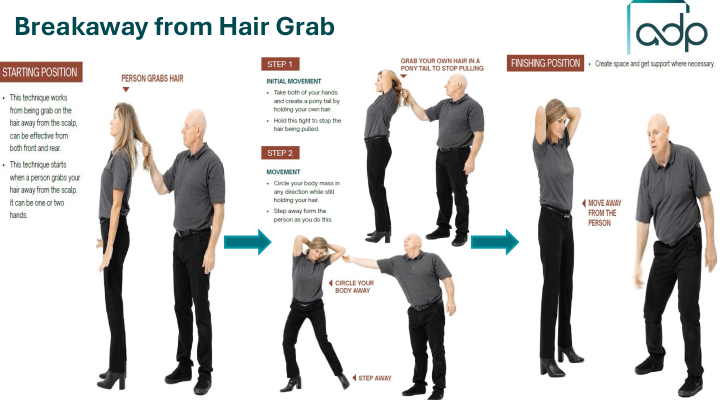
Last term, some of the Leadership Team undertook the Train-the-Trainer Protective Intervention Training (PIT). We will deliver the core training on our Curriculum Day on Monday, followed by targeted, differentiated training to cohorts of teachers and ESS throughout the term. The Curriculum Day will be held in the Hall on the new tiered seating. Devices are not required.
Protective Intervention Training helps school staff prevent and manage behaviours of concern while reducing the need for physical interventions, de-escalate situations involving aggressive or violent behaviour, and ensure the health and safety of students and staff.
If a school considers student challenging behaviours to pose a risk to staff safety and to require the use of protective interventions during their work, the school should seek guidance and appropriate training to reduce risk where it is foreseeable.
At Jackson School, this was completed in 2021; the Wellbeing SIT have undertaken the revised course and will re-deliver this training to staff on our Curriculum Day.
By completing this course, you will:
- Recognise triggers and signs (verbal and visual cues) of an agitated student
- Increase situational awareness and preparation
- Be able to evaluate a situation and make more informed decisions regarding safety and next steps
- Develop confidence in using de-escalation skills when dealing with a heightened student
- Use voice, tone, and body language appropriately to defuse tension
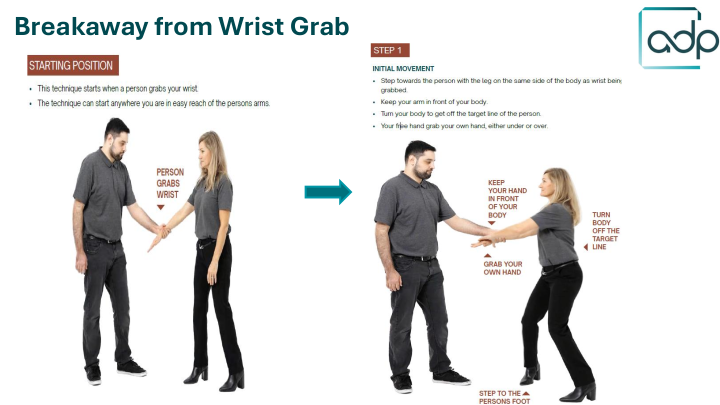
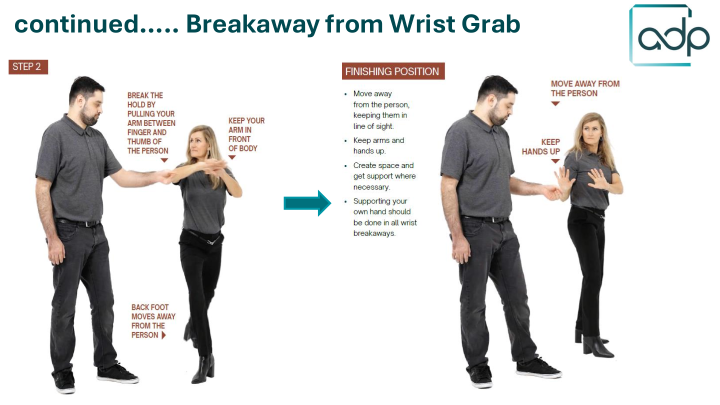
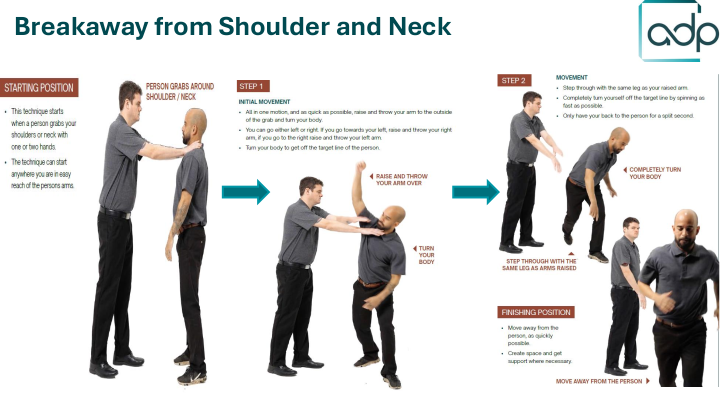
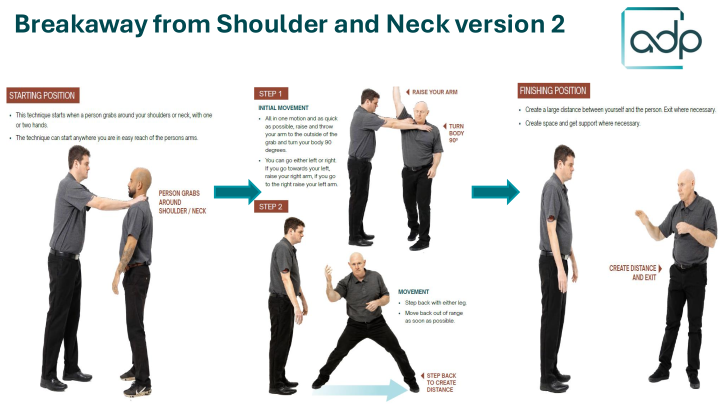
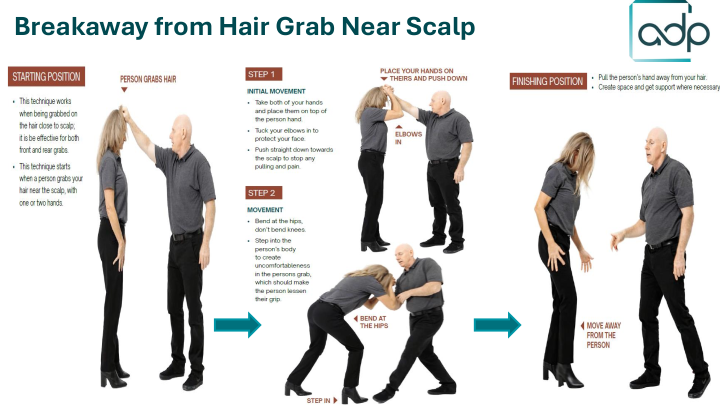
- Learn various techniques related to disengaging, positioning, movement, breakaways, and escapes
This training is conducted in a safe and open environment, fostering discussions that enhance participant’s understanding of the material and increase their confidence in handling challenges.
Course Outline
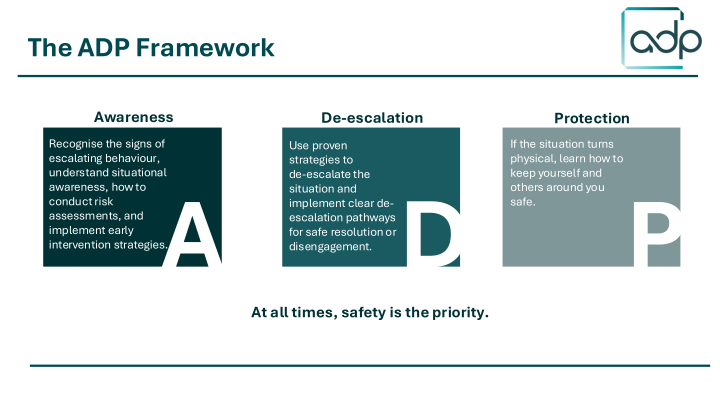
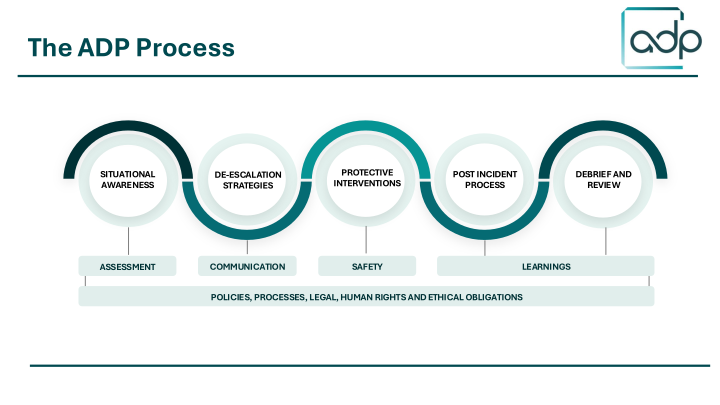
All course outlines are crafted using our A.D.P. Framework and personalised through pre-training consultations. This collaborative approach ensures that your team’s specific needs are thoroughly addressed and that the training content, including scenarios, remains relevant and practical. The training is divided into three modules: Awareness, De-escalation, and Protection. Each module targets a key aspect of intervention and tension reduction, thereby ensuring safer workplaces and learning environments.
Restraint and Seclusion Policy
The Restraint and Seclusion Policy outlines the circumstances where physical restraint and seclusion are permitted in Victorian government schools.
Physical restraint and seclusion are permitted only in exceptional circumstances when necessary to protect the physical safety of a student or another person.
The policy outlines reporting and notification requirements, as well as the responsibilities of school and corporate staff regarding incidents of physical restraint and seclusion.
School staff must never use physical restraint and seclusion as behaviour management techniques, for convenience, as retaliation, or to discipline or punish a student.
Physical restraint must never be used where it has the effect of:
- covering a student’s mouth or nose, or in any way interferes with breathing
- taking a student to the ground into the prone or supine position
- putting stress on a student’s joints
- applying pressure to the neck, back, chest or joints
- deliberately applying pain to gain compliance
- intentionally causing a student to fall
- having a person sitting, lying, or kneeling on a student.
The following behaviours are prohibited:
- headlocks, choke holds, basket holds, bear hugs, therapeutic holding or wrestling holds (including full or half nelsons)
- using a hog-tied position
- straddling any part of a student's body
- dragging a student along the ground.
Physical restraint and seclusion must never be included in a student plan, including behaviour support and student safety plans. Designated seclusion rooms and areas primarily used for seclusion are prohibited. Preventing a student from leaving an area normally used by students, using a locking mechanism, is prohibited.
Doors and door handles installed in such a manner as to prevent a student from leaving the room unassisted are prohibited. Physical restraint is not permitted when vaccinating a student.
The Department has recently updated the Restraint and Seclusion policy to:
- Fact sheet: Staff intervention in physical altercations between students
- list supervised situations that do not meet the definition of seclusion
- include additional information about new professional development to help school staff learn more about the policy
- provide guidance to help schools and National Disability Insurance Scheme (NDIS) practitioners to work together. For example, it is the responsibility of a school principal to determine whether a NDIS behaviour support practitioner can attend a school site and whether student information can be provided to them.
Please familiarise yourself with the updated policy and your school’s responsibilities.
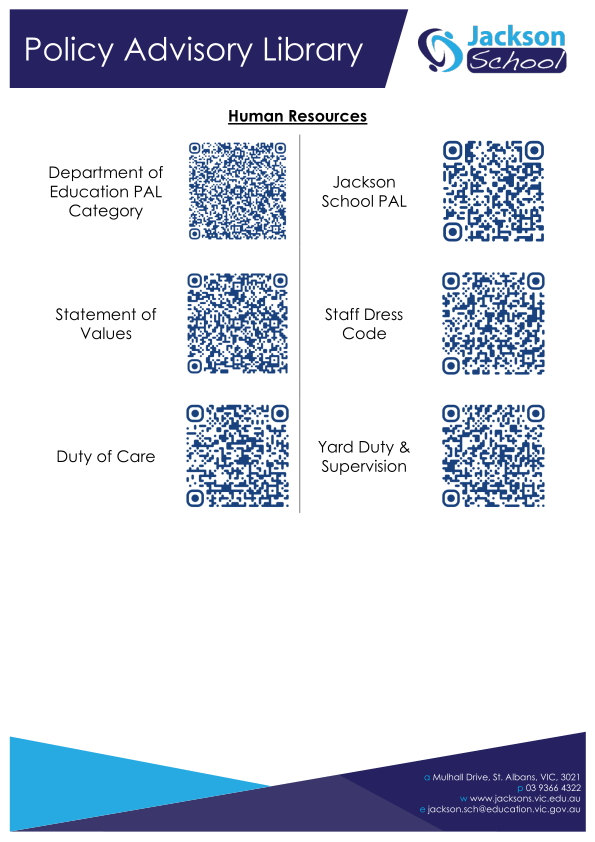
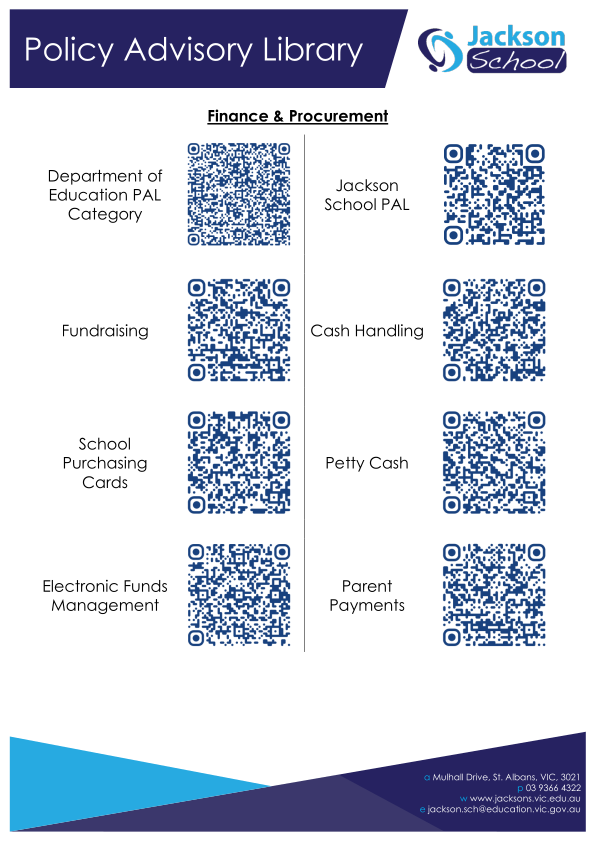
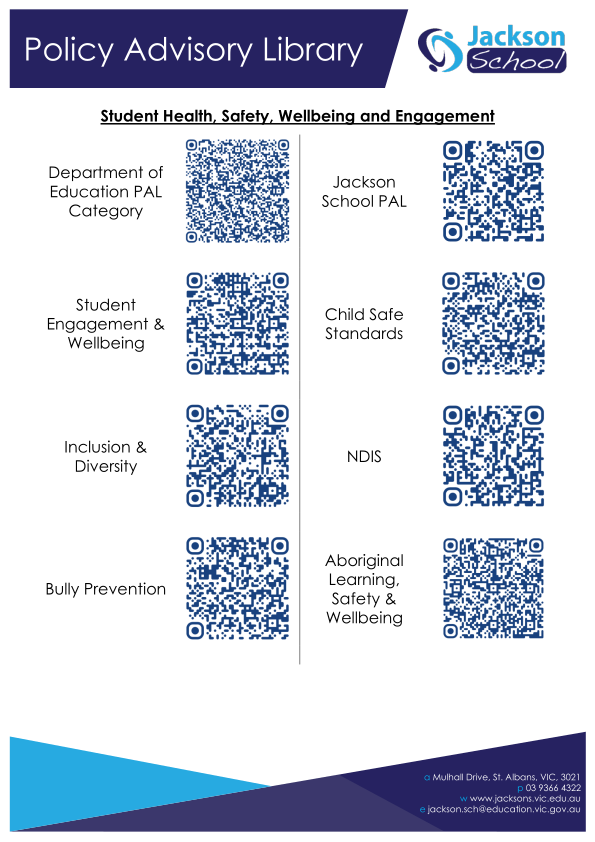
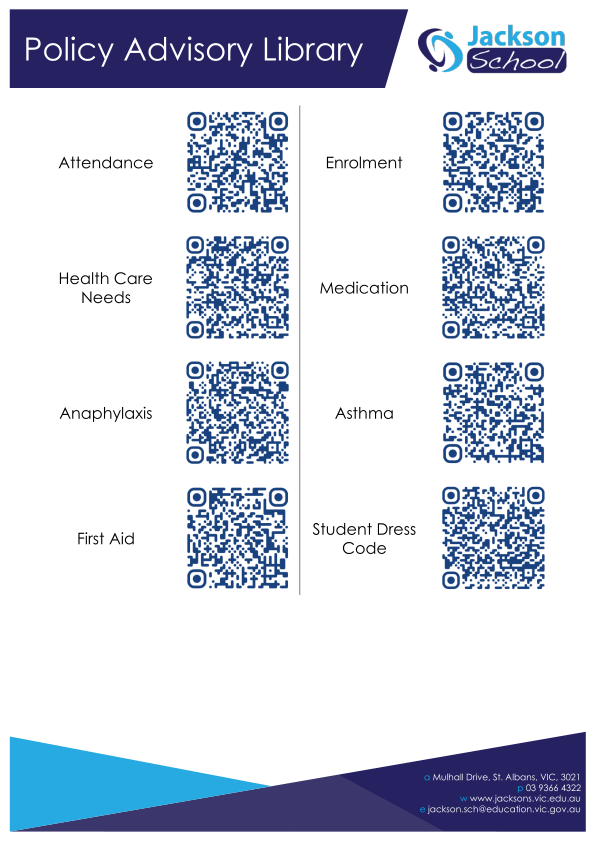
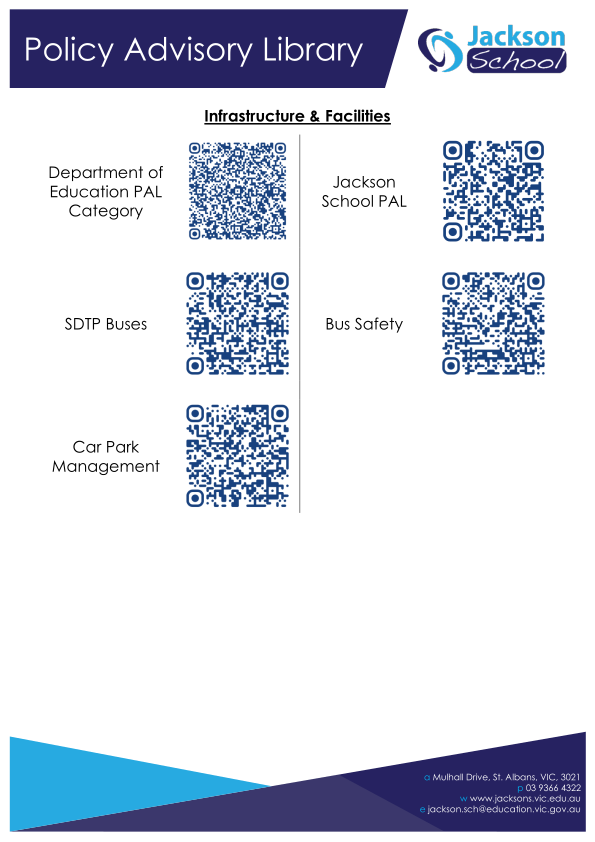
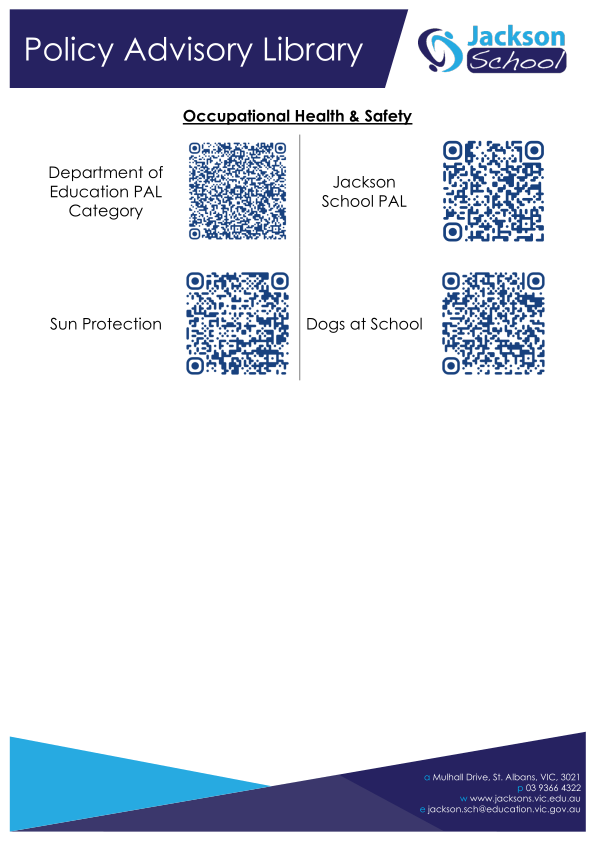
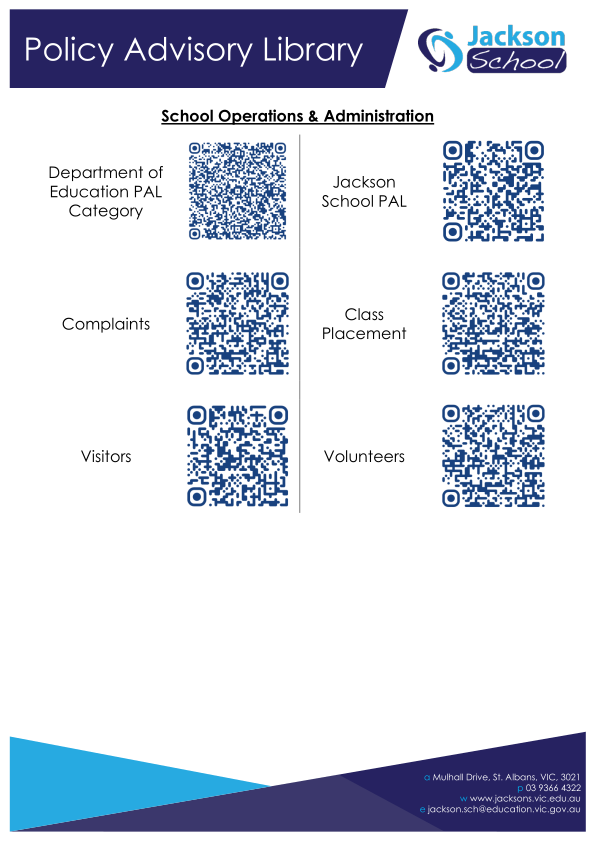
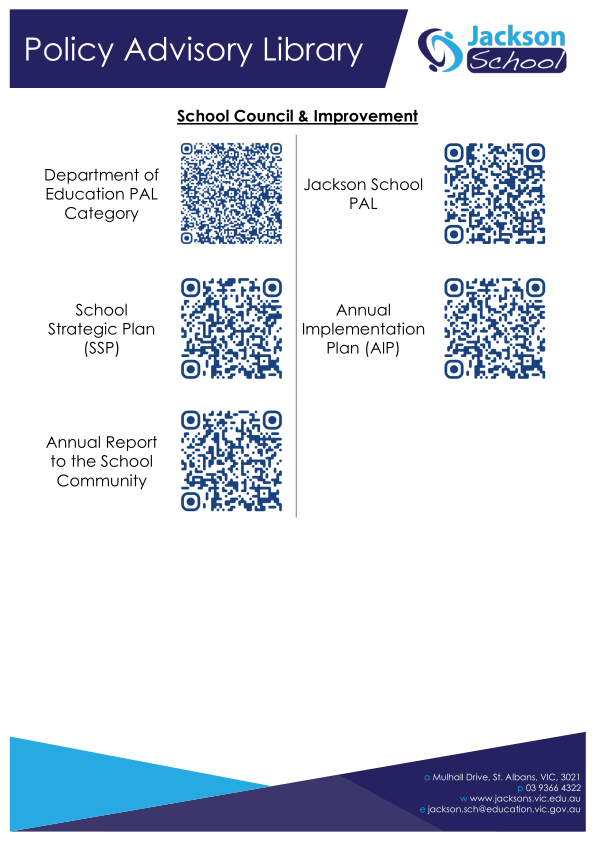
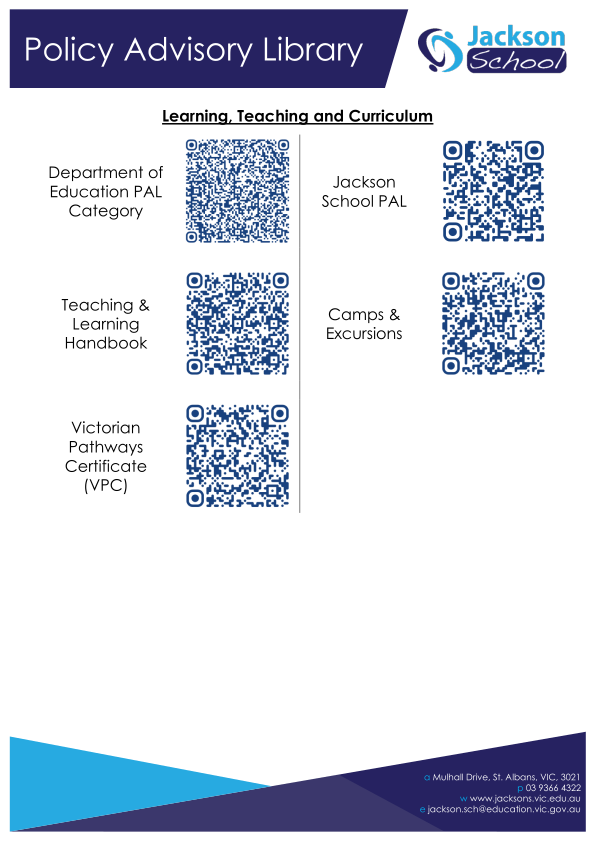
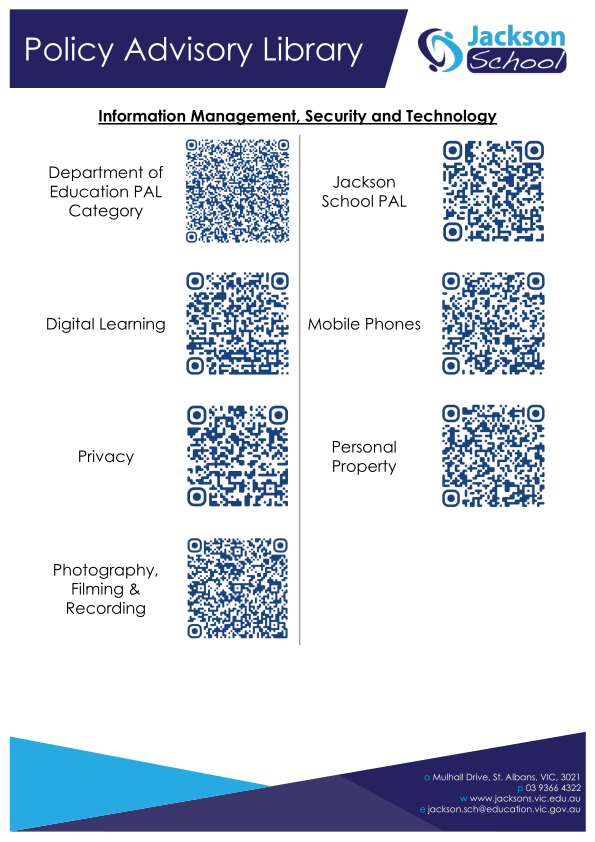
To view our Jackson School Policy Advisory Library with child safe standards policy and guidelines, please visit: https://newsletters.naavi.com/i/pNpVrpM or scan the QR codes below.
- Child Safety & Wellbeing Policy
- Child Safety Responding and Reporting Obligations Policy and Procedures
- Code of Conduct
- Risk Register