CHILD SAFETY IS EVERYONE'S RESPONSIBILITY









 Ripponlea Primary School
CHILD SAFE STANDARD 3
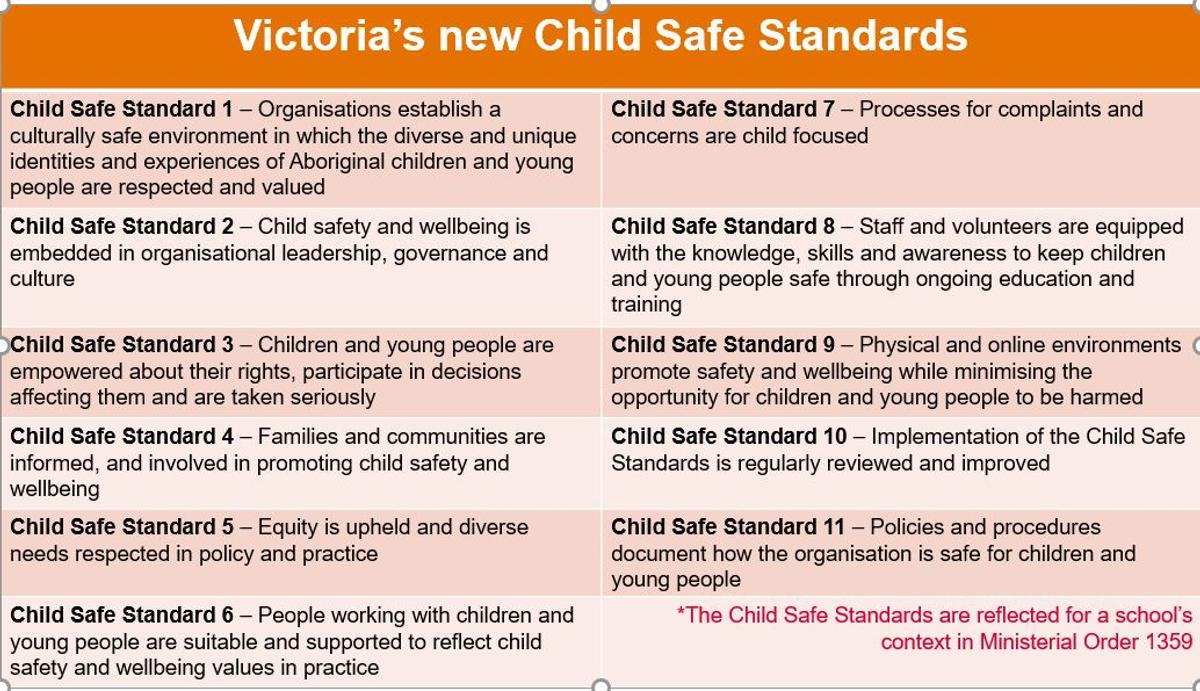
Children and young people are empowered about their rights, participate in decisions affecting them and are taken seriously.
In complying with Child Safe Standard 3
The school council, parents and carers, visitors, staff and principal will ensure:
- inform students about all their rights, including their rights to safety, information and participation
- recognise the importance of friendships and encourage support from peers, to help students feel safe and be less isolated
- make sure staff and volunteers:
- are attuned to signs of harm
- facilitate child-friendly ways for students to express their views, participate in decision-making and raise their concerns
- to develop a culture that encourages participation and responds to what students say
- give students opportunities to participate, and respond to their contributions to strengthen confidence and engagement
- offer students access to sexual abuse prevention programs and related information in an age-appropriate way. School boarding premises are required to offer sexual abuse prevention programs and related information where it is relevant to the setting or context
- develop curriculum planning documents or other documentation that details how the school will address these requirements.
Ripponlea Primary School does the following to adhere to Standard 3
Inform students of their rights
- Provide age-appropriate and accessible information to students such as information about:
- the school's Child Safety and Wellbeing Policy and Code of Conduct.
- the Charter of Commitment under the UN Convention on the Rights of the Child
- how the adults in the school should behave.
- Inform students of their rights and special protections including the right to:
- live and grow up healthy
- have a say about decisions affecting them
- get information that is important to them
- be safe and not harmed by anyone.
- When sharing information under the information sharing schemes:
- work to build trust by being open and transparent about information sharing and keep the child and family informed each time their information is shared if it is appropriate, safe and reasonable to do so
- seek and consider the views of the child (or the relevant family members) about sharing their confidential information if it is appropriate, safe and reasonable to do so
- Provide information through the curriculum via relevant subject areas to promote:
Resilience, Rights and Respectful Relationships, School-wide Positive Behaviour Support Framework, Safe Schools, Bully Stoppers, eSmart
Empower students to contribute to school life
- Conduct year-level meetings and form groups to discuss students' rights and safety issues.
- Invite students to provide feedback on school-wide decisions and take their views into account in school decision-making.
- Document student participation in activities that contribute to the life of the school.
- Involve students in consultation processes and inform them of their impact on decision-making.
- Demonstrate that the school takes students seriously by acting on their concerns, noting that what might seem unimportant to an adult may be important to a young person.
- Provide students who find it harder to speak up or be heard with multiple avenues for communicating, including writing, drawing, or physical forms of communication.
Empower students to raise their concerns
- Provide students with information about complaints processes.
- Give students a variety of ways to raise concerns. For example:
- provide an anonymous, year-level student suggestion box
- distribute regular online surveys
- display information about the adults who students can talk to if they have a concern.
- Highlight student views in your school community or public-facing documents, including quoting students where appropriate.
- Create opportunities for all student voices by being aware of discriminatory barriers and any overreliance on the input of student leaders.
Strengthen peer support for safety and wellbeing
- Display posters acknowledging sexuality and gender diversity and identify safe spaces where students can go if they need support.
- Carry out regular whole school wellbeing assessment surveys.
- Use the Bully Stoppers survey tool to assess bullying in your school.
- Establish Student Action Teams to investigate issues of inclusion and exclusion.
- Discuss healthy boundaries for friendships. Point out that the risk of harm can occur in child-to-child interactions, as well as adult-to-child interactions.
- Use school transition programs, like Transition: A Positive Start to School (DOCX, 4.3MB) or Transition – Year 6 to 7, to provide support for students entering the school.
- Provide buddying or mentoring programs for new students transitioning to the school mid‑year or outside of the regular transition timeline.
Establish protective factors
- Teach students practical protective strategies, including:
- what to do when they feel unsafe
- phrases they can use to raise an objection
- pathways for raising safety concerns, and
- online safety behaviours.
- Provide contact information for independent child and youth advocacy services or helplines.
- Provide a range of age-appropriate picture books, fiction and non-fiction that include:
- children's rights and empowerment themes
- cultural and linguistic diversity
- neurodiverse characters and people with disability
- diversity in sexual orientation and gender.
- Support all students to identify trusted adults and friends they can talk to about a concern at school, at home or in the community.
- Deliver age-appropriate curriculum content about respectful relationships, sexuality, consent and sexual abuse prevention through the Resilience Rights and Respectful Relationships teaching and learning materials as part of implementing the whole school approach to Respectful Relationships.
- Use the School's Mental Health Menu to support students in your school.
- Empower students with the knowledge that adults are accountable and that students have a right to safety.
Communicate in a respectful and age-appropriate way
- Educate staff to uphold Aboriginal cultural safety and be respectful of identity and culture.
- Train staff and volunteers to facilitate child-friendly ways for students to express their views, participate in decision-making and raise their concerns.
- Educate staff and volunteers about children's rights, including the 4 guiding principles in the Convention on the Rights of the Child.
Use sensitivity and build trust
- Provide training to staff and volunteers to be attuned to signs of harm and risk factors in students.
- Remind staff and volunteers to recognise that students might communicate in different ways, including through verbal and non-verbal cues, play, body language, facial expressions, drawings or behaviours.
- Follow through on your commitments – show students that the leadership team and staff are trustworthy and take their worries or concerns seriously.