Library
Library Leader Canowindra - Maria Muse
Library Leader Yirramboi - Paige Witcombe




 Overnewton Anglican Community College
Library
Library Leader Canowindra - Maria Muse
Library Leader Yirramboi - Paige Witcombe
Article by Paige Witcombe, Library Leader – Yirramboi campus
What makes a book controversial? And who gets to decide what we are allowed to read?
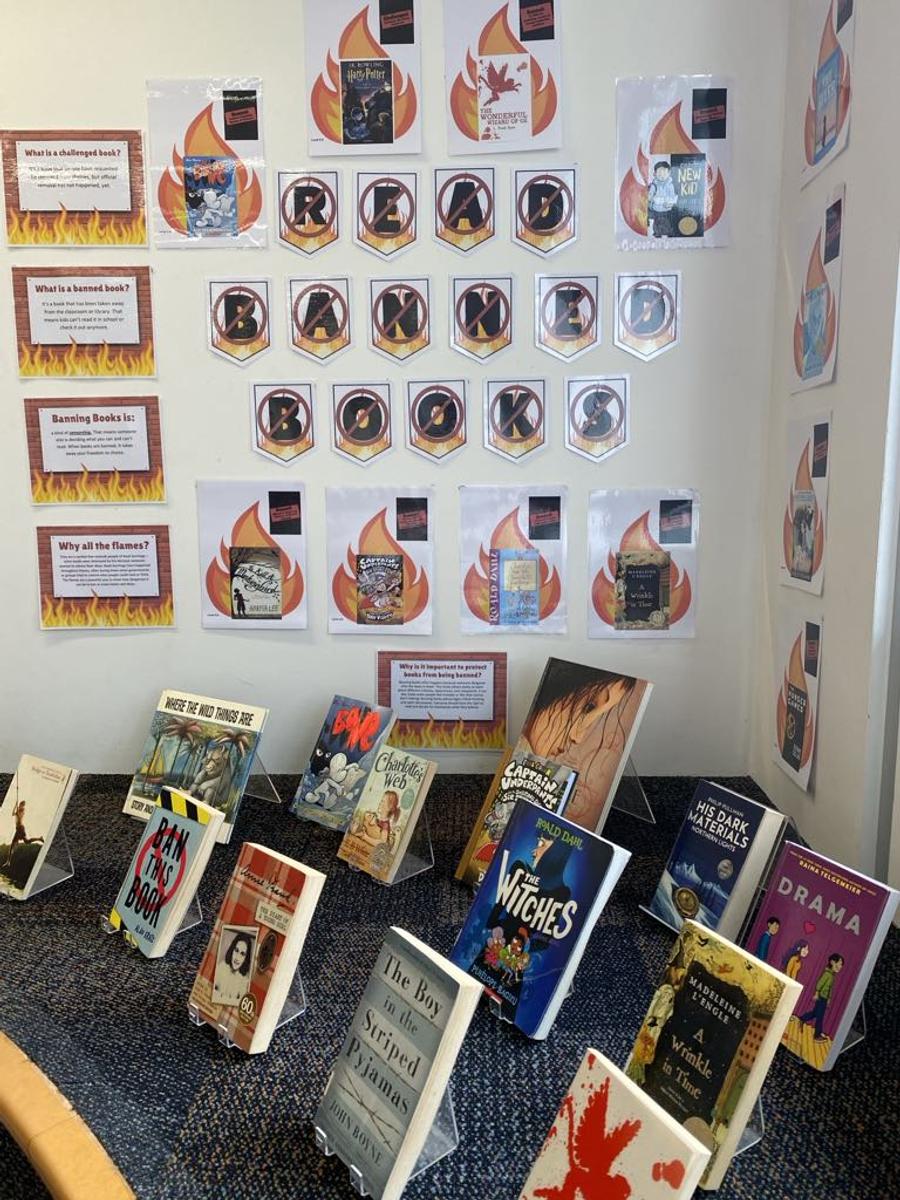
During Banned Books Week (October 4-10), students in Middle School Library lessons have been exploring these questions and learning about the difference between a banned book, a challenged book and a book that is age-restricted. We have discovered that a challenged book is one that someone has asked to have removed or restricted, while a banned book has actually been prohibited and removed from library shelves. Age restrictions are different again: they recognise that some books contain themes or content that may not be suitable for every age group.
Students have also been surprised to discover that some very familiar books have been challenged or banned over the years. The Lorax, for example, was challenged in a Californian logging community because of concerns that its environmental message might turn children against the logging industry. The Wonderful Wizard of Oz has also faced challenges, including a 1928 decision by the Chicago Public Library to remove it, with contemporary accounts raising concerns about its depiction of women in positions of leadership. These examples provide an interesting window into the values and concerns of different times. What seems controversial to one generation can become an accepted, or even treasured, part of children's literature for another.
The issue is certainly not just historical. In the United States, book challenges and bans have reached unprecedented levels in recent years. PEN America recorded 6,870 instances of book bans across public schools during the 2024–25 school year, affecting 3,743 unique titles (PEN America, 2025a). Since 2021, more than 22,800 instances have been documented across 45 states and 451 school districts (PEN America, 2025a). These figures remind us why the freedom to read matters. Books introduce us to ideas, experiences, cultures and perspectives beyond our own. Reading widely does not mean agreeing with everything we encounter; rather, it gives us the opportunity to ask questions, consider different perspectives and develop the critical-thinking skills to make up our own minds.
Deciding what belongs in a school library is an important professional responsibility. Our librarians consider a range of factors, including our Collection Development policy, professional reviews, publisher guidelines, curriculum relevance, literary merit, educational value and the needs and ages of our students. We also consider where a resource should be located within the collection and who should have access to it.
Parents and carers also play an important role in determining what is appropriate for their own children.The library's role is to provide access to a broad and diverse range of quality resources within appropriate guidelines; parents and carers know their children best and can guide their individual reading choices. Ultimately, our aim is to provide students with a library that is rich, diverse and thought-provoking - a place where they can discover stories they love, encounter perspectives different from their own and, most importantly, learn to think for themselves.
PEN America. (2025a). The Normalization of book banning: Banned in the USA, 2024–2025.
PEN America. (2025b). PEN America index of school book bans – 2024–2025.