Learning & Teaching










Maths News …
Prep Maths: Collecting and Representing Data
The Prep children are learning how to collect, sort and compare data using objects, pictures and simple representations. They have been exploring investigative questions with two possible outcomes, using familiar and meaningful contexts from their everyday lives.
Through hands-on experiences, children are developing their ability to organise information, identify similarities and differences, and explain what they notice in their data. They are learning to share their thinking with others, make comparisons between groups, and recognise patterns and trends in the information they collect.
How you can support your child at home:
Ask simple investigative questions
Encourage your child to explore questions with two possible answers, such as:
- “Do more people in our family prefer apples or oranges?”
- “Are there more red or blue toys in your room?”
- “Which pet do people like more: cats or dogs?”
Collect and sort objects Help your child collect everyday items such as buttons, toys, LEGO pieces or pencils and sort them into groups based on features like colour, size, shape or type.
Compare groups Encourage your child to compare their groups by asking:
- “Which group has more?”
- “Which group has fewer?”
- “Are any groups the same?”
- “How do you know?”
Represent data using pictures and drawings Support your child to create simple charts or picture graphs to show their findings. For example, they could use smiley faces to show favourite foods or draw symbols to represent different types of pets.
Talk about what they notice Ask questions that encourage mathematical thinking:
- “What do you notice about your results?”
- “Which choice was the most popular?”
- “Why do you think more people chose this option?”
Make data collection fun Turn everyday activities into data investigations:
- Keep a tally of different coloured cars you see on a walk.
- Record the weather each day for a week using drawings or symbols.
- Survey family members about their favourite foods, games or activities.
These simple experiences help children see how maths is used to collect information, answer questions and make sense of the world around them.
Year 1–2 Mathematics: Location
In Maths, the children in Year 1-2 have been learning about Location. They are developing their understanding of position, direction and how to describe where objects and places are located.
The children are learning to use everyday language to describe location, including words such as above, below, beside, left, right, between, near and far. They are developing their ability to give and follow directions using simple maps, pathways and positional language.
The children are exploring how to create and interpret simple maps and diagrams. They are learning to use landmarks, symbols and keys to represent familiar places and describe the location of objects or features within a space.
How Families Can Support at Home:
- Use positional language: Encourage your child to describe where objects are located using words such as left, right, above, below, beside and between.
- Create simple maps: Ask your child to draw a map of a room, their home or a familiar place and include labels, symbols and a key.
- Give directions: Play games where your child gives directions to find an object or move around a space using steps such as “move forward 3 steps” or “turn left”.
- Explore maps together: Look at simple maps and ask questions such as:
- “Where is this place located?”
- “How would we get from one place to another?”
- “What landmarks can you see?”
Year 3-4 Mathematics: Multiplication and Division
In Maths, the children in Year 3–4 have been learning about Multiplication and Division. They are developing their understanding of multiplication and division strategies and building fluency with their multiplication facts.
The children are developing strategies to solve multiplication problems by using partitioning, doubling and place value knowledge. They are learning how to break numbers apart to make calculations more efficient, for example:
23 × 4 = (20 × 4) + (3 × 4)= 80 + 12= 92
The children are also learning to solve division problems by sharing and grouping equally. They are using materials, diagrams and written strategies to solve division problems and understand the connection between multiplication and division facts.
How Families Can Support at Home:
- Practise multiplication facts: Encourage regular practice of times tables
- Use everyday examples: Ask questions such as:
- “If we have 4 groups of 8, how many do we have altogether?”
- “If 32 items are shared equally between 4 people, how many does each person get?”
- Create arrays: Use objects at home (blocks, coins or toys) to make equal groups and arrays.
- Play multiplication games: Use quick-fire questions, flashcards or online games to build fluency.
- Encourage strategy use: Ask your child:
- “What strategy did you use?”
- “Can you solve it another way?”
- “How does multiplication help you solve division problems?”
Year 5-6 Mathematics Learning: Data
In Maths, the children in Year 5- 6 have been learning about Data. They are developing their ability to collect, represent, interpret and analyse data to answer questions and make informed conclusions.
The children are learning how to design and conduct data investigations by developing questions, collecting data through surveys, observations or experiments, and organising information using appropriate methods. They are using tables, frequency tables, spreadsheets and digital tools to accurately record and manage data.
The children are exploring different ways to represent data, including column graphs, line graphs and other data displays. They are learning to choose the most suitable representation depending on the type of data collected and the purpose of the investigation.
Children are interpreting data displays by identifying patterns, comparing results and describing key features such as the mode, range and trends within the data. They are developing their ability to evaluate data, consider whether conclusions are reasonable and communicate their findings using mathematical language.
Children are also learning that data can be used to answer questions, solve problems and support decision-making in real-world contexts.
How Families Can Support at Home:
- Collect data together: Encourage your child to create a survey question and collect responses from family members or friends.
- Use everyday data: Look at information such as weather records, sports results, shopping prices or household data and discuss what the data shows.
- Create and interpret graphs: Support your child to create graphs using paper or digital tools and ask questions such as:
- “What information does this graph tell us?”
- “What is the most common result?”
- “What patterns or changes can you see?”
- “What conclusions can you make from the data?”
- Discuss reliability: Encourage your child to think about whether the data collected is enough to answer a question and whether the results are fair.
Literacy News
Welcome back to everyone! Term 4 is a wonderful term to consolidate all of the amazing things we have learned during the year in Reading and Writing.
Prep:
Term 4 prep is the best! This is where our preps really flourish and put all their learning into practice. Here are a few examples of some great writing we have completed over the last few weeks!
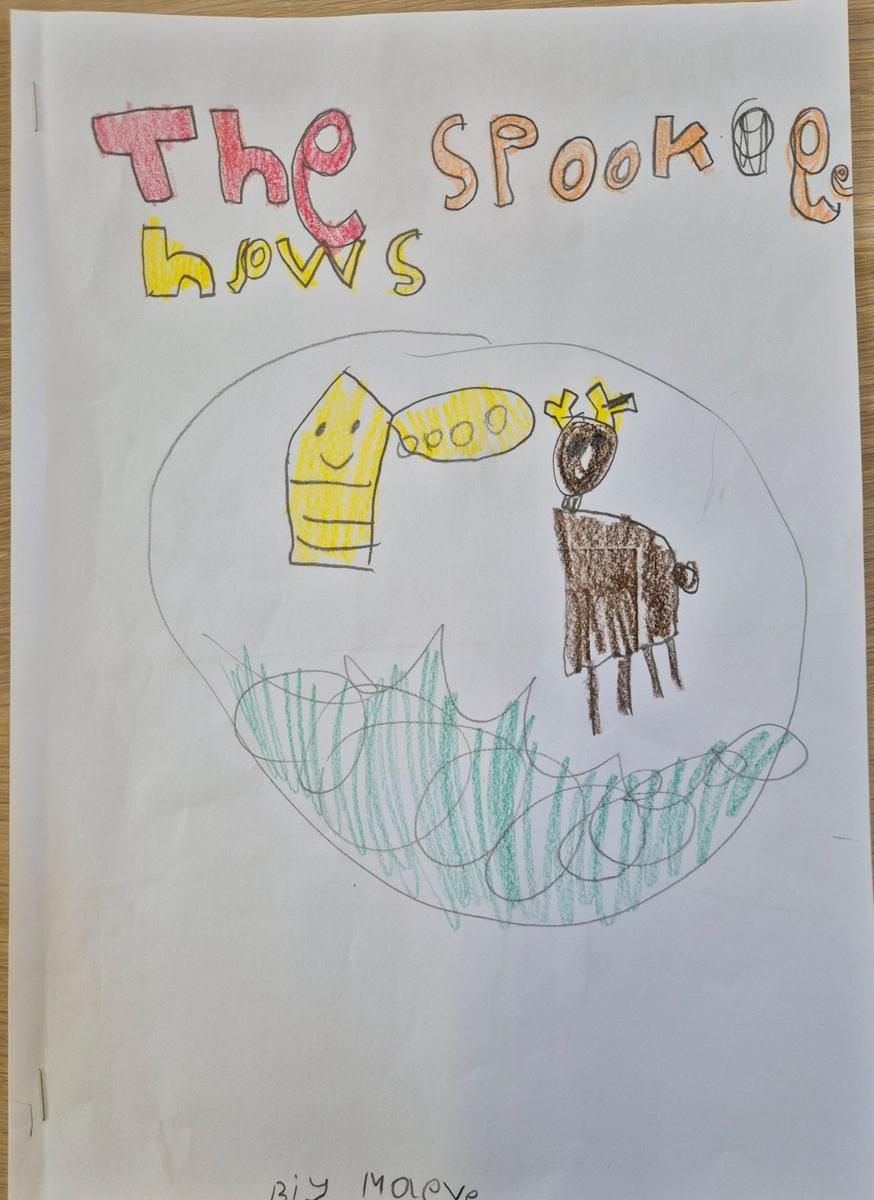
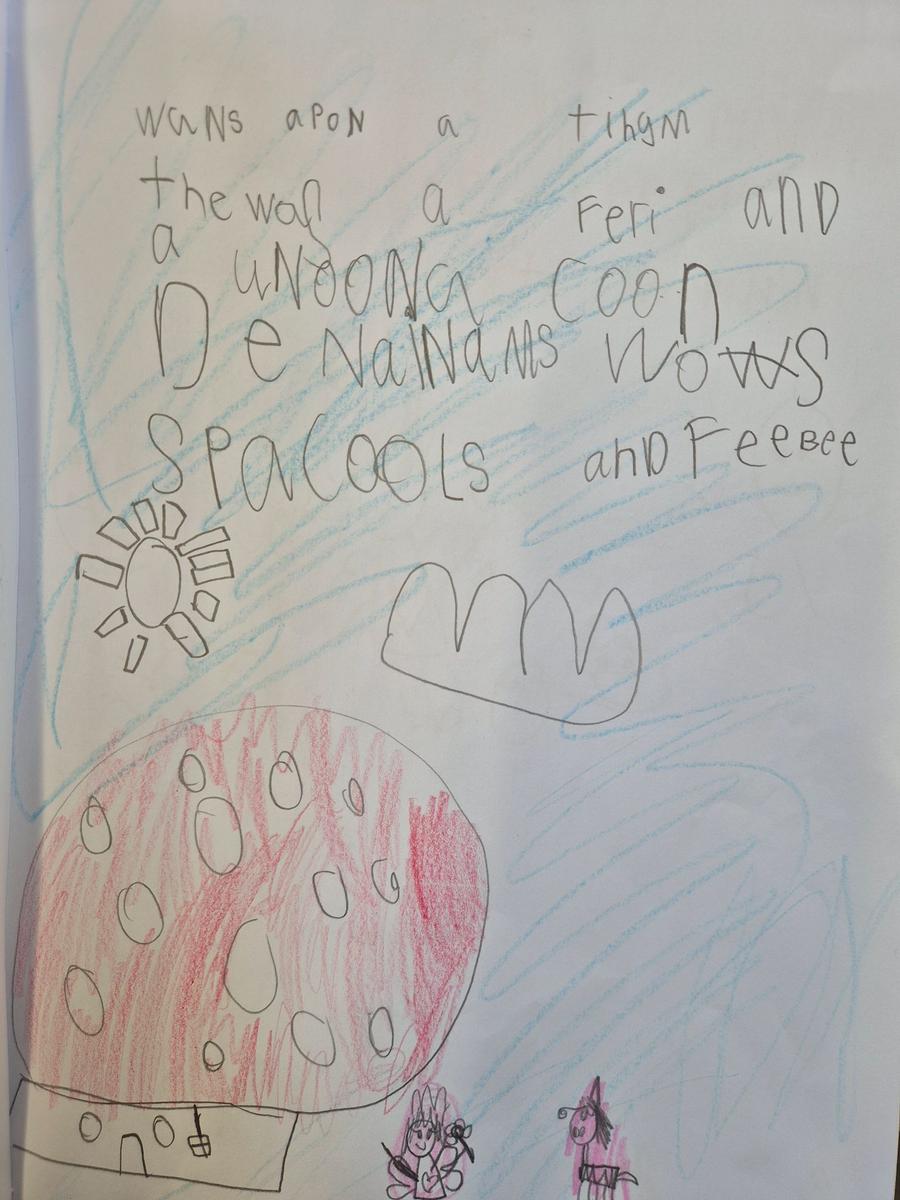
Coming up in Prep: We will be learning the sounds ng, nk, ai & ay and the how the suffix ing and es change the meaning of words.
In writing, our preps will see themselves as authors and create their own story books. They will learn particular writing strategies from popular authors and borrow their ideas in their own books.
1-2 Hub
Reading: In reading our grade 1-2 children are learning alternative spelling sounds for the /oo/ sound. The alternative spelling rules we will investigate include the u-e like in the word glue, ew like in flew, ui like in fruit and ou like in should.
Children will continue to strengthen their comprehension skills this term. We will have a big focus on making inferences and vocabulary. Inferring is where children will use clues from the text to help them answer comprehension questions.
Writing: In writing, children will continue to learn about the 4 different sentence types. The 4 sentence types we are learning about are: Statements, Commands, Questions and Exclamations. Children will learn that each of these sentences communicate something different depending on the type of punctuation that is used.
Our grade 1-2’s will continue to practice writing compound sentences using a conjunction in between. For example: The dog barked, so the cat ran away.
3-4 Hub
Reading: We are so excited to start a new novel this term. The book we will be studying is
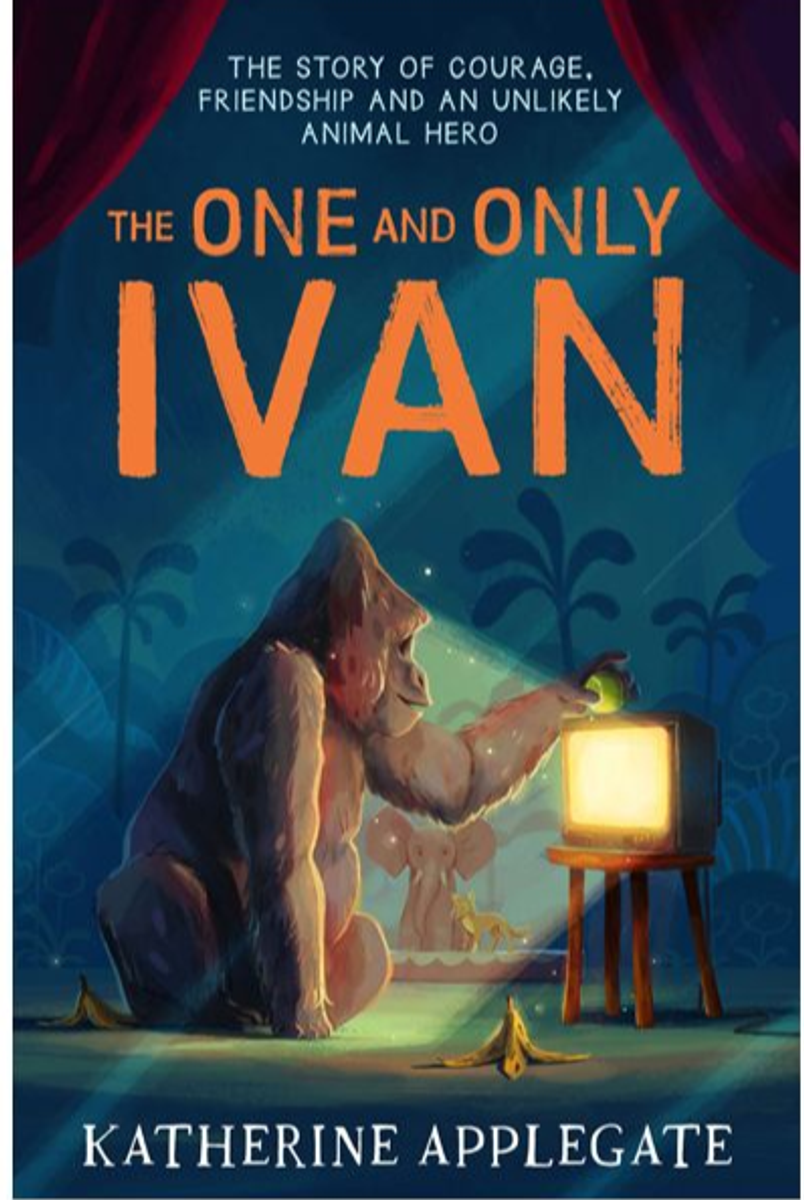
called The One and Only Ivan by Katherine Applegate. This novel follows Ivan, a gorilla who lives in captivity at a mall. Ivan forms close bonds with other animals, including an elephant named Stella and a dog named Bob. When a young elephant named Ruby arrives, Ivan becomes determined to find a better life for her. With the help of his friends, a cleaner named George and his daughter Julia, Ivan strives to secure Ruby's freedom. The book delves into themes of identity, friendship, and the desire for a better life, offering a poignant exploration of the challenges faced by captive animals.
Writing: The novel we are studying in reading will directly link with our writing. We will use sentences from the text to expand our own sentences using because, but and so. The themes in this text will allow children to begin thinking deeper about their own opinions which will lead nicely into our next genre of persuasive writing.
5-6 Hub
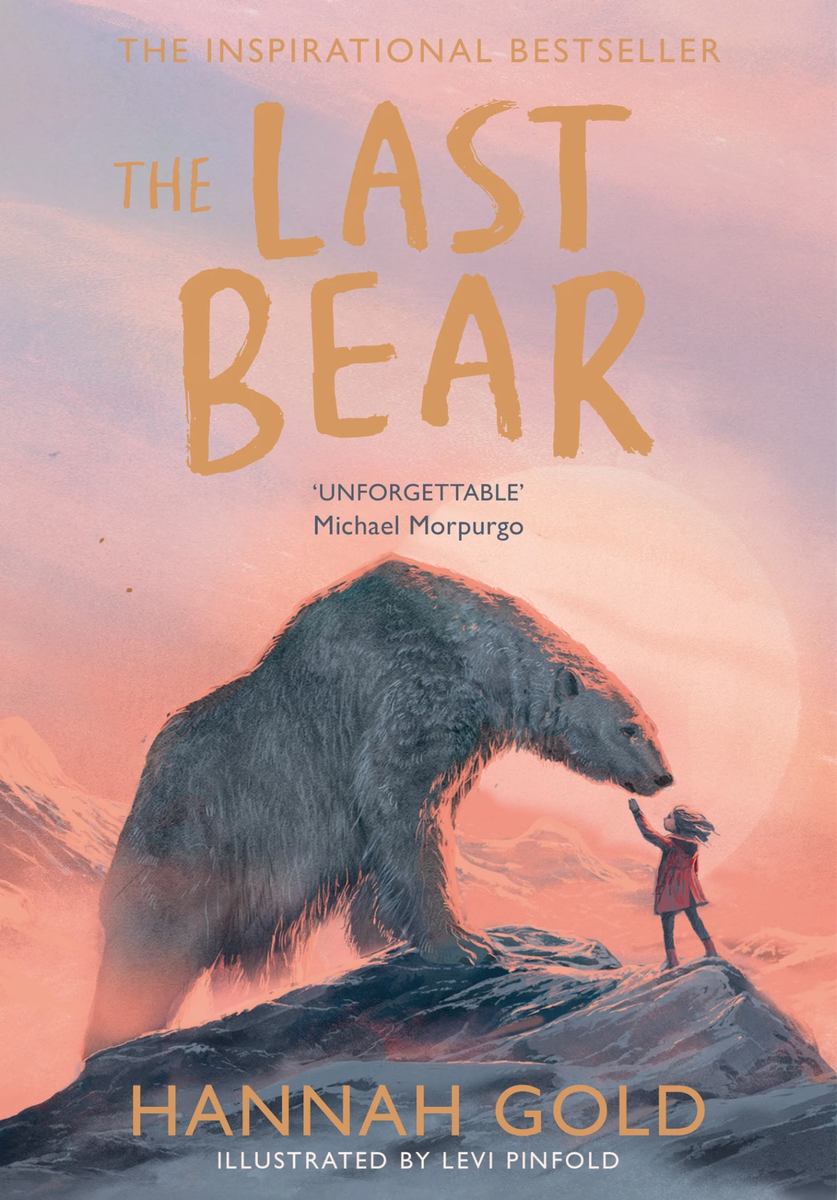
Reading: Our 5/6 children will be studying a new novel this term called The Last Bear by Hannah Gold. This text is set in the remote Arctic, following the journey of 11-year-old April Wood.
April's father, a climatologist, is stationed on Bear Island for six months to monitor the effects of climate change. Feeling lonely and neglected by her work-absorbed father, April explores the island and discovers a starving polar bear, the last one remaining on the island. The bear is struggling due to the lack of ice and food caused by global warming. Along the way, April learns about the importance of friendship, the impact of human actions on the environment, and the power of hope and determination.
The story highlights the urgency of environmental conservation and the emotional connection between humans and animals, emphasizing themes of courage, resilience, and the importance of protecting our planet.
Writing:
The themes explored in reading will help support children’s own opinions when writing to persuade. Children will learn persuasive techniques to write persuasively to an appropriate audience and appeal to a call to action.
Library & Take Home Books
Do you have any St Gabriel library or take home books lying around? If you are finished with them, please send them back to school so that other children can borrow these!
Thank you!!
- Librarian