
Faith & Identity
Mr Geoff Brodie - Assistant Principal Faith & Identity
Faith & Identity
Mr Geoff Brodie - Assistant Principal Faith & Identity
You are merciful to all, O Lord,
and despise nothing that you have made.
You overlook people’s sins, to bring them to repentance,
and you spare them, for you are the Lord our God.
(Wisdom 11:24,25,27)
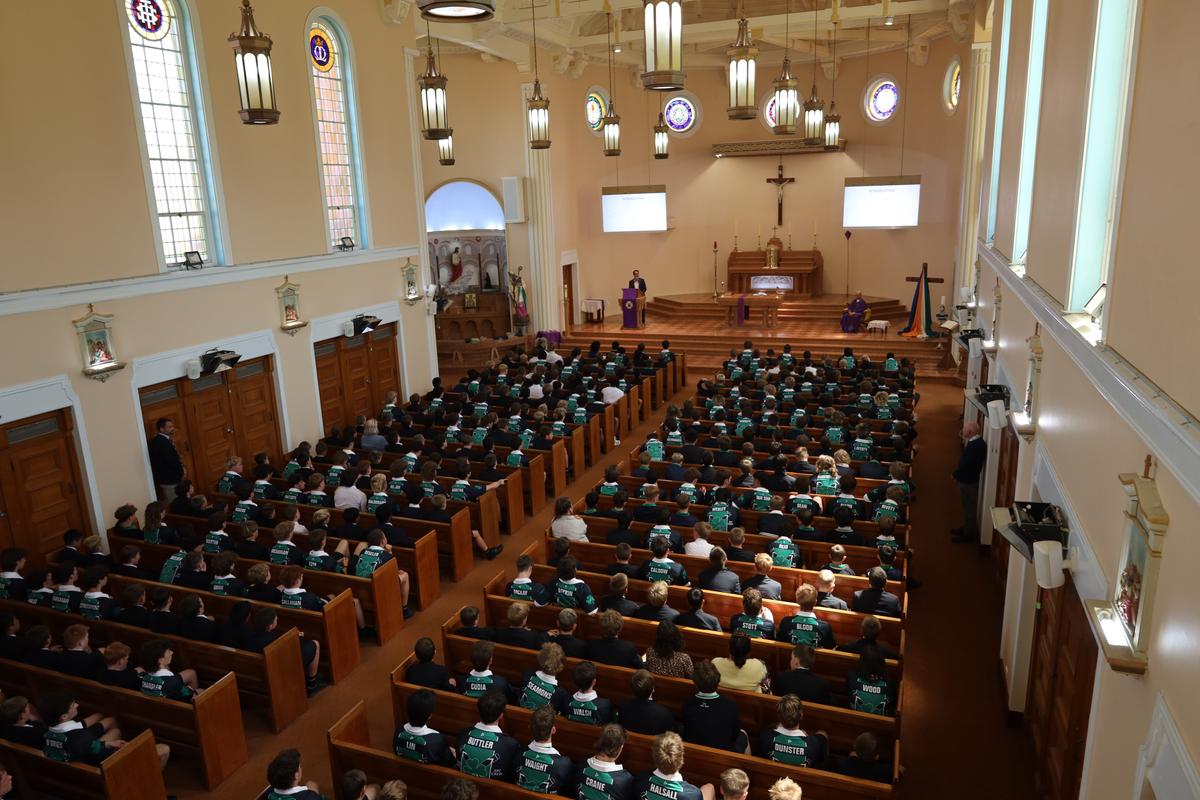
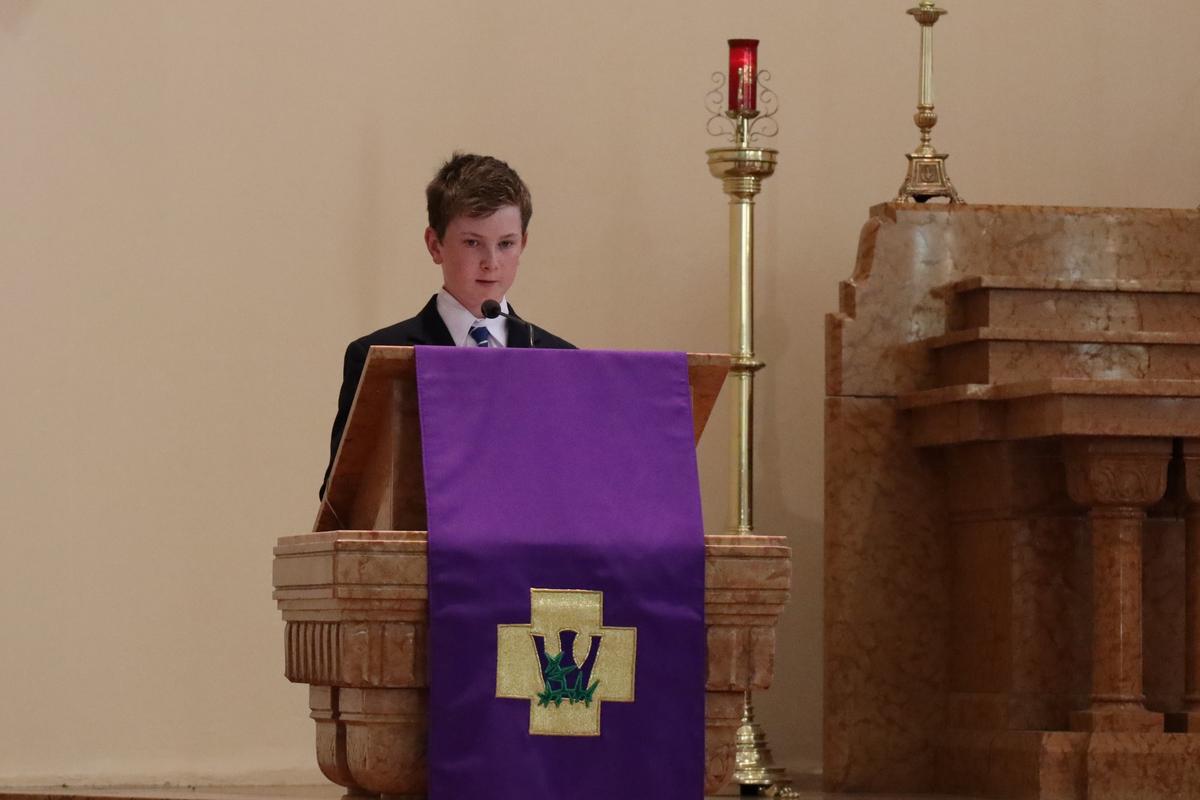
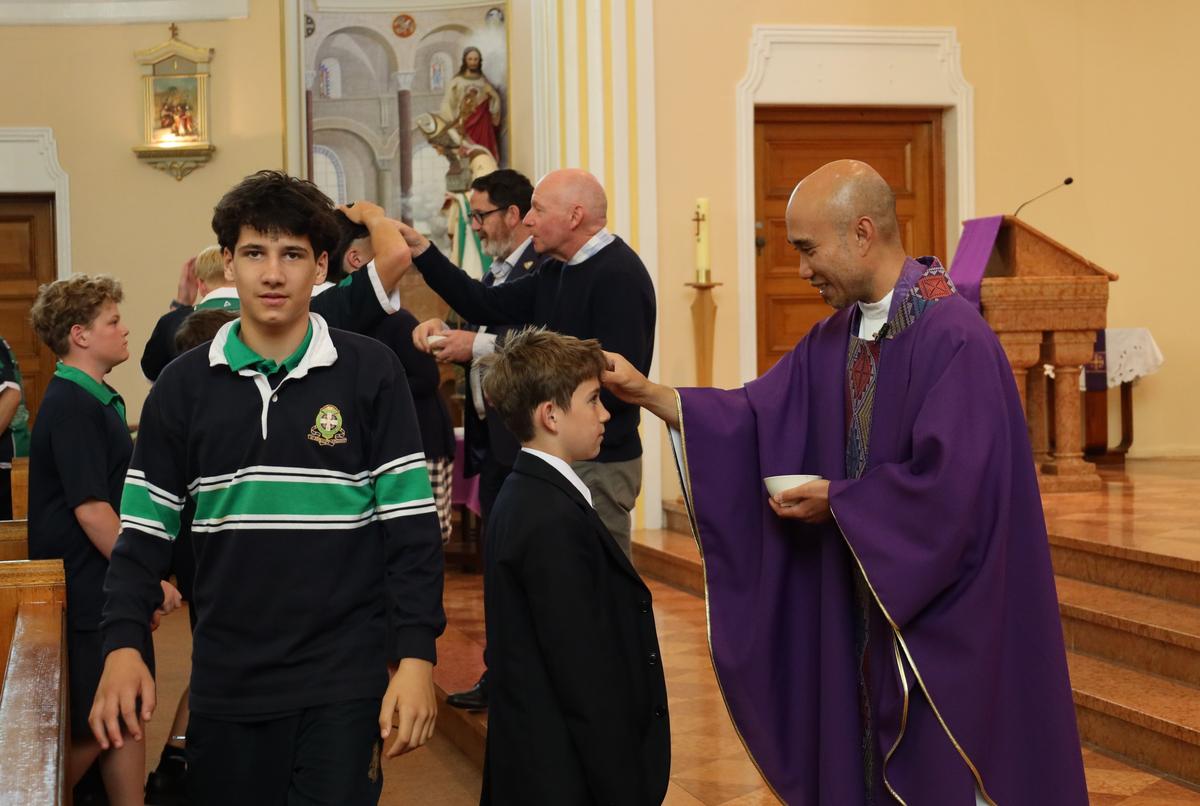
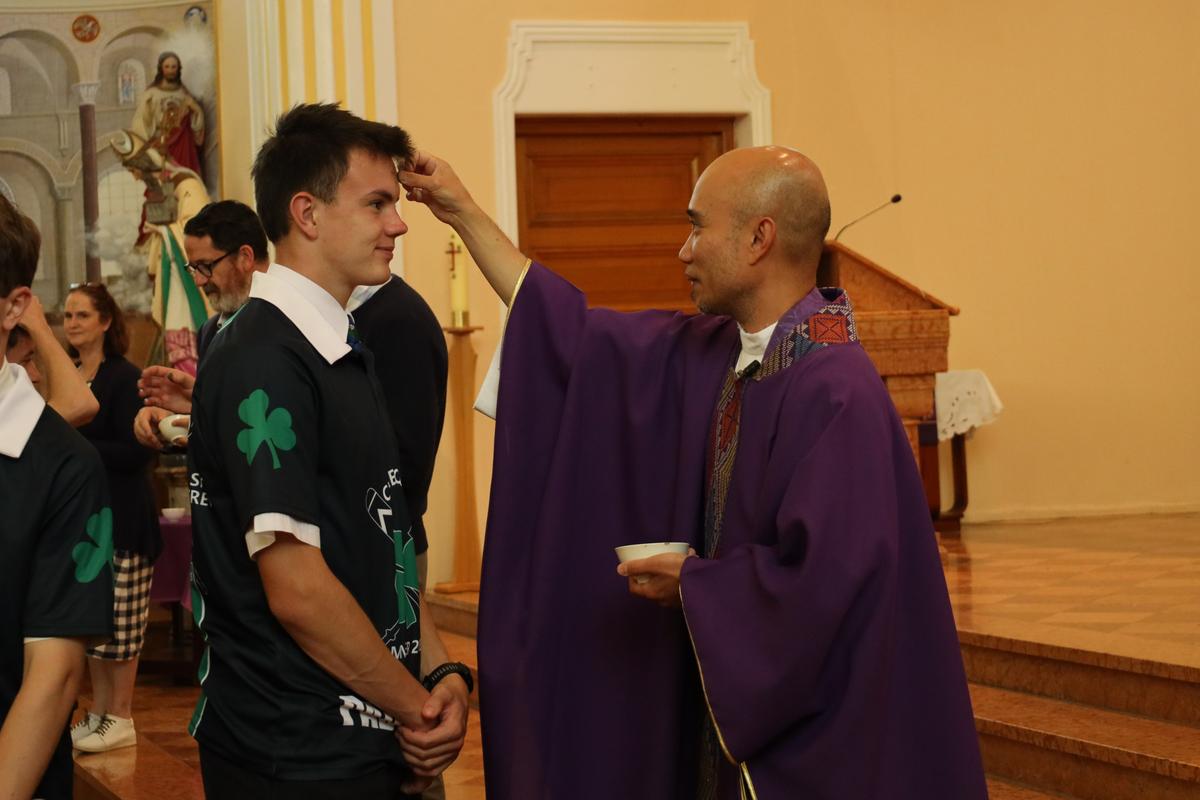
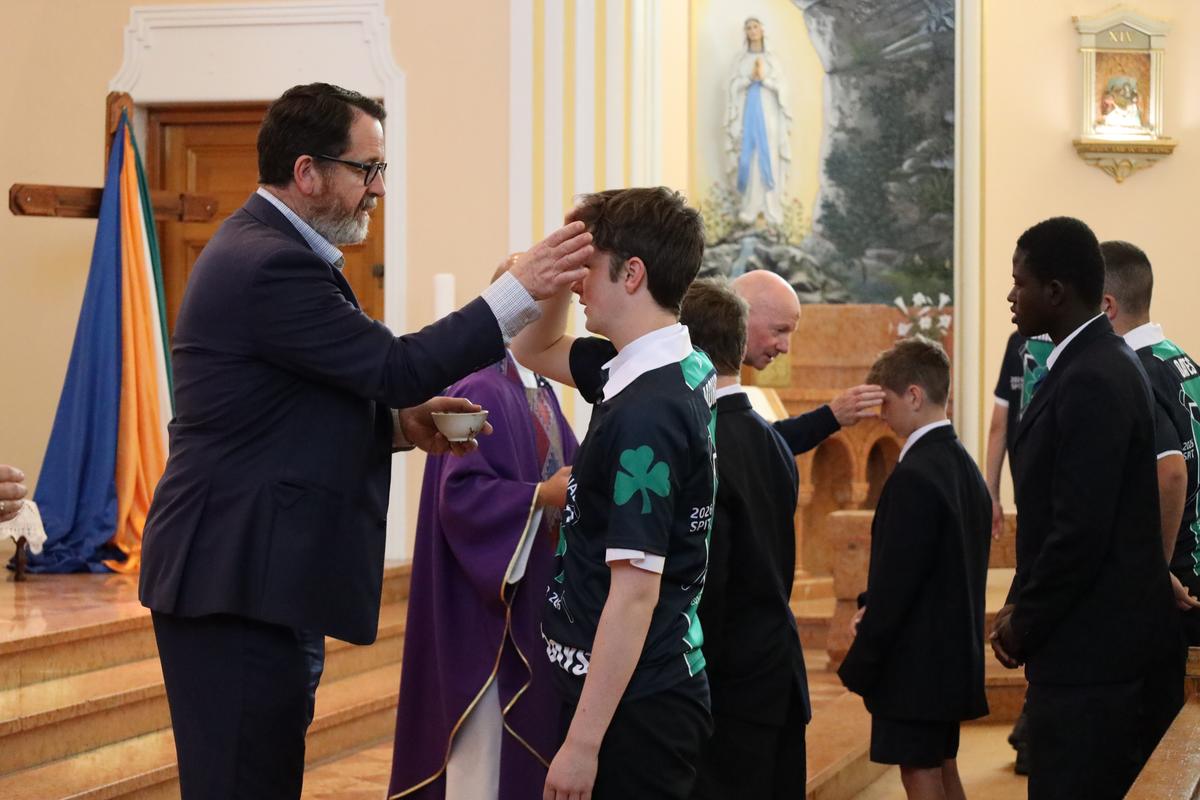
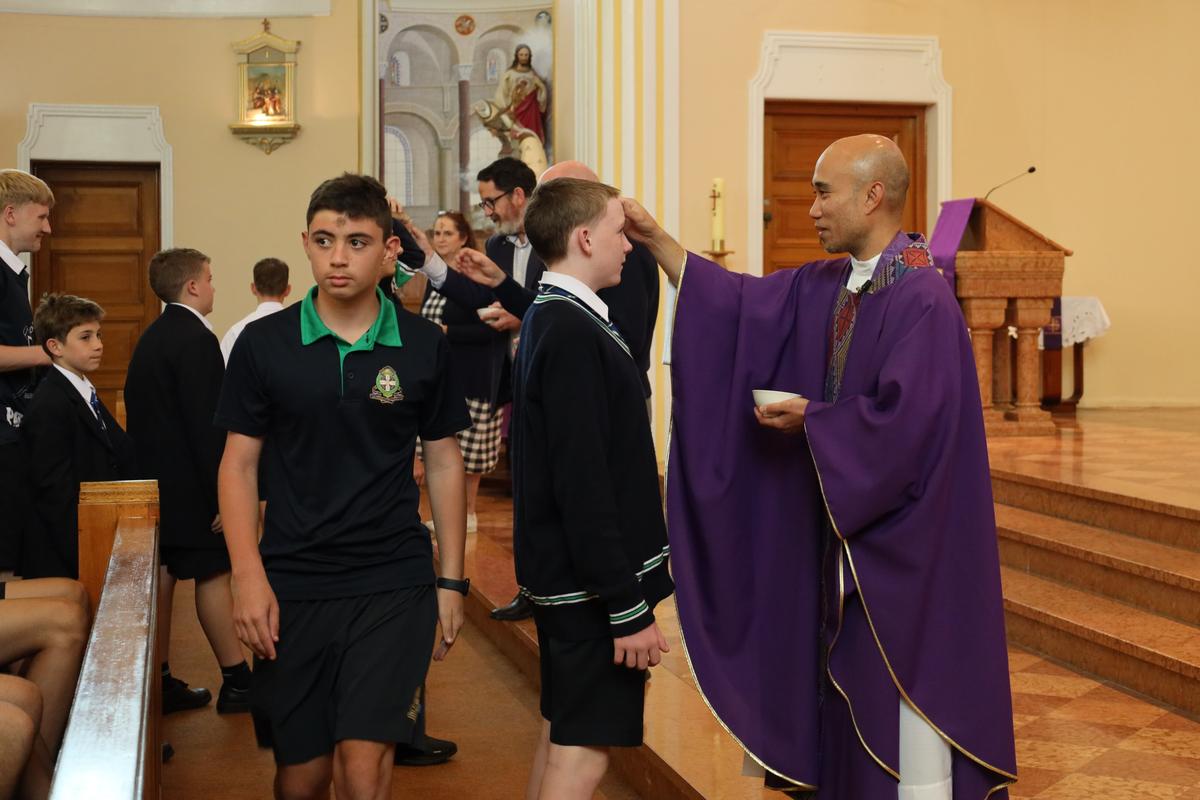
This week we celebrated Ash Wednesday, and so once again we have begun the Season of Lent: that solemn time in preparation for the great joy of Easter. Our College Chaplain, Fr Eladio Lizada OSJ, led us in our Year level liturgies in our Old Collegians’ Chapel. A special moment on a day full of blessings was the coming together of our Year 12 and Year 7 students to pray together.
Our liturgies, that were an invitation into the solemnity of the occasion, included the following reflection.
Today, Ash Wednesday, marks the beginning of our Lenten journey, a journey that invites us to reflect upon the things that matter most; the things of the heart that lead us to fullness of life.
Today we mark ourselves with the sign that reminds us, and proclaims to all whom we meet, that we believe Jesus is the source of all life. In a moment we will come together to join in prayers and rituals that invite us into this sacred time. As a Catholic school in the Edmund Rice Tradition, today is a very important today.
The ashes we will receive today remind us that our hearts, minds, and hands must always be seeking a better way of living. The life, teaching, death, and Resurrection of Jesus are the great events that have gained for us eternal life. They are the events that underpin our Touchstones.
Let us start today in sacred silence.
When we are silent, we are open to everything and everyone around us.
When we are silent, we become attentive to the beauty of God’s creation.
When we are silent, we are open to the constant voice of God’s love.
When we are silent, we can find the courage to act for justice and in solidarity with the voiceless.
During each liturgy students lead our General Intercessions. These prayers are offered below as an invitation into your own moment of prayer.
That the Church will turn back to God with a sincere and contrite heart.
That nations will always seek the ways of peace and justice for their people. May they never accept marginalisation of the young and elderly.
That those who are poor and destitute will find us generous and compassionate, inspired by the Gospel and welcoming to all.
That we will always be motivated by love – a love that is perfectly happy in serving God and our neighbour with justice and solidarity.
That in this time of Lent we will be liberated from sin in all its forms, especially selfishness and greed, and ask for God’s forgiveness. May we repent, for the Kingdom of God is at hand.
That those who have gone before us will reach their eternal reward.
Fr Eladio proclaimed the message of Lent as a call to holiness and righteousness through the power of God’s love. He made special mention of Pope Leo’s Lenten message with its focus on the commitment to recentre on lives on God, where Lent is a call to spend time meditating on the mysteries of Jesus’ life, teachings, death, and resurrection. Lent is a time to experience the beautiful mystery of God, especially felt in love of our neighbour. In this age of non-printing and electronic communication, please see below for the complete text of Pope’ Leo’s Lenten message for your prayerful consideration. It is also another way to get to know our Pope more personally.
Dear brothers and sisters,
Lent is a time in which the Church, guided by a sense of maternal care, invites us to place the mystery of God back in the centre of our lives, in order to find renewal in our faith and keep our hearts from being consumed by the anxieties and distractions of daily life.
Every path towards conversion begins by allowing the word of God to touch our hearts and welcoming it with a docile spirit. There is a relationship between the word, our acceptance of it and the transformation it brings about. For this reason, the Lenten journey is a welcome opportunity to heed the voice of the Lord and renew our commitment to following Christ, accompanying him on the road to Jerusalem, where the mystery of his passion, death and resurrection will be fulfilled.
Listening
This year, I would first like to consider the importance of making room for the word through listening. The willingness to listen is the first way we demonstrate our desire to enter into relationship with someone.
In revealing himself to Moses in the burning bush, God himself teaches us that listening is one of his defining characteristics: “I have observed the misery of my people who are in Egypt; I have heard their cry” (Ex 3:7). Hearing the cry of the oppressed is the beginning of a story of liberation in which the Lord calls Moses, sending him to open a path of salvation for his children who have been reduced to slavery.
Our God is one who seeks to involve us. Even today he shares with us what is in his heart. Because of this, listening to the word in the liturgy teaches us to listen to the truth of reality. In the midst of the many voices present in our personal lives and in society, Sacred Scripture helps us to recognize and respond to the cry of those who are anguished and suffering. In order to foster this inner openness to listening, we must allow God to teach us how to listen as he does. We must recognize that “the condition of the poor is a cry that, throughout human history, constantly challenges our lives, societies, political and economic systems, and, not least, the Church.”
Fasting
If Lent is a time for listening, fasting is a concrete way to prepare ourselves to receive the word of God. Abstaining from food is an ancient ascetic practice that is essential on the path of conversion. Precisely because it involves the body, fasting makes it easier to recognize what we “hunger” for and what we deem necessary for our sustenance. Moreover, it helps us to identify and order our “appetites,” keeping our hunger and thirst for justice alive and freeing us from complacency. Thus, it teaches us to pray and act responsibly towards our neighbour.
With spiritual insight, Saint Augustine helps us to understand the tension between the present moment and the future fulfilment that characterizes this custody of the heart. He observes that: “In the course of earthly life, it is incumbent upon men and women to hunger and thirst for justice, but to be satisfied belongs to the next life. Angels are satisfied with this bread, this food. The human race, on the other hand, hungers for it; we are all drawn to it in our desire. This reaching out in desire expands the soul and increases its capacity.” Understood in this way, fasting not only permits us to govern our desire, purifying it and making it freer, but also to expand it, so that it is directed towards God and doing good.
However, in order to practice fasting in accordance with its evangelical character and avoid the temptation that leads to pride, it must be lived in faith and humility. It must be grounded in communion with the Lord, because “those who are unable to nourish themselves with the word of God do not fast properly.” As a visible sign of our inner commitment to turn away from sin and evil with the help of grace, fasting must also include other forms of self-denial aimed at helping us to acquire a more sober lifestyle, since “austerity alone makes the Christian life strong and authentic.”
In this regard, I would like to invite you to a very practical and frequently unappreciated form of abstinence: that of refraining from words that offend and hurt our neighbour. Let us begin by disarming our language, avoiding harsh words and rash judgement, refraining from slander and speaking ill of those who are not present and cannot defend themselves. Instead, let us strive to measure our words and cultivate kindness and respect in our families, among our friends, at work, on social media, in political debates, in the media and in Christian communities. In this way, words of hatred will give way to words of hope and peace.
Together
Finally, Lent emphasizes the communal aspect of listening to the word and fasting. The Bible itself underlines this dimension in multiple ways. For example, the Book of Nehemiah recounts how the people gathered to listen to the public reading of the Law, preparing to profess their faith and worship through fasting, so as to renew the covenant with God (cf. 9:1-3).
Likewise, our parishes, families, ecclesial groups and religious communities are called to undertake a shared journey during Lent, in which listening to the word of God, as well as to the cry of the poor and of the earth, becomes part of our community life, and fasting a foundation for sincere repentance. In this context, conversion refers not only to one’s conscience, but also to the quality of our relationships and dialogue. It means allowing ourselves to be challenged by reality and recognizing what truly guides our desires — both within our ecclesial communities and as regards humanity’s thirst for justice and reconciliation.
Dear friends, let us ask for the grace of a Lent that leads us to greater attentiveness to God and to the least among us. Let us ask for the strength that comes from the type of fasting that also extends to our use of language, so that hurtful words may diminish and give way to a greater space for the voice of others. Let us strive to make our communities places where the cry of those who suffer finds welcome, and listening opens paths towards liberation, making us ready and eager to contribute to building a civilization of love.
I impart my heartfelt blessing upon all of you and your Lenten journey.
From the Vatican, 5 February 2026, Memorial of Saint Agatha, Virgin and Martyr