This term, Grades 1-6 are learning new grammatical concepts and are all making excellent progress. Most students are now able to write full sentences in French, with various levels of difficulty.
Prep
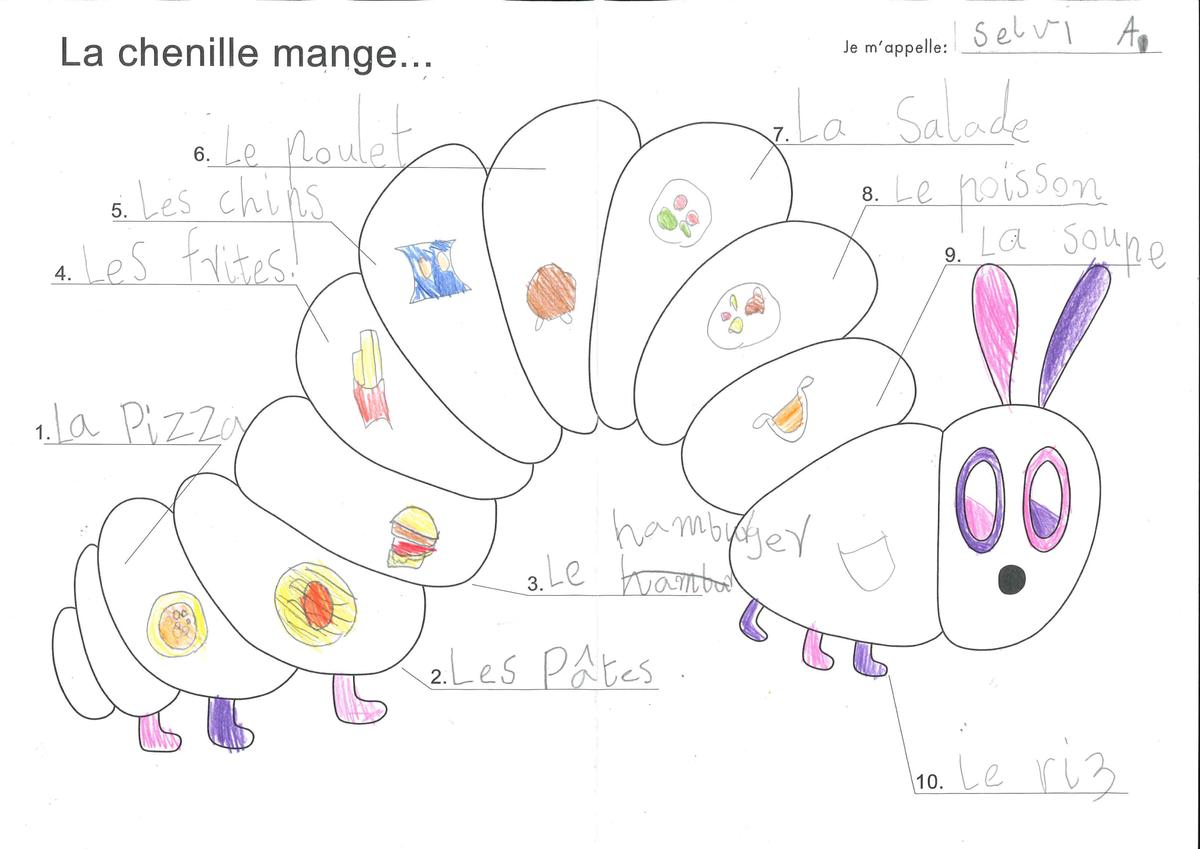
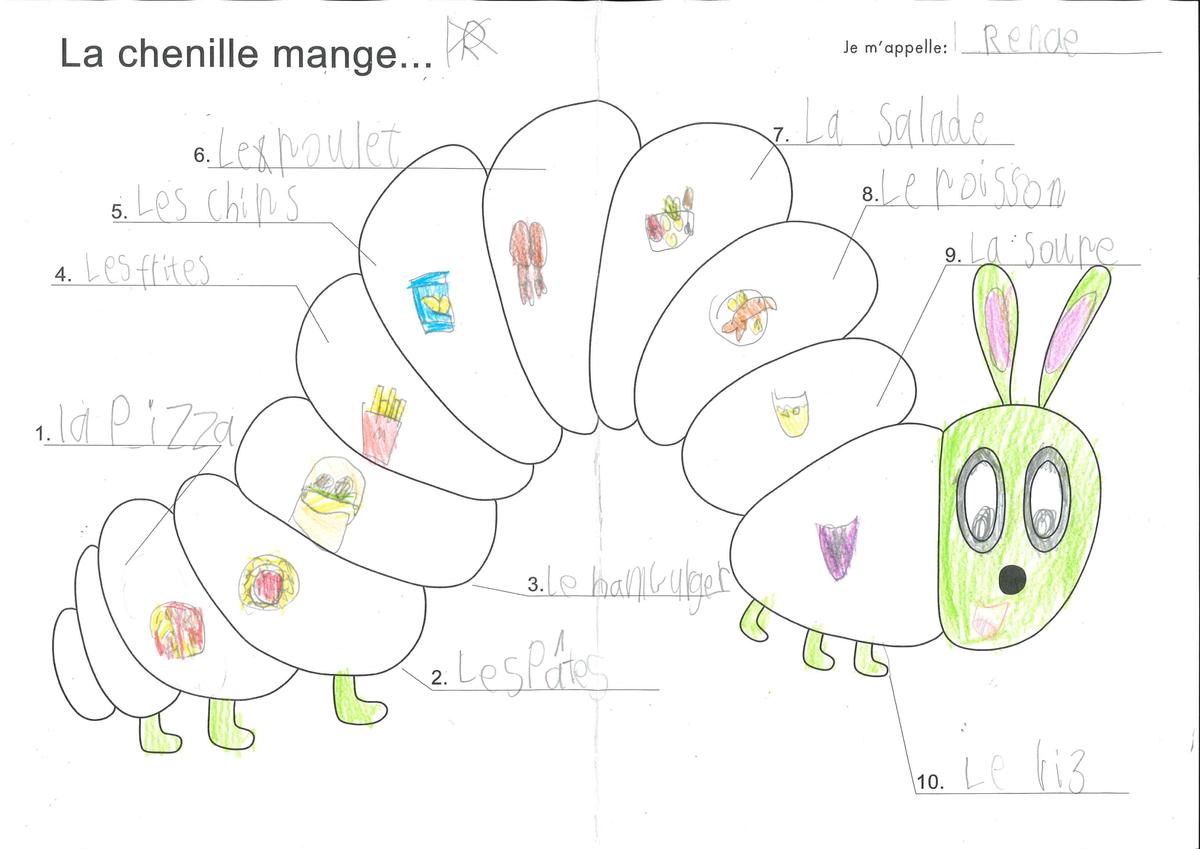
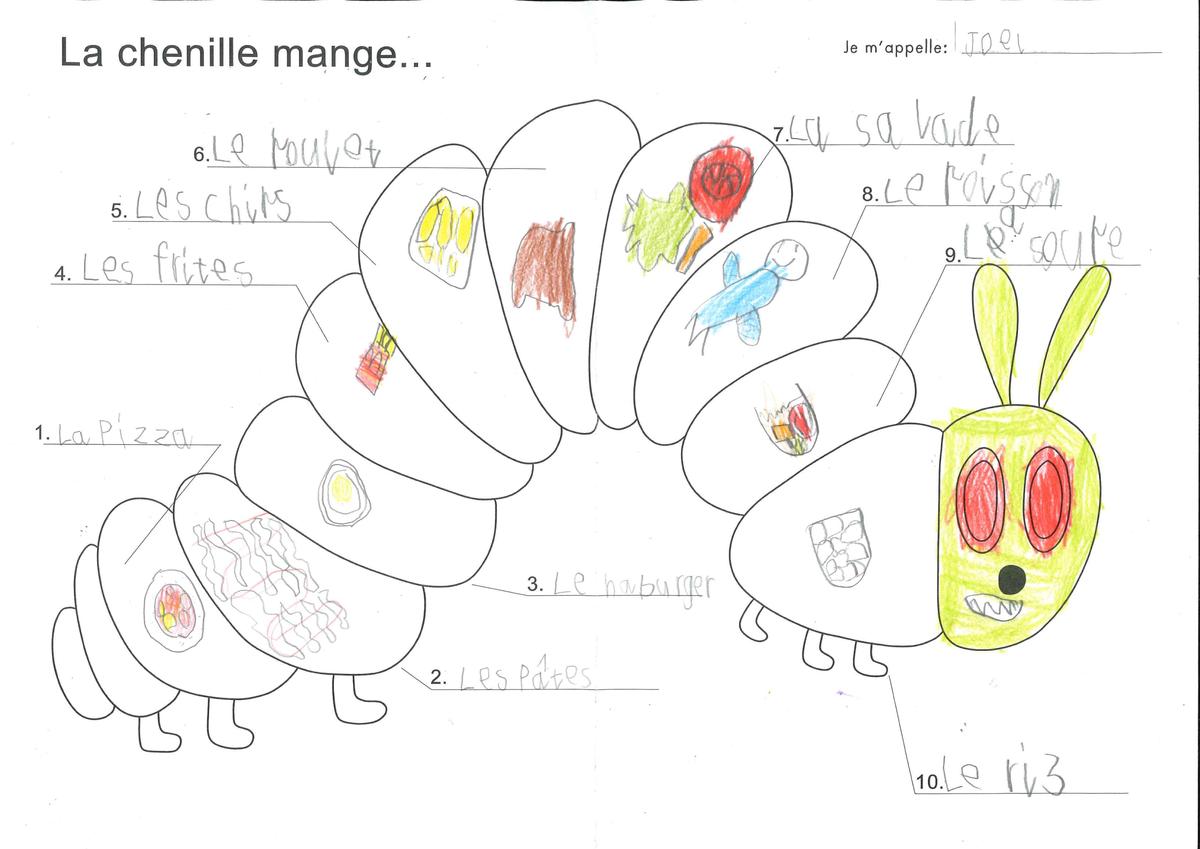
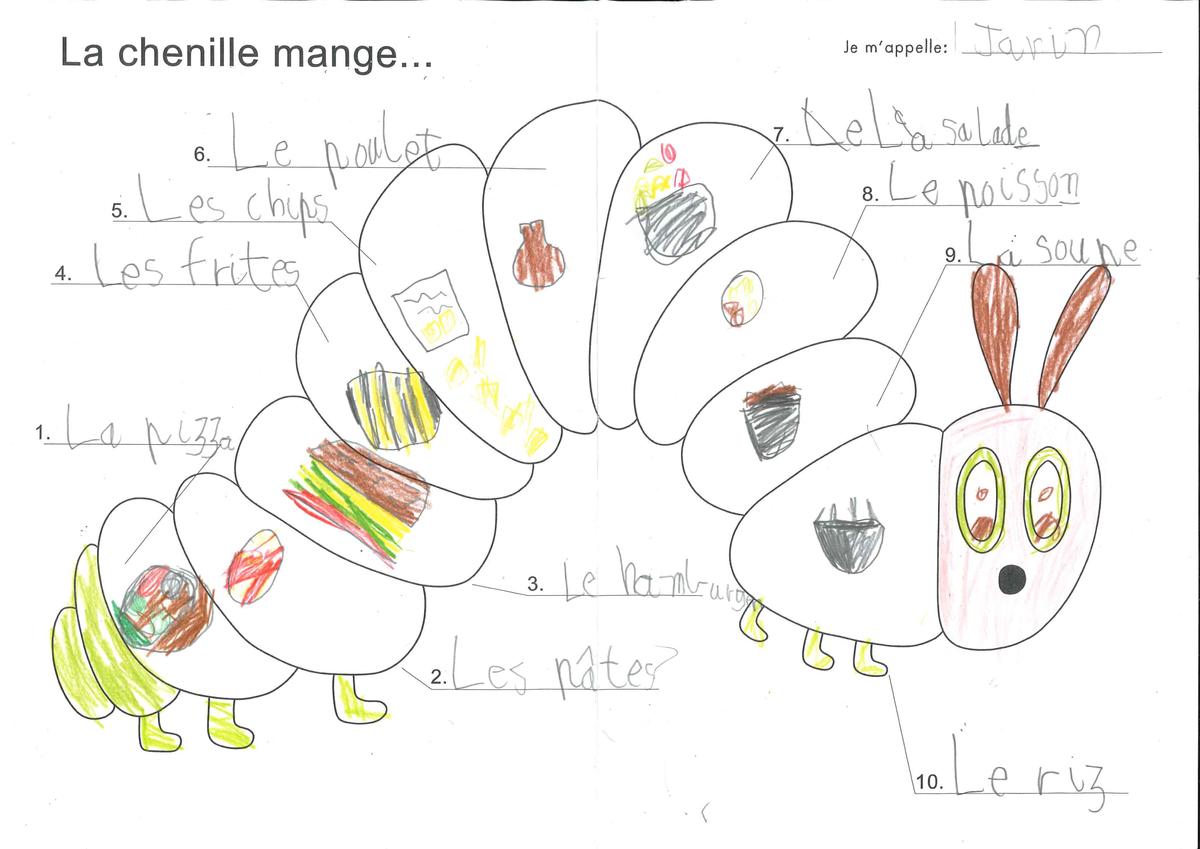
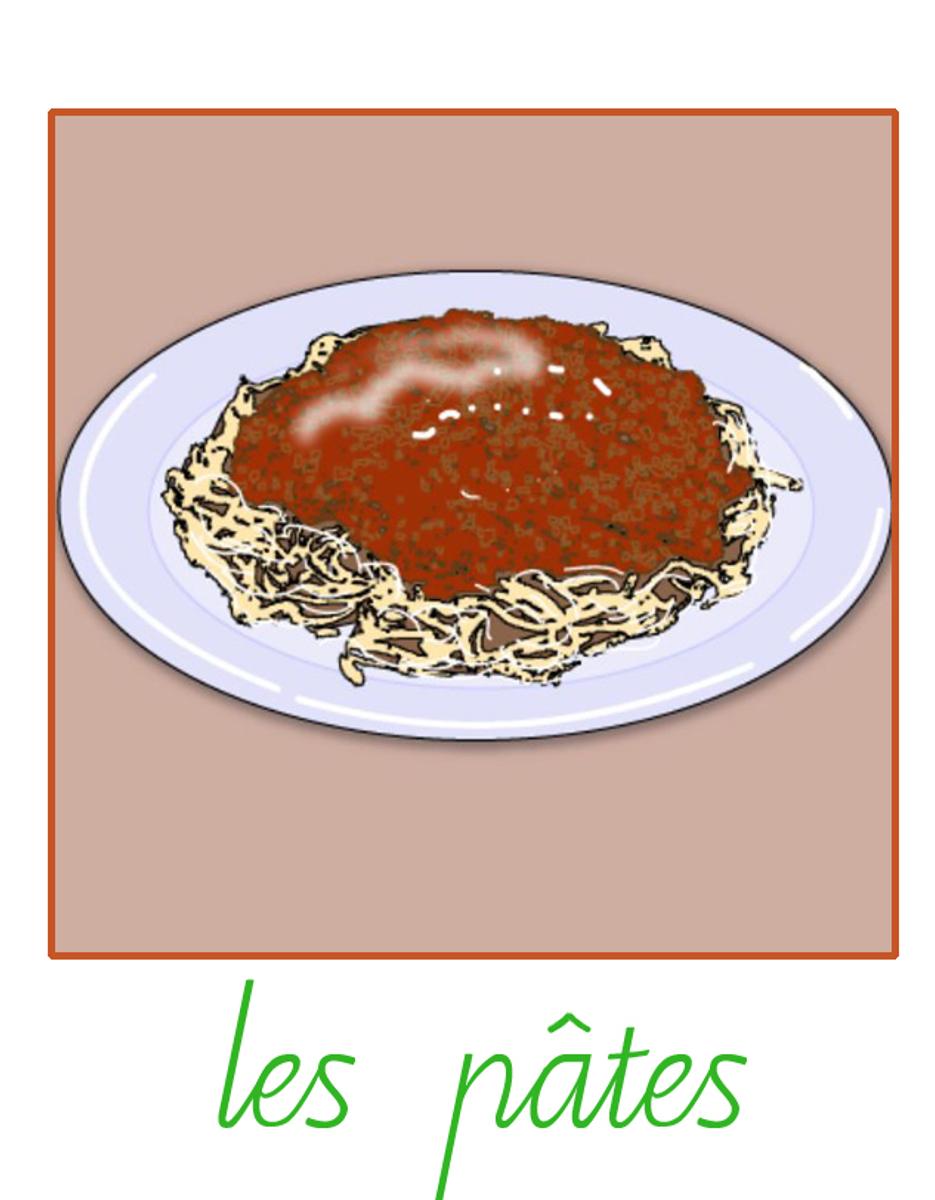
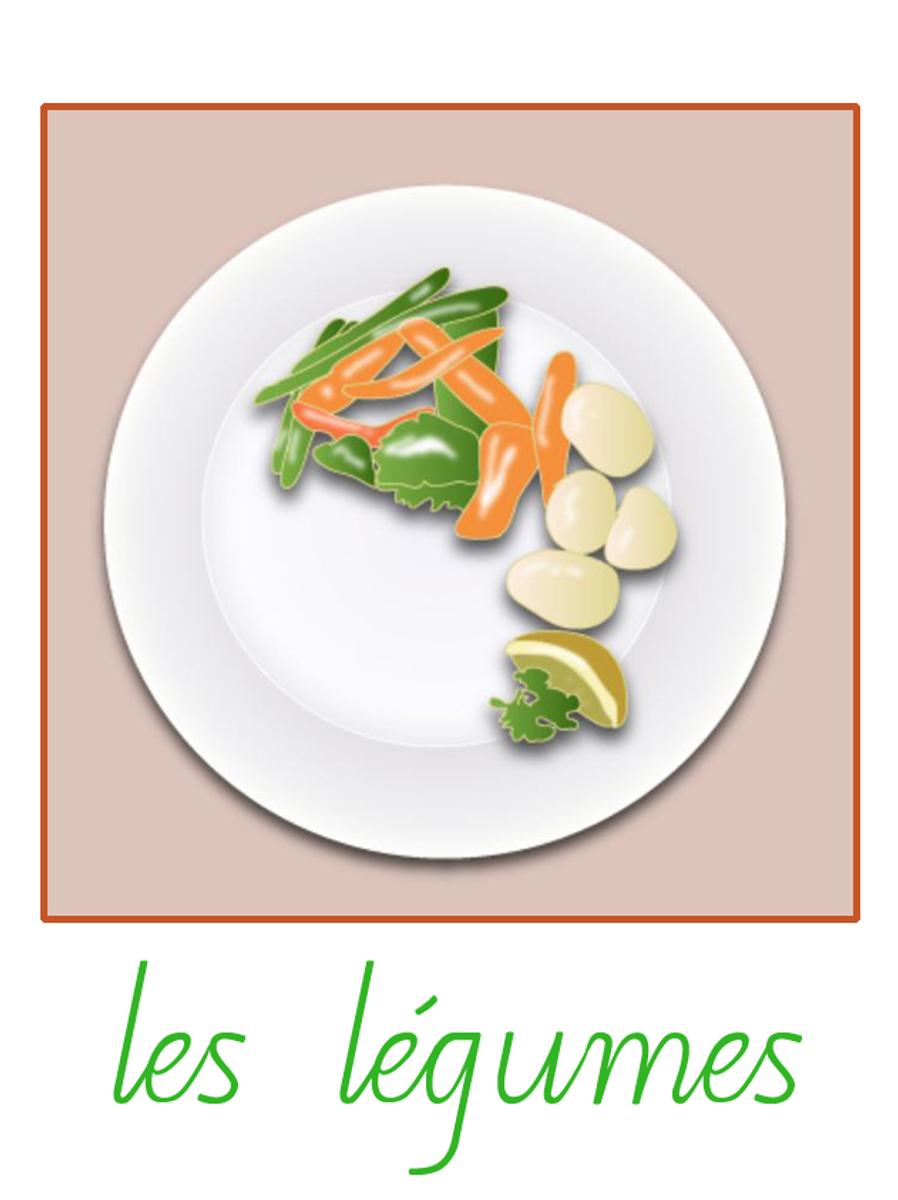
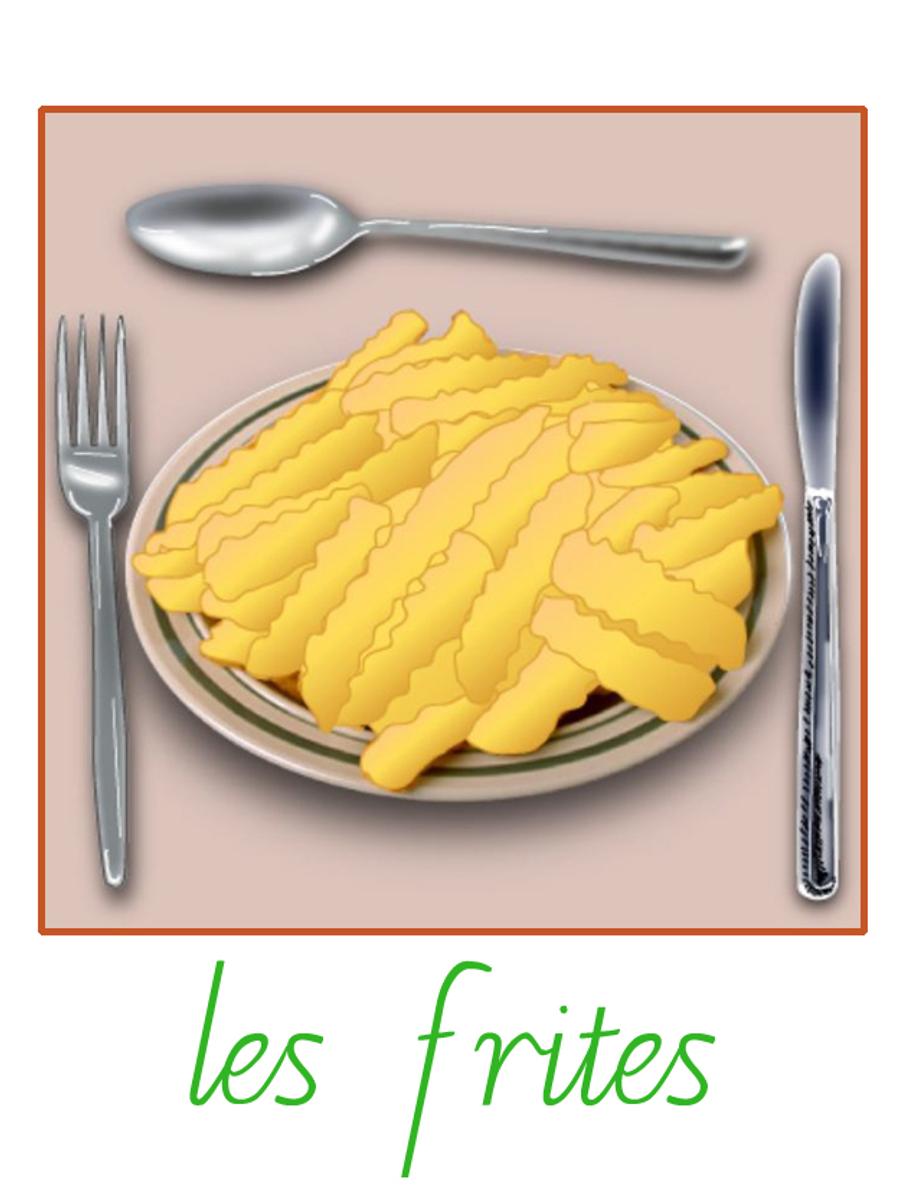
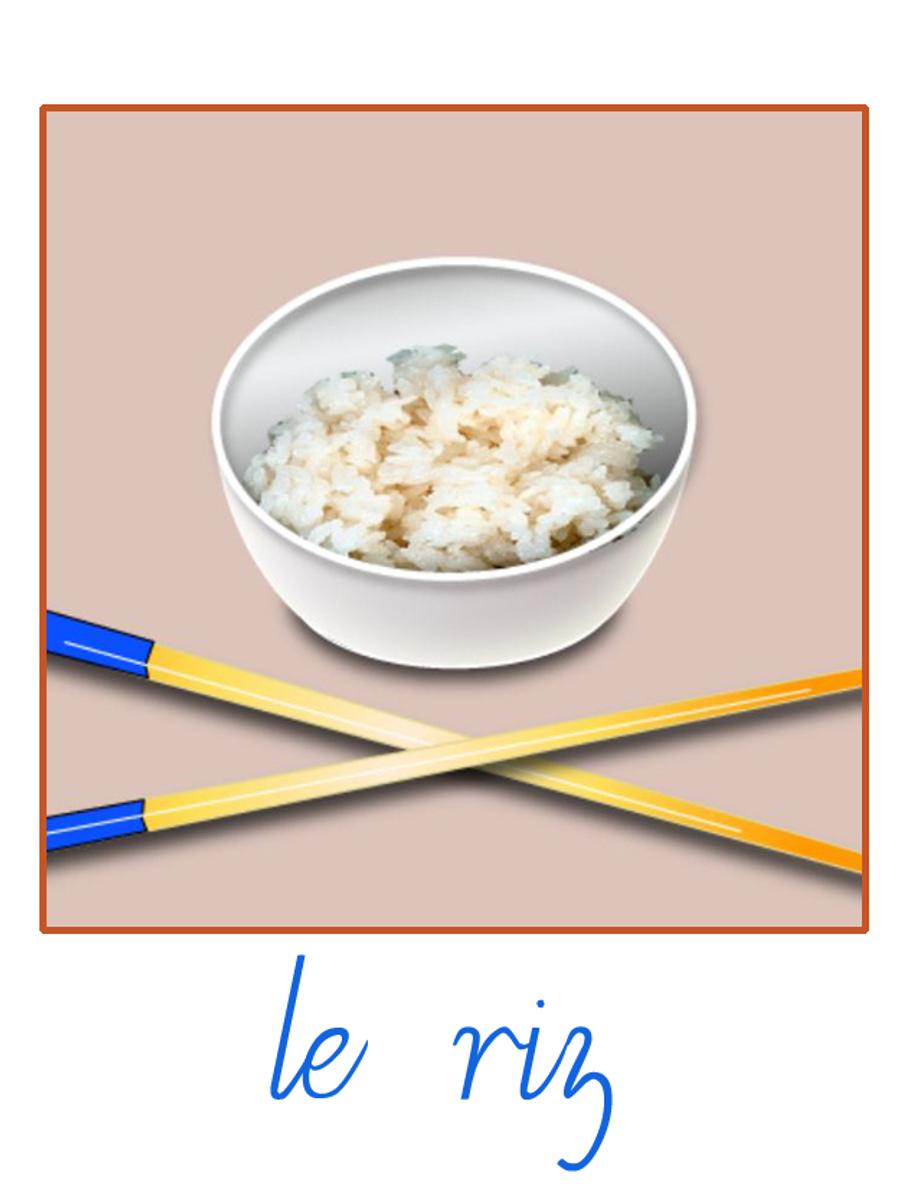
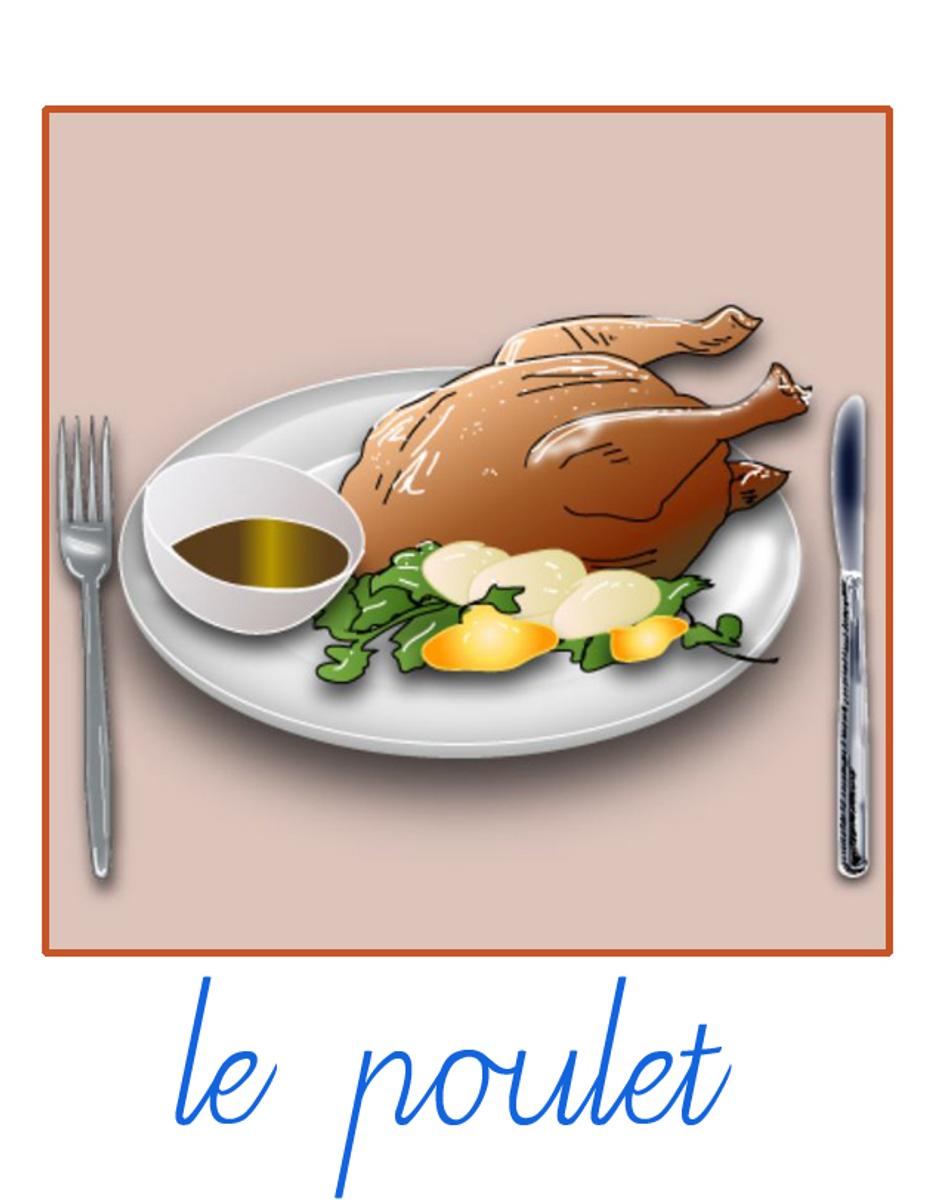
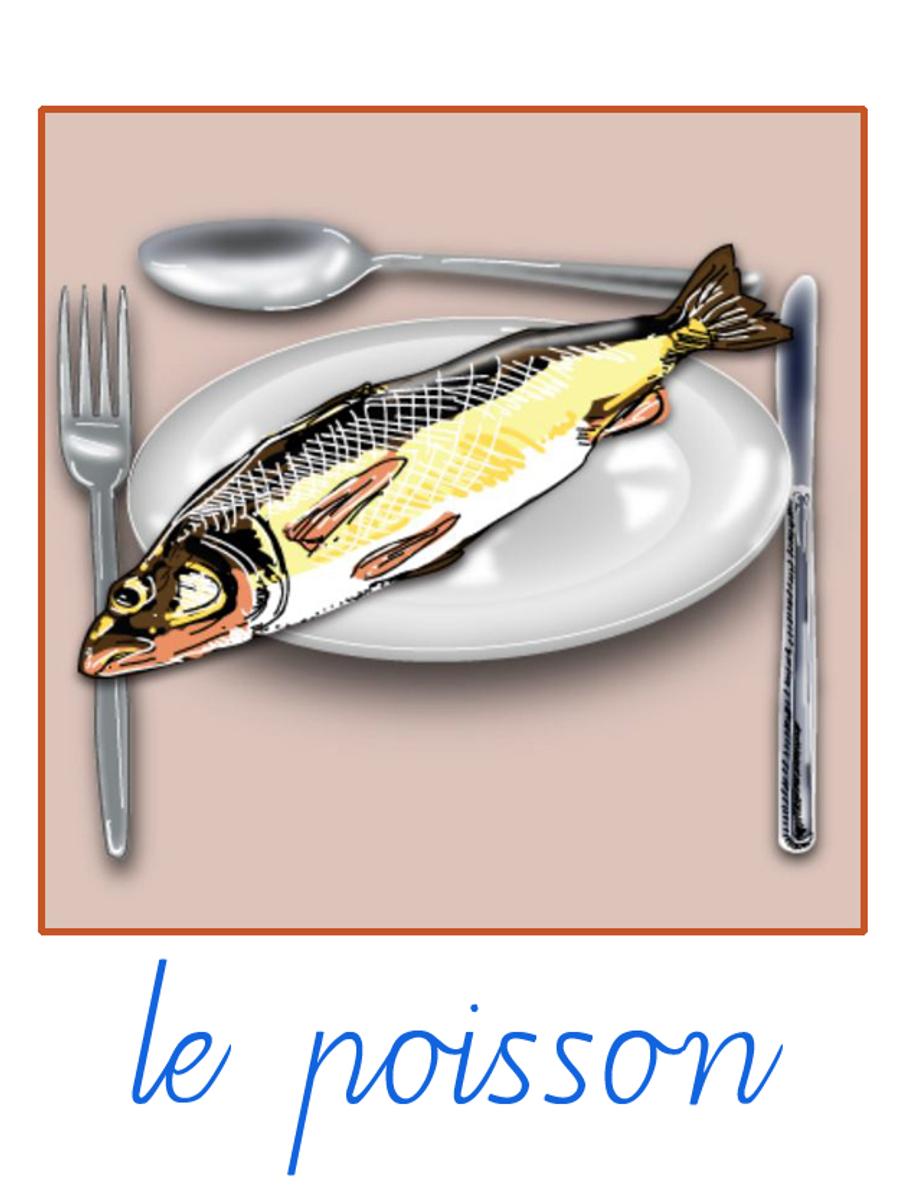
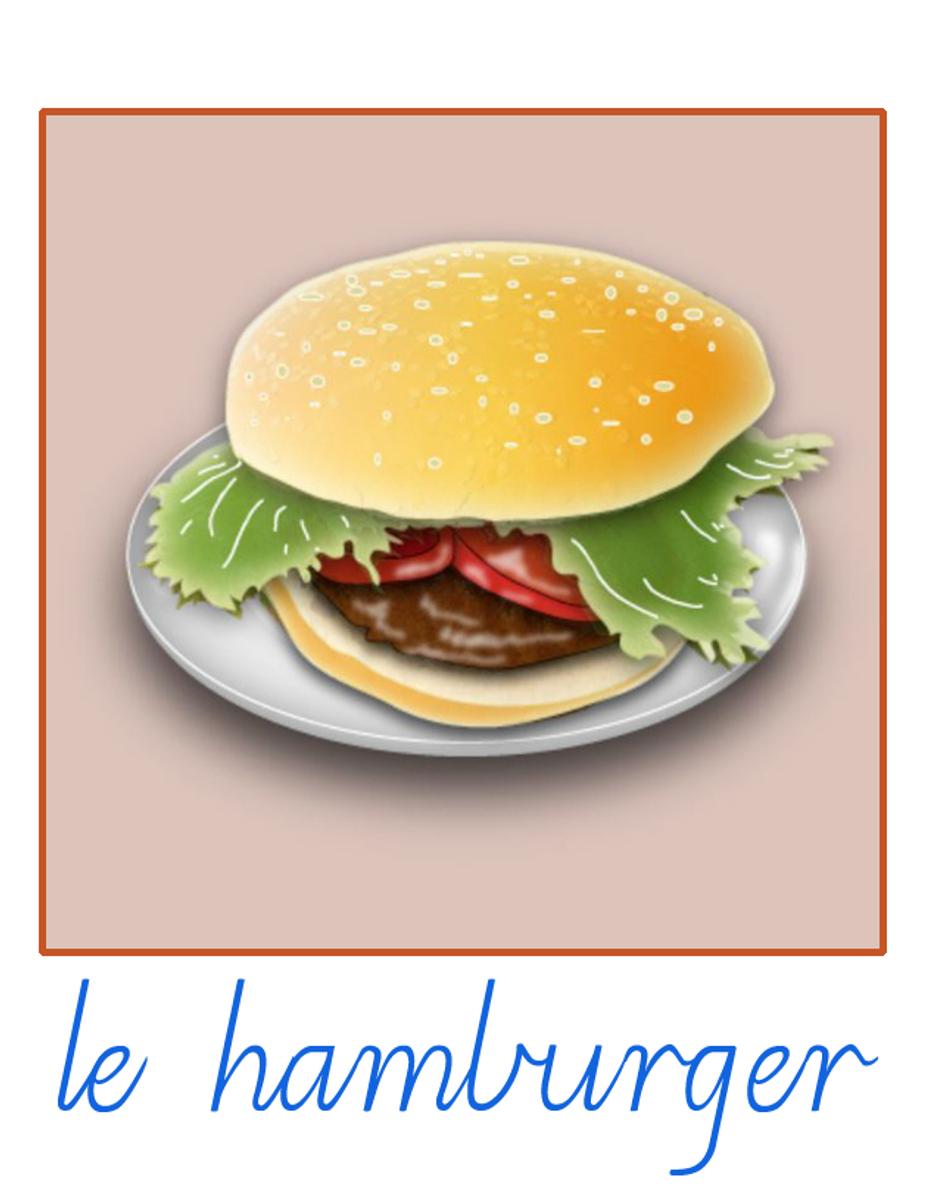
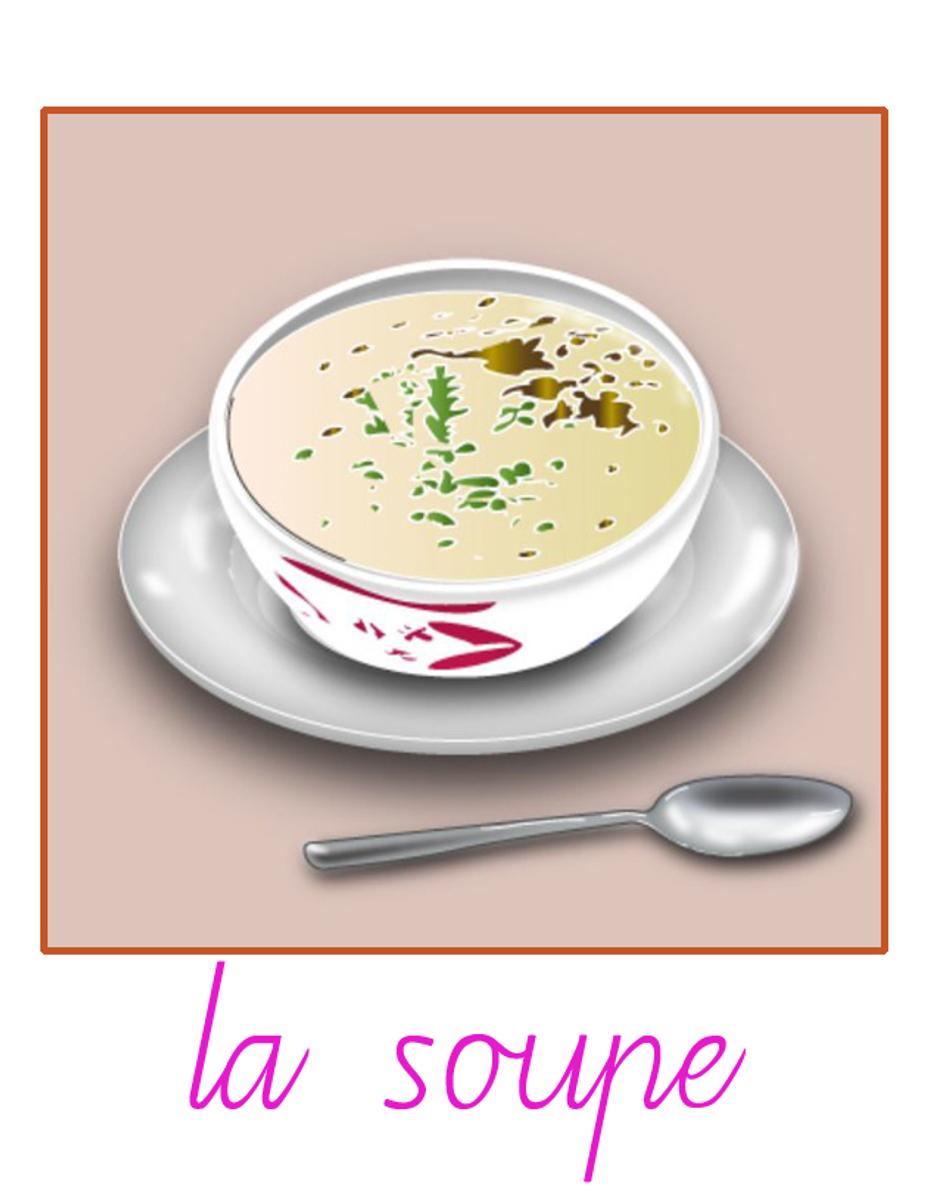
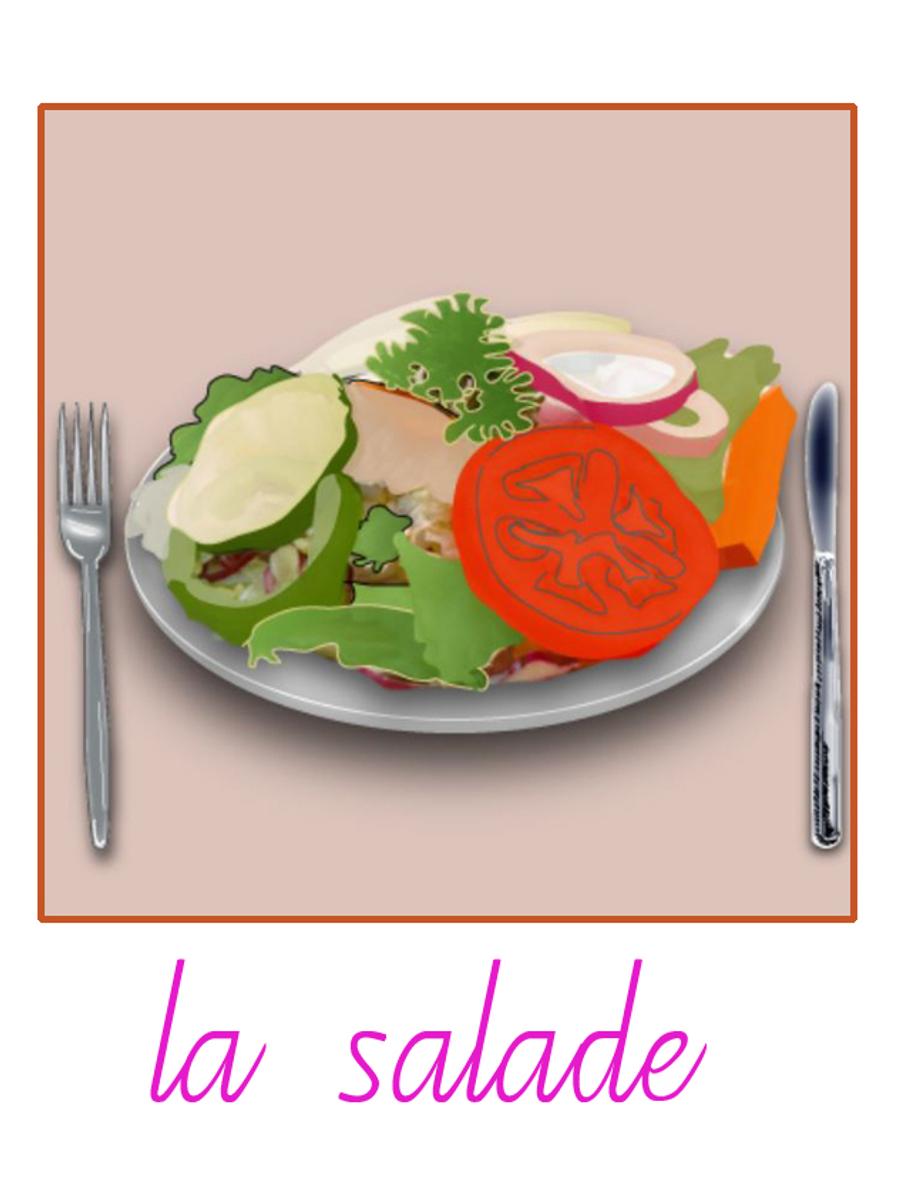
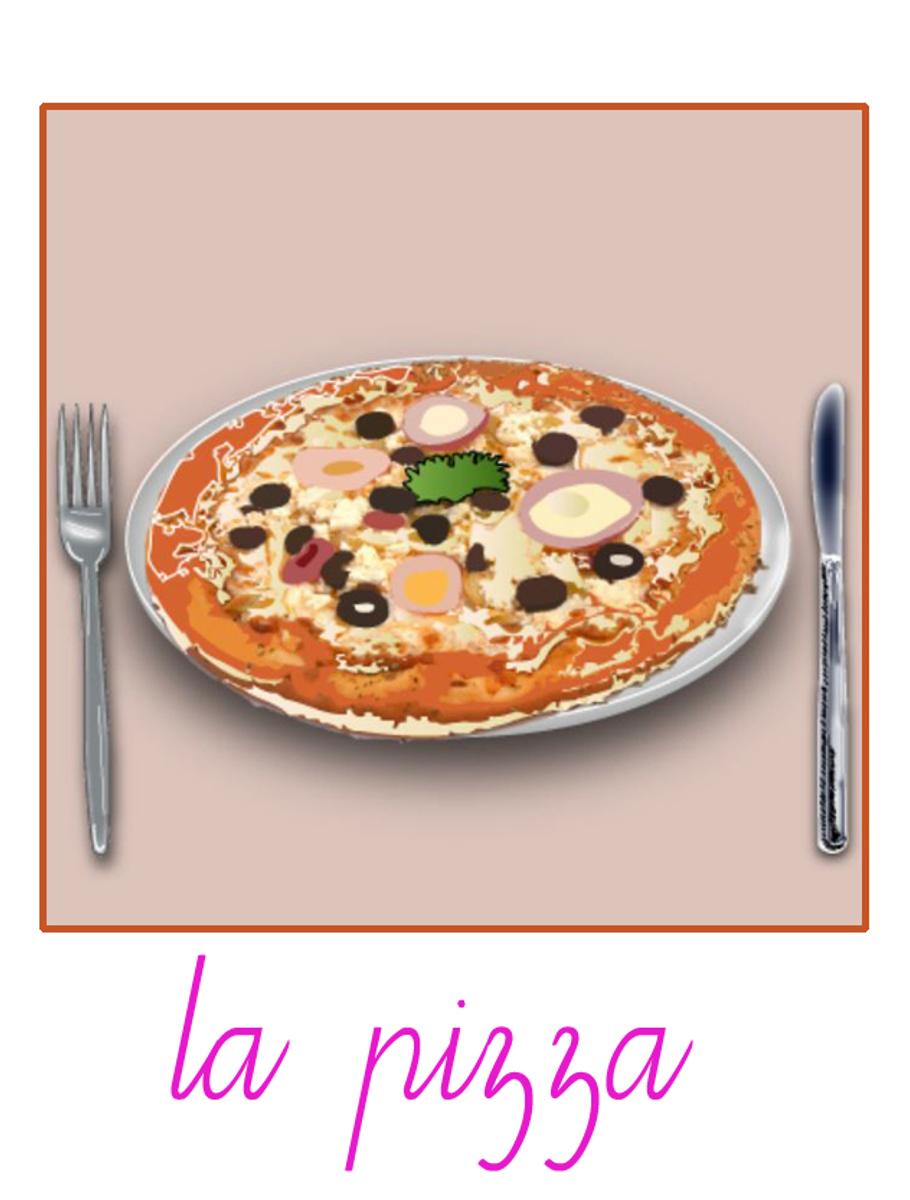
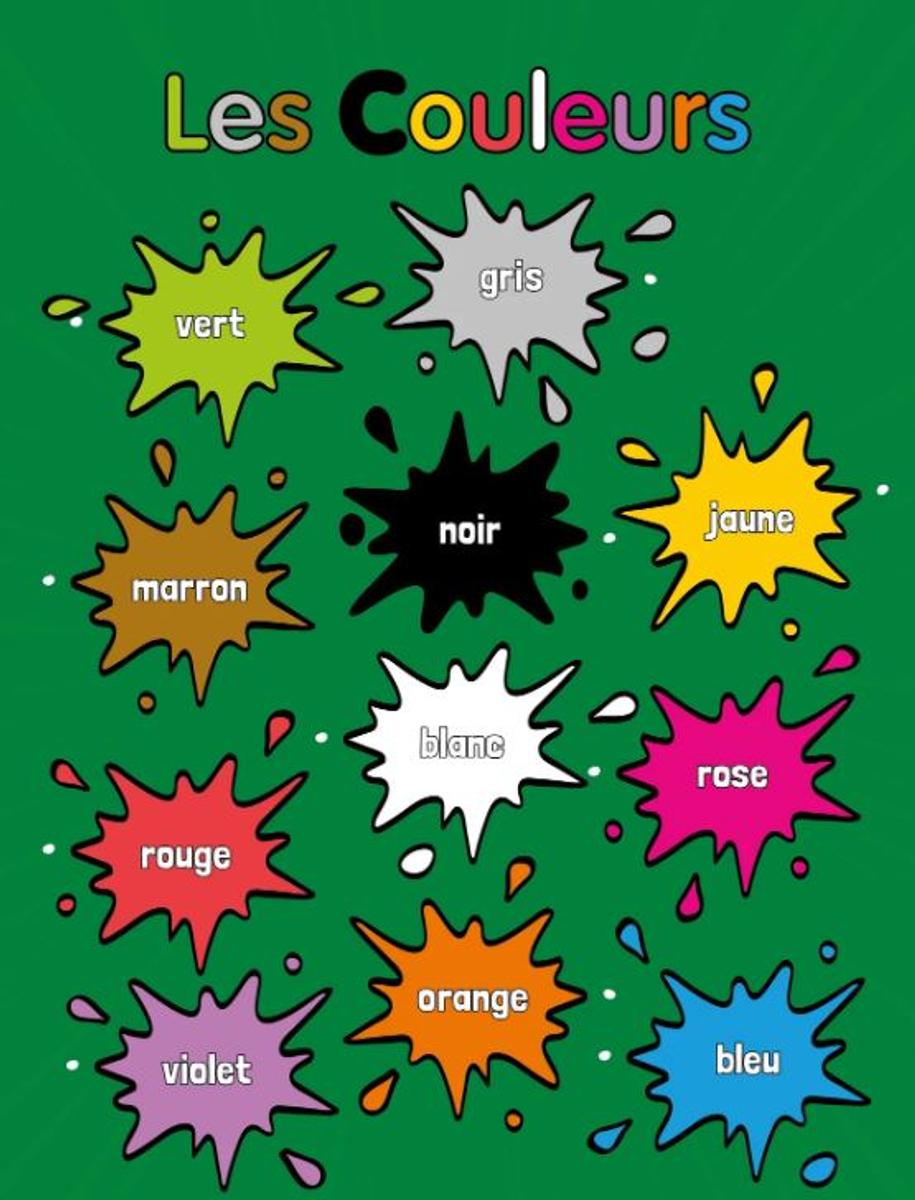
Our little ones have memorised simple food vocabulary and were able to apply this knowledge to describe what their hungry caterpillar ate. They are now starting to learn colours.
Selvi
Renae
Joel
Jarin
Selvi
Renae
Joel
Jarin
Grades 1/2
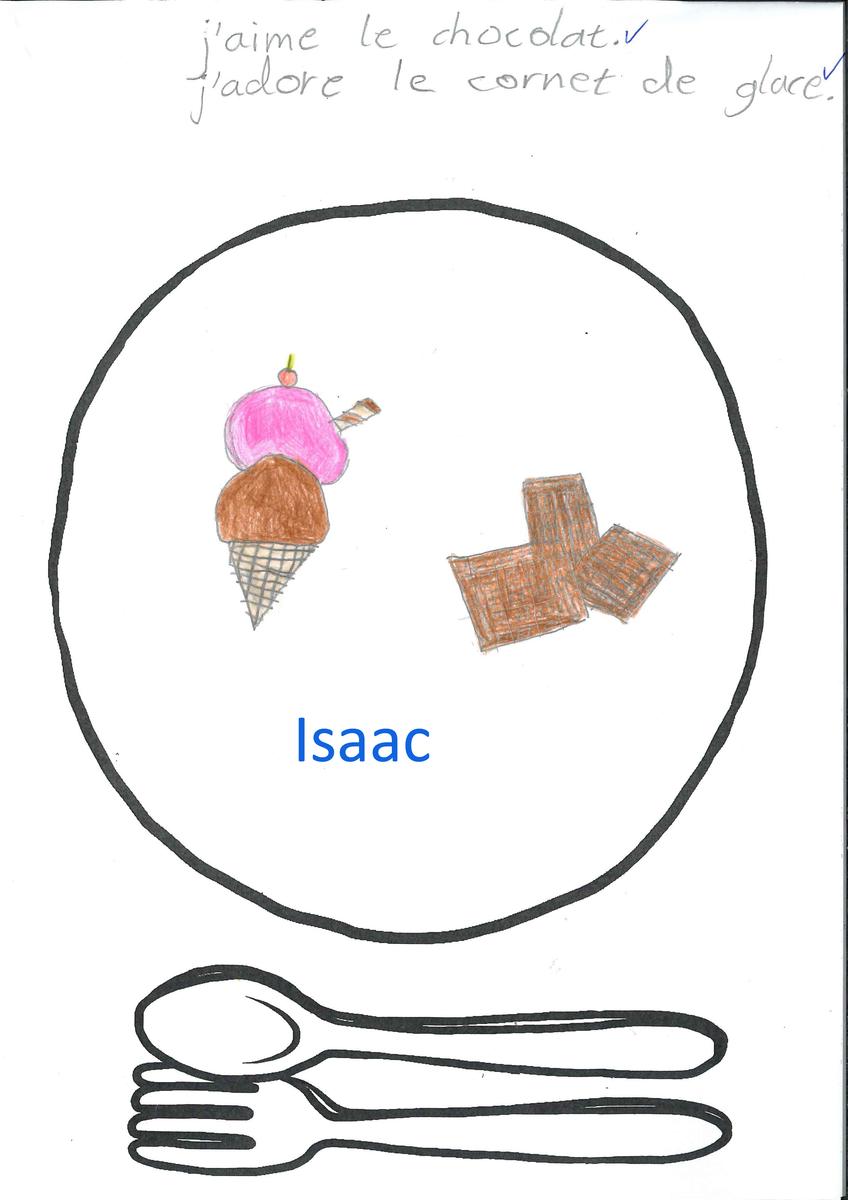
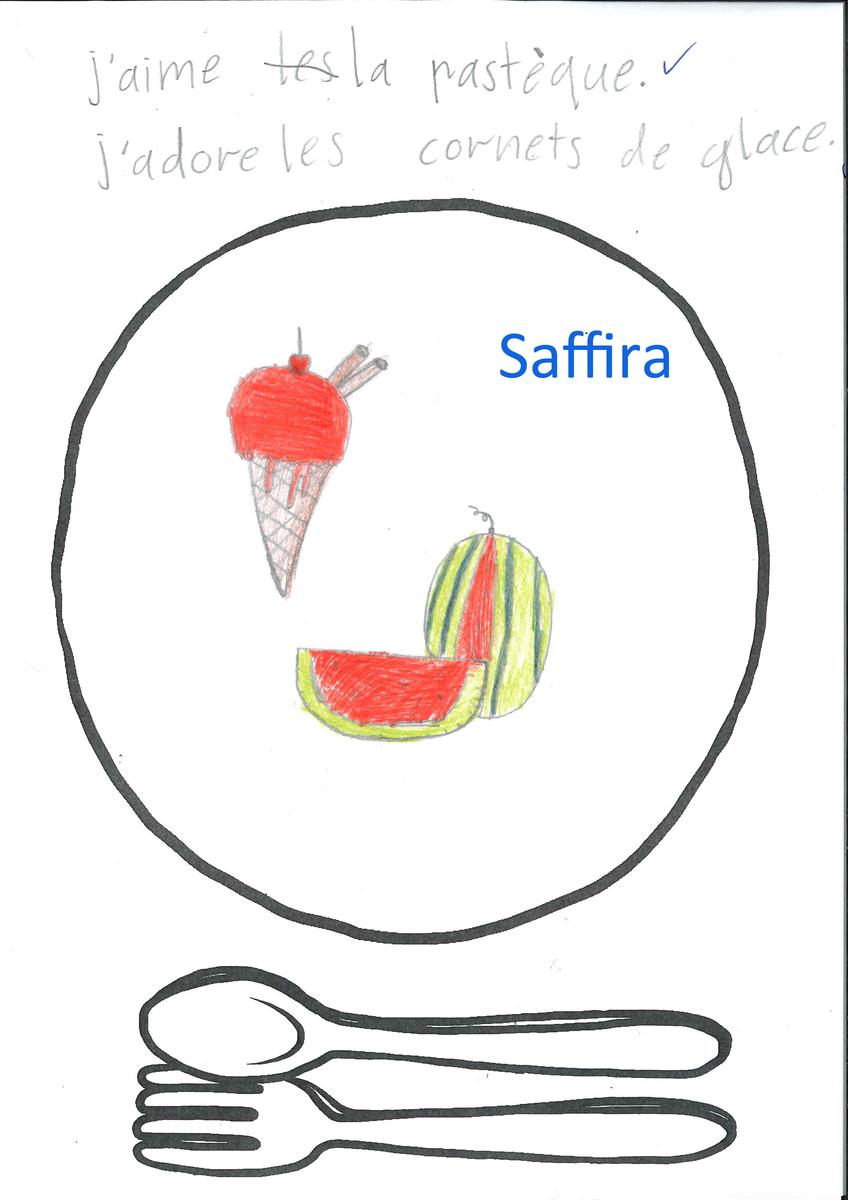
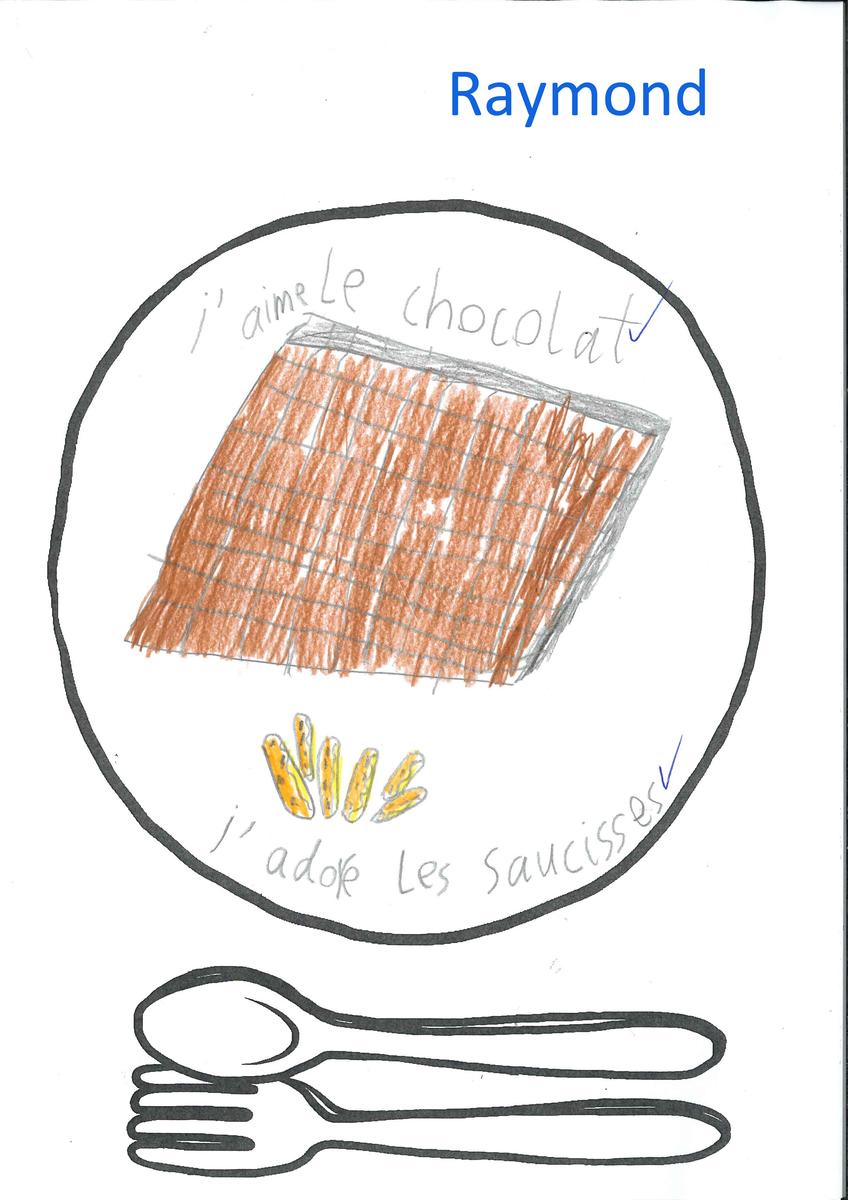
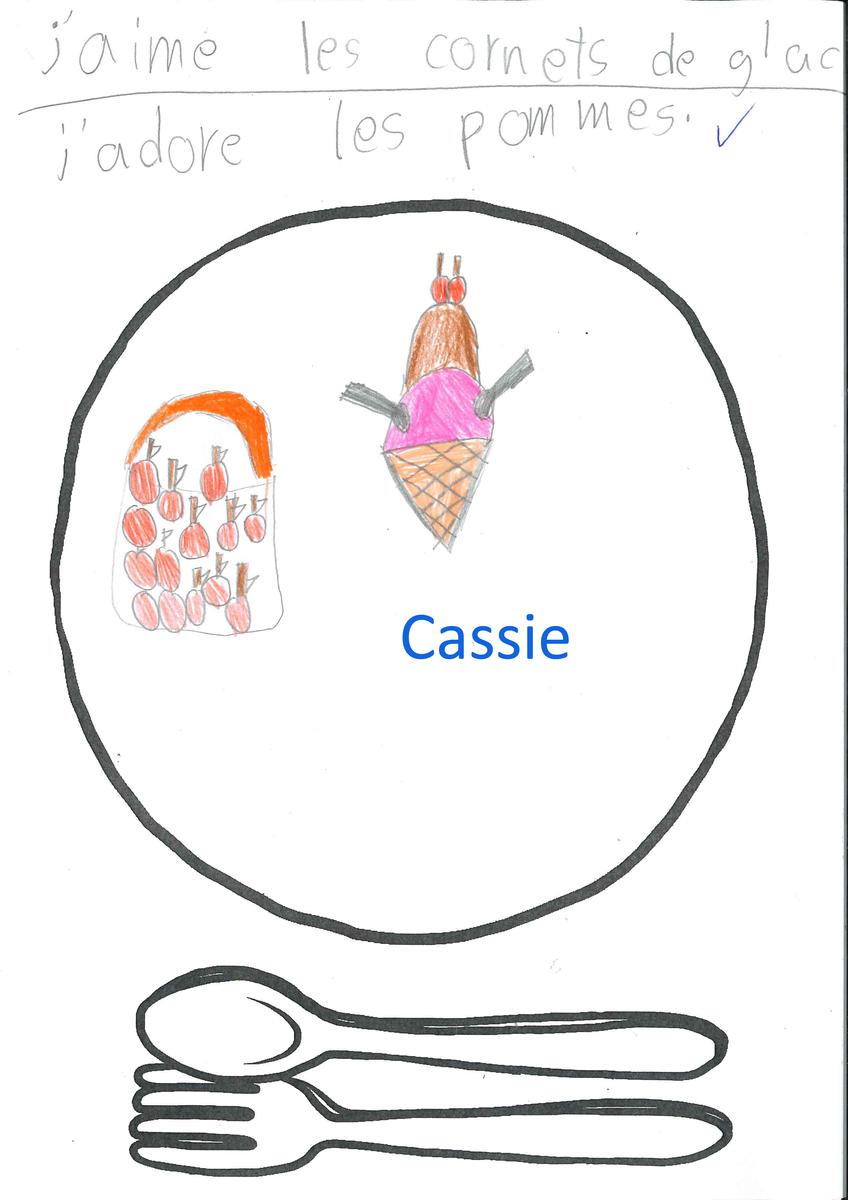
The students are learning how to express food preferences, using four expressions:
- J'aime (I like)
- J'adore (I love)
- Je n'aime pas (I dislike)
- Je déteste (I hate)
Grades 3/4
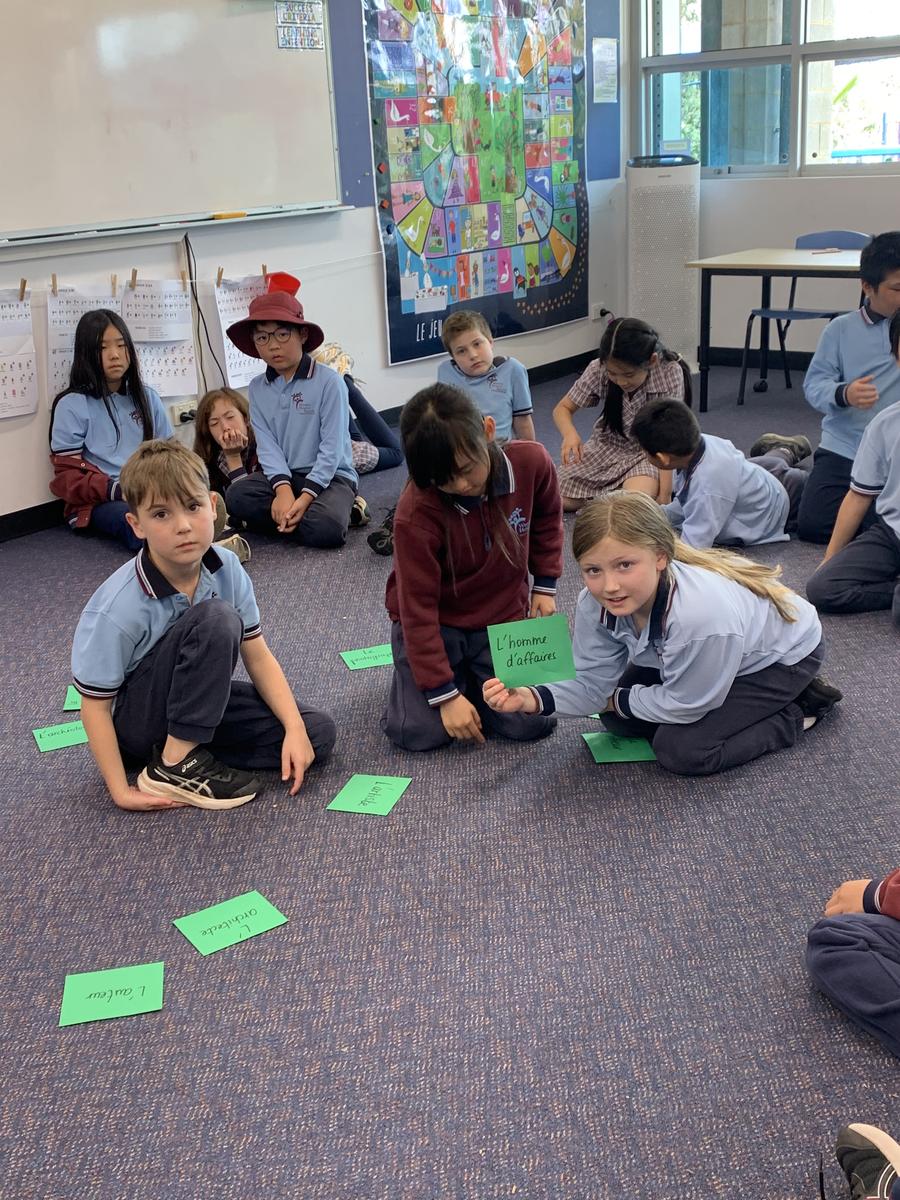
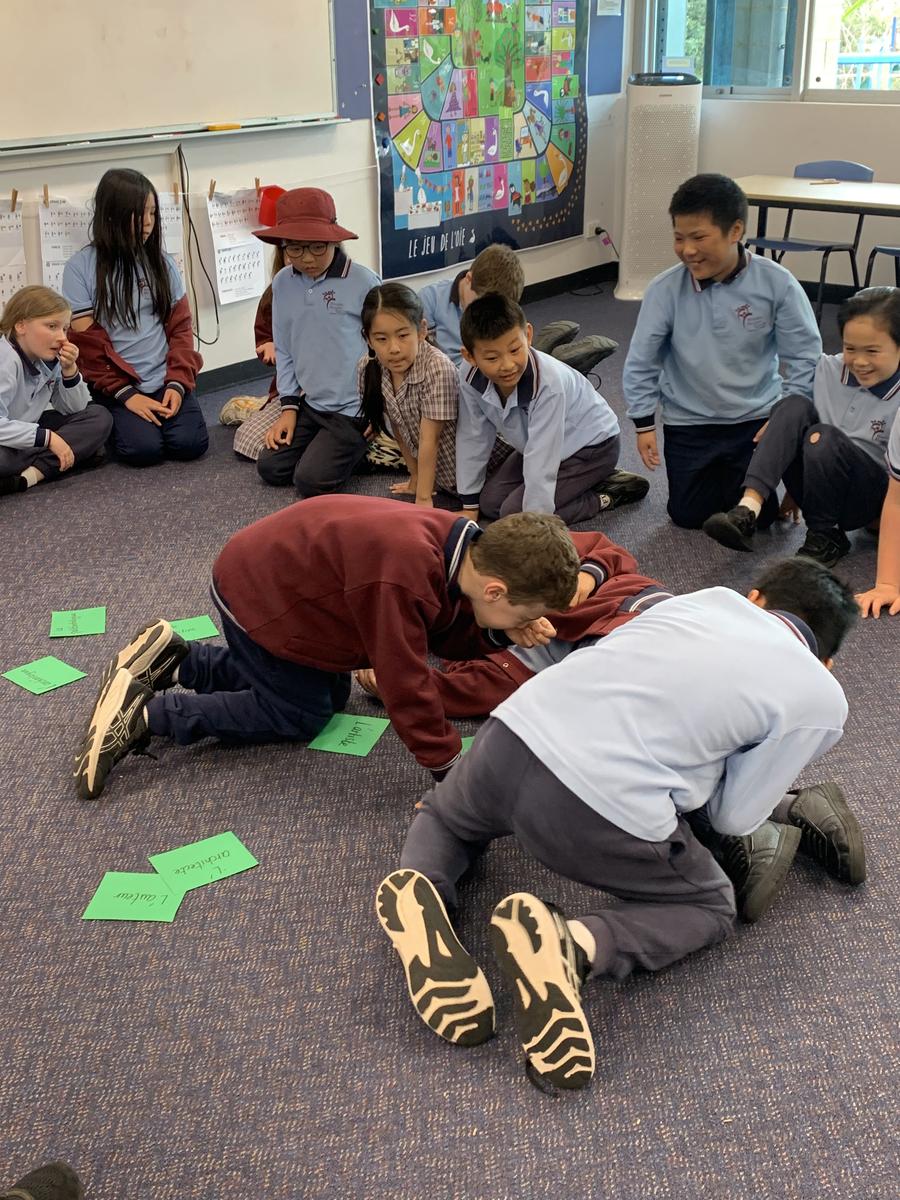
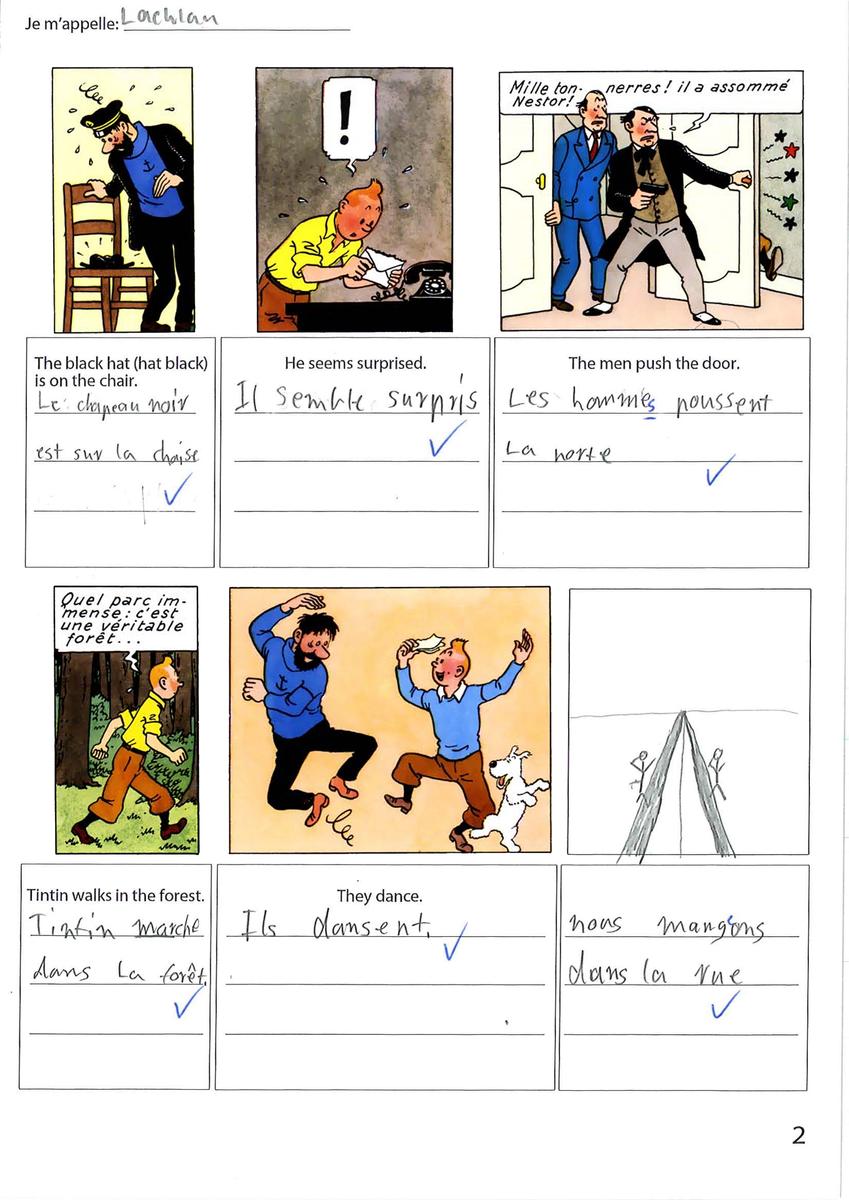
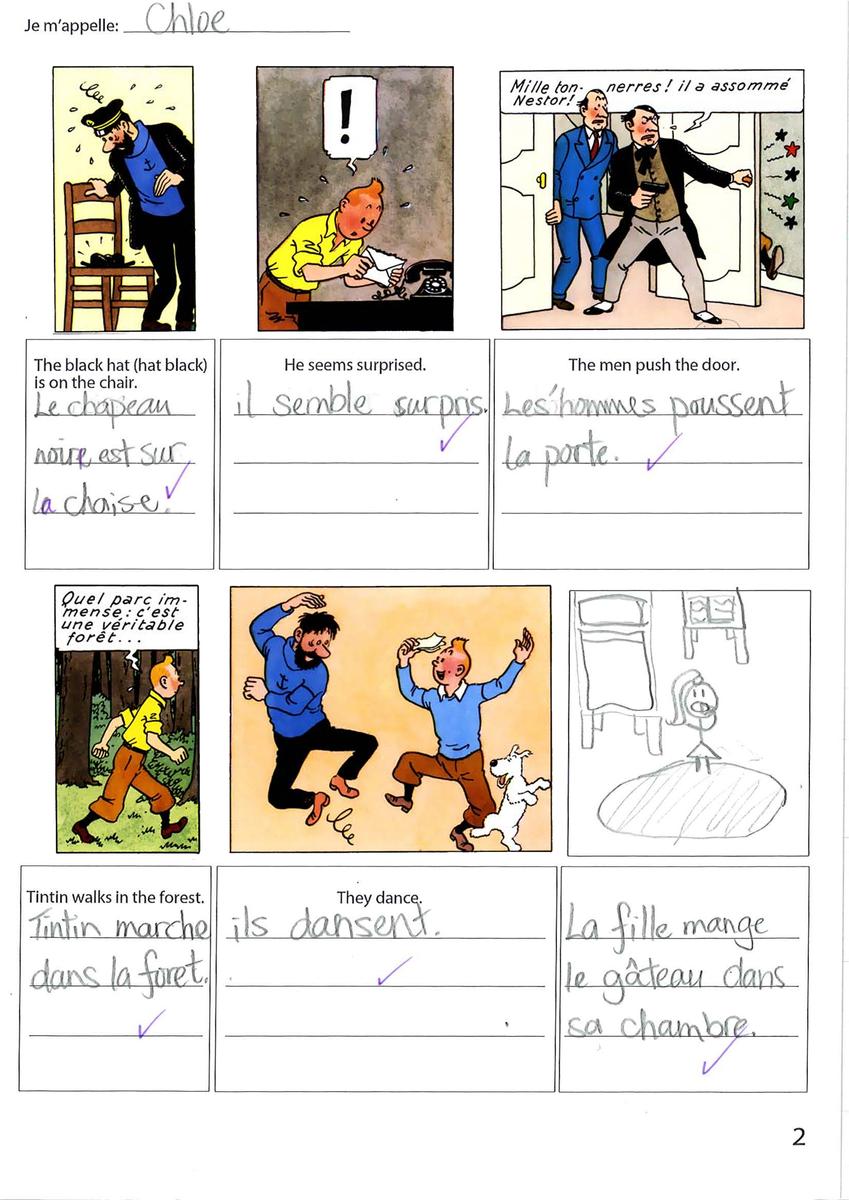
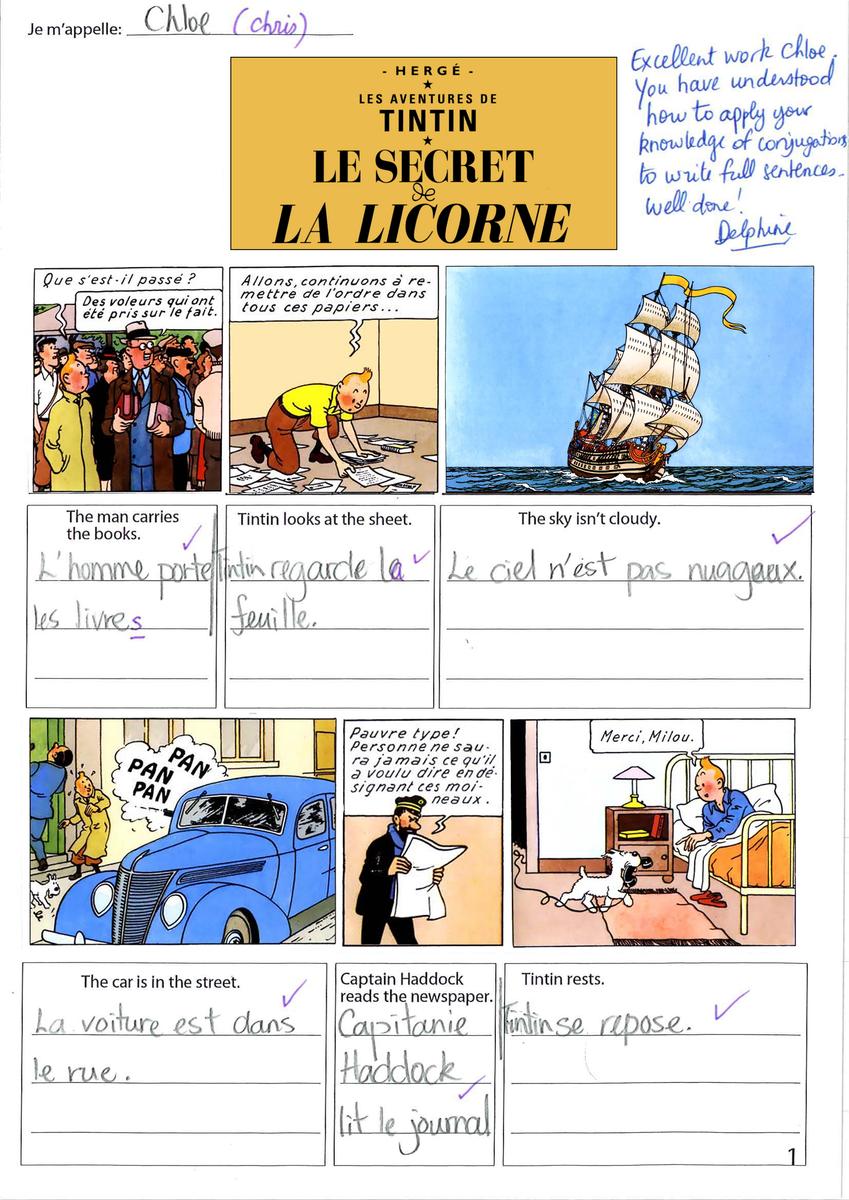
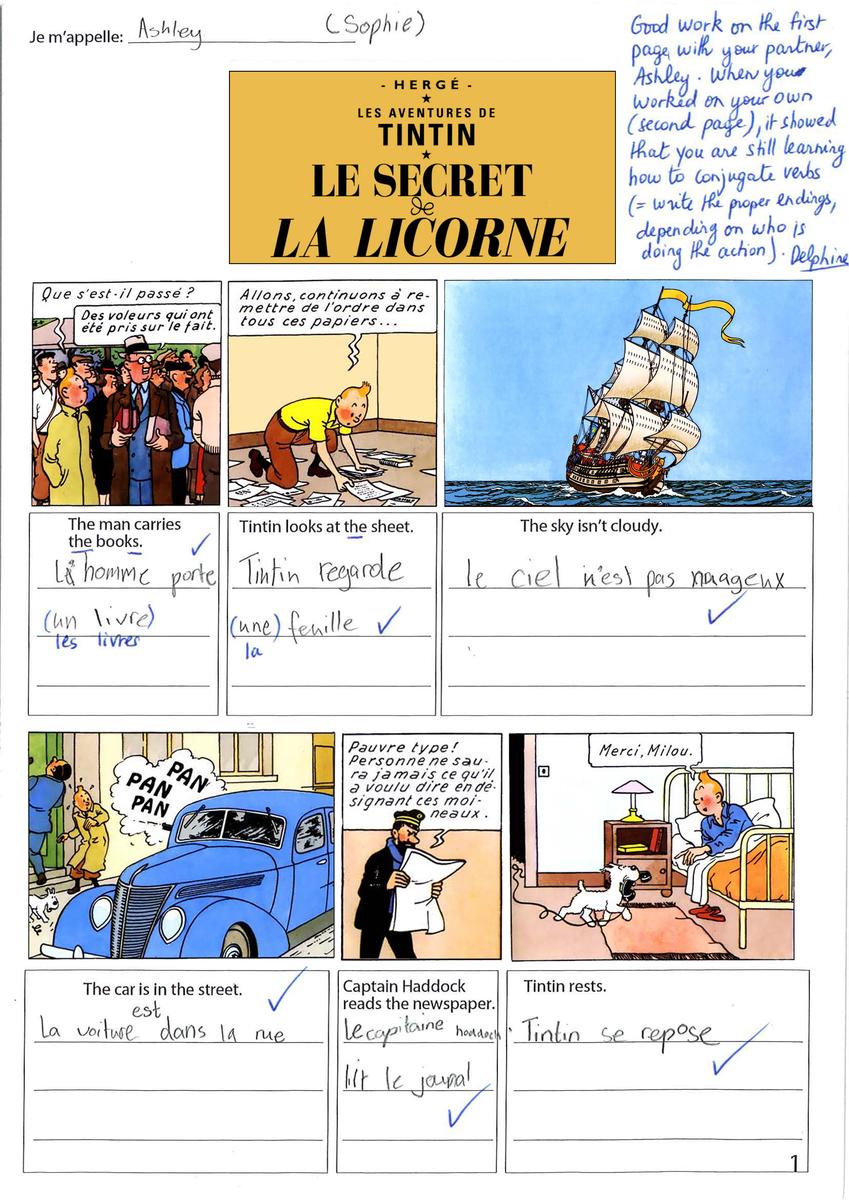
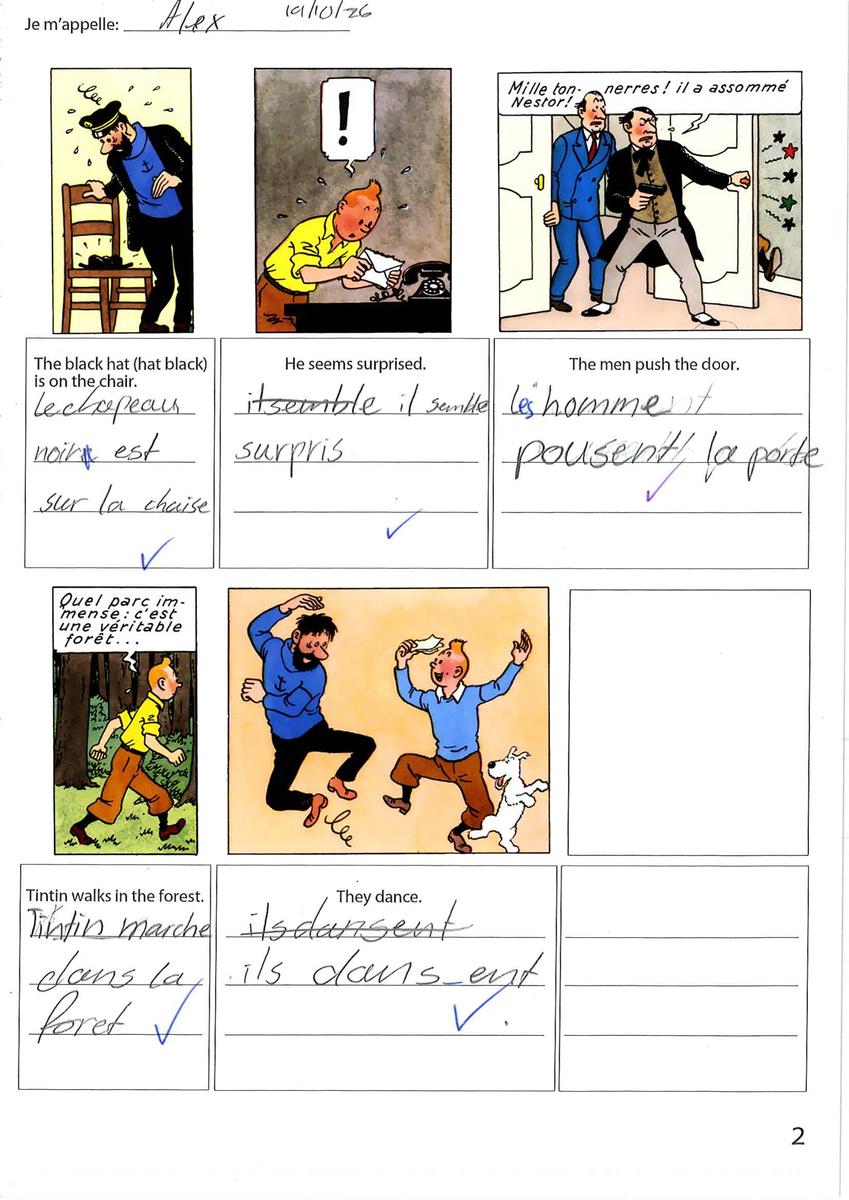
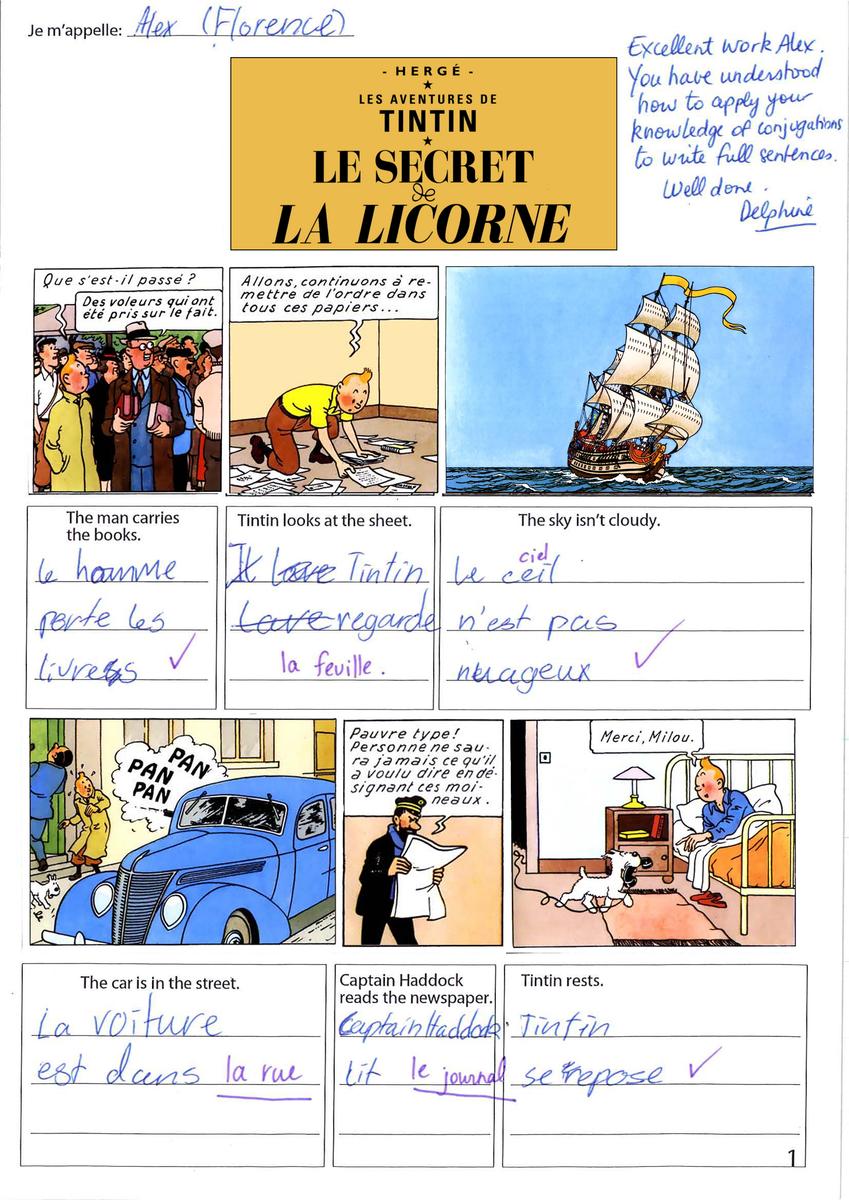
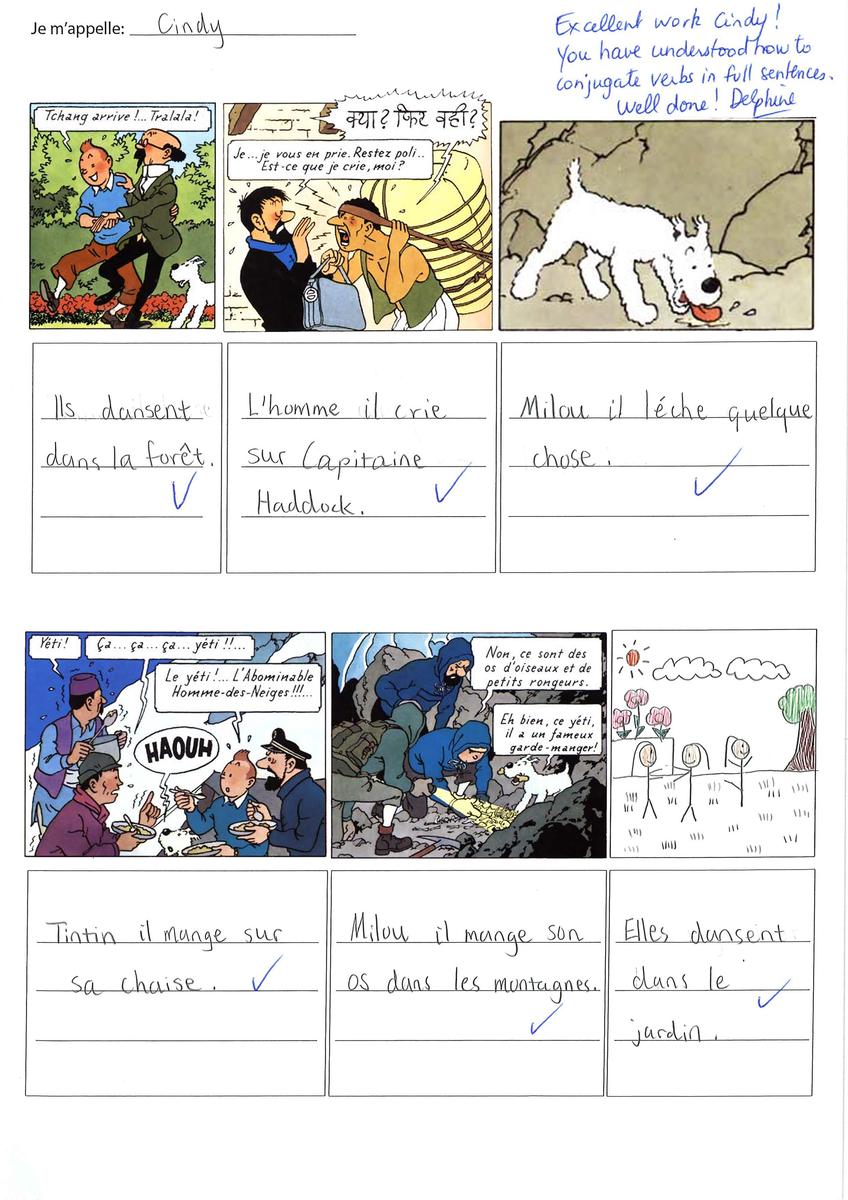
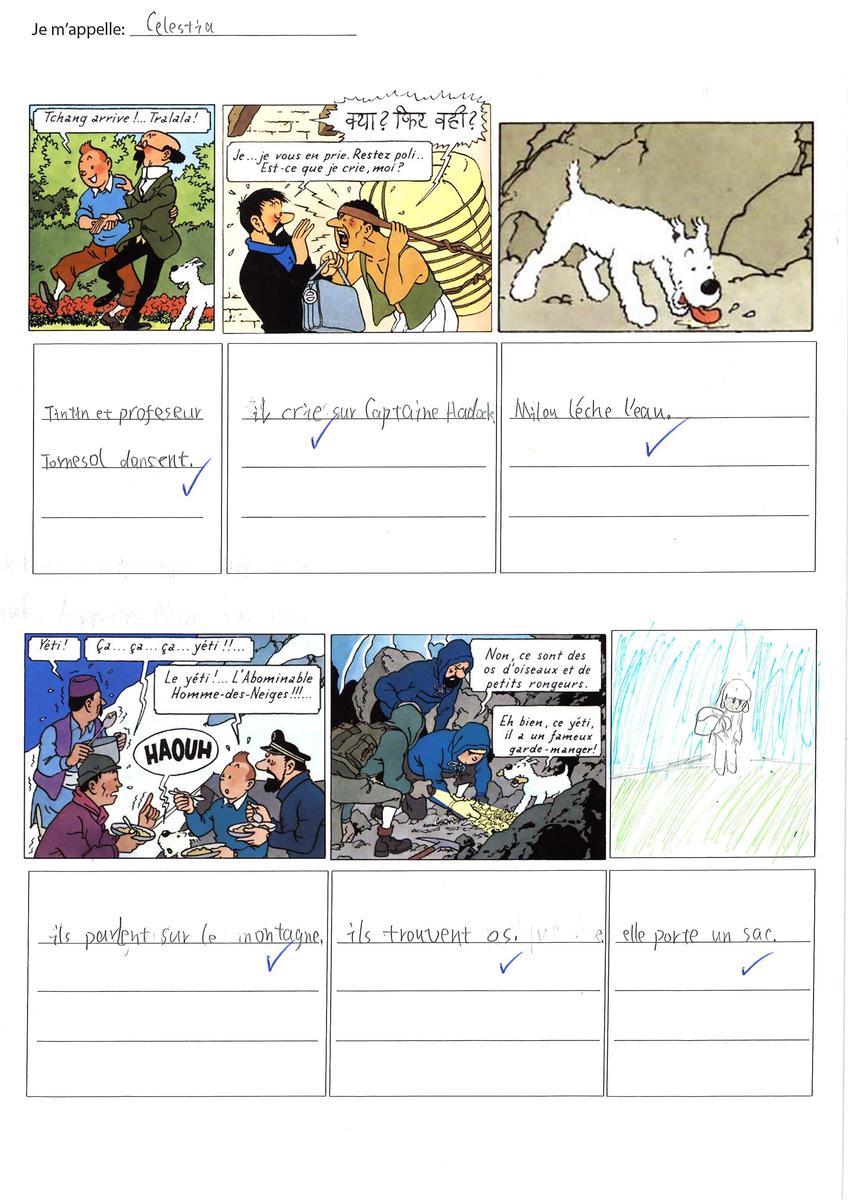
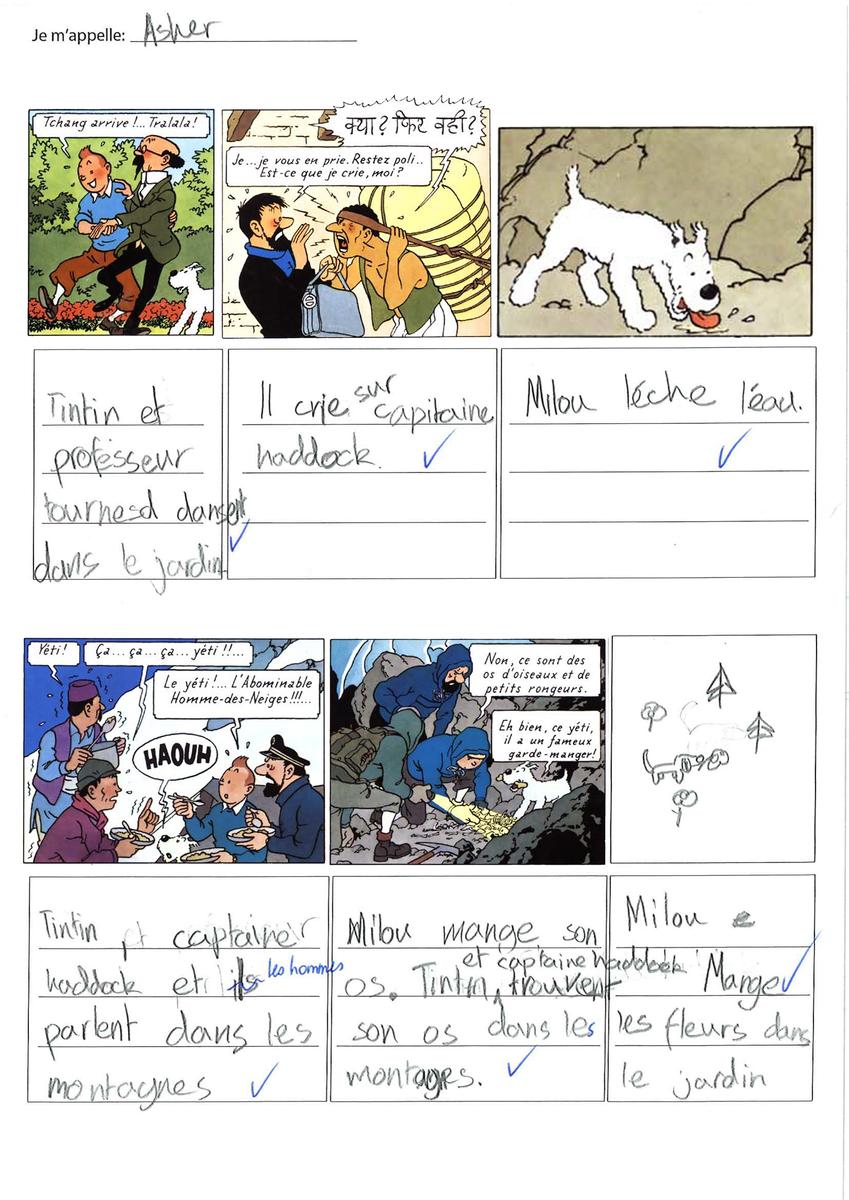
The students have learnt how to conjugate group 1 French verbs (ending in -ER) in the present tense, and can write simple sentences to describe pictures from a Tintin cartoon they watched in class. Last week, they played a miming game to start memorising a list of French jobs. For the remainder of the year, we will focus on revising basic numbers and the students will learn to count to 1000.
Miming a job to guess the French name
Miming a job to guess the French name
Lachlan
Chloe
Chloe
Sophie
Alex
Alex
Lachlan
Chloe
Chloe
Sophie
Alex
Alex
Grades 5/6
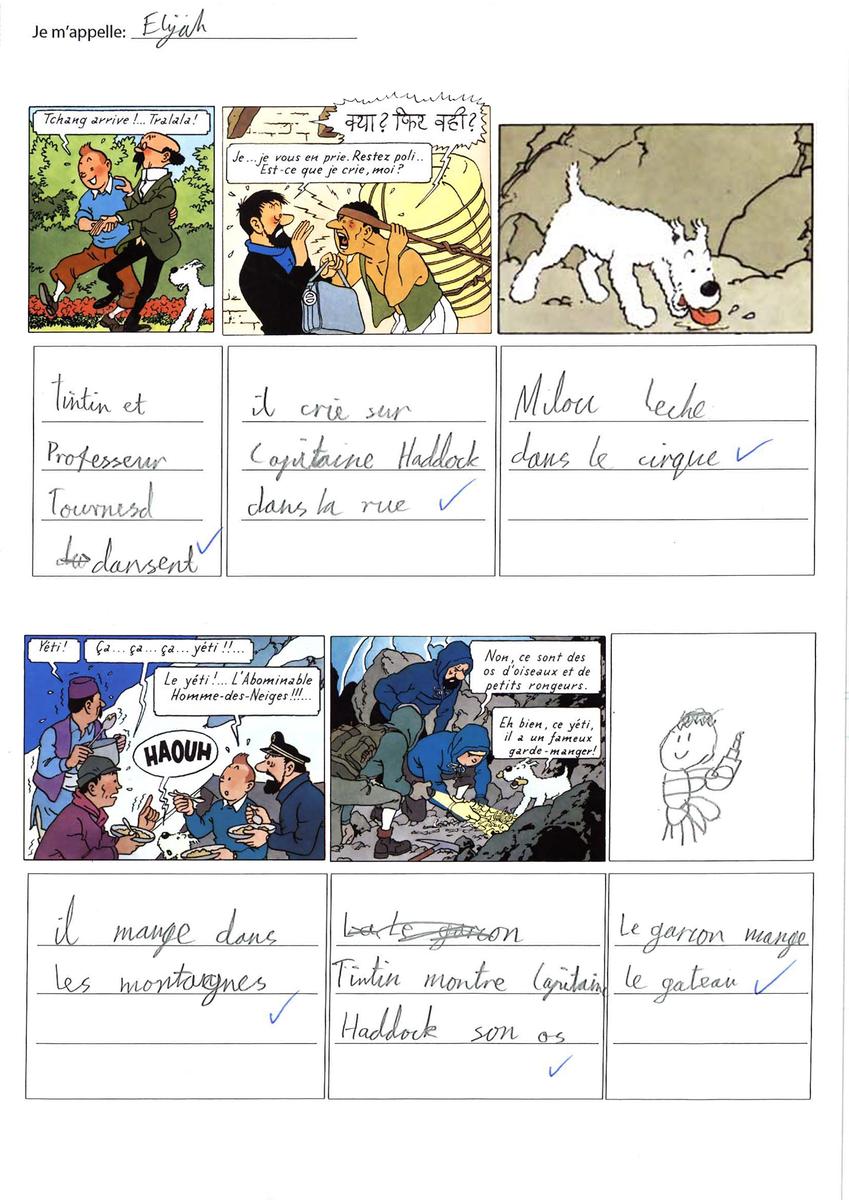
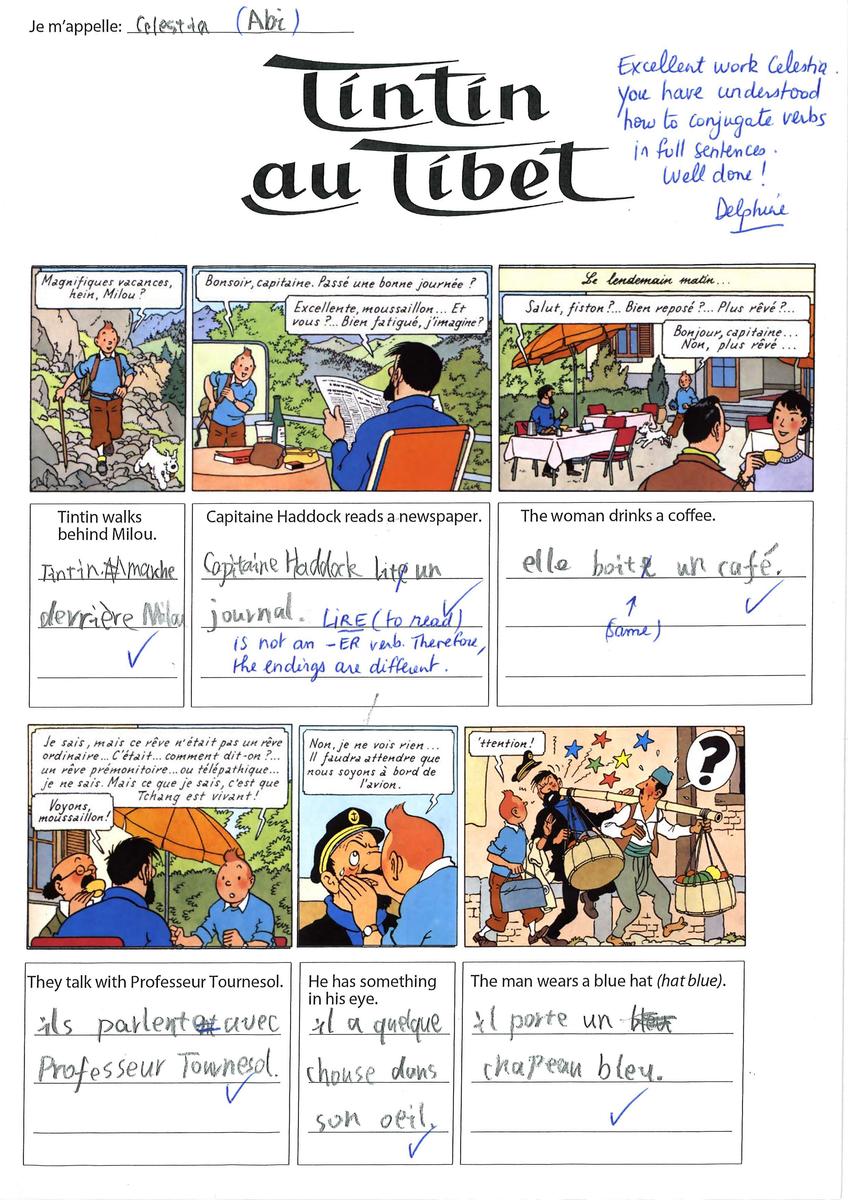
Like in Grades 3/4, the grammatical focus of the start of the term was learning how to conjugate verbs, but with a higher difficulty level. Some students can now apply their knowledge to a range of verbs and are able to write their own sentences.
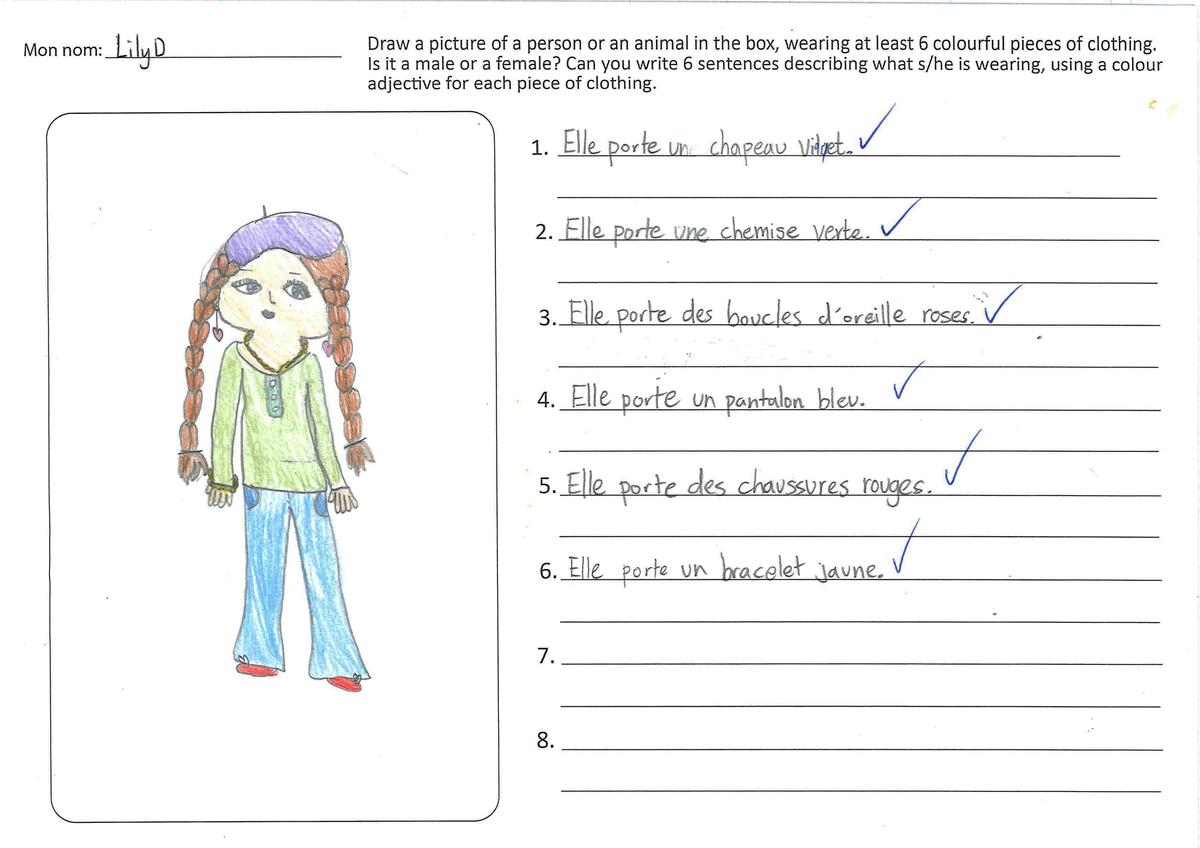
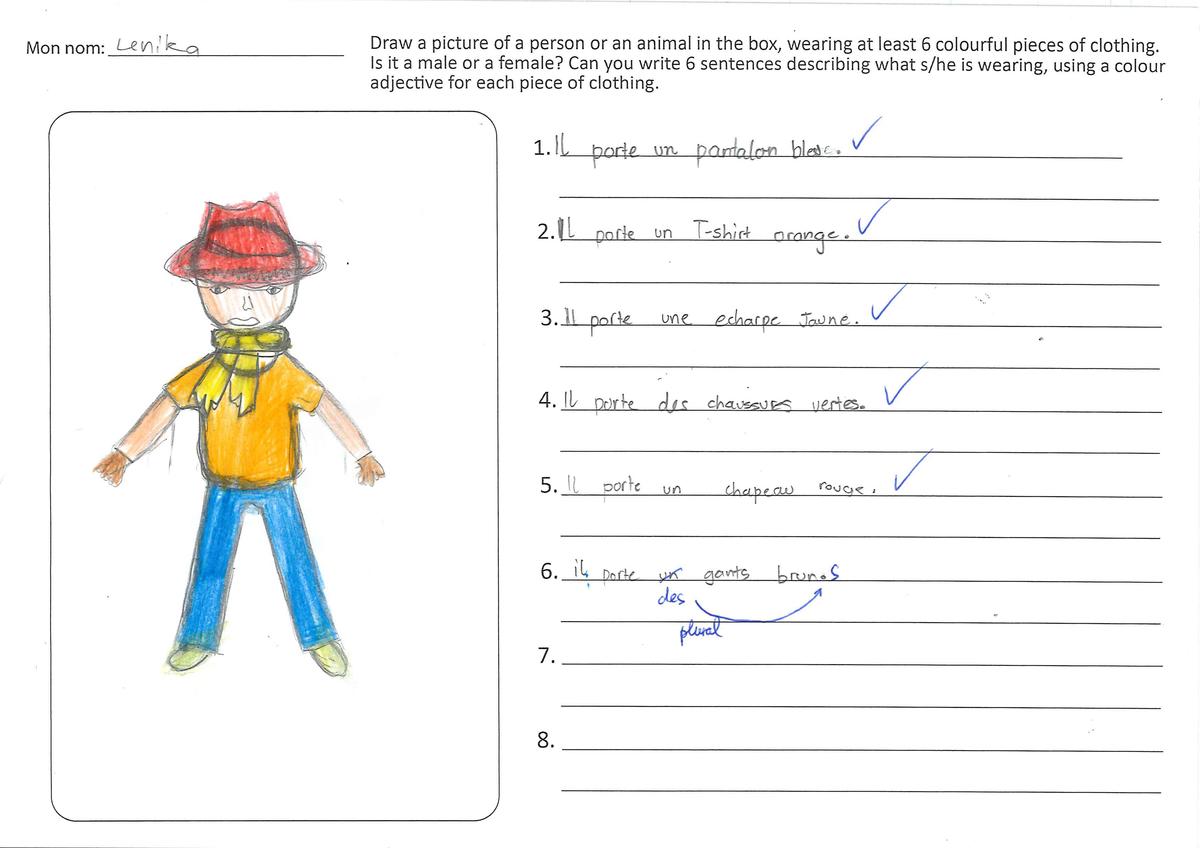
The second grammar concept was the agreement between French nouns and adjectives: adjectives must always agree in gender (masculine or feminine) and number (singular or plural) with the noun they describe. The students produced a piece of work to demonstrate their understanding: they drew their own character wearing colourful clothes, and wrote sentences to describe it, such as 'Elle porte des chaussures noires'(She is wearing black shoes). Because the noun 'chaussures' (shoes) is feminine and plural, the adjective 'noires' (black) must end with letters 'E' and 'S'. However, the adjective is written differently in the following sentence: 'Il porte un chapeau noir' (He is wearing a black hat'). 'Le chapeau' (the hat) is a masculine singular noun. Theferore, the adjective 'noir' (black) does not require letters 'E' and 'S' at the end.
For the rest of the term, we will focus on the French Revolution with the use of VR headsets. The studemts will be able to 'walk' in the streets of Paris during the 18th century and learn about the difficult daily life of most French in these days.














 Weeden Heights Primary School