Literacy News
Building Strong Readers and Writers at SKiPPS
Week 5: Handwriting – Building Automaticity for Writing Success
Literacy Spotlight: The goal of handwriting instruction is not beautiful handwriting - it is effortless handwriting.
When we think about literacy, our minds often go straight to reading. However, writing is an equally important part of becoming literate, and one of the foundations of successful writing is the ability to form letters accurately and automatically.
Handwriting is much more than neat presentation. It is a complex skill that requires children to coordinate their thinking, fine motor movements and knowledge of letter formation. When students develop automatic handwriting skills, they are able to focus more of their attention on generating ideas, choosing vocabulary, constructing sentences and communicating their thinking.
What Do We Mean by Automaticity?
Automaticity means being able to complete a skill quickly and accurately without needing to consciously think through every step.
Think about skills adults use every day. When we write our name, tie our shoelaces or type a familiar word, we do not need to stop and think about each individual movement. The skill has become automatic through teaching and practice.
The same is true for handwriting. When children have to concentrate on how to form each letter, this uses valuable mental energy that could otherwise be used for higher-level writing skills.
Why This Matters for Learning
Our working memory - the part of our brain we use to hold and process information at the same time - has a limited capacity.
For beginning writers, remembering:
- where to start a letter,
- which direction to move the pencil,
- how letters are formed,
- how to spell a word, and
- what they want to write
can be a lot to manage at once.
Through explicit teaching and regular practice, handwriting becomes more automatic. This frees up students' thinking space so they can focus on the ideas, vocabulary and structure of their writing.
Simply put:
When handwriting becomes automatic, students can think more like writers.
At SKiPPS
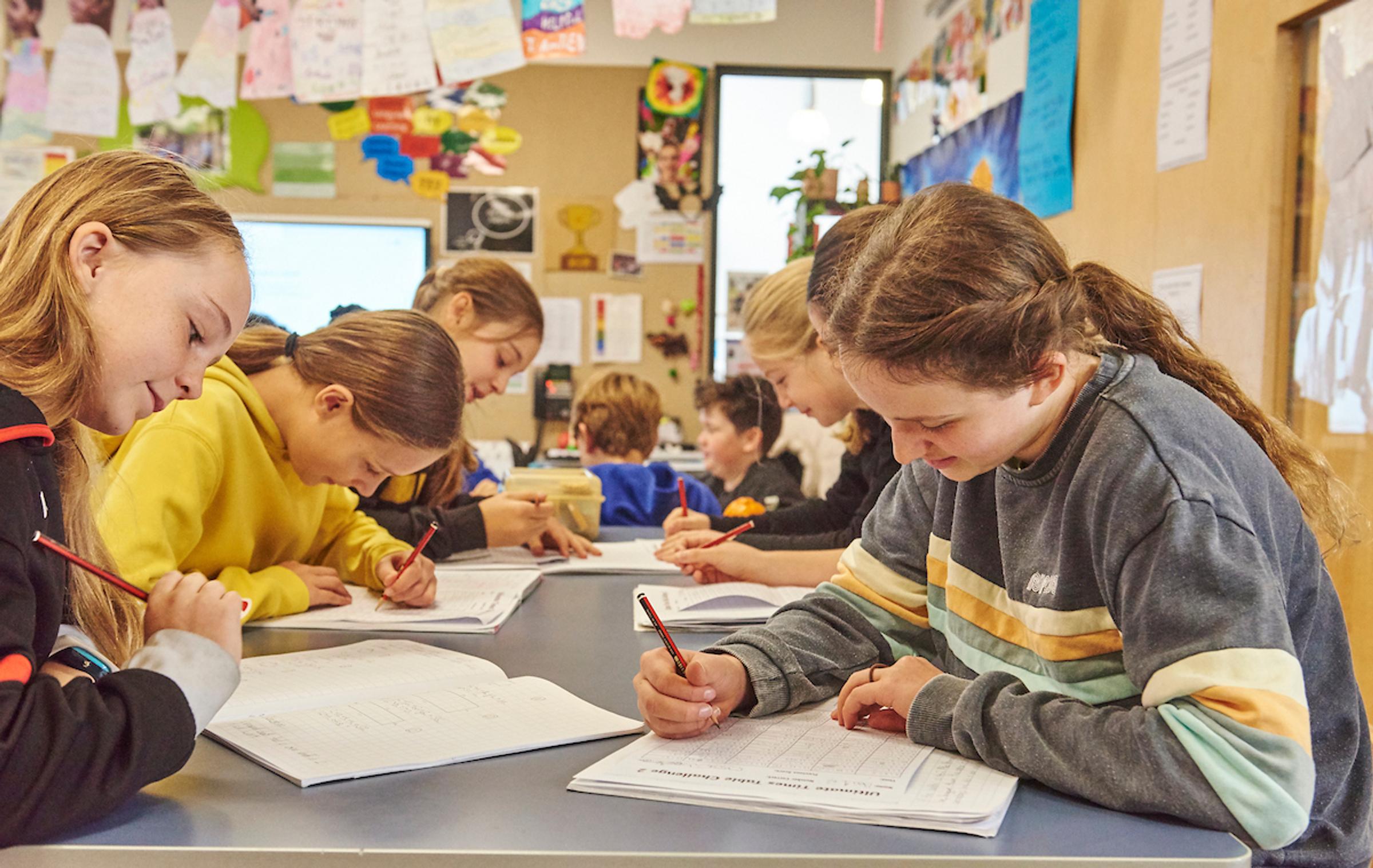
At SKiPPS, handwriting is explicitly taught daily and practised as part of our Structured Literacy approach.
Students are taught:
- the correct formation of letters and numbers,
- where letters begin and finish,
- how letters sit on the line,
appropriate spacing and sizing.
Teachers model handwriting clearly, provide opportunities for guided practice and give feedback to ensure students develop accurate habits from the beginning.
Daily practice is important because handwriting, like any skill, improves through repetition. Regular opportunities to practise help students build the automaticity they need to write with increasing confidence, speed and accuracy.
Literacy Spotlight
Typing and handwriting are both valuable skills, but they serve different purposes.
Handwriting supports the development of early literacy skills by strengthening the connection between seeing a letter, knowing its sound and producing it accurately. This connection helps children develop stronger word recognition and spelling skills.
Learning to type is also important in our digital world, but students benefit from first developing strong handwriting foundations.
How You Can Help at Home
Families can support handwriting development by:
- Encouraging your child to take their time and form letters carefully.
- Providing opportunities for writing in everyday life (shopping lists, cards, notes or journals).
- Celebrating effort and improvement rather than focusing only on neatness.
- Encouraging the correct formation of letters rather than allowing inefficient habits to become established.
Asking your child to explain how they form a letter or where a letter begins.
Small amounts of regular practice are much more effective than occasional long sessions.
Handwriting is a skill that grows through explicit teaching, feedback and practice. By helping students develop automatic letter formation, we give them a stronger foundation for expressing their ideas and becoming confident writers.
If you would like some extra handwriting sheets for home, please reach out and we can provide a booklet to be used that will support what we are teaching in the classroom.
Coming next week: Fluency: Moving from Learning to Read to Reading to Learn.
A request for some help - contacting books

We have a collection of class novels that require contacting. If contacting is one of your 'secret talents', please reach out and let me know. I will provide the contact.
The books are in my office - you are welcome to come and collect directly from me or I am able to send a bag home with your child if that is easier.
Thank you enormously!
Jac Morphy
Assistant Principal - Curriculum and Instruction