Term Four News
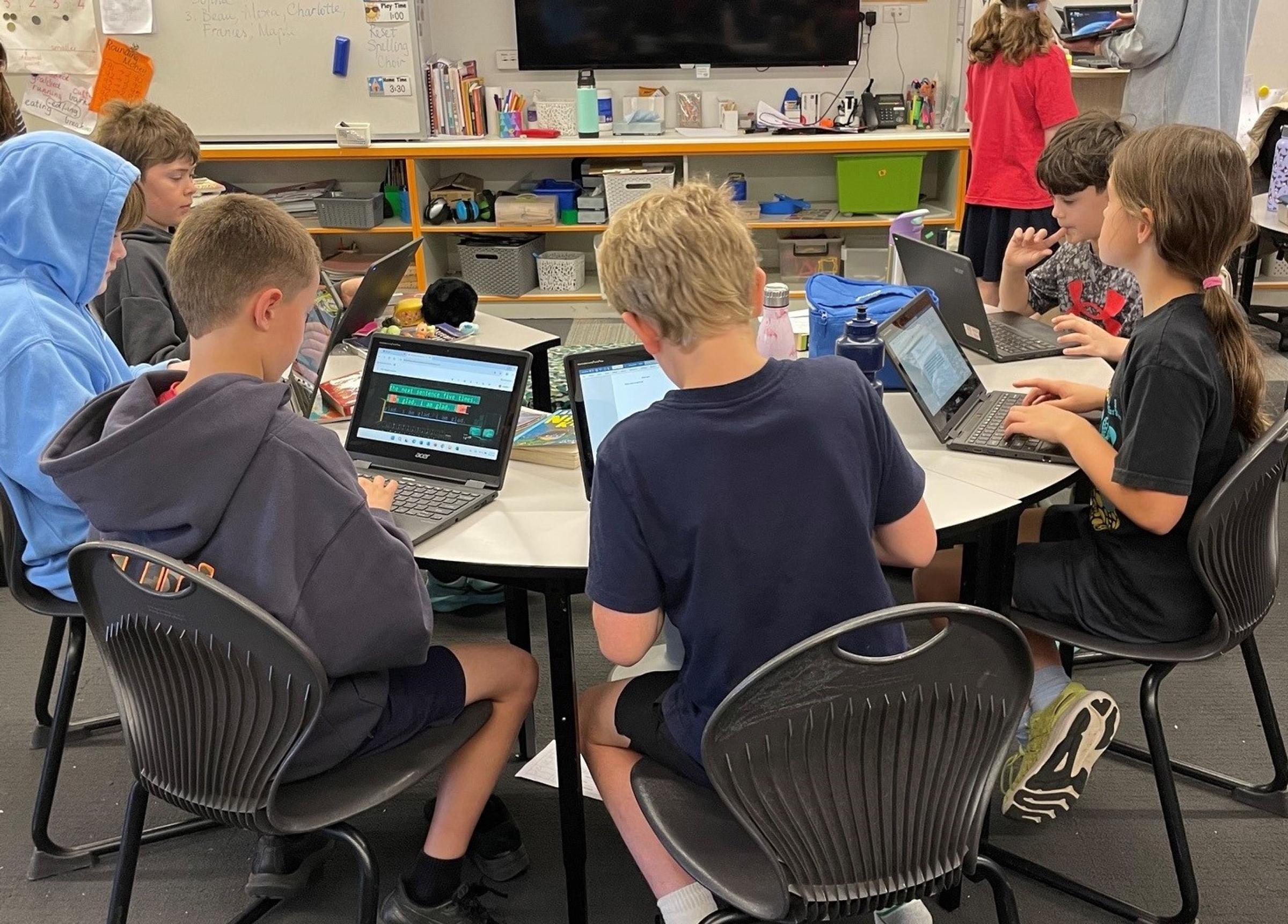
Welcome to Term 4!
We can’t believe it’s already term four! We sadly said goodbye to Emilia at the end of last term, while also warmly welcoming Nicole to our Year 4 cohort. This is the final term that students will spend on the Langridge Street Campus, making it a very special one. We are looking forward to another exciting term filled with learning and opportunities to celebrate the progress our students have made throughout the year. Of course, we are also looking forward to our celebration of learning excursion (at the end of the term), which will be a wonderful way to finish the year together!
4A - Binh
4B - Prue
4C - Nicole
4A - Binh
4B - Prue
4C - Nicole
Literacy
Our Literacy work this term will focus on:
- Fantasy fiction writing including unpacking elements of a fantasy story such as: magical objects, imaginary places, invented languages, non-human characters, myths and good vs evil plots.
- Upgrading verbs and sentence types.
- Editing and uplevelling our writing.
- Adding suffixes and prefixes to words, homophones and spelling.
- Strengthening comprehension while reading our new class novel The Lion, the Witch and the Wardrobe.
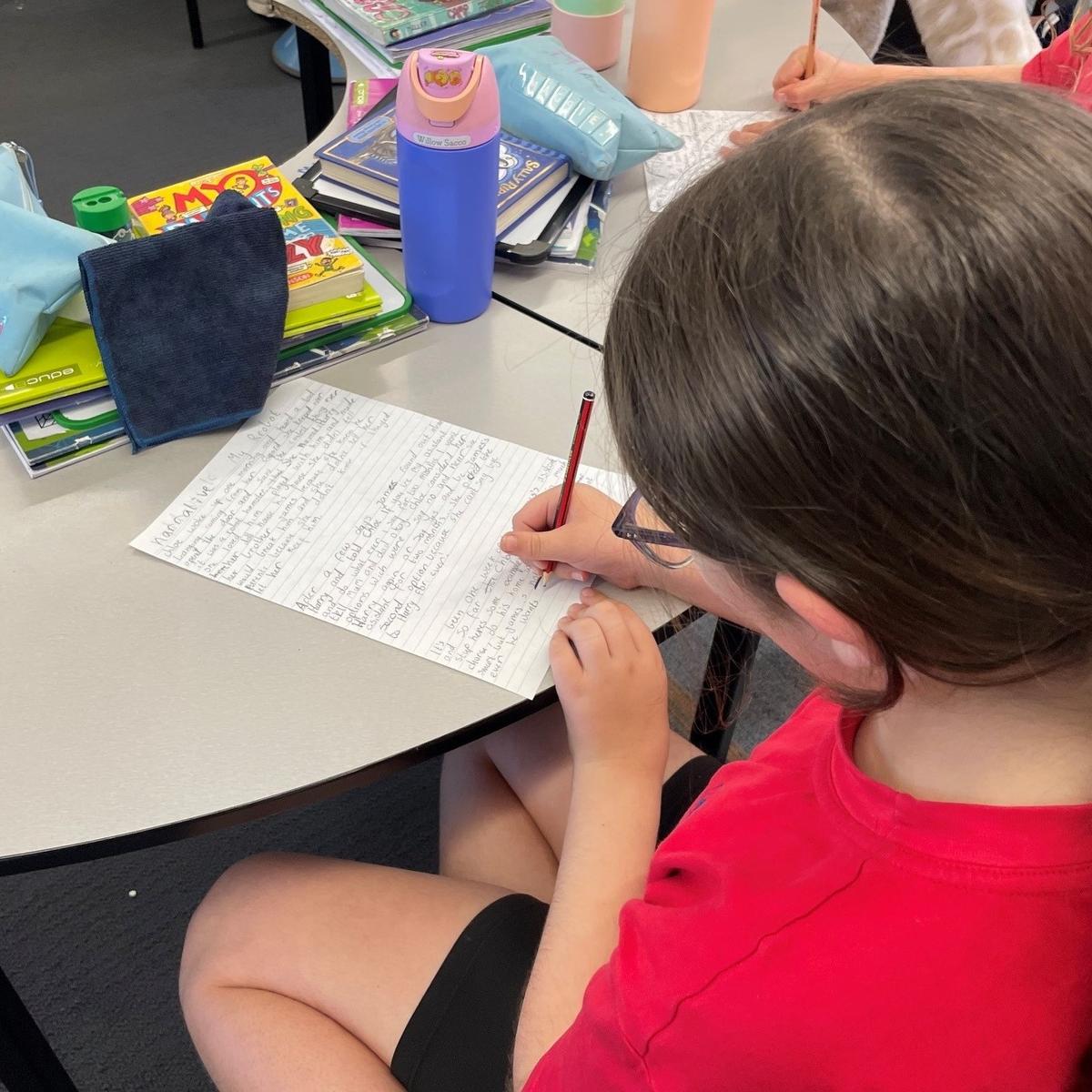
Students will plan, draft, revise and edit a fantasy fiction on a topic of their choice. Core literacy skills will continue to be supported by weekly explicit phonics, vocabulary, handwriting, grammar and punctuation lessons. Our grammar, punctuation and spelling focus will be determined through assessment and analysis of student writing samples at the beginning of the term.
To support this learning at home you can :
- Encourage your child to read outside of school times daily. If they are a reluctant reader, you could take it in turns to read a page each. Ask questions from time to time to monitor comprehension. Some examples are: Who are the characters? What is the plot? What do you think might happen next?
- Visit the local library to explore different genres.
- Encourage your child to write at home. E.g. keep a journal, write shopping lists, or a convincing letter for that new game they’d like.
- Encourage them to use interesting adjectives and verbs (action) when writing.
- Encourage the correct use of full stops, commas and apostrophes.
- Encourage your child to edit their work for mistakes before they show you. They should also make sure the writing makes sense. Getting your child to read their writing aloud is a good technique to find mistakes in writing.
- Using a dictionary helps with spelling mistakes.
- Using a thesaurus helps to expand your child’s vocabulary.
- Encourage your child to practise handwriting at home to improve neatness.
- Provide your child with pens, pencils, paper and a spot to write at home.
Numeracy
This term, students will focus on:

- 2D shapes and 3D objects: We will compare and classify 2D shapes and 3D objects, describing their features and recognising the 2D shapes that make up the faces of 3D objects.
- Composite shapes: We will explore how familiar shapes can be combined to represent and create more complex shapes and real-world objects.
- Symmetry: We will identify and create line and rotational symmetry in shapes, patterns, artworks and the natural environment.
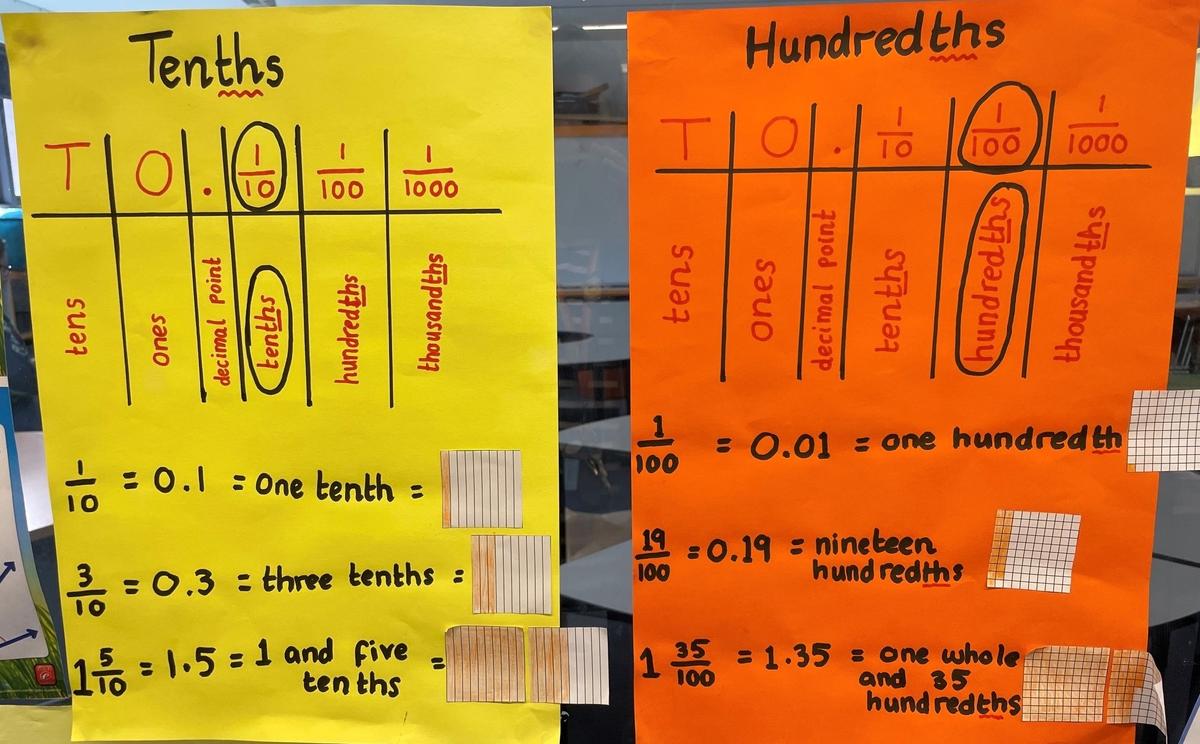
- Equivalent fractions: We will explore different ways to represent equivalent fractions and investigate how fractions with related denominators are connected.
- Fractions and mixed numerals: We will count by fractions, locate fractions on number lines, work with mixed numerals and improper fractions, and find fractions of collections.
- Mass and capacity: We will estimate, measure and compare mass and capacity using appropriate metric units and a range of scaled and digital measuring instruments.
- Probability: We will describe possible outcomes of everyday chance events and order events according to how likely they are to occur and conduct repeated chance experiments and games, record the results and investigate how outcomes can vary.
- Apply mathematical thinking, reasoning and problem-solving skills through rich tasks, investigations and collaborative learning experiences.
Throughout the term, students will participate in pre- and post-assessments to monitor their growth and celebrate their progress in numeracy.
To support this learning at home you can:
- Support general maths fluency by practising skip counting or times tables together.
- Ask your child to teach you the place value games they have learnt at school including: Just Gridding, Mastermind, Four Move Wipe-Out.
- Explore how these topics relate to everyday life, like cooking, daily weather forecasts, etc.
- Explore and conduct chance experiments, and predicting outcomes.
Further ideas to support your child at home can be found here: Literacy & Numeracy Tips.
Design & Technology
Technology in food production and food specialisation.
This unit introduces students to the role of technology in food production, and food specialisation. Through the lens of design and technology, students will explore the journey of food from farm to table, sustainable practices in production, and create solutions that meet dietary and environmental needs.
During the unit, students will be investigate these topics:
- Traditional food and fibre production: Explore Aboriginal and Torres Strait Islander Peoples’ traditional food and fibre production techniques, including sustainable practices and seasonal food knowledge.
- Sustainable practices and resources: Investigate how traditional practices, tools and technologies support sustainability and the responsible use of plants, animals and natural resources.
- Food and fibre production: Explore how plants, animals and fibres are produced in Australia, including school gardens, animal housing, farming methods and technologies used to produce food and materials.
- Food safety and nutrition: Investigate food safety, preservation and processing methods, and compare fresh, minimally processed and ultra-processed foods and their nutritional value.
- Healthy food choices and preparation: Use the senses to explore food, investigate the benefits of colourful and appealing food presentation, and create healthy meals using a variety of vegetables and ingredients.
Health & Wellbeing
Talking the Talk Program
This term we will be undertaking the Talking the Talk Sexuality Health lessons that focus on physical, social, and emotional changes. The content of the lessons complies with the curriculum and is recommended by the Department of Education, and is focused on Respectful Relationships, Consent and Sexuality Education.
The lessons are age-appropriate content using a fact-based approach. A variety of materials will be used to deliver the content in a sensitive manner, including games, conversations and audio and visual media.
Topics include
- Everyone grows up
- Naming body parts, including genitals
- Sexuality diversity briefly introduced
- Introduction to puberty changes: emotional and physical
- The amazing story of conception, pregnancy & birth
- Protective safety (body safety)
- Consent
Respectful relationships: emotional literacy, personal strengths, positive coping, problem solving
Download your free Parent Conversations Guide Ebook from the parent platform and then listen to Vanessa explain it to you on her Healthy Sexuality Conversations Podcast.
Respectful Relationships (RRRR)
This learning supports social and emotional skill building. This term, we will be focusing on:
- Gender norms and stereotypes.
- Positive gender relations.
Information on this department mandated program below:
Specialist Subjects
Performing Arts
We are applying our knowledge of how to play chords on the ukulele, guitar and keyboard and creating bands. We will begin by playing songs as a whole class, focussing on playing in time with each other. At the end of the term, students will create small group bands, where they choose their own instrument and song to perform to the class.
Physical Education
At the start of each lesson this term we will be warming up using skipping ropes. Students will be challenged to perform footwork tricks while skipping as well as rope control tricks, such as side swings and wraps. Students will play modified sports to practise their fundamental motor skills, continue to develop game sense skills as well as demonstrate teamwork and fairplay.
Science
Continuing on from last term’s learning covering Physical Science, students are moving on from heat energy to focusing on forces. They will explore different types of forces, including frictional, gravitational, electrostatic and magnetic forces, and investigate how these can be exerted by one object on another through direct contact or from a distance.
Visual Arts
Our Hero’s Gallery at ART FOR ALL proved to be so inspirational. I hope you had an opportunity to see your artist’s work proudly exhibited beside Vincent Namatjira’s.
This term students will continue to work with textile art, creating a fibre board consisting of knots, plaits, finger knitting, weaving, and wrapping. They will extend their understandings of clay, moulding pinch pots with coils and featuring an Australian animal.
French
Students will be creating a comic using the character (personnage) they designed last term. They will revisit and consolidate familiar vocabulary through French stories and use these words to develop their own comic. This project will support students in building their reading comprehension, vocabulary recognition and confidence in using French in a creative context.
We look forward to a fantastic final term!
Prue, Binh, Nicole & the Specialist Teachers