Literacy










 Holy Family School

📖Helping our students become thoughtful readers📚
Reading is about so much more than recognising words on a page. At Holy Family, we want our students to become confident readers who can understand, think about and make meaning from the texts they read. From Prep to Grade 6, we explicitly teach comprehension strategies that help students make sense of stories, information texts and everything in between.
An essential part of comprehension is vocabulary knowledge. The more words children understand, the better they can make sense of what they read. This is why we place such importance on rich classroom discussions, exploring new words and making connections between words, ideas and experiences. We encourage our students to be curious about language, ask questions about unfamiliar words and use new vocabulary when speaking and writing.
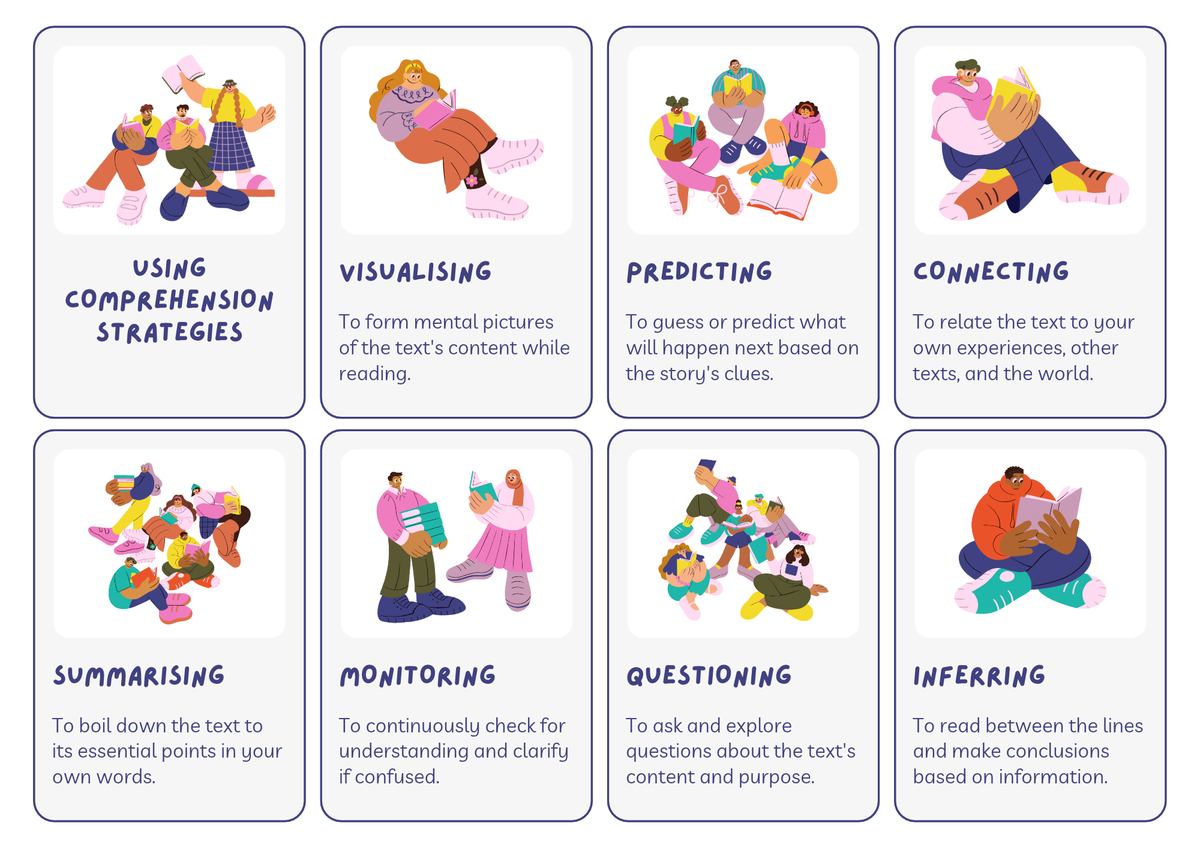
Throughout the school, students learn and practise a range of comprehension strategies, including:
- Visualising: Creating pictures in our minds as we read, using the words and details in the text.
- Predicting: Thinking about what might happen next using clues from the text and what we already know.
- Summarising: Identifying the most important information and retelling it in our own words.
- Making connections: Linking what we read to our own experiences, other texts and the wider world.
- Monitoring: Checking that what we are reading makes sense and recognising when we need to reread or seek clarification.
- Inferring: Using clues from the text and our own knowledge to work out information that is not directly stated.
- Questioning: Asking questions before, during and after reading to deepen our understanding.
These strategies develop over time. Our younger students might begin by talking about the characters in a story, describing the pictures they imagine or making simple predictions. As students progress through the grades, they learn to combine strategies, interpret more complex texts, recognise an author's message and support their ideas with evidence from their reading.
How can you support comprehension at home?
The wonderful news is that you don't need to be a teacher to help your child become a thoughtful reader! Reading together, sharing conversations and being curious about words can make a real difference. Try asking questions such as:
- What do you think will happen next?
- Can you picture what is happening? What helped you imagine that?
- Does this remind you of anything you know or have experienced?
- What do you think that word means? What clues helped you work it out?
- What is the most important thing you have learnt or discovered?
- Did anything confuse you? What could you do to help it make sense?
Remember, there is no need to ask every question or turn reading into a test. Sometimes the most valuable thing you can do is simply talk about the book, share your own thoughts and enjoy discovering new ideas together.
At Holy Family, we want our students to develop a genuine love of reading alongside the skills they need to understand and learn from texts. By building vocabulary, talking about ideas and practising comprehension strategies, we are helping our students become independent readers who can think deeply, make connections and discover the world through reading.
Happy reading!
Julianne Kelly
Literacy Leader
Learning & teaching Leader