
Chaplain's Reflection
Sons of Thunder
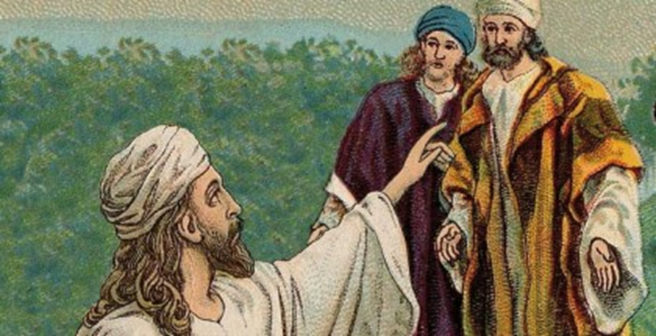
Jesus nicknamed John and his brother James “Sons of Thunder” for their impetuosity (Mk 3:17) and here they are again demanding places of honour even above their apostle colleagues. Their pretensions (Mark 10:35-45) are the setting for Jesus’ clarification about hierarchy and service in the Kingdom of God.
Scrambling over one another, wielding power over one another, seeking honour, recognition, or prestige above one another are unattractive elements of the human condition, which Jesus very specifically calls us to rise above. “This is not to happen among you… anyone who wants to be first among you must be a slave to all.”
Unlike the religious, political, and social arrangements of his time, “the normal values of society have been turned upside down among Jesus followers. Greatness is not measured by one’s degree of authority over others, but by the service one offers to others”. (Pagola p280).
The “Sons of Thunder” went on to greatness as the first martyr and the traditional scripture writer, presumably having learnt that Jesus is about serving, not being served.
Pope Francis warns the church in Evangelii Gaudium (p76) of “those who would rather be a general in a defeated army than a mere private in a unit which continues to fight”. Those “mere privates” are actually “servant leaders”, leading persistently, faithfully by example. If ever there was a need for this servant leadership in our church, our nation, and our world it is now.
We might reflect how well our parishes are developing and supporting servant leaders. Are we helping people to flourish as servant leaders functioning, not just within the church and parish, but out in the wide world? Rather than “bignoting” ourselves with exclusions and titles are we quiet, “sleeves rolled up” servant leaders, leading others to Jesus?
Cardinals?
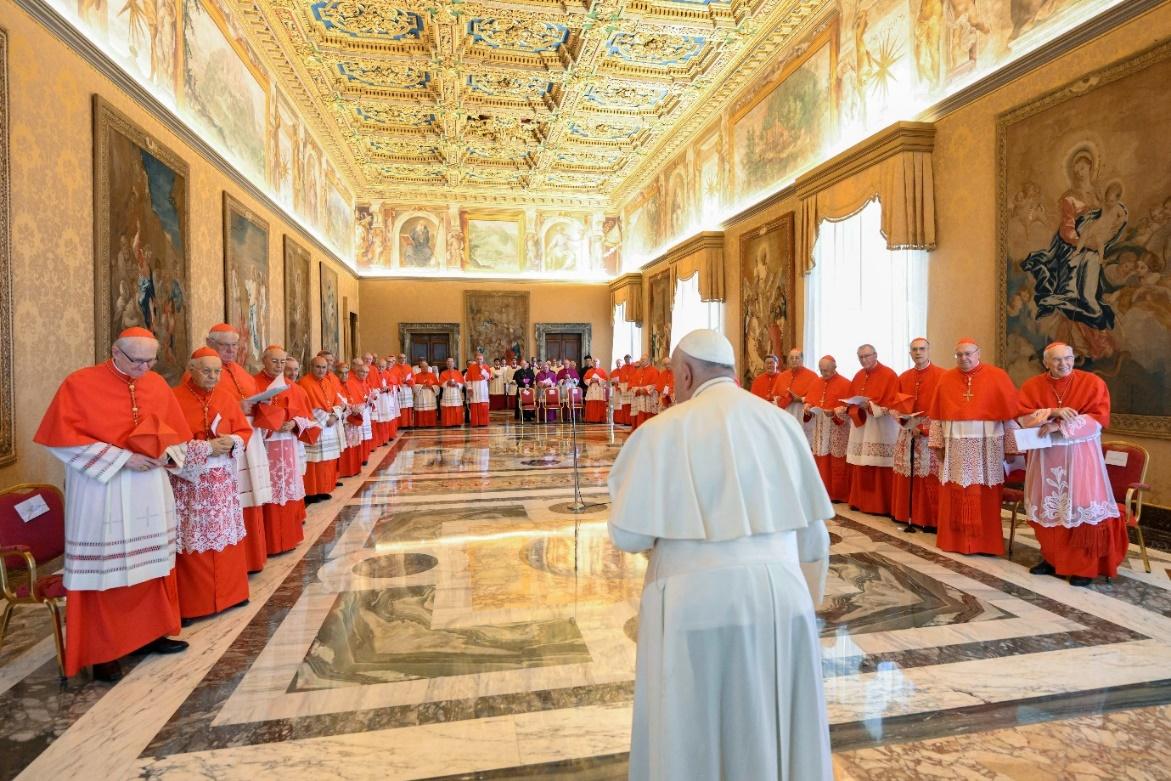
Most of us have a vague idea that “Cardinals” are the top dogs in the Church after the Pope. And that is pretty much the case. Popes create cardinals, usually for life, from amongst bishops and archbishops leading major dioceses and archdiocese around the world. Once Cardinals were mostly Italian, or certainly European, but increasingly they are appointed from far flung dioceses in Africa, Asia, Oceania, and South America. Pope Francis was the Cardinal Archbishop of Buenos Aires in Argentina. A “Cardinal’s hat” is sometimes created for heads of the “Dicasteries” (departments) and other Roman bodies governing the church. And very rarely a priest is elevated directly to Cardinal.
We at Marist Sion are delighted that, in his recent announcement of new Cardinals, Pope Francis is elevating one of the latter, Fr Timothy Radcliffe who visited our college and ran a program for our staff a few years ago.
Cardinals mostly have key jobs in the church before being made Cardinals and mostly they keep doing them with enhanced recognition and authority.
Apart from supporting the Pope around the world, the College of Cardinals has the primary role of selecting a new Pope when the incumbent Pope dies or retires. Only Cardinals less than 80 years of age get to vote for the Pope.
With Pope Francis’ addition of 21 new Cardinals on 7 December 2024, there will be 256 Cardinals, 141 of whom will be Cardinal electors (under 80 and eligible to vote for a new Pope). Cardinal Timothy Radcliffe will only have that role until he turns 80 in August next year. On the other hand, our new (and only) Australian Cardinal will be Cardinal Mykola Bychok, who has been Eparch (Bishop) of Saints Peter and Paul of Melbourne, our sister Ukrainian Catholic Church, since 2020, and is a mere 44 years old. He’ll be the youngest Cardinal and eligible to vote at conclaves until he turns 80 years of age in 2060!
As the Holy Father pointed out, the Cardinal-elects hail from around the world.
"Their origins," he said, "express the universality of the Church, which continues to proclaim God's merciful love to all people on earth”.
Deacon Mark Kelly
College Chaplain