History
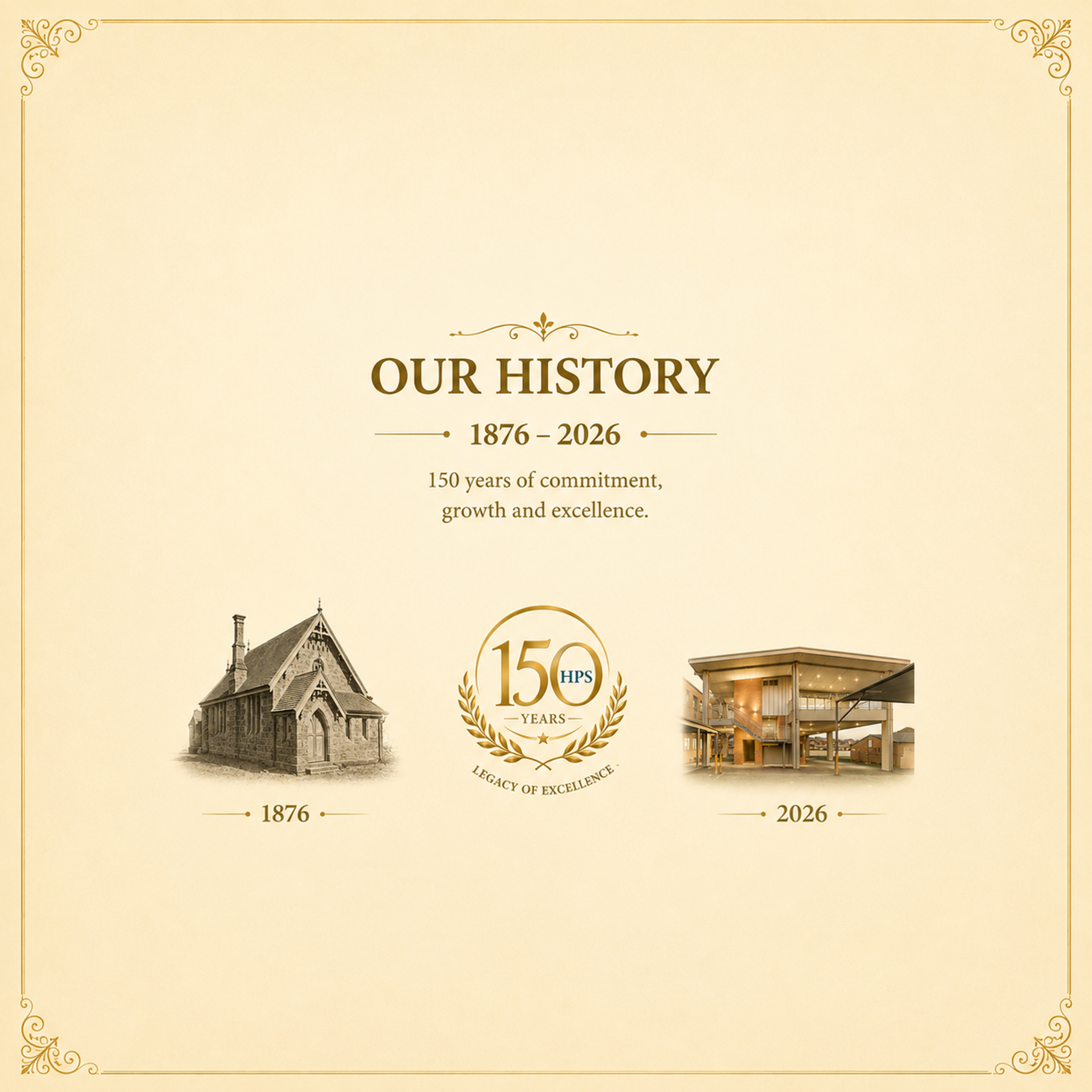
Hurstville Public School: A Proud History Since 1876
The Beginning of Public Education in Hurstville
Before Hurstville Public School was established, local children attended a Church of England school located near the present-day school site. In 1875, the school's teacher, George Palmer, announced his retirement. The local minister believed the school should not continue and instead supported the creation of a government public school for the growing community.
A committee was formed to establish the new school and selected a site of just under two acres. The land, purchased from Michael Gannon for £30, was situated beside the local Post Office and opposite the Blue Post Inn.
To strengthen their application, the committee highlighted that the nearest school was three miles away and that 104 children aged between four and fourteen lived within two miles of the proposed site.
Following an inspection by W.M. McIntyre of the Council of Education, approval was granted for a school designed to accommodate 60 students. The building, designed by architect Benjamin Backhouse, was completed in October 1876 at a cost of approximately £600.
How Hurstville Got Its Name
One of the most fascinating aspects of the school's history is that the suburb itself was named after the school.
Before 1876, the area was known as Lord's Forest or Gannon's Forest. Inspector McIntyre originally suggested the name "Forestdale" for the new school. However, the Council of Education felt there were already too many schools with "Forest" in their name and requested an alternative.
The name "Hurstville" was then proposed and adopted. It quickly became associated with the surrounding community, which eventually took the same name.
The exact origin of the word remains debated. Some believe it was inspired by the town of Hurst in Lancashire, England, or by local identities connected to the district. However, the most widely accepted explanation is that McIntyre wished to preserve the area's strong connection to its forested landscape.
The name can be interpreted as:
- Hurst – a wooded hill or grove of trees
- Ville – a collection of houses or settlement
Together, Hurstville means "a settlement among the wooded hills."
The Early Years
The school's first teacher was Michael Lappan. Although enrolment reached around 60 students, attendance was often poor, with only half attending regularly. Lappan believed the absence of a school bell tower contributed to the problem.
School Inspector Jones had a different view, attributing low attendance to Lappan's age and disciplinary methods. During an inspection, students were tested in spelling, dictation, grammar and scripture. The results were disappointing, and examples of these examination papers are still preserved in the NSW Department of Education archives today.
In 1879, Lappan left Hurstville and was replaced by Locrin Tiddy.
Growth Following the Railway
The arrival of the railway in 1884 transformed Hurstville from a small rural settlement into a rapidly growing suburb. By the late 1880s, enrolments had exceeded 200 students.
At this time, Principal Felix Thistlethwayte introduced an innovative organisational structure. Instead of separating students into Infants and Primary departments, he divided the school into Boys' and Girls' departments. He believed this would improve management of the growing student population and provide a learning environment better suited to students' needs. The Girls' Department was officially established in 1889.
Expansion to Meet Demand
As Hurstville continued to grow, so did the school. By 1913, overcrowding had become a significant issue. Acting Chief Inspector McLelland reported that the Infants Department had 400 students but only 280 seats available.
Conditions in the Primary Department were similarly crowded, with three girls sharing desks designed for two and up to nine boys seated at desks only nine feet long.
These challenges prompted further expansion and development of the school, marking the beginning of a long tradition of growth that continues today.
A School at the Heart of the Community
Since opening its doors in 1876, Hurstville Public School has evolved alongside the community it helped to name. Over nearly 150 years, the school has educated generations of students while adapting to the changing needs of one of Sydney's most diverse and dynamic communities.
Today, Hurstville Public School stands as one of New South Wales' oldest and most respected public schools, proudly continuing its tradition of excellence, inclusion and lifelong learning.