Wellbeing Corner 2
By Ryo Sugihara








 Glen Waverley Primary School
Wellbeing Corner 2
By Ryo Sugihara
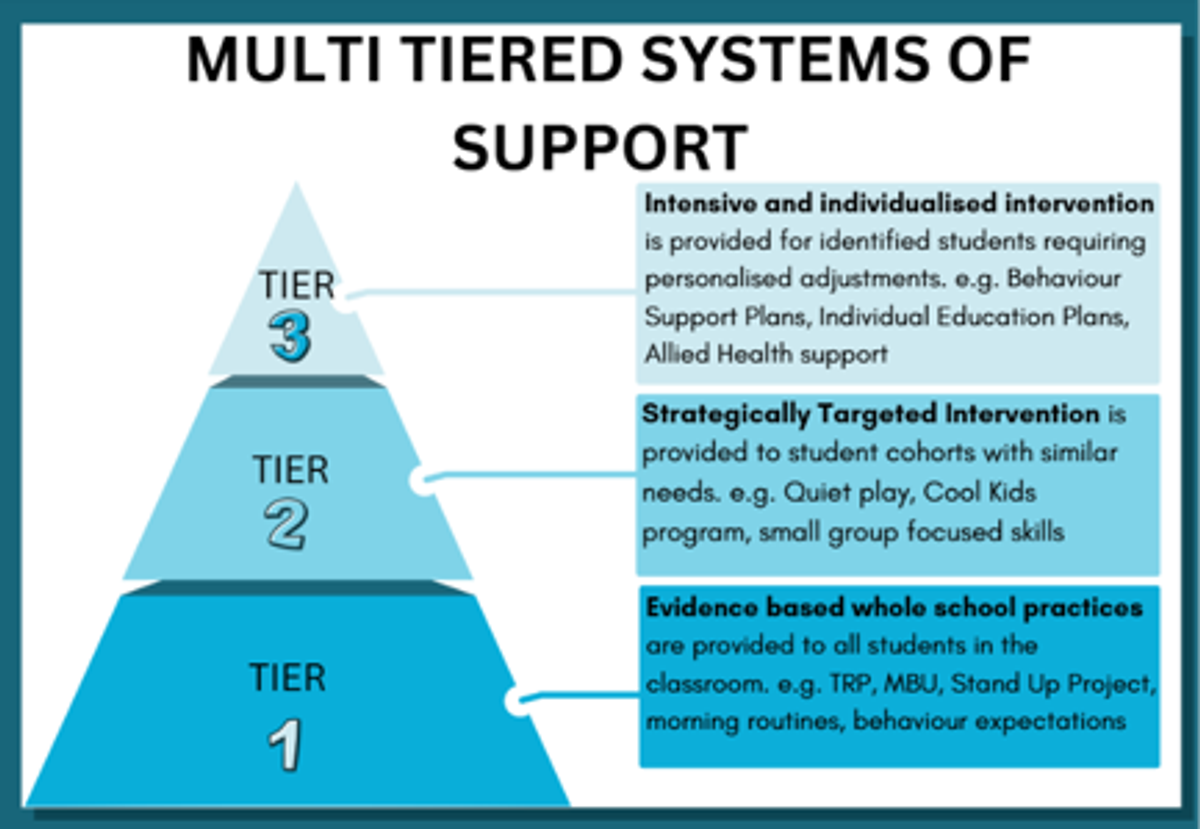
Glen Waverley Primary School we have a highly robust Wellbeing program which encompasses a range of mental health and wellbeing areas including social, emotional and physical wellbeing, both in the offline and online environment. The wide range of programs and initiatives across the school can be organized in tiers which we call the Multi-Tiered System of Support (MTSS), where Tier 1 initiatives are delivered to all students across the school, Tier 2 initiatives are delivered to cohorts of students and Tier 3 initiatives are targeted at individual students. It can be visualized in the following diagram below:
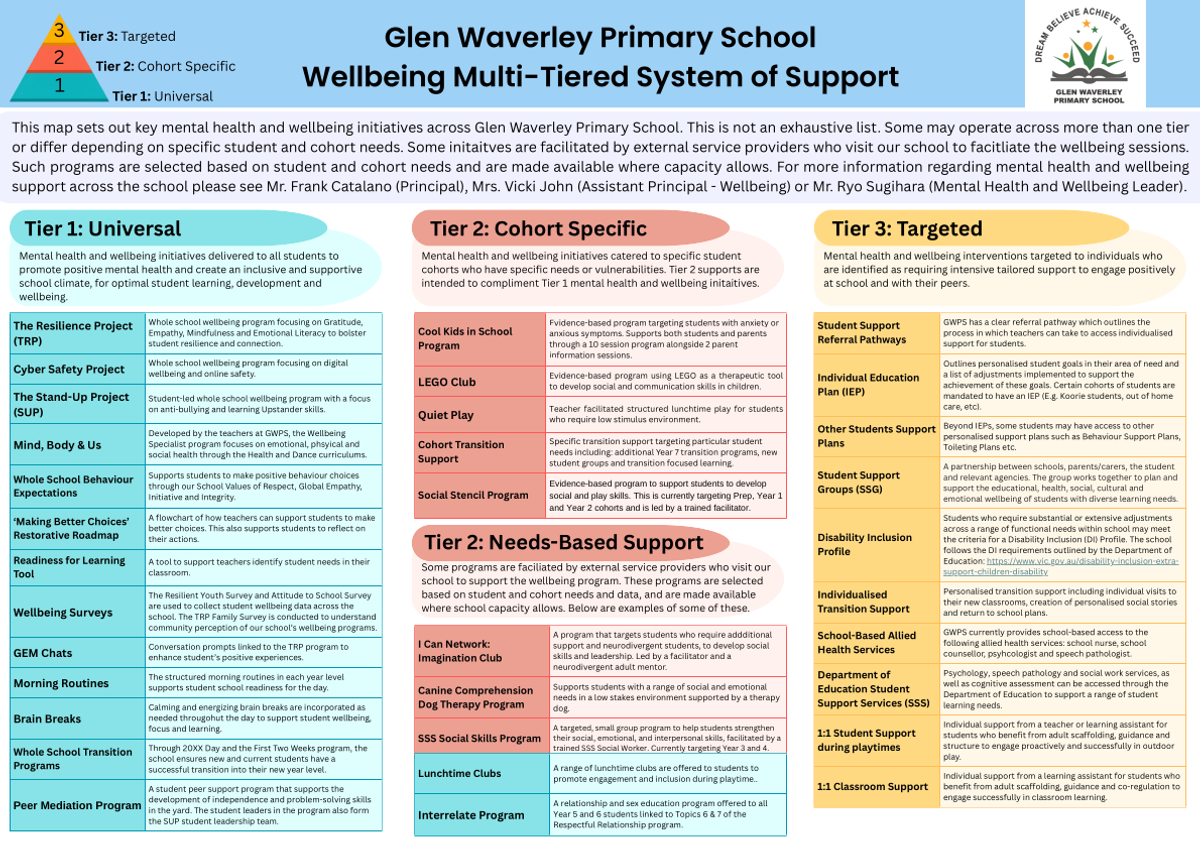
In this edition of the Wellbeing Corner, we will be introducing you to the plethora of wellbeing support that we offer at our school through our MTSS one page reference map:
Tier 1: Universal Wellbeing Support
Universal Wellbeing Support are mental health and wellbeing initiatives that are delivered to all students to promote positive mental health and create an inclusive and supportive school climate for optimal student learning, development and wellbeing. These are rolled out across the school and are mostly proactive approaches to wellbeing. These include initiatives such as:
Tier 1 support is intended to be a proactive approach to wellbeing. Through regular wellbeing practices, students learn and embed skills and strategies that can help them through mental health and wellbeing challenges before they arise, ensuring they are more readily able to cope with challenges and demonstrate resilience.
Tier 2: Cohort and Needs-Based Wellbeing Support
Targeted Wellbeing Support are mental health and wellbeing initiatives catered to specific student cohorts who have specific needs or vulnerabilities. Tier 2 support are intended to compliment Tier 1 mental health and wellbeing initiatives by extending key wellbeing learning from Tier 1 and diving deeper to target these specific needs. Some programs are in this tier are facilitated by external service providers who visit our school to support the wellbeing program. These programs are selected based on student and cohort needs and data, and are made available where school capacity allows. Initiatives offered within this tier at our school may include, but are not limited to:
Tier 2 support can be considered as being both proactive and reactive. It is reactive as it is offered as a response to specific student needs and are targeted to those student cohorts who have an identified vulnerability. It is also proactive as the students are provided with additional opportunities to learn and practice the wellbeing skills in a facilitated environment.
Tier 3: Targeted Individualised Wellbeing Support
Targeted and individualised wellbeing support are mental health and wellbeing interventions targeted to individuals who are identified as requiring intensive tailored support to engage positively at school and with their peers. Tier 3 support involves extensive levels of intervention and often involves the engagement of a range of stakeholders to better cater for the individual student needs. At Glen Waverley Primary School this might look like, but not limited to:
As you can see, our school offers an extensive range of wellbeing support and initiatives as part of our commitment to good student mental health and wellbeing. If you would like to learn more about any of the wellbeing support offered within our school, please feel free to reach out to me on ryo.sugihara@education.vic.gov.au or chat to me in person at school!
Ryo Sugihara
Mental Health and Wellbeing Leader