
Letter to Family and Friends
Teach Like a Champion: Excellence in Every Classroom
Dear Families,
This year, our teaching staff has been training in Teach Like a Champion, a framework developed by educator Doug Lemov after studying teachers who consistently achieved exceptional results across US schools. Lemov identified the specific strategies these teachers used and turned them into teachable, trainable techniques. The rationale is simple: great teaching is not a mysterious gift reserved for the naturally talented - it is a craft built on concrete, repeatable practices any teacher can learn.
We believe this aligns beautifully with a biblical worldview. Scripture calls us to excellence in all things -
"Whatever you do, work heartily, as for the Lord..." - Colossians 3:23
Every student is made in the image of God, gifted with mind and potential, and deserving of instruction that draws the best out of them.
One key idea underpinning the program is managing cognitive load. Researchers distinguish between long-term memory, which can store vast amounts of knowledge, and working memory, the small mental "workbench" we use to think in the moment. Working memory is immediately accessible, but extremely limited in capacity, so when students are asked to juggle too much new information, instructions, or noise at once, their thinking actually breaks down rather than deepens. Lemov urges teachers to roll out new content in manageable chunks and constantly embed short sequences of practice and retrieval, rather than overwhelming students all at once. A major way our teachers do this is through developing automatic, routine procedures for everyday classroom moments - transitioning between activities or starting a lesson, thereby freeing up students' limited mental energy for the actual content rather than working out what to do next.
A school-wide approach matters because consistency compounds. When teachers use shared language, routines, and techniques, students experience coherent expectations as they move from classroom to classroom and year to year, reducing the mental load of constantly relearning new rules.
A few techniques in use across our school:
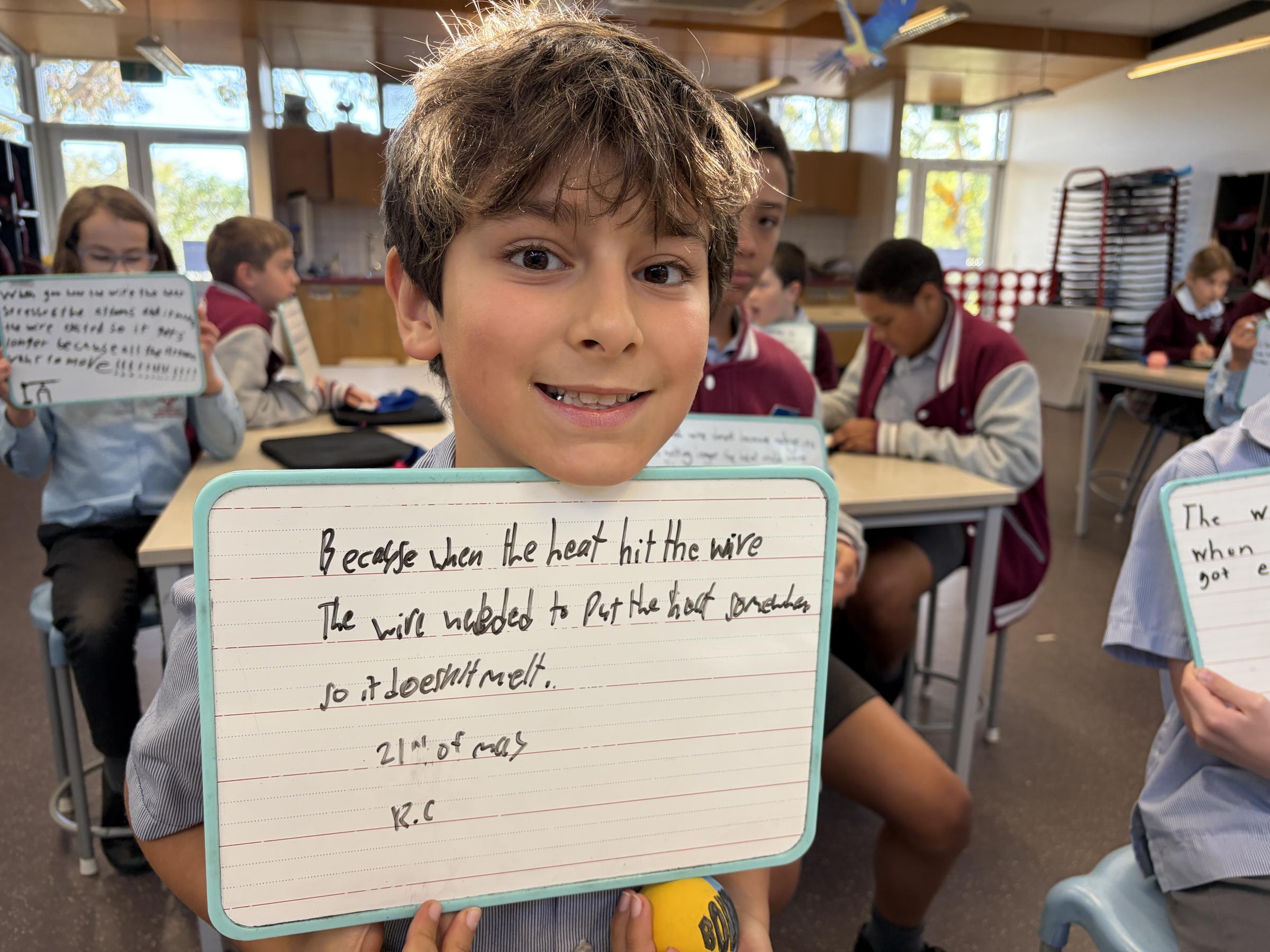
Check for Understanding – teachers continually gather quick evidence of how well students grasp the material, catching misunderstandings early before they compound. One key tool we use across the school is mini whiteboards, with consistent routines for their use in every classroom, allowing every student to show their thinking and giving teachers an instant snapshot of who needs more support.
Turn and Talk – before a whole-class discussion, students briefly discuss a question with a partner, giving every child a low-pressure chance to rehearse their thinking out loud before sharing it more widely.
Habits of Attention – routines that help students build strong attentional habits including sitting up, looking at the person speaking and showing appreciation for their classmates’ ideas and perspectives.
We've already noticed real shifts in student focus and engagement, and we're looking forward to seeing that continue to grow.
Grace and peace!
Julie Wicks
Deputy Principal