Term Four News
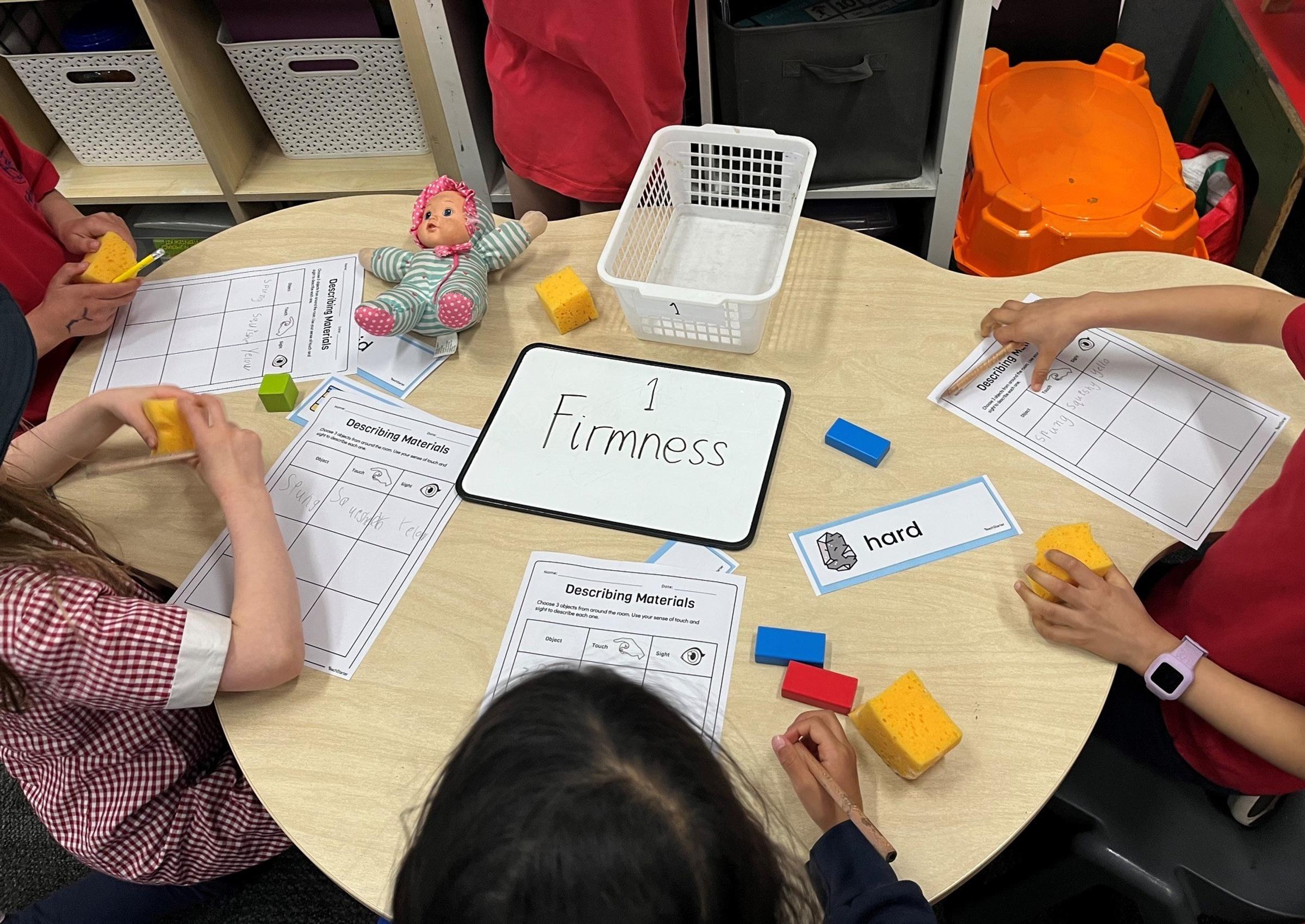
Our Final Term of Foundation!
Only one more term of Foundation to go! We cannot believe how fast this year has flown by. We have had an amazing year so far and have been blown away by how much the children have grown into curious, kind and enthusiastic learners. They have accomplished so much this year already – we are so excited to see what else they can achieve this term as they continue to develop their independence and love for learning.
FA - Lucy
FB - Tash
FC - Katie
FA - Lucy
FB - Tash
FC - Katie
Literacy Block
Reading
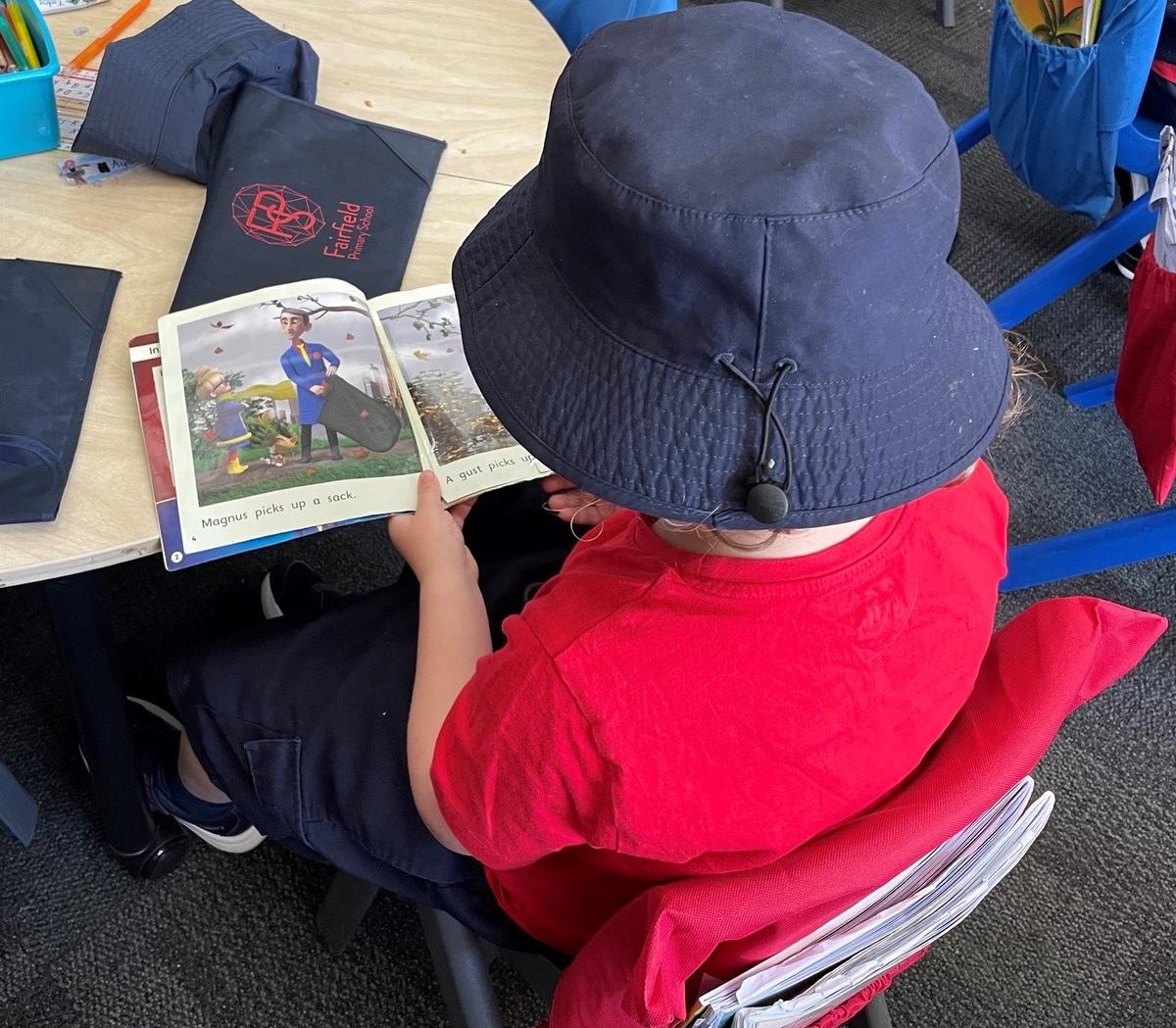
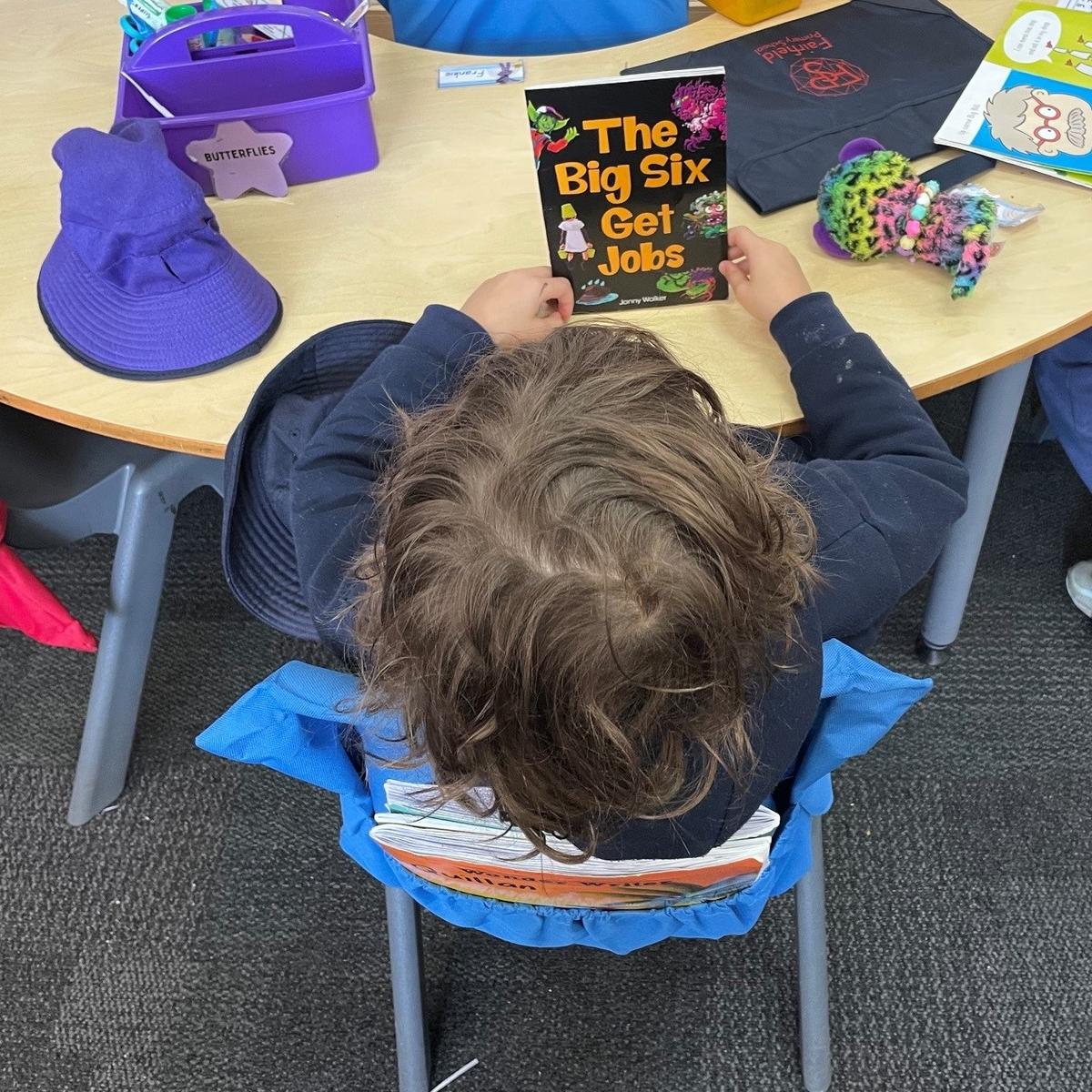
This term students will continue to read with partners and out loud by themselves to focus on their reading fluency, heart word recognition and letter-sound knowledge.
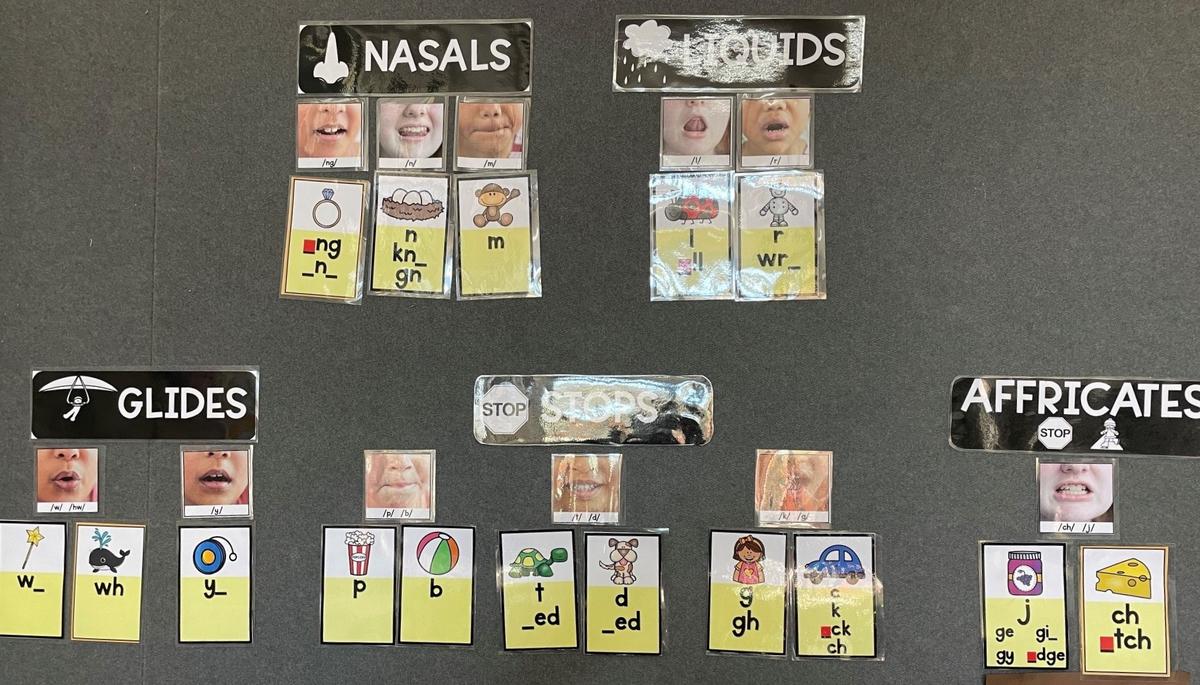
As a class, we will continue focusing on strengthening students’ phonemic awareness, spelling, recognition of heart words, fluency and decoding skills. We are currently focusing on the digraphs ‘ph’ and ‘wh’, and will begin looking at long vowel sounds and teams ai, ay, ea, ee, oa, igh, ie and robber y – where the ‘y’ makes long i and long e.
Things you can do at home to support this learning:
- Read every night, filling in the Little Learner reading diaries together and tracking how many days they have read.
- Encourage your child to read a sentence or paragraph more than once to help them with word recognition and accuracy. You may notice that your child may be bringing home the same book twice, this is okay as it is developing their phonics fluency.
- Looking for long vowel sounds in books, signs and everyday writing, such as rain, play, feet, boat and night.
- While reading, you might like to focus on a particular sound or pattern. For example, does your child’s book have a long /a/ sound? What letters are working to make that sound?
- Look at the heart words in the book that your child is reading, focus on these words throughout the week when reading and see where you can find them in everyday life.
- Ask your child questions about the story they have just read, or stories that you have read to them, such as:
- Do you already know anything about [the topic of the book]?
- Did you learn anything from this book?
- What was the story about? Did it remind you of any other stories you know?
- Were there any new words you read?
- What question would you ask the main character or author?
- Ask your student what new words they have learned at school.
- Take the time to point out words and sounds in the environment, e.g., the ‘sh’ in shops or the soft ‘c’ in a circle.
- Share stories with your family and encourage your child to share stories with you. These can be imagined or real life. Prompt them to elaborate and add details by asking questions like, ‘what happened next?’ or ‘why did they do that?’
Writing
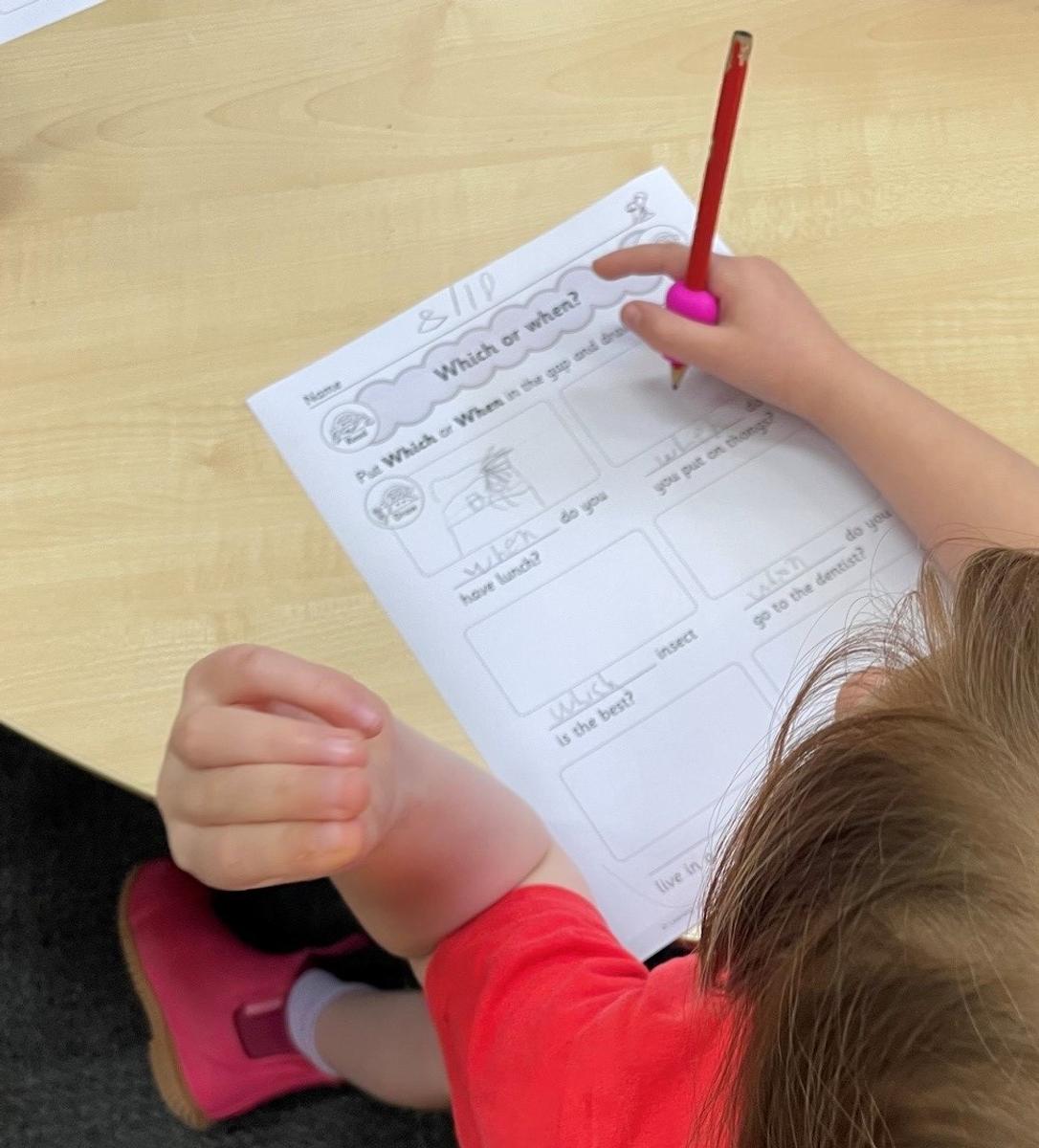
The focus for writing this term will be to develop their ability to write a detailed and descriptive paragraph. Students are continuing to expand on their ideas and to make sentences interesting. This can be done by adding 'when' or 'why' an event occurred, or by adding adjectives to a boring sentence, e.g., ‘The dog ran.’ to ‘At midnight, the cheeky dog ran through the woods.’ Throughout these writing activities, students will continue to practise spacing between their words and their use of punctuation.
Students are investigating syntax and how to correctly form sentences. Students are given opportunities to regularly revise the concepts that we are investigating within the context of their own writing. Students will investigate the difference between a sentence and a fragment, a sentence needs a who/what (subject) and do (verb) and a fragment is incomplete.
Students are exploring dictation where they listen to a simple sentence which focuses on the sounds they have previously learnt. Dictation benefits students by improving spelling and phonics, enhancing their listening skills and concentration, developing handwriting and punctuation, and reviewing sentence structure. An example of a sentence is, 'Gran has the best rings.’ This sentence helps to revise blends, the suffix ‘s’ and the ‘ng’ digraph.
Students are building upon their editing and correction skills, by reading a simple sentence and finding errors in spelling and punctuation. Students then fix these sentences and share their observations together. We are focusing on boundary punctuation, capital letters for names and the correct spelling of high frequency words. An example of a sentence used in this process is, 'en SpRinG loocY Picks FLoweRs'.
Some of the writing strategies that we are working on in the classroom are:
- Brainstorming ideas by drawing a picture or discussing the sentence with a friend or a teacher.
- Focusing on using lowercase letters.
- Mapping each word by its sounds, and writing a letter or letters to match. This may show up as invented spelling, such as ‘prte’ for ‘party’, which is an indication of strong phonemic awareness.
- Ending the sentence with punctuation.
- Using their finger to mark a space between each word.
- Extending their writing with adjectives, when, where, why, and how.
Things you can do at home to support this learning:
- Practise correctly forming lowercase and uppercase letters at home, using dotted thirds.
- Encourage your child to write in all of kinds of real-life contexts. They can stretch out the sounds for the shopping lists, write letters to relatives or friends, write stories, keep a journal, etc.
- Practise using finger spaces between words.
- When writing with your child, celebrate plausible attempts at spelling e.g. ‘pk’ or ‘prk’ for ‘park’.
Numeracy
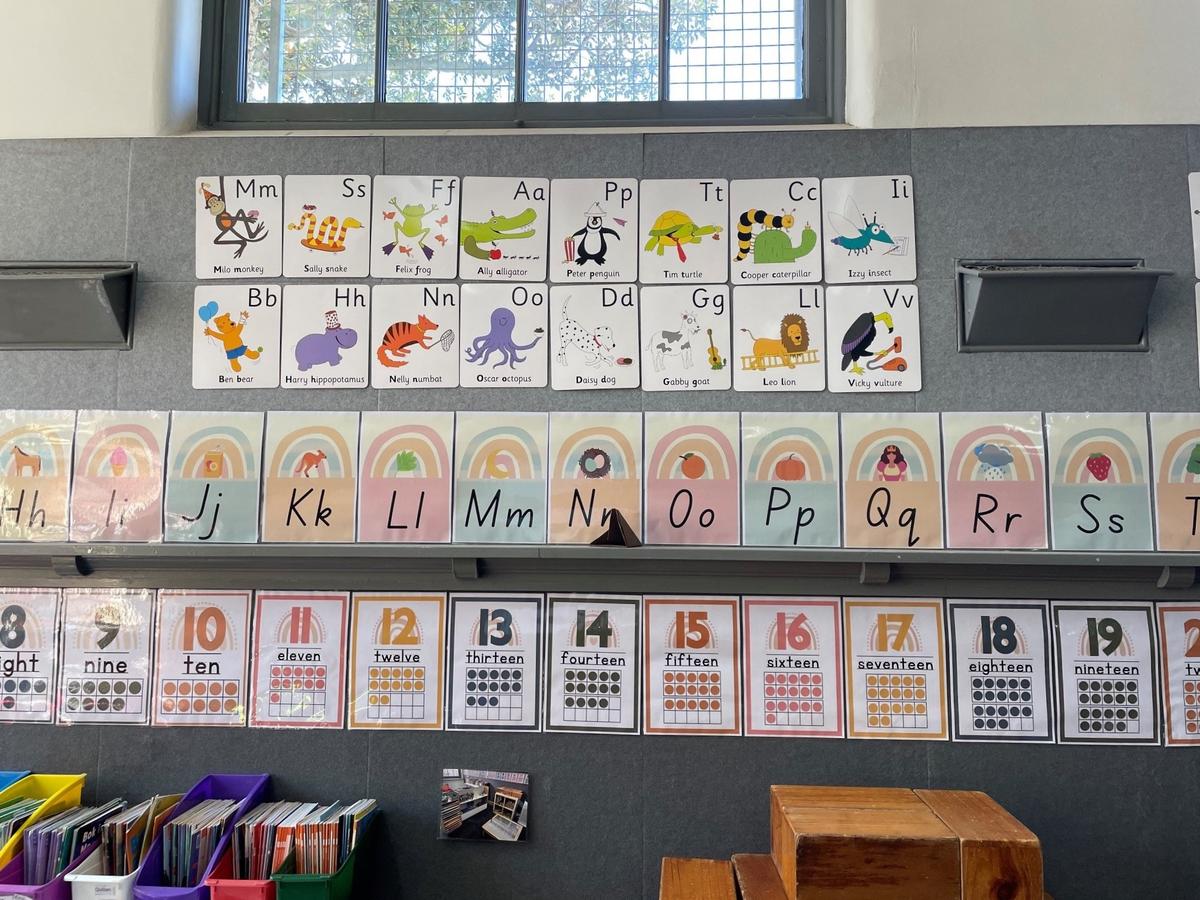
We will begin the term exploring the concepts of sharing and grouping which act as the foundations of multiplication and division. Students develop an understanding of how to evenly share even and odd collections between two to three groups.
Students will explore what it means for a collection to be even, and identify which numbers and amounts can be shared equally between two groups with no remainder.
As the term progresses, students will use concrete materials to investigate all the possible groups in collections to 20. I.e., 10 can be split into 10 groups of 1, 2 groups of 5, 5 groups of 2 and 1 group of 10.
Students will also explore real life problems and use their knowledge to solve them. For example, Lucy had 12 marbles and she wanted to share them equally with Tash and Katie.
Create a drawing to show how Lucy could share the marbles.

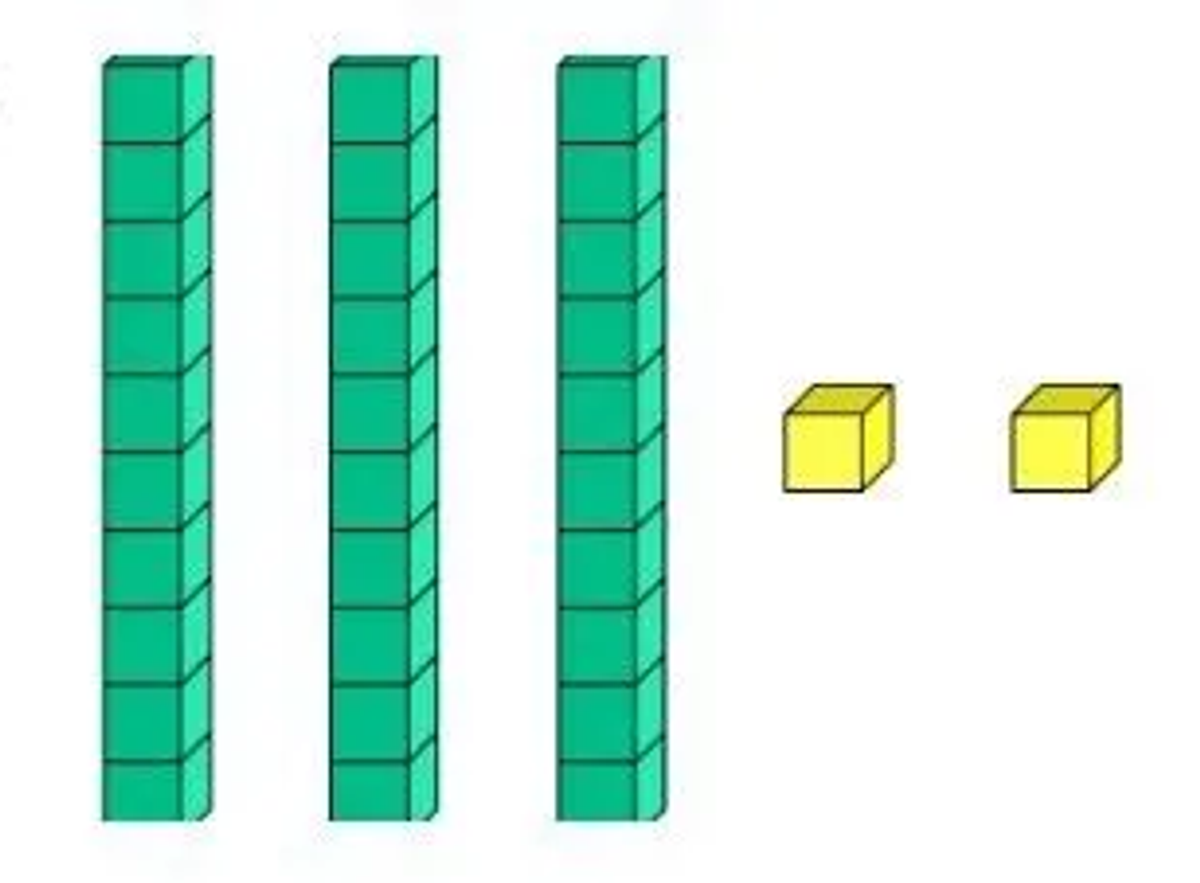
We will continue to develop the students' knowledge of numbers and place value by investigating numbers beyond 20. We will learn to read, write and represent numbers using MAB blocks (pictured below). See example below for the number 32:
We will then move on to exploring mass and capacity, where students will investigate and compare the mass of different objects in the classroom. They will explore concepts such as heavier, lighter, the same mass, and make predictions before testing and comparing objects. Students will also investigate capacity through hands-on activities by exploring how much different containers can hold, using language such as full, empty, holds more, holds less and about the same.
The students will also explore the notes and coins that we use as currency in Australia. They will use their understanding of addition and subtraction to explore simple financial transactions using whole dollar amounts. E.g., If my burger cost $9, how many $1 coins will I need to pay for it? This concept will be further explored through role play where students can pretend to own or buy from a shop to purchase items using whole dollars.
To support this learning at home:
- Count forwards to and backwards from a more challenging number.
- Ask your child questions like, ‘What number is before 15?’ or ‘What number is 3 before 20?’ Use a hundreds chart or number chart to help your child work out these questions.
- Incorporate maths into your daily life – shopping trips, cooking, etc.
- Use the vocabulary ‘take away’ and ‘how many left?’ if talking about subtraction at home.
- Give situations for sharing things equally. E.g., If there are 8 cookies and 4 people, can you share them equally amongst them?
- Use concrete materials to support subtraction conversations. This does not have to be unifix or counters but can be something authentic to what you are doing. E.g., We had 12 eggs. If we use 3 in this cake, how many will be left?
- Provide your child with scenarios in which they need to problem solve using their knowledge of subtraction and addition. For example, 'There are 20 friends at the party. 3 left to go and get pizza, 2 went to the park, and only 1 came back. How many friends are left at the party?' Or 'There are 15 cows on the farm. 2 paddocks. How could the cows be split?'
Design & Technology
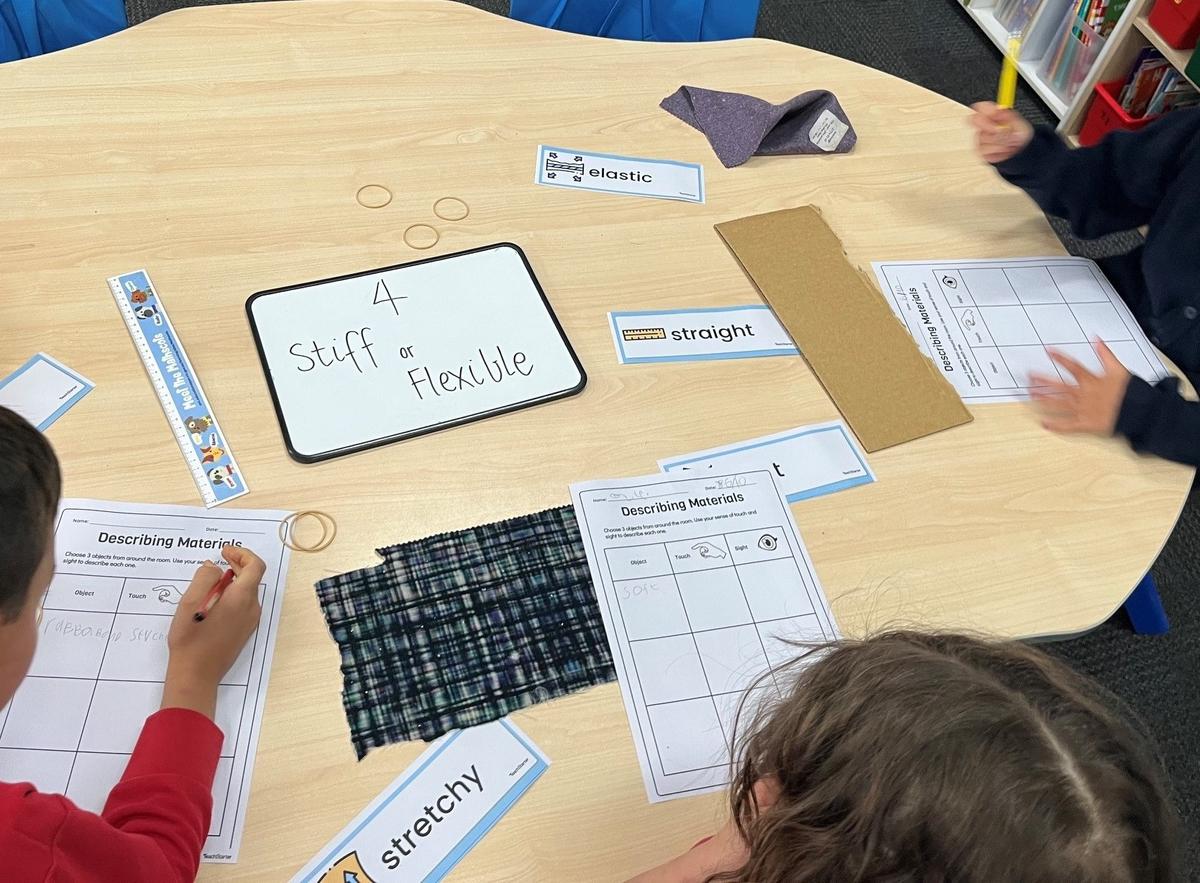
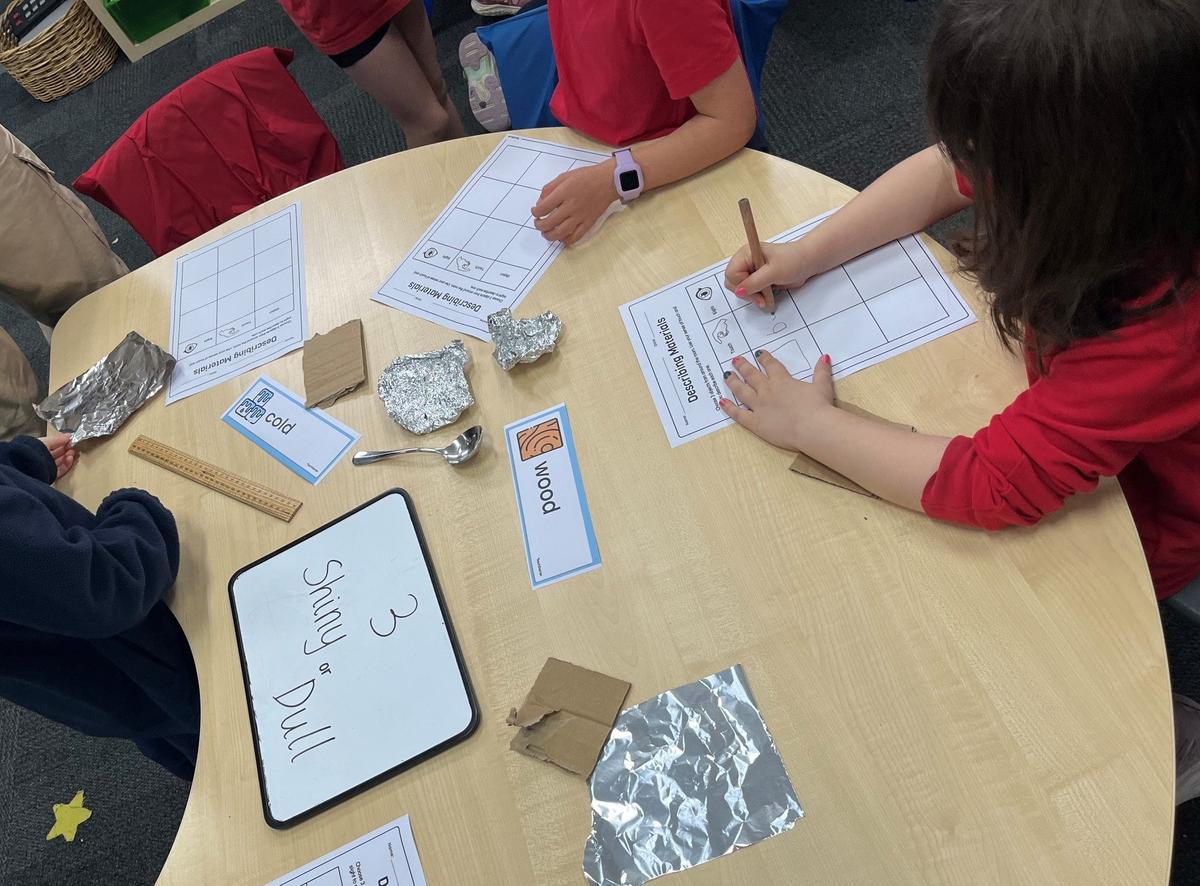
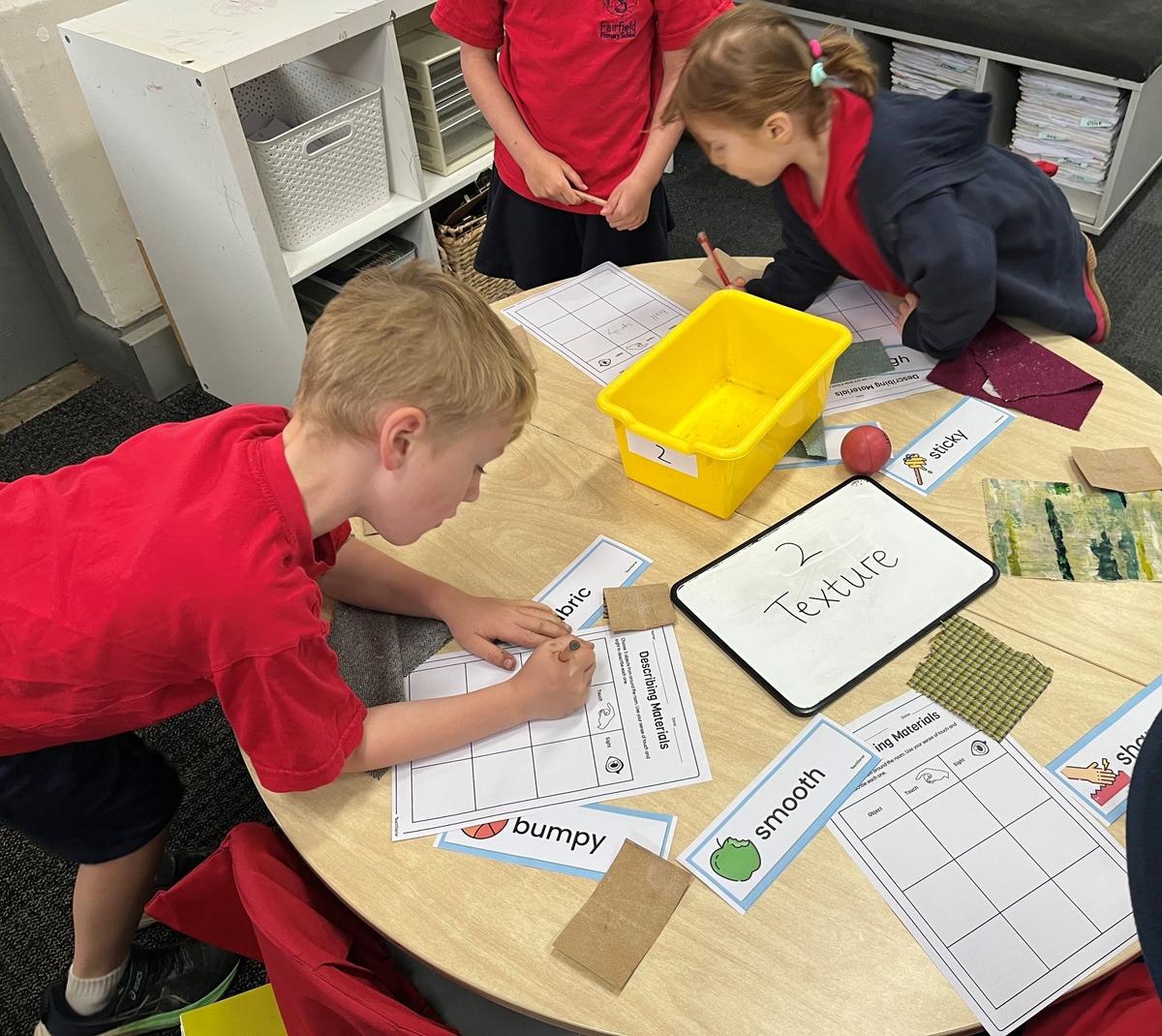
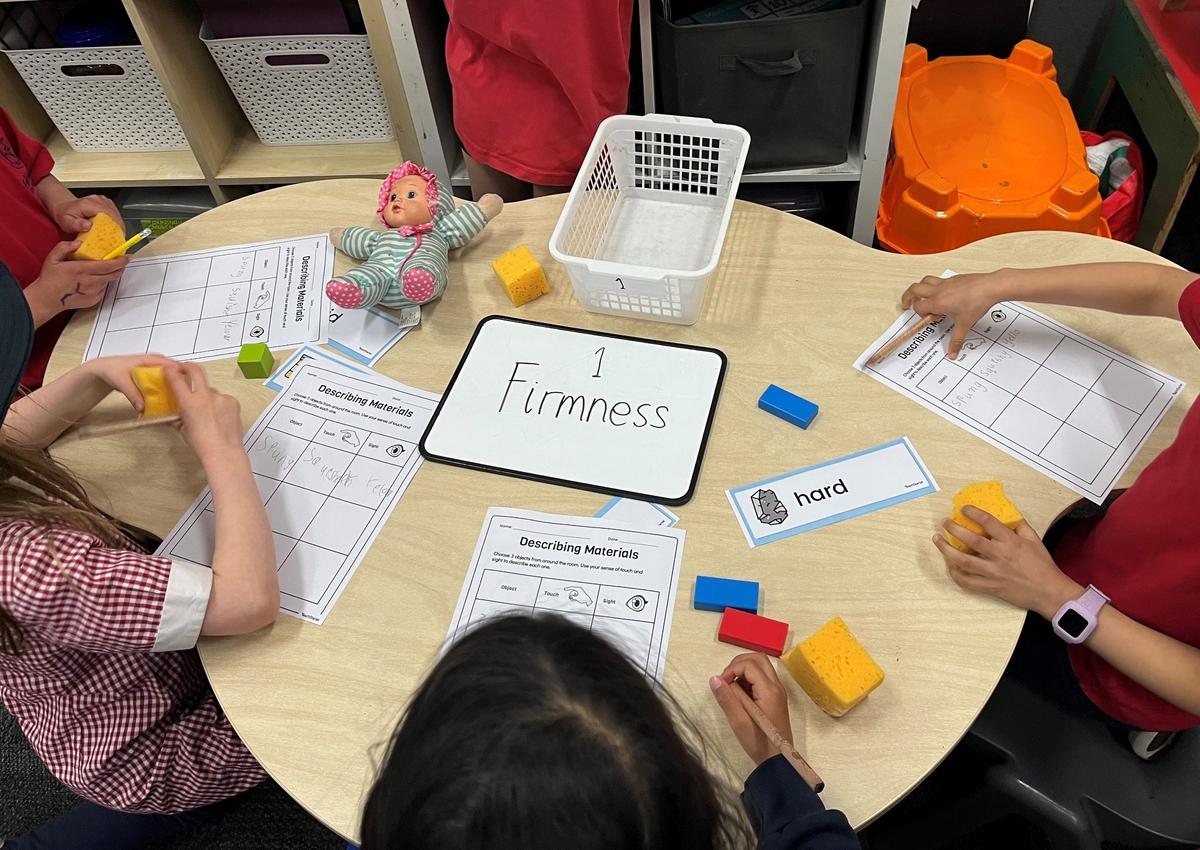
This term, our students will be exploring the world of Design and Technology. They will investigate a range of materials, including plastic, wood and metal, and explore their different properties. Students will sort and group materials based on their characteristics and consider why particular materials are chosen for different purposes. We will then explore how materials are used in design, including how designed solutions can help objects float, slide and fly. Students will also investigate how designed solutions can meet the needs of individuals, families and communities.
Health & Wellbeing
As part of the Resilience, Rights and Respectful Relationships (RRRR) program, Foundation students are developing their personal and cultural strengths and their understanding of positive gender relationships.
Specialist Subjects
Performing Arts
We are preparing for our Celebration of Learning held on Wednesday 9 December. Students will be performing some dances and a special item for their grown-ups. Bring your dancing shoes! The focus of these dances are learning about musical form and following simple choreography with our peers.
Physical Education
At the start of each lesson this term we will be warming up using skipping ropes. Students will be given instructions on how to hold and swing a skipping rope, and be given a chance to explore skipping. Students will also continue to continue practising their fundamental motor skills such as throw and strike.
Science
Continuing on from last term’s learning covering Physical Science, the students are moving on from sound to focusing on movement. They will be looking at how the way objects move depends on a variety of factors including their size, shape and material. Foundation students will participate in many hands-on investigations to observe how toys move and compare how objects of different sizes and similar shapes roll and bounce.
Visual Arts
Our Hero’s Gallery at ART FOR ALL proved to be so inspirational. I hope you had an opportunity to see your artist’s work proudly exhibited beside Vincent Namatjira’s.
This term, students will continue to work with textile art, collaging and weaving fabrics.
They will also explore the modelling medium of clay, moulding balls, coils, pinch pots and slabs.
French
Students are developing their morning routine by using the calendar to identify the days of the week and talk about aujourd’hui (today) and demain (tomorrow). They are learning to describe the weather (la météo) and identify the current season (les saisons), while revising vocabulary from last term. Through songs, rhymes and familiar words, students are also beginning to recognise French sounds and develop their listening and speaking skills.
Here's to a terrific final term!
Lucy, Tash, Katie & the Specialist Teachers