
Wellbeing News
Learning to Resolve Conflict
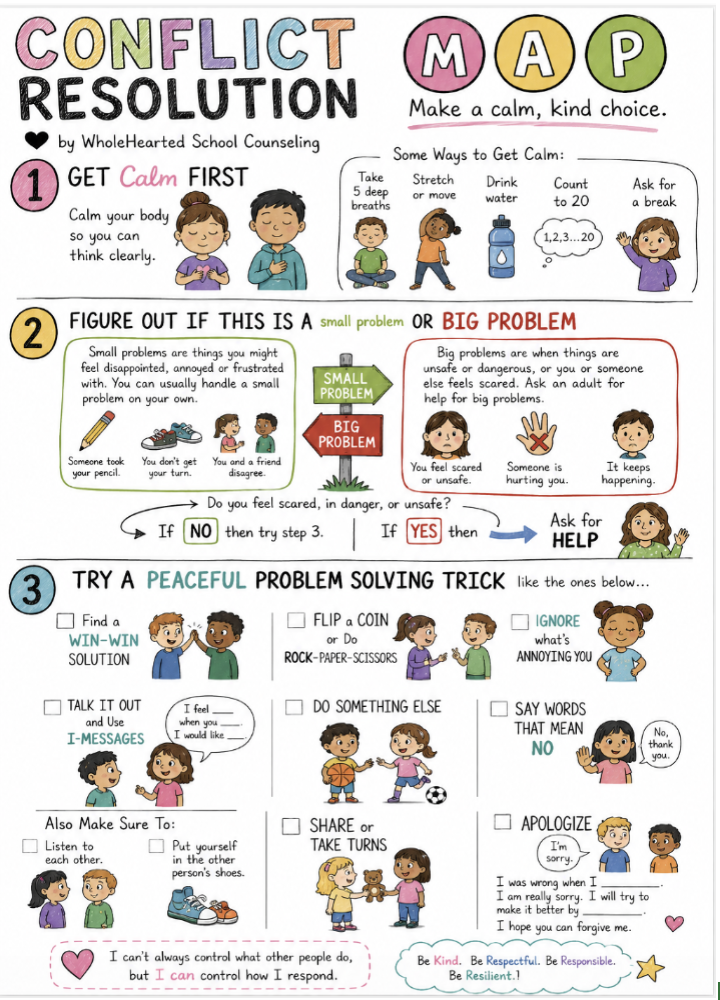
Over the last fortnight, our school-wide PBL expectation focus has been “I resolve conflict and problems calmly.”
Students are learning that disagreements and problems are a normal part of friendships, learning and playing with others. Our focus is on teaching students how to respond calmly, respectfully and safely when these situations arise.
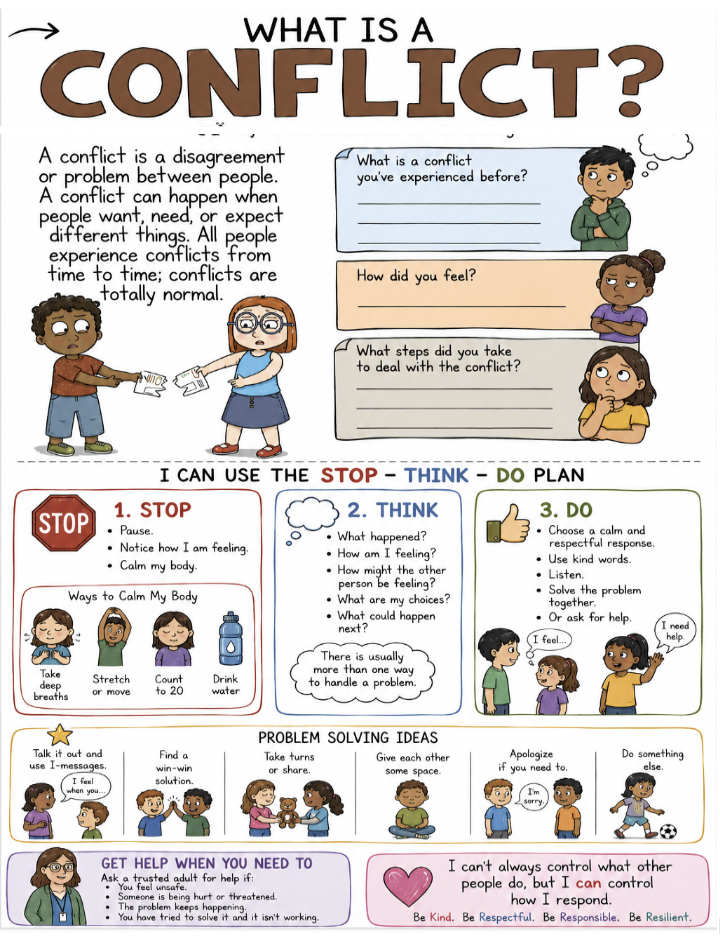
Students are learning to use the simple STOP – THINK – DO strategy:
STOP – Pause, notice how you are feeling and calm your body before reacting.
THINK – What happened? How might the other person be feeling? What choices do I have?
DO – Choose a safe, respectful and fair way to respond.
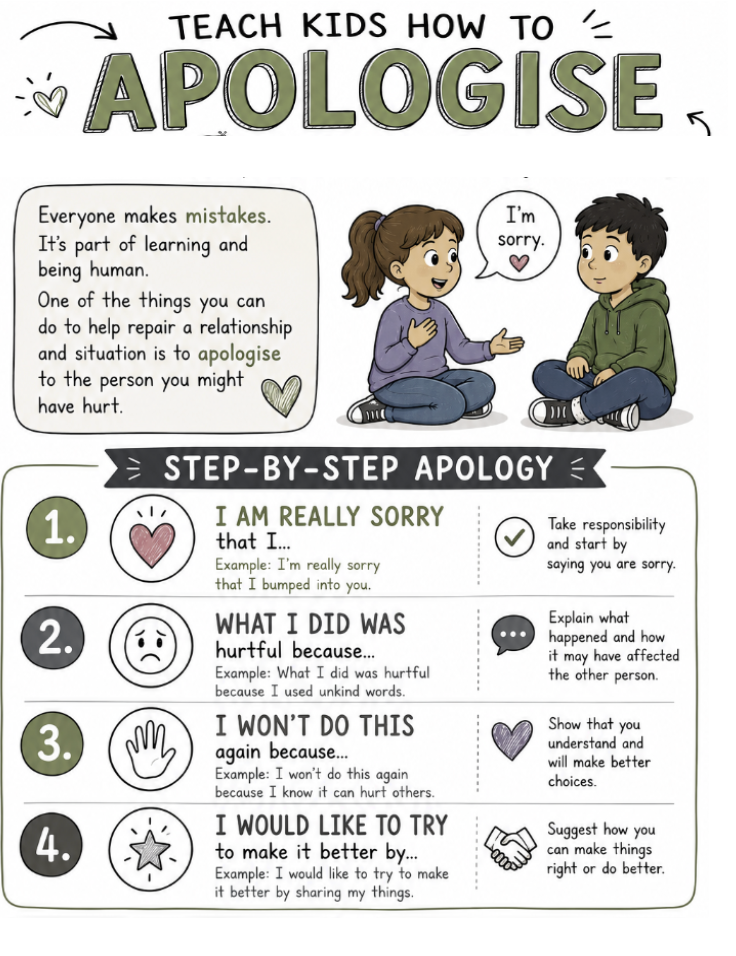
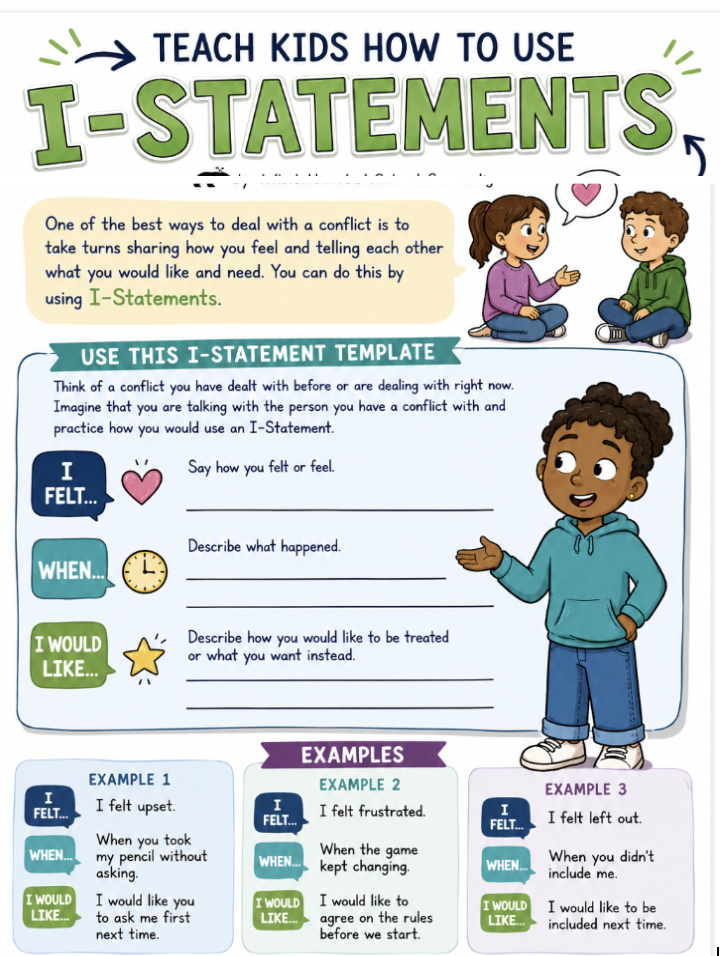
We are explicitly teaching students what this can look and sound like in everyday situations. This might include using a calm voice, listening to the other person, taking turns to explain what happened, walking away when needed, finding a fair solution, apologising or asking an adult for support.
Why is learning to manage conflict important?
Research tells us that disagreements and conflict are a normal part of children’s everyday social interactions. Learning to navigate these moments provides children with opportunities to develop important skills such as understanding emotions, seeing another person’s perspective, communicating their needs, considering different solutions and making respectful choices.
Rather than trying to remove all conflict from children’s experiences, we want to equip them with the skills to manage everyday disagreements safely and appropriately. Research supports explicitly teaching children skills such as emotional regulation, perspective-taking, social problem-solving and constructive conflict resolution. By teaching and practising STOP – THINK – DO, we are helping students learn to pause, regulate their response, consider their options and choose a constructive way forward.
An important part of this learning is teaching students the difference between everyday conflict and bullying. Disagreements, arguments and unkind interactions are different from bullying, but they still need to be acknowledged and responded to appropriately. Conflict can occur when students have different ideas, wants or perspectives.
We are also reminding students that resolving a problem does not mean they have to agree with everyone or manage every situation on their own. Seeking help is a positive and appropriate response when they feel unsafe, someone is being hurt or a problem continues after they have tried to resolve it.
Supporting this learning at home
Encouraging your child to pause before reacting and talk through everyday disagreements and problems.
Using the same “Stop – Think – Do” language at home can help children slow down, think about what has happened and consider different ways they could respond.
An important part of resolving conflict is perspective-taking. Encourage your child to think about the situation from more than one point of view and consider what the other person may have been thinking, feeling or experiencing.
When children share a disagreement, it can also be helpful to stay curious rather than trying to determine who was “right” or “wrong”. Children may experience and remember the same situation differently. Listening to your child’s perspective while gently encouraging them to consider what the other person may have experienced can help move the conversation from blame towards understanding and problem-solving.
Where appropriate, giving children time to think through possible solutions rather than immediately solving the problem for them can also help build their confidence and independence.
Some helpful questions might be:
“What happened?”
“How were you feeling?”
“What do you think the other person thought happened?”
“How might they have been feeling?”
“Could there be another way of looking at it?”
“What could you do next?”
“What might help make things better?”
“What could you do differently next time?”
“Do you think you can work through this, or do you need some help?”
Focusing on what happens next, rather than only on what went wrong, helps children see everyday conflict as something they can learn to navigate. By using consistent language at school and at home, we can help students develop the skills to listen to others, consider different perspectives, problem-solve and manage everyday conflict calmly and respectfully.
Nationally Consistent Collection of Data on School Students with Disability (NCCD)
Every year, all schools in Australia participate in the Nationally Consistent Collection of Data on School Students with Disability (NCCD). The NCCD is an annual collection undertaken as part of the School Census.
The NCCD collects information about:
- the number of students receiving reasonable adjustments at school because of disability
- the level of adjustment provided to support students to access and participate in education on the same basis as students without disability.
Students are included in the NCCD when they receive reasonable adjustments at school because of disability. These adjustments support students to access and participate in education on the same basis as students without disability.
The NCCD is underpinned by the Disability Discrimination Act 1992 and the Disability Standards for Education 2005.
Information collected through the NCCD is handled in accordance with privacy requirements.
The NCCD helps schools and education authorities to:
- recognise and understand the adjustments being provided for students with disability;
- reflect on and strengthen support for students with disability;
- develop consistent practices for identifying and reviewing reasonable adjustments; and
- improve access, participation and educational outcomes for students with disability.