Literacy Update























 St Fidelis' Catholic Primary School
Reading at home: the importance of oral language
Over the past few weeks, we have looked at reading fluency, vocabulary and background knowledge. This week, we are focusing on oral language and the role that talking and listening play in reading development.
Oral language includes listening, speaking, understanding words, forming sentences and explaining ideas. These skills are closely connected to reading because children need to understand language to make sense of written text.
A child may be able to read the words in a sentence but struggle to explain what the sentence means. Talking about ideas, experiences and texts helps children develop the language they need to understand what they read.
Conversations also provide opportunities for children to practise new vocabulary, share background knowledge, ask questions and explain their thinking.
How can you help at home?
Talk about everyday experiences. Ask your child to tell you about their day, a game they played, something they learnt or a place they visited. Encourage them to explain what happened and why.
Ask questions that encourage more than a one-word answer. Instead of asking, "Did you enjoy school?", try asking, "What was something you learnt today?" or "What was the most interesting part of your day?"
Read together and talk about the text. Pause during a story to discuss what is happening, what a character might be thinking or what could happen next. With information books, talk about the facts and ideas being presented.
Encourage your child to explain their thinking. If your child gives an answer, ask, "Why do you think that?" or "Can you tell me more?" This gives them practice putting their thoughts into words.
Listen and build on their ideas. If your child says, "The dog was scared," you might respond, "What do you think made the dog scared?" This extends the conversation and encourages further thinking.
Introduce new words during conversation. Everyday activities provide opportunities to explain words and phrases. For example, while cooking, you might discuss words such as measure, combine, melt and temperature.
Talking about books
After reading a book, ask your child to retell the main events or explain what they learnt. Encourage them to put the information in their own words rather than relying on you to explain everything.
You could ask:
- What was the most important part?
- Why do you think that happened?
- What did you learn that you did not know before?
- Can you explain that in your own words?
- Does this remind you of anything you have experienced or learnt?
Give your child time to think and respond. If they find it difficult to explain an idea, help them by asking a simpler question or discussing the relevant part of the text again.
You do not need to turn every conversation into a lesson. Everyday discussions in the car, at the dinner table, while shopping or when playing together all provide opportunities to develop language.
Remember: The more opportunities children have to listen, talk, explain and ask questions, the more practice they get using language. These skills support reading comprehension, writing and learning across the curriculum.
Writing at home – A Letter to Santa
Writing a letter to Santa is another fun and purposeful opportunity to practise writing at home. This is an optional activity for families who would like to give it a go. Children can think about who they are writing to, what they would like to share and how to organise their ideas into a letter. It’s a lovely way to write for a real audience and a meaningful purpose!
If your child would like to take part, you can find out more about Australia Post’s Santa Mail program here: Santa Mail – Australia Post.
Scholastic Book Club
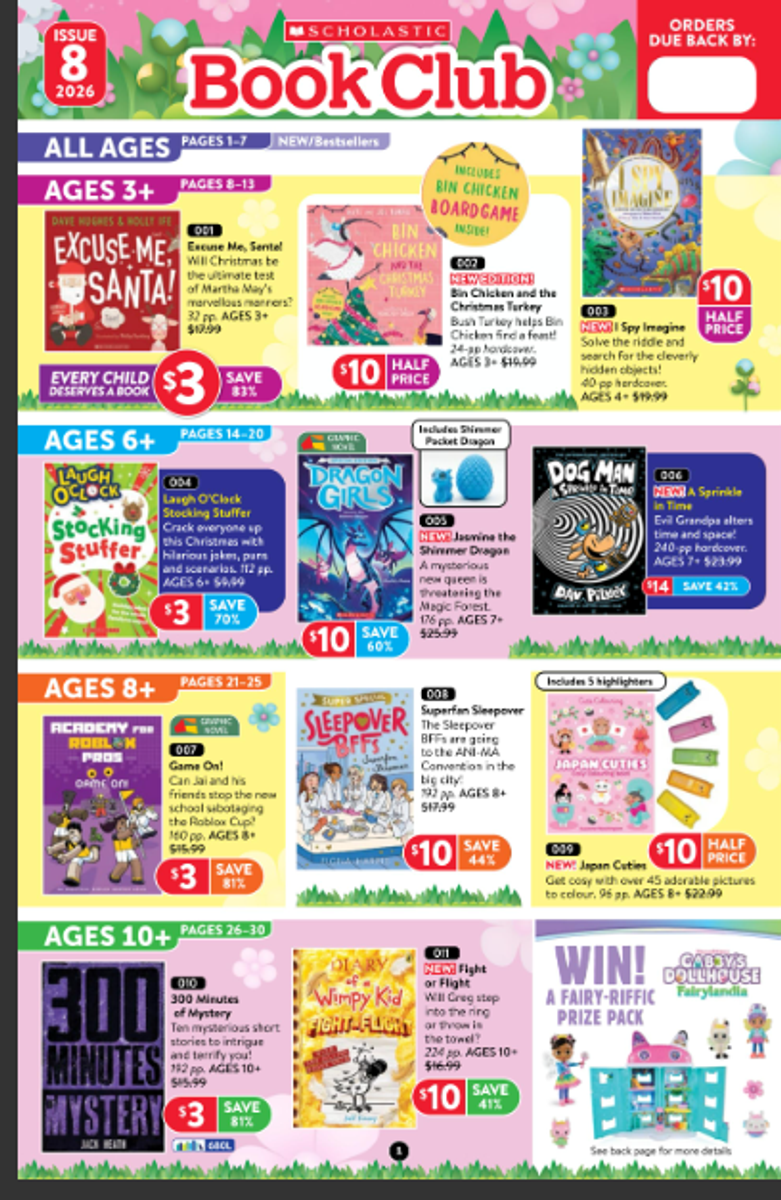
A big thank you to our school community for supporting Scholastic Book Club throughout the year. Every purchase helps us earn reward points, which are put to great use in purchasing new books and valuable resources for our school library and classrooms. Your continued support is greatly appreciated and helps us keep our love of reading growing!
As this is our final Scholastic Book Club issue for the year, please ensure any orders are placed by 30 November to allow time for delivery before the end of the school year. Thank you again for your support!
https://scholastic.com.au/media/15820/bc_8-26_issuu.pdf