Library
Library Leader Canowindra - Maria Muse
Library Leader Yirramboi - Paige Witcombe
















 Overnewton Anglican Community College
Library
Library Leader Canowindra - Maria Muse
Library Leader Yirramboi - Paige Witcombe

Article by Paige Witcombe, Library Leader – Yirramboi campus
A national conversation about the future of school libraries and qualified teacher librarians is gaining momentum across Australia. In September, news that Catholic Schools Maitland-Newcastle in NSW planned to discontinue teacher librarian positions across affected schools in its diocese sparked widespread concern among educators, authors, parents and library organisations.
The issue prompted children's author Dr Kate Temple to launch a national change.org petition calling for qualified teacher librarians to be mandated in every Australian school. More recently, a social media campaign has encouraged supporters to share photographs and messages advocating for the profession and urging people to write to their local Members of Parliament.
But why does this matter?
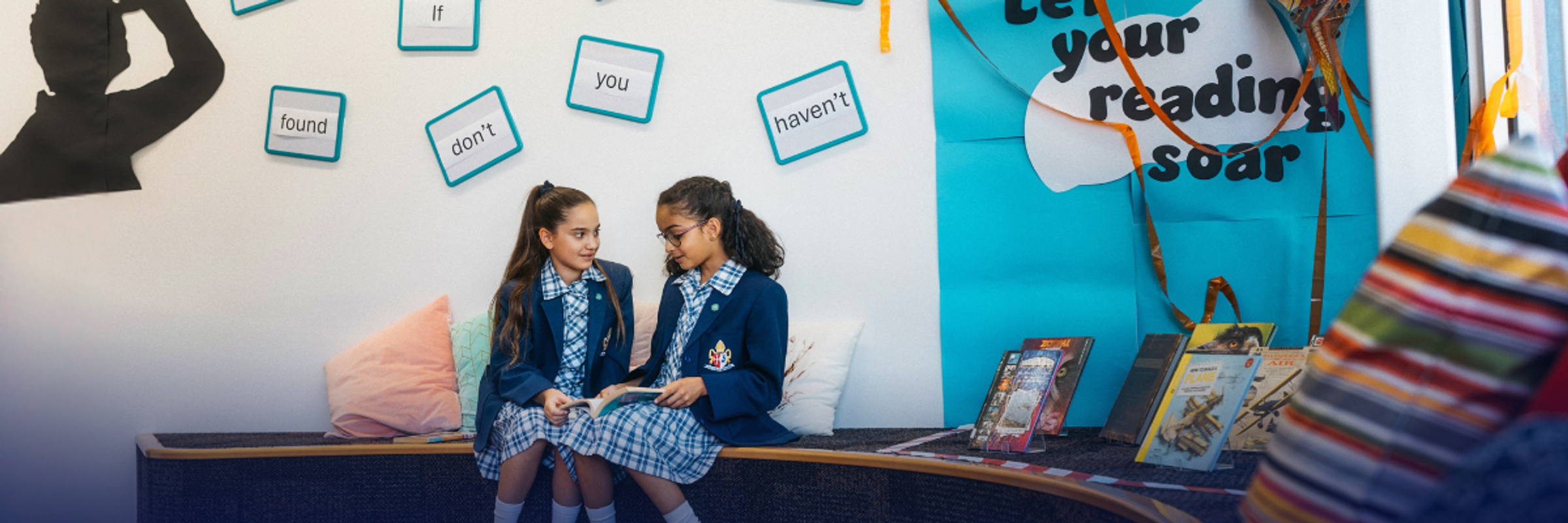
A school library is far more than a collection of books. It is a dynamic teaching and learning environment. Our teacher librarians are qualified teaching professionals with specialist expertise in librarianship, combining knowledge of education, literature, research, digital technologies and information literacy to support students throughout their learning journey.
Teacher librarians play an important role in fostering a positive reading culture. With specialist knowledge of children's and young adult literature, they connect students with books that reflect their interests, abilities and experiences, helping them discover new authors, genres and series.
Through book recommendations, author visits, reading challenges, competitions and celebrations, they encourage students to explore the world of books. Programs such as the Premier's Reading Challenge in Junior School and Renaissance Accelerated Reader in Middle School or the Pastoral Reading Program in Senior School, our teacher librarians help students develop reading habits, set goals, monitor progress and celebrate achievements. Ultimately, the aim is to develop lifelong readers who choose to read because they enjoy it.
Perhaps one of the most important aspects of a teacher librarian's role is teaching research and information literacy skills. In a world of search engines, social media and GenAI, students need to distinguish reliable information from misinformation and recognise bias and different perspectives.
Teacher librarians teach students to develop research questions, locate and evaluate credible sources, recognise misinformation, compare information, reference appropriately and use digital technologies and AI responsibly. These skills are essential across every subject, from scientific investigations and history projects to persuasive writing and independent research. They also collaborate with classroom teachers to develop curriculum resources and meaningful learning experiences.
At our school, we recognise the value of having qualified professionals who bring specialist knowledge and expertise to our libraries every day. The national campaign reminds us that this expertise should not be a privilege available to some students, but an opportunity for every Australian student. We encourage our school community to learn more about the campaign and support the call for qualified teacher librarians in every school.
Let's champion our school libraries and the professionals behind them - inspiring readers, developing researchers and empowering lifelong learners.
References
Students Need School Libraries. (n.d.). Students Need School Libraries.
Tomkins, B. (2026, September 7). Why school libraries still matter in the digital age. School News.