College Chaplain
College Chaplain - Reverend Peter Landry














 Overnewton Anglican Community College
College Chaplain
College Chaplain - Reverend Peter Landry
Article by Rev Peter Landry, College Chaplain
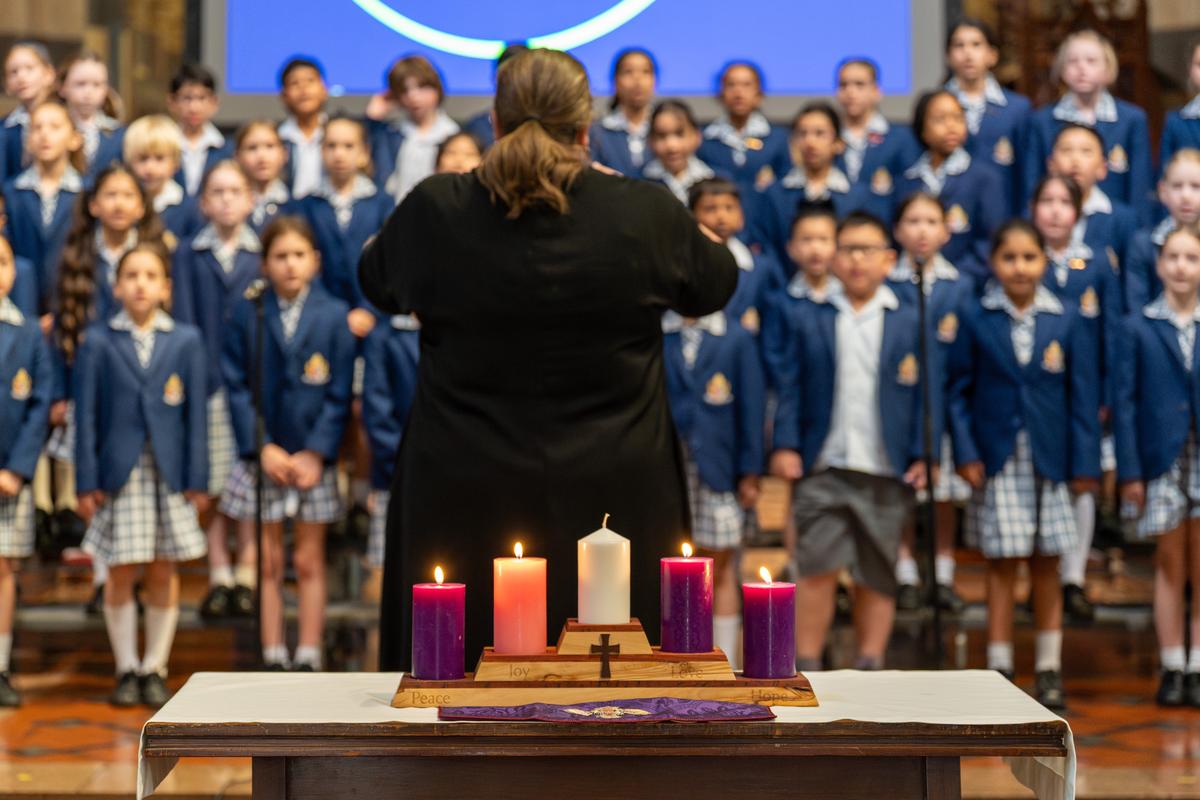
In Chapel services across the College this term, we will be celebrating Advent. Within the Christian tradition, Advent is about more than opening the little windows of a decorated box to reveal chocolate, whiskey or fishing lures (though these are all great additions to the tradition). It is a season of waiting and preparation.
Traditionally, Advent is celebrated during the four Sundays before Christmas Day. It invites Christians around the world to remember how God’s story of hope, joy, love and peace became our story through the birth, life, death and resurrection of Jesus. It is an opportunity to pause amid the chaos of December and reflect on the heart of Christmas: God entering the world in the person of Jesus. At the College, we’re taking a slightly different approach. As we’ll all be enjoying our summer holidays when Advent is traditionally celebrated, we’re using the whole of Term 4 to explore the themes and stories behind the Christmas message. After all, if Woolworths and Coles can start selling mince pies in October, why can’t we get a head start too?
I HATE waiting!
With online shopping and almost unlimited access to information, I’ve become increasingly impatient. If a series or book starts building towards a mystery or an unanswered question, I often struggle to wait for the reveal. In fact, more often than not, I’ll just google the answer to the mystery instead of waiting until the reveal. Why do I do this to myself? I justify my actions by saying that I have enough stress in my life already, but really, I’ve just forgotten how to wait.
I noticed a similar impatience among our students during our first Chapel of the term. I brought in a large, beautifully wrapped Christmas box and asked whether we should open it there and then. Almost every student shouted, “YES!” When I suggested we should wait instead, the response was far less enthusiastic. Throughout the service, I returned to the question, each time met with increasingly excited (and increasingly frustrated) reactions.
It was a slightly cruel but hopefully memorable object lesson in the challenge of waiting which set the scene for the reading which came from Isaiah 9:6, written at a time when humanity was longing for hope and looking forward to the fulfilment of God’s promises. The prophet Isaiah spoke of a future in which God would bring light and peace into the world: “For to us a child is born, to us a son is given, and the government will be on his shoulders. And he will be called Wonderful Counsellor, Mighty God, Everlasting Father, Prince of Peace.” Around 800 years later, Jesus was born.
Waiting is part of life. There are things we eagerly anticipate: summer holidays, warmer weather and Friday afternoons. There are also things we might rather avoid: deadlines, difficult conversations and, for some parents, the summer holidays.Christians believe that God’s promises are fulfilled in Jesus, and that God remains with us through whatever life may bring. Advent reminds us that we may not always know what lies ahead, or how long we will have to wait, but we can find comfort and strength in the promise that we do not face the future alone, we have hope. So yes, the summer holidays will arrive eventually. And whether this fills you with joy or dread, you do not need to face them alone.
During Chapel, I gave the students some mental homework.
I invited them to think about two questions:
What is something you’re excited about?
What is something that’s making you worried?
I then encouraged them to end their day with a simple prayer or moment of reflection, either on their own or with their family. For those who find prayer helpful, we used these words:
Dear God,
Thank you for… (something I’m excited about).
Please help me with… (something I’m worried about).
Thank you that you are always with me.
Amen.
You’re welcome to adapt this in whatever way feels natural for your family. You might use the questions as a starting point for a conversation around the dinner table, at bedtime or on the drive home. There’s no need to have all the answers or to make every worry disappear. Sometimes, simply listening and helping a child put their feelings into words is the perfect place to start.
As we move towards the end of the year, I hope this little practice helps our students notice the things they’re grateful for, find space to acknowledge the things that worry them, and remember that they don’t have to carry those worries alone.
In the busyness of the final weeks of term, may we find moments to celebrate what is good, make room for what is difficult, and offer one another the reassurance that we don’t have to have everything figured out. After all, we’re not always very good at waiting. But we can learn to wait with hope, together.