Subject Domains
English
Sinead Allen | Domain Leader
It has been an excellent start to the year in English at Sandringham College. We have welcomed our wonderful Year 7 students who have settled in with enthusiasm. Across Years 7–12, students have been engaging with a wide range of literacy skills and applying these to their analytical, persuasive, and creative writing.
It has been fantastic to see the engagement and dedication from students throughout Term 1. We admire the commitment and effort students have shown to their English studies.
In Year 7, students have been developing their understanding of simple, compound, and complex sentences. Additionally, they have just started a persuasive writing unit. Our Year 7 SEAL students have been developing their creating writing skills. They have been writing narratives in response to a prompt.
Our Year 8 students have been studying Taika Waititi’s film, ‘Hunt for the Wilderpeople’. They have been practising their analytical writing and writing about various themes that are relevant to the text. In Year 8 SEAL, the students have been closely studying the themes and ideas presented in ‘A Midsummer Night’s Dream’ by William Shakespeare.
In Year 9, students have been analysing William Shakespeare’s ‘Romeo and Juliet’. They have been discussing and writing responses that analyse Shakespeare’s views and values. Our Year 9 SEAL students have been learning about different writing genres. They have been planning, drafting, and writing narratives.
Our Year 10 students are analysing the text ‘The White Tiger’ by Aravind Adiga. Students have been applying their knowledge to essay topics and developing an understanding of the author's views and values.
In Year 11, students have been studying ‘Nineteen Eighty-Four’ by George Orwell. Our Year 11 Literature students have been studying Emily Brontë's 'Wuthering Heights'. The students have been analysing the literary devices, characters, themes, and values that are explored in these texts.
Our Year 12 students have had an excellent start and are working hard to prepare for their upcoming analytical text response essay on the film ‘High Ground’.
In English Language, the students have been learning about informality and the nature and functions of language.
To help set students up for success in English lessons, it is important that they come to class prepared each day. Students should have:
Workbook
Mini whiteboard
Blue or black pen
Red pen
The text that they are studying
Dictionary
Homework plays a vital role in English learning at secondary school. Continued practise and retrieval of skills are essential for building understanding and confidence. Parents and carers can support their child’s learning by helping to establish a quiet, distraction‑free space for homework and encouraging students to attempt all questions, even if they are unsure.
We look forward to continuing a successful year of learning in English.
HPE
Lauren Varadi | Domain Leader
It has been a strong start to the year in Physical Education, with junior classes participating in a variety of practical units including Athletics, Minor Games, Net/Wall sports, and Fitness. In Health, students have been learning about Respectful Relationships, Nutrition, and Diversity and Inclusion, building key knowledge around wellbeing and healthy choices.
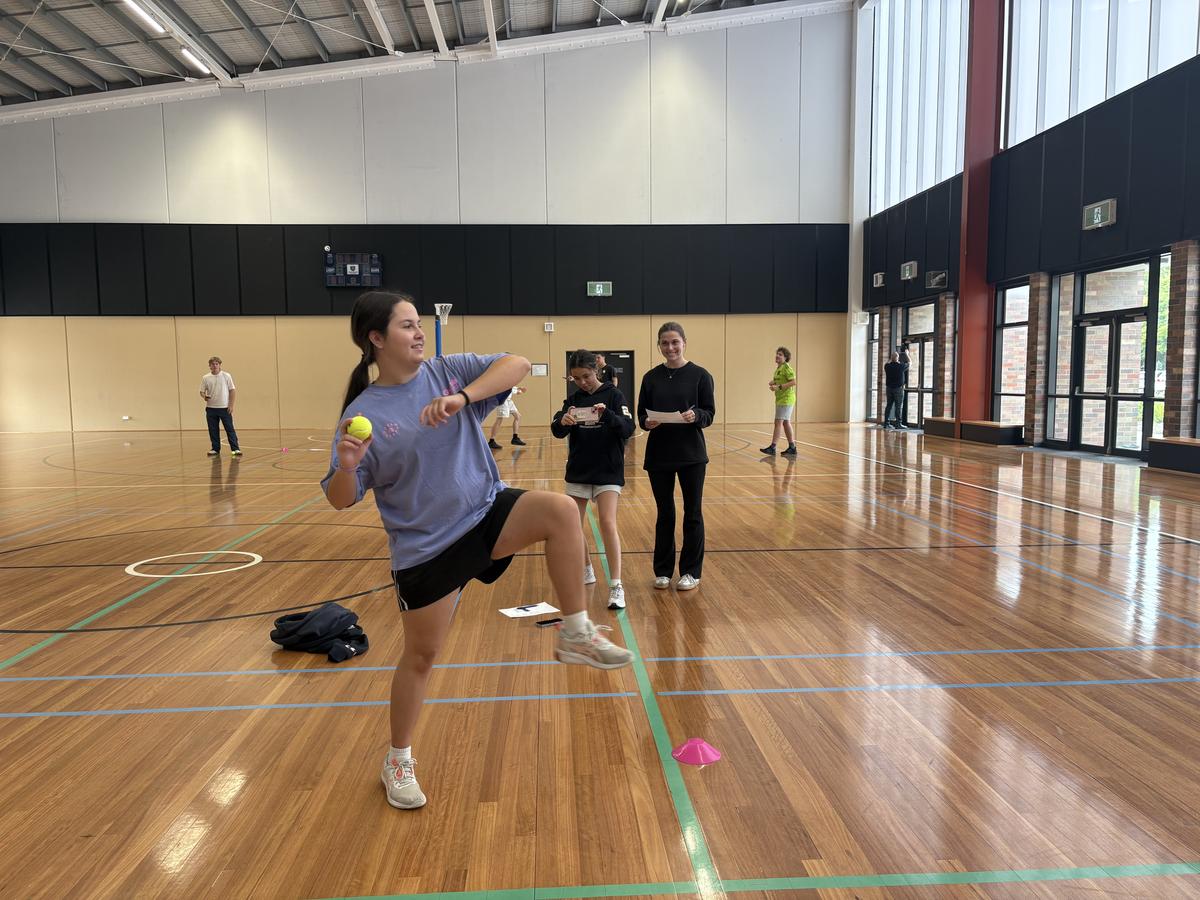
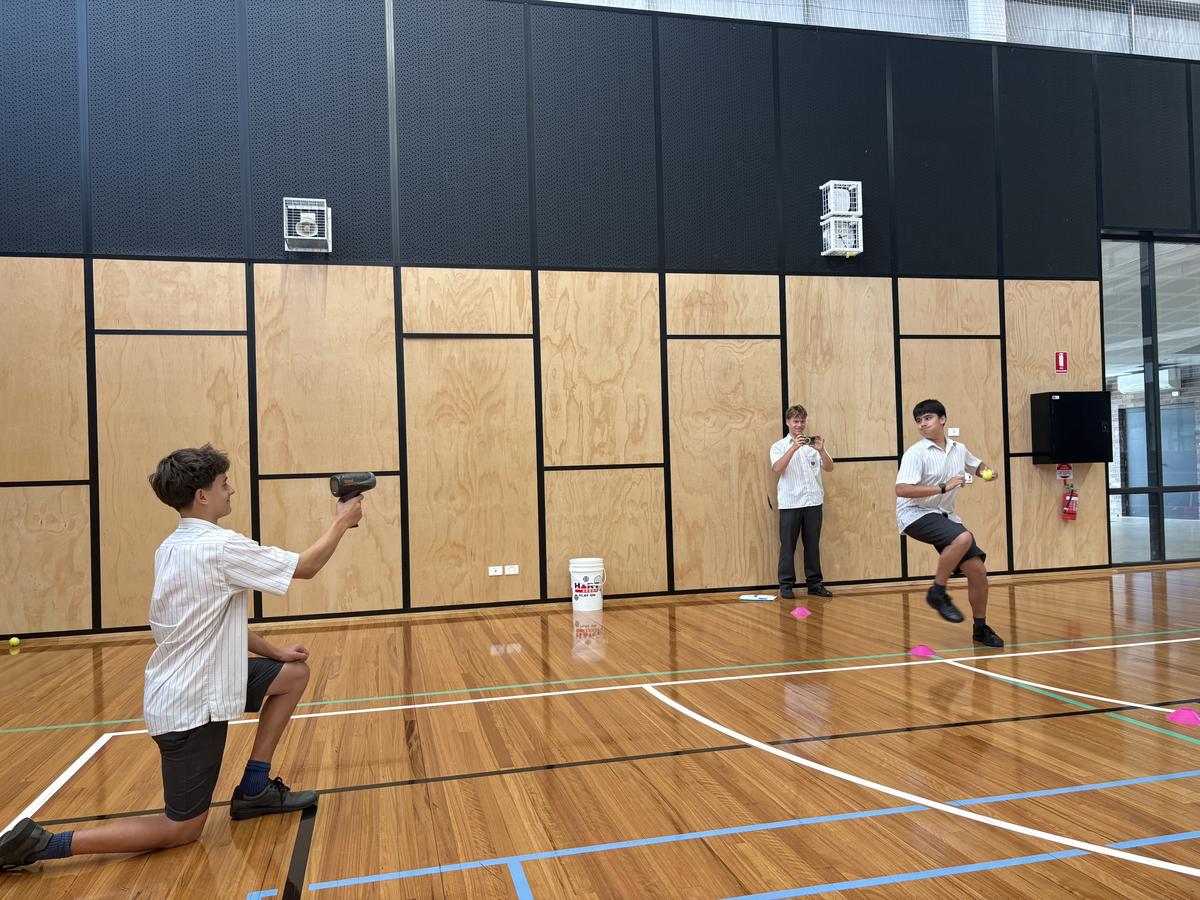
In the senior classes, Mr Greenhalgh’s Year 12 Physical Education students completed a qualitative movement analysis on a baseball pitch. Using the biomechanical principle of summation of momentum and a speed gun, students analysed and identified optimal pitching techniques.
We are looking forward to an exciting Term 2 ahead. VCE students, keep your eyes peeled for a lunchtime gym club coming soon!
Unit 3/4 Outdoor and Environmental Studies Grampians Camp
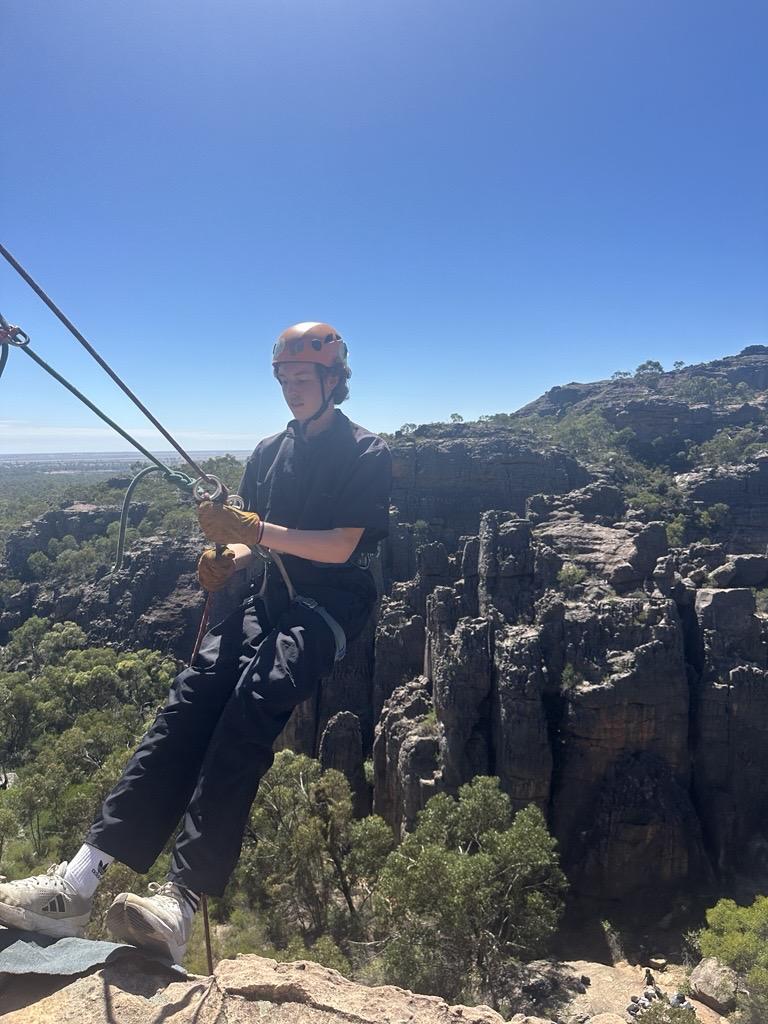
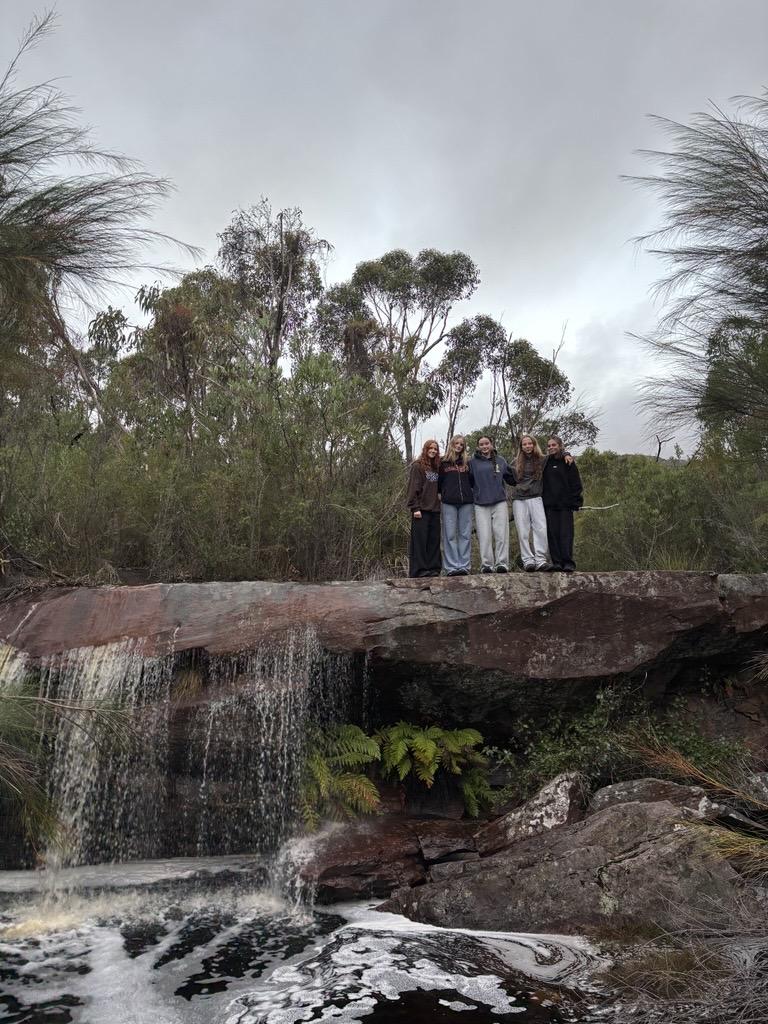
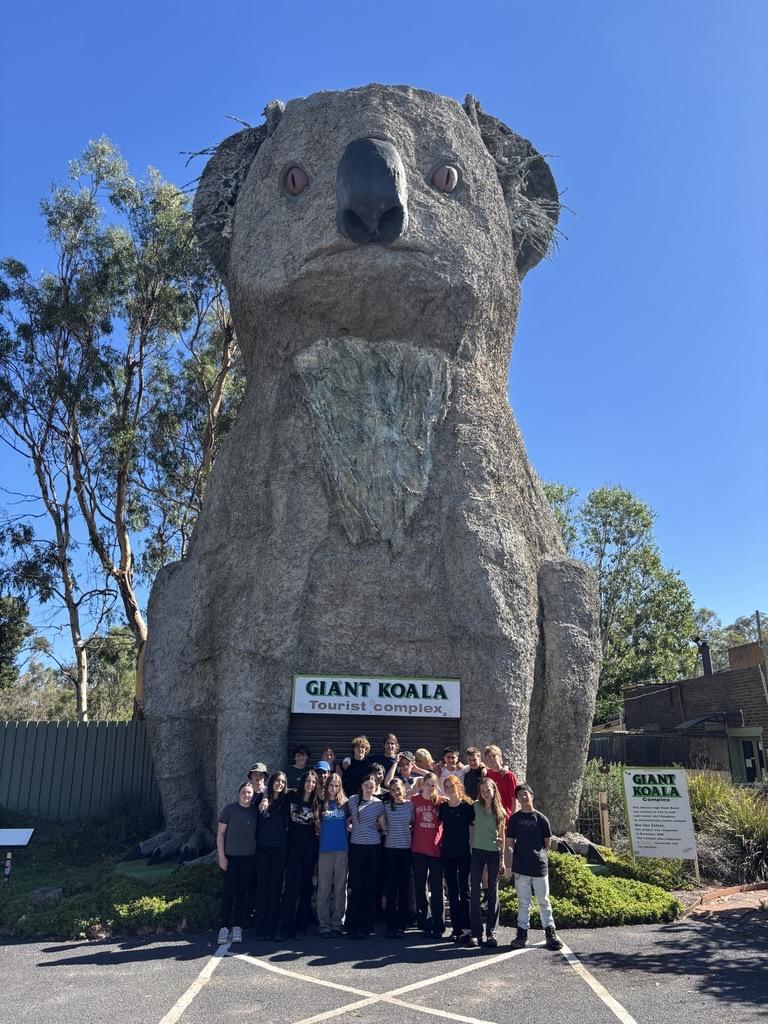
Students attended a camp in the Grampians National Park during Term 1. Students explored the landscape through bushwalking and fieldwork, focusing on land management, conservation, and human interactions with the environment. They also learned about Aboriginal connections to Country and the cultural significance of the area. The camp provided strong real-world case studies to support SACs and exam preparation.
Unit 1/2 Outdoor and Environmental Studies Sorrento Snorkelling Excursion
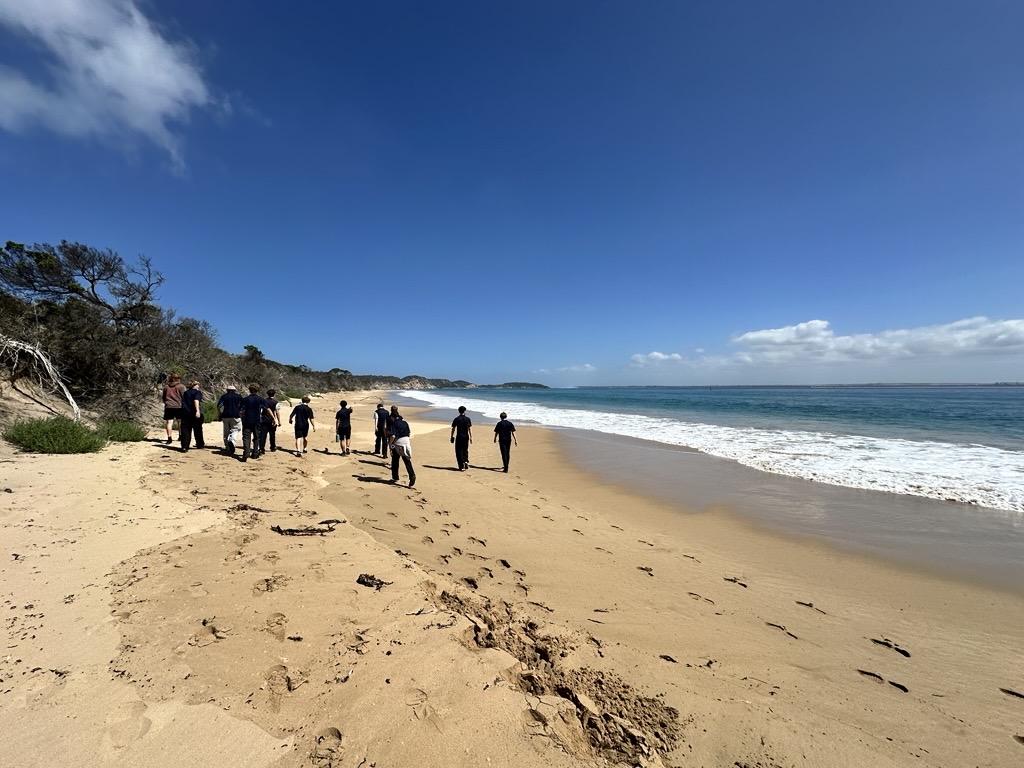
Students took part in a snorkelling excursion at Sorrento. Students explored the marine environment of Port Phillip Bay, observed marine life, and examined human impacts on coastal ecosystems. The excursion helped build practical skills and understanding of key Unit 1 and 2 concepts.
Humanities
Rasita Ramsaran | Domain Leader
This term, our Humanities classrooms have been filled with students questioning, debating, and challenging the world around them.
Year 7
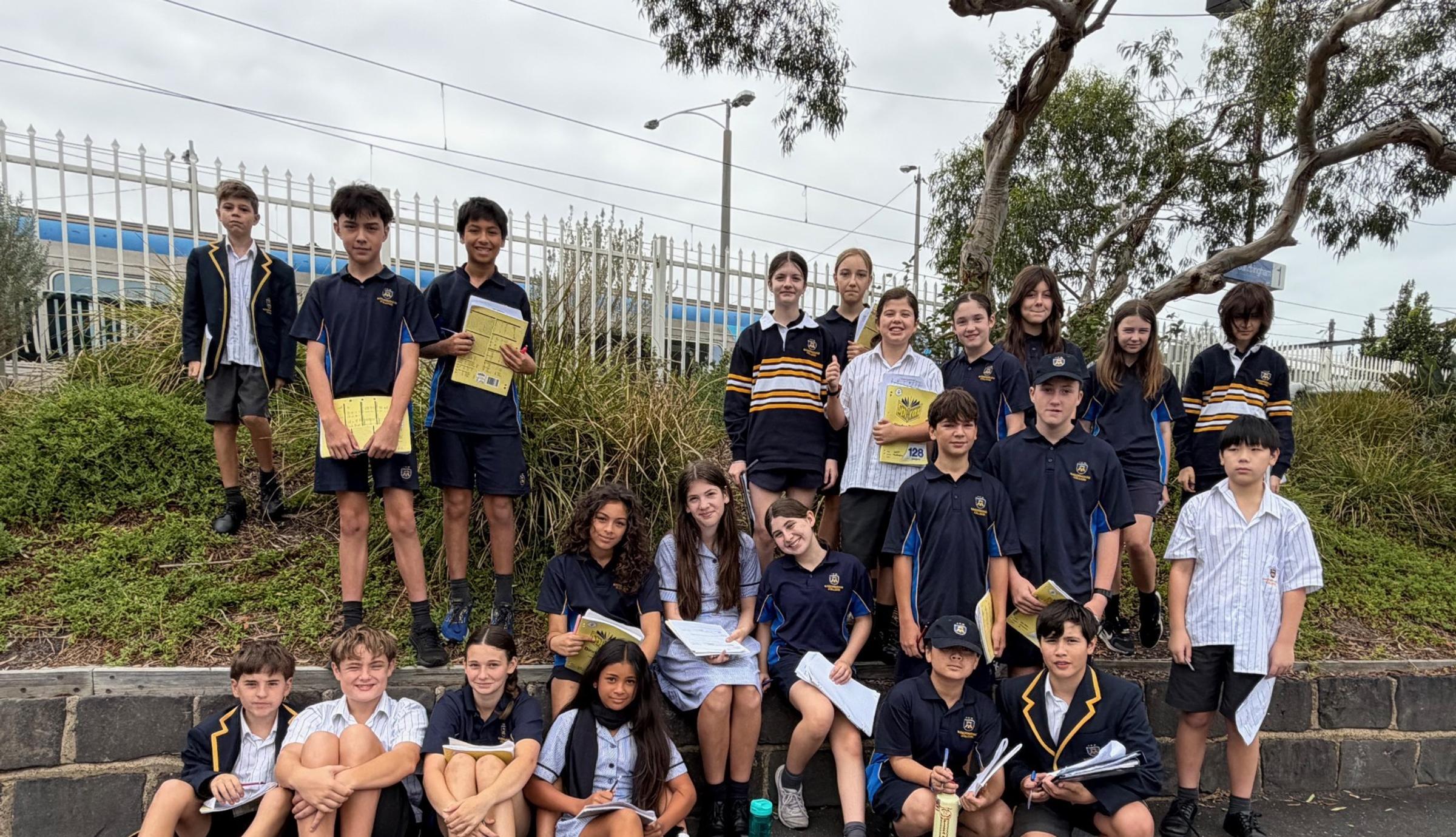
We begin with our Year 7 cohort, who have settled confidently into the routines of secondary school life. As part of their Geography unit, Place and Liveability, students participated in a “liveability walk” through Sandringham Village—an authentic opportunity to connect classroom learning with their local environment.
During the walk, students explored key aspects of liveability, including safety at the railway crossing, the role of nearby emergency services, and access to healthcare facilities. These real-world observations allowed students to evaluate what makes a community liveable while developing a deeper understanding of how these factors can vary across different places.
Through this experience, students not only gained an appreciation for the high standards of liveability within Sandringham Village, but also began to build empathy and awareness of the diverse experiences of people living in other communities around the world.
A huge thank you to the Year 7 Humanities teachers - Amy Porter, Ben Crone, Ben Anderson and Mia Treacey.
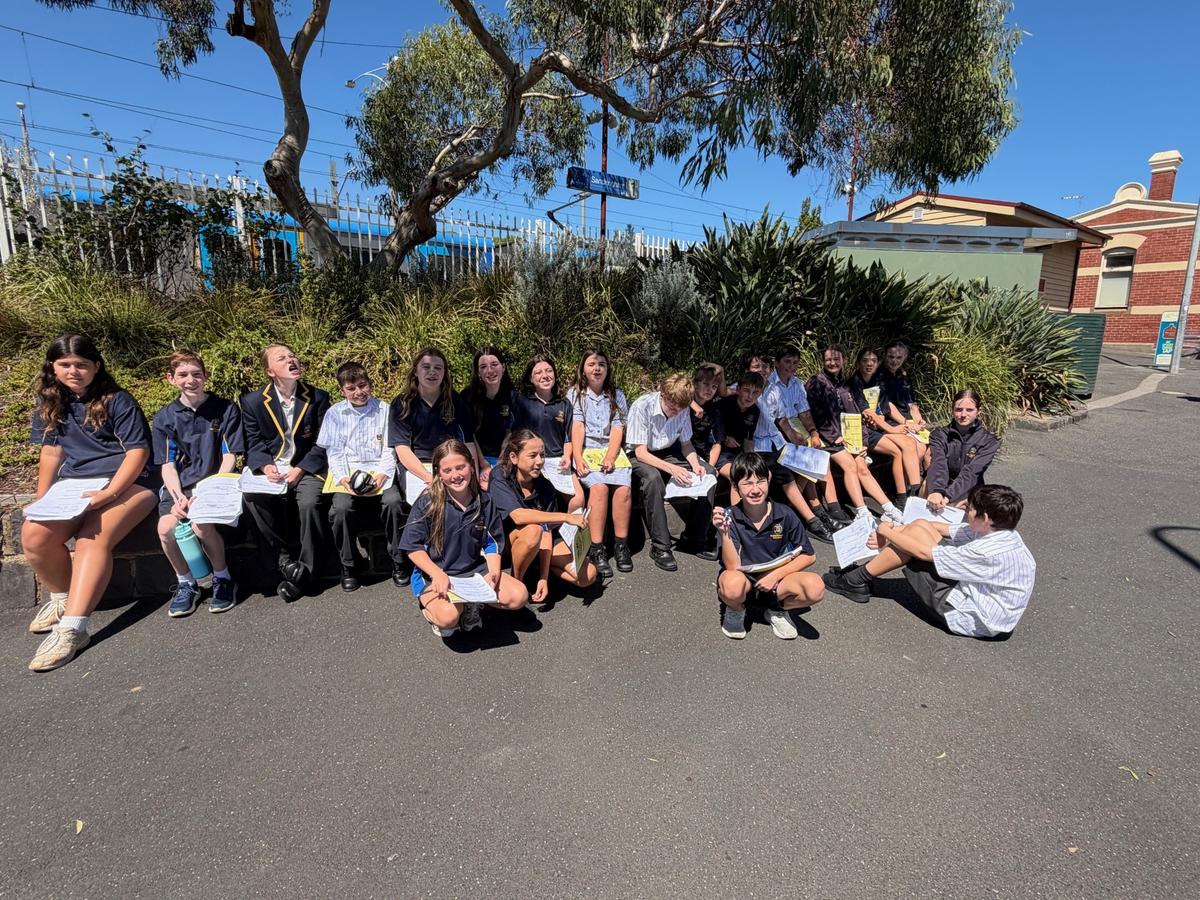
7H on their liveability walk
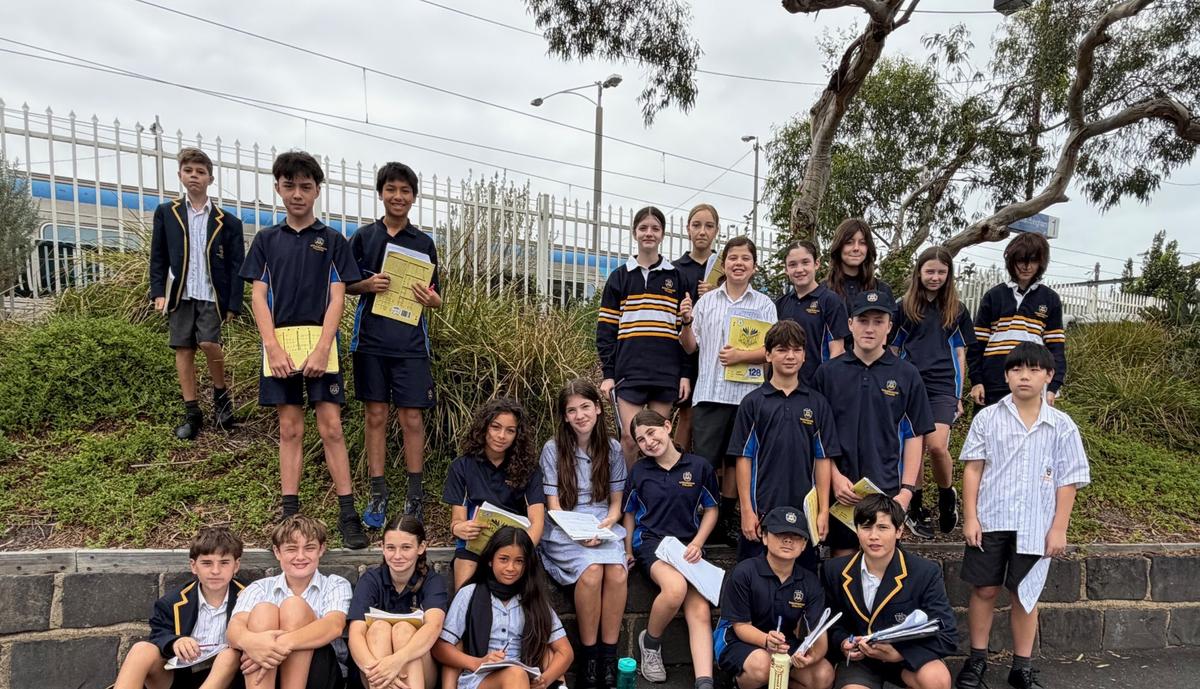
7C evaluating the levels of greenery in Sandringham Village
7H on their liveability walk
7C evaluating the levels of greenery in Sandringham Village
Year 8
Building on their understanding of Place and Liveability from last year, our Year 8 students took their learning to the coast with a field trip to Red Bluff Beach. Despite the grey, rainy conditions, their enthusiasm and determination were unwavering as they explored how natural processes and human interventions shape the coastline.
It was inspiring to see students bring their classroom knowledge to life, quickly spotting groynes, seawalls, signs of erosion, and other key coastal features. Experiences like this not only deepen their understanding but also highlight the connections between theory and the world around them.
A huge thank you to the Year 8 Humanities teachers - Amy Porter, Yostina Askander, Frank McNamara and Gabbie Mavridis.
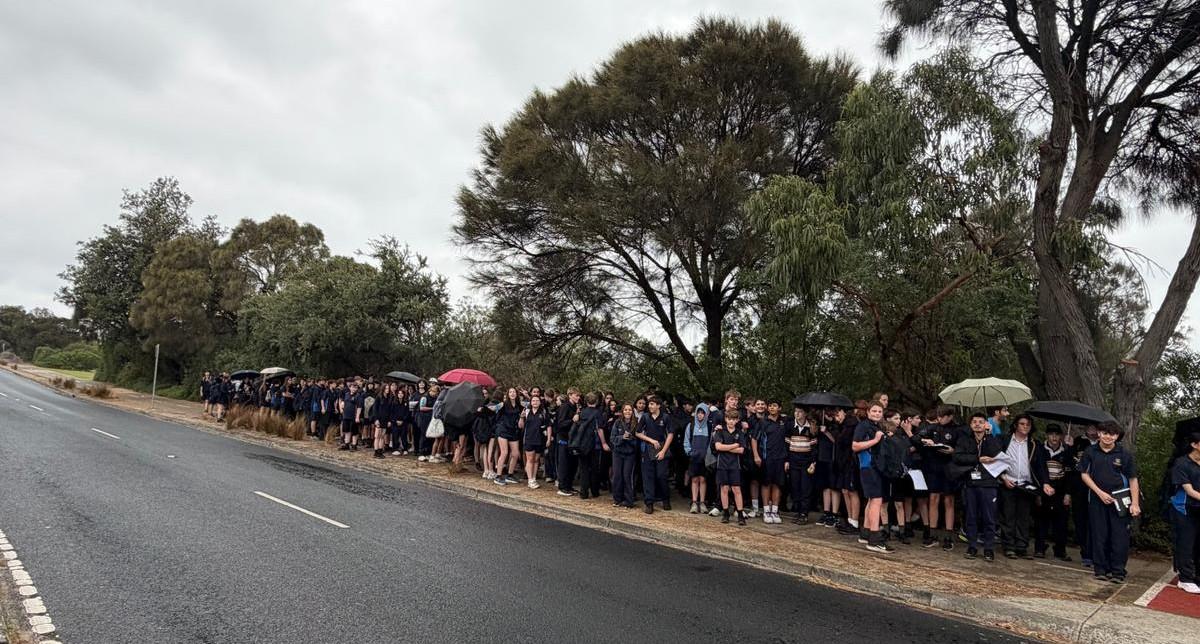
Year 8s braving the cold to examine the Red Bluff coastal landscape
Year 8s braving the cold to examine the Red Bluff coastal landscape
Year 8 SEAL
The Year 8 Humanities SEAL students have been studying Landforms and Landscapes as part of their Geography unit. At the beginning of March they ventured down to Red Bluff Beach on a sunny Friday afternoon to conduct fieldwork regarding the impact of erosion on the beach, and the ways in which humans use and manage the beach. For their assessment they are comparing the management of Red Bluff Beach with another location they have chosen.
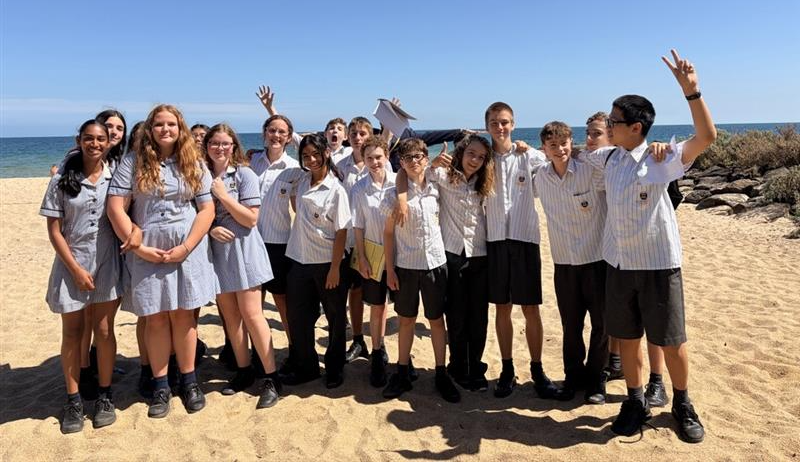
Year 8 SEAL Collecting Data at Red Bluff Beach
Year 8 SEAL Collecting Data at Red Bluff Beach
Year 11 Accounting
ASX Sharemarket Game:
A group of Year 11 and Year 12 students have been taking part in the ASX sharemarket game which is played by schools around Australia. As part of the game, students are provided with theoretical balance of $50,000 to invest in various ASX listed companies over 10 weeks. The game begun on Thursday the 12th of March, and as of Wednesday the 18th, star investor and Year 11 student Zeke Jolly has managed to generate a return of ~$1470, leading him to be ranked 11th in Victoria (out of ~2000 other students) and 37th nationally (out of ~10,000). A phenomenal first week return which Zeke has achieved using a trading strategy focusing on Energy and Healthcare sectors.
~Lachlan de Graaf Knight, Year 11 Accounting Teacher
Year 11 Philosophy
How important is memory to your identity? Would you still be the same person if you lost all your memories?
Those are just two of the big questions our Year 11 Philosophy students have been grappling with this term. Through our exploration of these questions, and the ideas of various philosophers, students have gained a fuller understanding of the different aspects that form a person’s identity. They have also honed their thinking and reasoning skills through our exploration of these questions. Next term, our Year 11Philosophy students will begin exploring philosophical questions around knowledge, such as whether certainty is necessary for knowledge.
~Ben Crone, Year 11 Philosophy Teacher
Year 12 History
In Year 12 History, students (or comrades) have been studying their first of two revolutions – the Russian Revolution. So far, they have learned about the downfall of the Tsars, and the rise of Vladimir Lenin and his Bolshevik revolutionaries. Currently, the class has just begun their second Area of Study for Unit 3, focusing on consequences of the Russian Revolution, and the extent to which revolutionary ideals were achieved or compromised. Much like figures such as Lenin, Trotsky, and Stalin, the Year 12s are devoting themselves entirely to the cause. They are well on their way to becoming professional revolutionaries!
~Amy Hirth, VCE History Teacher
Languages
Laura Ritchie | Domain Leader
In Year 7 Languages, many students are studying French or Chinese for the very first time. It has been great to see the enthusiasm from students as they have embraced the challenge of puzzling out how a new language works - across speaking, reading, writing and listening. As part of their Term 1 ALT, students participated in a role play about themselves. It was great to see the Year 7 students demonstrate all they have learnt since starting the year and while I was out on yard duty in the last few weeks of term I heard a number of students practicing with their partners in preparation.
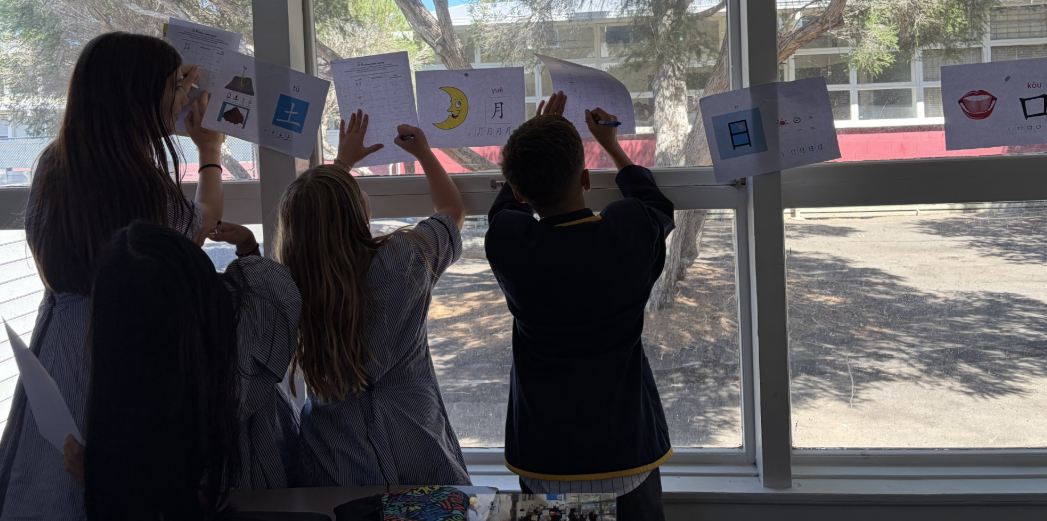
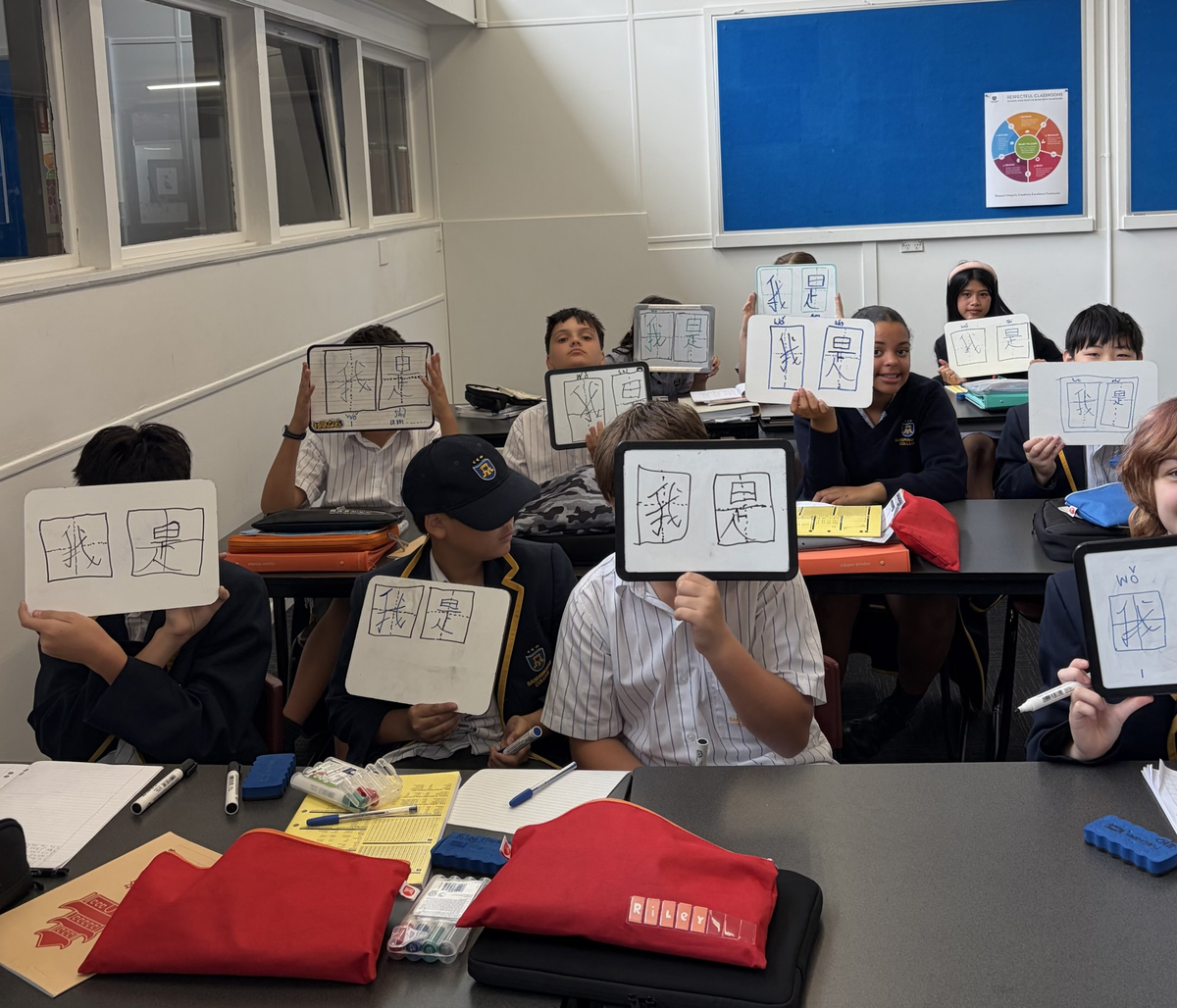
In Chinese, students have been building their understanding of Chinese characters through writing practice in tian zi ge (square grids) and interactive activities like gallery walks. They explored how characters often come from pictures, such as 口 (mouth), 山 (mountain), and 人 (person), helping them remember and connect meaning more easily. Students have also enjoyed learning about Chinese festivals, including the Spring Festival and Lantern Festival, through Chinese New Year wishes, quizzes, and real-life cultural connections.
Mathematics
Laura Suckling | Domain Leader
It has been a strong start to the year in Mathematics at Sandringham College. Across Years 7–12, students have been engaging with a wide range of mathematical topics this term. These have included adding and subtracting integers, index laws, solving linear equations, graphing equations, probability, and geometric reasoning and proofs, with content tailored to each year level.
We have been really impressed with the effort and engagement students have shown in their Mathematics classes so far. A positive attitude, willingness to attempt challenging problems, and consistent practice are all key contributors to success in Mathematics, and it has been wonderful to see these on display in classrooms.
To help set students up for success in Mathematics lessons, it is important that they come to class prepared each day. Students should have:
Calculator
Workbook
Mini whiteboard
Blue or black pen
Red pen
Ruler
Greylead pencil
Homework plays a vital role in Mathematics learning at secondary school. Continued practice and retrieval of skills are essential for building understanding and confidence.
Years 7–9 students have weekly homework.
Years 8 and 9 will complete homework using Edrolo.
Year 7 students will use the Student Companion.
Years 10–12 homework will vary and may include completing textbook questions, SAC‑style tasks, or practice exam questions.
Parents and carers can support their child’s learning by helping to establish a quiet, distraction‑free space for homework and encouraging students to attempt all questions, even if they are unsure.
If Mathematics looks different from when you were at school and you would like to help your child, there are many excellent online resources available. A few highly recommended options include:
Maffs Guru : https://www.youtube.com/@MaffsGuru
Eddie Woo (Mister WooTube): https://www.youtube.com/@misterwootube
Khan Academy: https://www.khanacademy.org
For students in Years 8–12, the textbook and its associated online platform are also a great starting point, often providing worked examples and instructional videos.
We look forward to continuing a successful year of learning in Mathematics.
Science
Dr Roxanne Toivanen | Domain Leader
This year is shaping up to be a strong one for the Science Domain. We are excited to have one of our largest cohorts in recent years studying a VCE science, with 9 classes in Units 1 & 2 and 6 classes in Units 3 & 4 across Biology, Chemistry, Physics and Psychology.
We have also enjoyed welcoming our Year 7 students into the Bluff Road laboratories, where they have begun hands-on investigations into forces.
More details about student learning in and out of the lab will be shared in future issues. In this edition, I would like to highlight an article on the scientific endeavour, written by Dr Len Halprin. It is a powerful example of what it means to think and create knowledge like a scientist, an approach we aim to foster in our students at Sandy.
What is Science?
Dr Len Halprin - VCE Physics

The Swan River and Perth's iconic black swans (Credit: https://www.muval.com.au/ )
As we return to school, where a science subject is effectively compulsory to the end of Year 10, this is probably a good time to address the question “What is Science?”. Despite what many students may think, it is not simply reading through a science textbook and memorising facts. A much better description of science would be that it is how we go about observing the universe and everything in it, then attempting to explain and understand how it works. It is the tool we use to translate our natural curiosity into understanding and knowledge.
Probably surprisingly to many, the way science works is often the exact opposite of how we imagine. It is more useful here to describe what science is not. It is not an ongoing repetitive exercise of finding what works and proving theories. Rather, science actually learns more and progresses when we discover where we are wrong. Science progresses by being persistently, productively "less wrong" every single day.
The Illusion of "Proof"
Many students come away from high school science with the impression that its job is to prove things. They spend years in lab classes doing practical exercises designed to get the "right" result, reinforcing the idea that the goal of science is to find evidence that supports existing theories. But in the strict world of the scientific method, largely shaped by the 20th-century philosopher Karl Popper, science doesn’t actually prove things to be true, because it can’t. It can only prove them to be false.
This sounds counterintuitive, perhaps even discouraging. If science doesn’t (and can’t) provide absolute proof, why do we trust it to build bridges, send space probes to other planets, or cure diseases?
Before we can answer this question, we need to look at two different approaches to making logical sense of our observations. These are deduction and induction. Whereas deductive reasoning leads to absolute certainty, such as in mathematics, inductive reasoning acknowledges that it can never be certain, it can only provide a “best available guess”.
Inductive Reasoning is the heart of scientific observation. You observe 100 white swans, and it would seem that the logical conclusion is, "all swans are white." This is the exact opposite of deductive reasoning. Can you be sure that all swans are white?
The "flaw" in science is that it relies on induction. No matter how many white swans you see, you can never be 100% certain that the very next swan you observe won't be black. Another one million white swans will not prove your theory with certainty. But a single black swan will disprove it instantly. In science, you cannot "prove" a universal rule through observation alone; you can only "fail to disprove it" for now.
Karl Popper and the "Black Swan"
This is where Karl Popper’s most famous concept comes in: Falsifiability. Popper argued that for a theory to be "scientific," it must be capable of being proven wrong. If a theory is so vague that it can explain every possible outcome and can never be proven wrong, it isn't science, it’s a belief system. This is pseudoscience.
He used the "Black Swan" analogy to explain this. For centuries, Europeans believed that "all swans are white" because every swan they had ever seen was white. They had thousands of "proofs" for their theory. But then, explorers travelled to Australia and found a single black swan. (That explains the image at the front of this article).
In an instant, thousands of years of "proof" vanished. The theory was falsified. Popper’s point was that science progresses not by looking for more white swans to feel good about our theories, but by actively hunting for the one black swan that will show us we were missing something.
The 100°C Myth: A Lesson in Falsification
To see how this works in a classroom, let’s look at a classic "fact": Water boils at 100˚C. Most of us accept this as a universal law of nature. If you test it in a kitchen at sea level, your thermometer will confirm it every time. You might conclude you’ve "proven" the law.
But if you are a scientist looking for a "Black Swan," you start changing the conditions of the experiment. You take that same pot of water to the top of Mount Kosciuszko. Up on the mountain, your thermometer shows that the water begins to boil at approximately 91˚C.
Does this mean science "failed"? Quite the opposite. This observation falsified the original, simplistic hypothesis. It showed that the statement "water boils at 100˚C" was incomplete. It was a "white swan" theory that worked only in specific conditions.
This discovery forced scientists to consider the possible effect of another variable, atmospheric pressure. Boiling occurs when the internal pressure of the water (vapour pressure) overcomes the weight of the air pushing down on it. At high altitudes, there is less air "sitting" on the water, so it escapes into steam much sooner. This led to a modified, more accurate hypothesis:
"The boiling point of water is a function of ambient pressure. At 1 atmosphere of pressure, pure water boils at 100˚C."
By finding the Black Swan (the temperature that didn't agree with our original hypothesis) we didn't lose knowledge; we gained a much deeper understanding of the relationship between energy, matter, and the atmosphere. And, as a result, we moved from a “useful” hypothesis to a “more useful” hypothesis.
Why This Matters
For parents helping with homework or students looking at a future in STEM, understanding how science works shifts how we think about the world. When a scientific recommendation changes, such as new advice on nutrition, a change in medical protocols, or the reclassification of a planet, it isn’t a failure of science. It is science working exactly as intended. In each case we found a "black swan" that contradicted our old model, and we had the intellectual honesty to update our understanding.
This way of thinking about science asks us to state exactly what evidence would make us change our minds. In a world of loud opinions and "alternative facts," the scientific method is a shield. It protects us from being fooled by our own biases. It teaches us that "I don't know yet" is a much more powerful statement than "I'm 100% sure," because "I don't know" leaves the door open for discovery.
Conclusion: The Evolving Map
Science is not a destination; it is the process of building an increasingly accurate understanding of the universe. We might never have the "perfect" map that explains everything with absolute certainty, but by constantly looking for the Black Swans, i.e., the errors, the exceptions, and the wobbles, we ensure that the understanding of the universe that we have today is better than the one we had yesterday.
By embracing falsifiability, we teach the next generation not just to memorise what we know, but to understand how we know it, and to always keep an eye out for that next “black swan” that might change everything. The next contradictory result in science may lead to the next big breakthrough.