Wellbeing News











Dear Families,
Over the next fortnight all classes will be participating in lessons based on the Zones of Regulation program. This approach supports students to develop emotional awareness and self-regulation skills which lead to positive social interactions. Teaching our students the Zones aligns with our PBL topic of the fortnight which is ‘I use strategies to regulate my emotions.’ Showing and learning about this expected behaviour aligns with our school value of Resilience. It is really important that at first the students learn how to recognise their emotions and then establish an understanding of what strategies may assist them to head back towards the ‘green zone’. I have included the following information for you as you may find it useful to continue the discussion and language used at school within your homes.
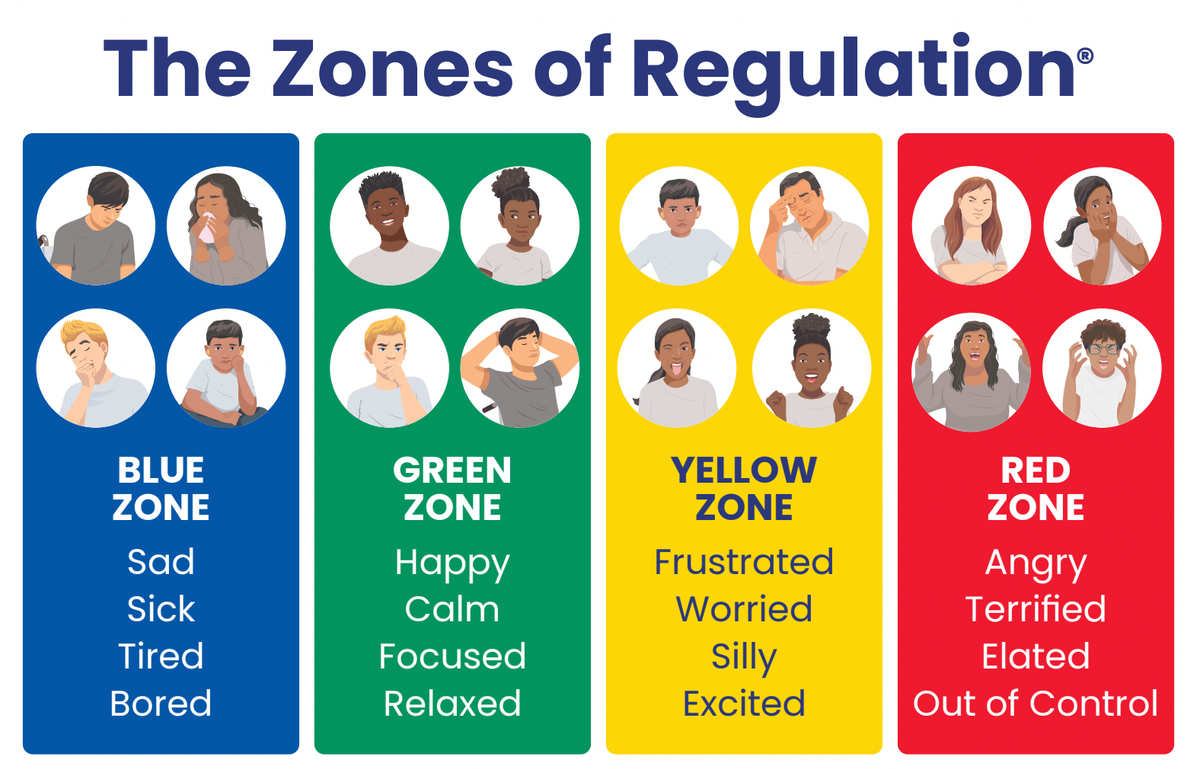
The Zones of Regulation teaches children to recognise their feelings and levels of alertness using four coloured zones:
- Blue Zone – feeling sad, tired, sick, or bored
- Green Zone – feeling calm, focused, happy, and ready to learn
- Yellow Zone – feeling worried, excited, frustrated, silly, or overwhelmed
- Red Zone – feeling angry, terrified, or out of control
Through age-appropriate activities, discussions, role plays and books, students will learn:
- how to identify emotions and body clues
- that all feelings are okay
- strategies to regulate emotions safely
- ways to solve problems and build positive relationships
how emotions can affect learning and behaviour
Our goal is to provide students with a shared language to talk about emotions and support wellbeing both at school and at home. Each student over the next fortnight will receive a zones visual card to be placed on their desk. They will use this card to identify the different zones they may be in throughout the day.
Some common language we will use in the classroom includes:
- “What zone are you in?”
- “What is your body telling you?”
- “What strategy could help you?”
- “How can we help ourselves get ready to learn?”
- “It is okay to be in any zone.”
“Different strategies work for different people.”
Student will develop their own list of strategies that may assist them. Examples of regulation strategies students may practise include:
- deep breathing
- movement breaks
- mindfulness activities
- asking for help
- using calming tools
- taking a break
positive self-talk
You may hear your child talking about their “zone” at home. We encourage families to use the same language to help children build confidence in recognising and managing emotions.
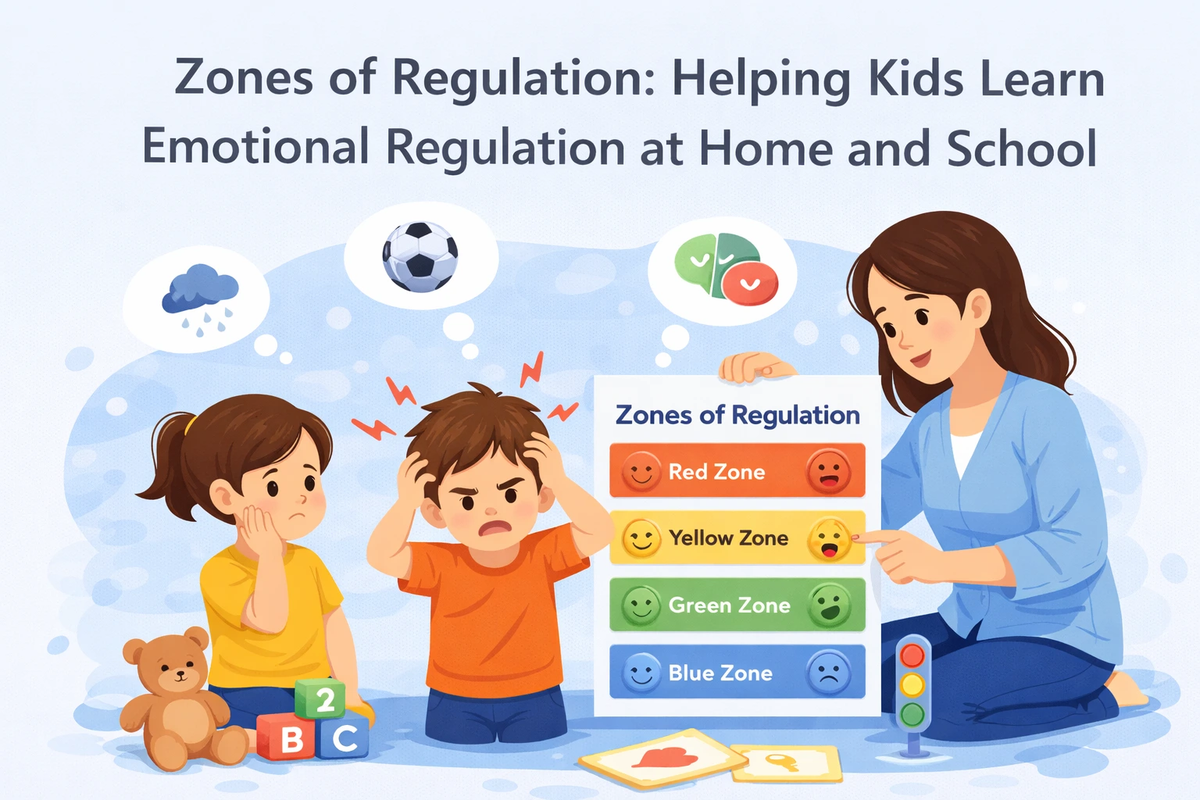
I have included the following article for further reading if you would like to. Zones of Regulation: Helping Kids Learn Emotional Regulation at School and Home
Please feel free to contact me if you would like more information about our wellbeing lessons or ways to support this learning at home.
Warmest regards,
Dominique Abbey
Mental Health and Wellbeing Leader