Wellbeing News









Self-image, self-worth and self-esteem…what’s the difference?
Some tips for students and families to build positive self-image, self-esteem, and self-worth.
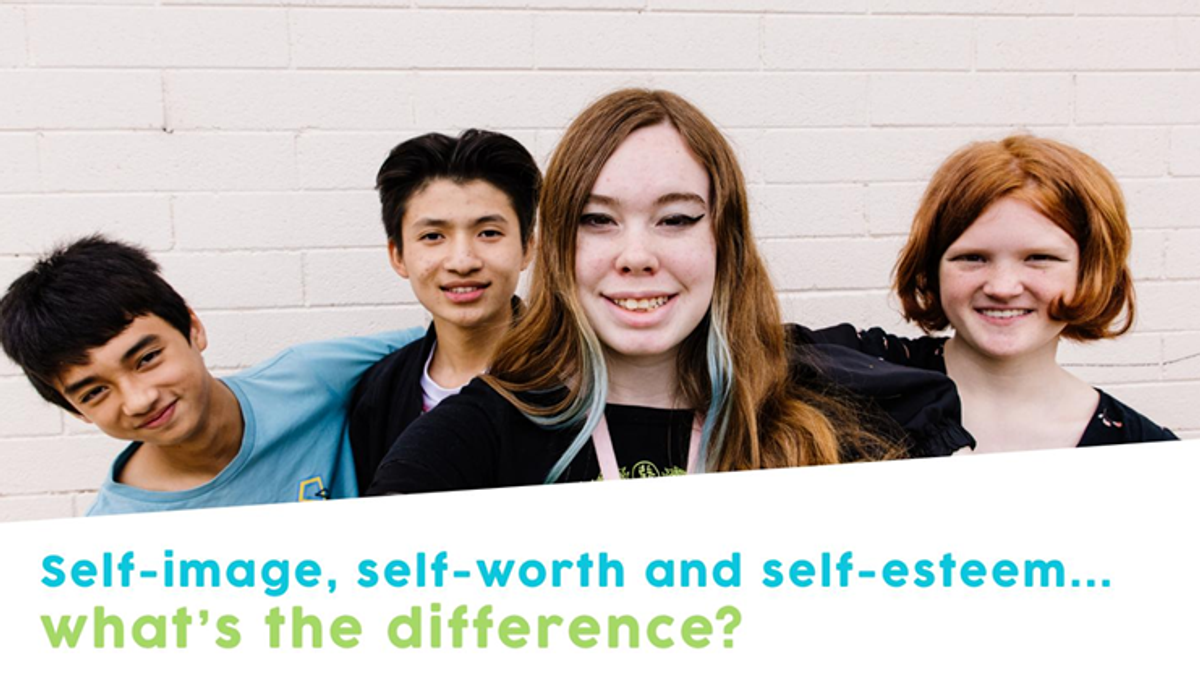
Have you ever wondered what the difference between self-image, self-worth and self-esteem is and if they are somehow connected? Well, wonder no more!
“Self-image refers to the way you see yourself in relation to the world around you. Self-image is not the same as self-esteem. Self-esteem is how you see your worth and self-image is both how you see yourself and how you think the world sees you.
Self-image can be influenced by our relationships, experiences, and environment. Having a positive self-image is important for our mental wellbeing and it can lead to an increase in confidence, better relationships, and greater success.
A lot of people know they want to achieve a positive self-image; however, they don’t work towards it as much as they think they do and bring themselves down negatively.
When we have a negative self-image, it can lead to feelings of low selfworth, anxiety, and depression. It is important to work on developing a positive self-image through self-care, positive self-talk, and surrounding yourself with supportive people.
Self-image can change over time. We can build a more positive self-image and achieve goals by focusing on our strengths. We tend to compare ourselves to people who we think are better than us, however, instead of comparing negatively, we could do it positively.”
“We can never be satisfied if we compare what we don’t have to what people have when we know they worked hard for that too.” It’s up to us to decide if we want to have a positive or negative self-image and it is up to us to work towards it.”
Signs of low self-esteem can include:
• Poor confidence
• A sense of lack of control
• Feeling like you don’t measure up to other people
• Difficulty asking for help or support
• Anxiety and self doubt
• Trouble accepting positive feedback
• Inability to set healthy boundaries with others
So we’ve heard about self-image. But how does self-worth connect with selfesteem?
Self-worth is how much you believe you matter as a person. I matter.
Self-esteem is how confident you feel in your abilities and what you can achieve. I can do this.
Self-image is how you see and think about yourself. This is who I am.
A few practical ways to improve your self-esteem, self-image and self-worth:
Notice your strengths
Don’t focus on the things you can’t do.
Focus on the things you know you’re good at.
If you can’t think of any, ask a friend, caregiver or trusted teacher to help.
Set small, achievable goals
These don’t have to be huge, just a little something you can work towards. Don’t forget to celebrate every win!
Challenge negative self-talk
Notice when a harsh thought pops into your head and replace it with something that feels kinder or more encouraging.
Focus on effort and growth
Trying hard matters more than striving for perfection.
Spend your time wisely
Invest your time and energy into people and activities that make you happy, build a sense of purpose and make you feel like respected, supported and valued.
Be kind to yourself. Treat yourself with the same kindness and understanding that you would offer a friend.
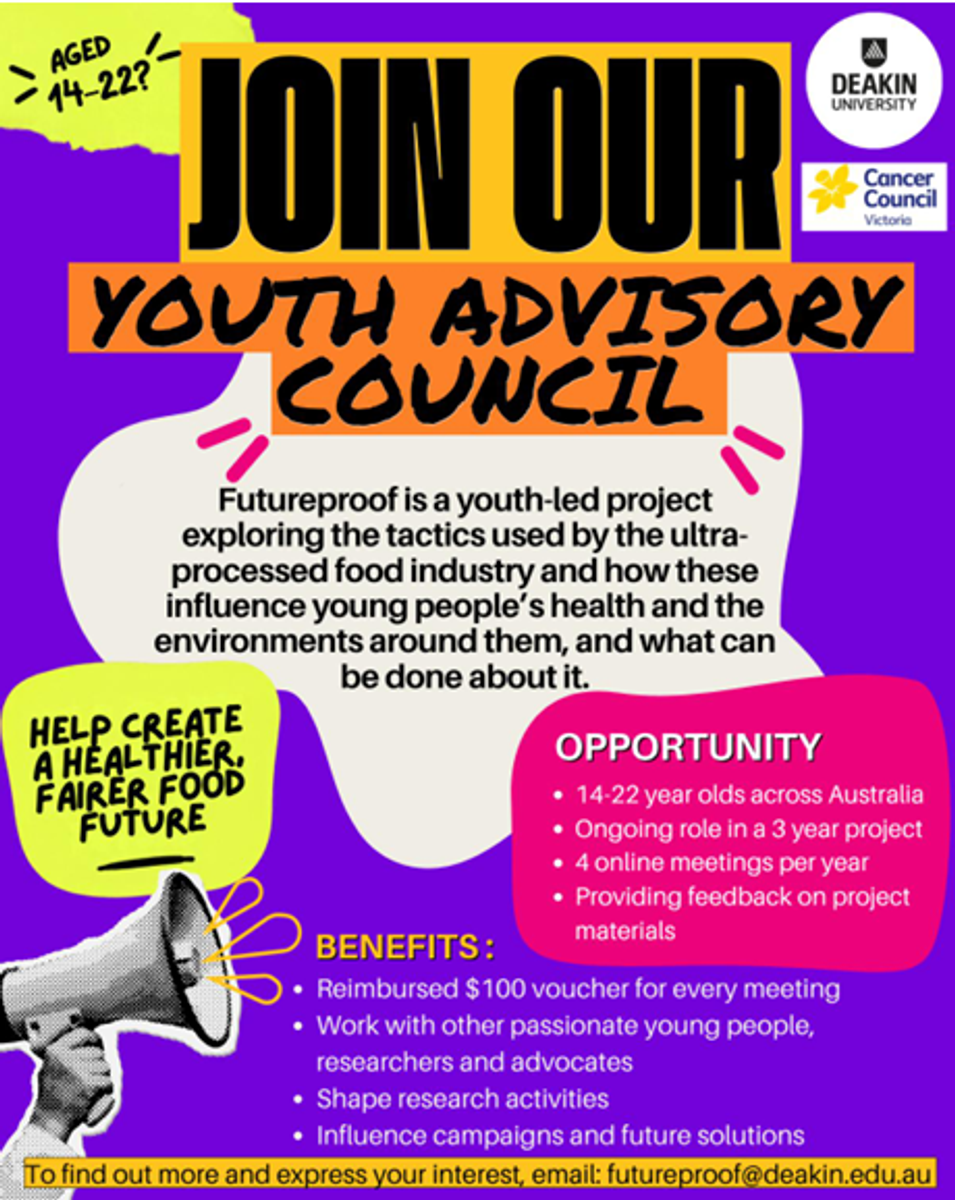
Paid Youth Advisory Council Opportunity (14–22) Futureproof Project
What: Young people aged 14–22 years who are interested in sharing their views and experiences about food, health, and the environments around them.
• No research experience or specific knowledge is needed.
• We are looking for a diverse group of young people with different experiences and perspectives.
What: We are recruiting young people to join the Futureproof Youth Advisory Council.
Futureproof is a youth-led research project being conducted in collaboration between Deakin University and Cancer Council Victoria, exploring the tactics used by the ultra-processed food industry, how these influence young people’s health and the environments around them, and what can be done about it.
Youth Advisory Council members will work with researchers and other young people to shape the research and project activities, share their ideas and perspectives, help interpret the findings, influence campaign messages and future solutions, and make sure young people’s voices are heard throughout the project.
Project funded by the National Health and Medical Research Council.
When: The Youth Advisory Council will meet up to 4 times a year over a 3 year period.
Where: Meetings will be held online, with opportunities to meet in person if preferred.
Paid: Youth Advisory Council members will be given a $100 voucher for each meeting they attend in recognition of their time and contribution.
Interested? To find out more and express your interest email
futureproof@deakin.edu.a
Opportunity from SMILING MINDS
FREE to watch, 19–25 November:
Raising Superheroes
What if we could prevent mental illness before it starts? As parents, carers and educators, we all want children to grow up feeling safe, connected and equipped to navigate life's challenges. But what if we could do more than support children when they're struggling? What if we could help prevent mental health challenges before they begin?
That's the powerful question at the heart of Raising Superheroes, a new documentary exploring what it really takes to give children the best possible foundations for lifelong mental health. Through stories from around the world, award-winning filmmaker Shannon Harvey uncovers the science, people and communities showing us that prevention is possible.
At Smiling Mind, we believe the foundations for good mental health are built early, in the everyday places children live, learn and grow. That's why we're proud to share this important film with our community.
You're invited to watch Raising Superheroes for FREE, from 19–25 November.
The film asks some big questions. Now, let's explore what we can do about them.
After watching Raising Superheroes, alongside our partners MCRI and ARACY we invite you to join a special Q&A panel, From Inspiration to Action, featuring Smiling Mind CEO Sarah La Roche alongside leading voices in child development, mental health prevention and advocacy.
Together, we'll explore what prevention looks like in practice, and how families, schools and communities can help create a future where more children thrive.
Whether you're raising children, teaching them or supporting their wellbeing, this is a conversation worth tuning in for.